|
MIND--ITS MYSTERIES AND CONTROL
By
SRI SWAMI SIVANANDA
CONTENTS
OM
1st July 1946
Beloved Dheerender!
Fear not. The mind is
no doubt extremely turbulent. Through repeated attempts you can perfectly subdue
it.
You are the master of
the mind. By Abhyasa and Vairagya assert your mastery. Feel the power, bliss
and splendour that result from perfect self-conquest.
Curb the mind ruthlessly.
Annihilate desire. When desire dies mind is your slave. Become desireless and
be victorious.
May you rest in your
pristine freedom!
Sivananda
Prayer
O Thou Invisible One! O
Adorable One! O Supreme! Thou permeatest and penetratest this vast universe
from the unlimited space down to the tiny blade of grass at my feet. Thou art
the basis for all these names and forms. Thou art the apple of my eye, the Prema
of my heart, the very Life of my life, the very Soul of my soul, the illuminator
of my intellect and senses, the sweet Anahata music of my heart, and the substance
of my physical, mental and causal frames.
I recognise Thee alone
as the mighty Ruler of this universe and the Inner Controller (Antaryamin) of
my three bodies. I prostrate again and again before Thee, my Lord! Thou art
my sole refuge! I trust Thee alone, O ocean of mercy and love! Elevate, enlighten,
guide and protect me. Remove obstacles from my spiritual path. Lift the veil
of ignorance, O Thou Jagadguru! I cannot bear any longer even for a second,
the miseries of this body, this life and this Samsara. Give Darsana quickly.
O Prabho! I am pining. I am melting. Listen, listen to my fervent, Antarika
prayer. Do not be cruel, my Lord. Thou art Dinabandhu. Thou art Adhama-Uddharaka.
Thou art Patita Pavana (Purifier of the fallen).
Om
Santih Santih Santih
Publishers'
Note
To everyone striving for
success in life, the invariable stumbling block proves to be the turbulent vagaries
of the mind. An undisciplined mind makes a man slave and wrecks his life. Controlling
and subduing it is the most vexing of problems to the earnest seeker of happiness.
The vital importance of the subject, therefore, prompted H.H. Sri Swami Sivanandaji
Maharaj to write this comprehensive work "MIND-ITS MYSTERIES AND CONTROL."
It is meant to serve as a valuable guide to all aspirants and it is also of
immense help to anyone in any walk of life. Being the outcome of personal experience
of the revered author and written with a practical end in view, "MIND-ITS
MYSTERIES AND CONTROL" is a treasure worthy to be possessed and studied
constantly.
-THE DIVINE
LIFE SOCIETY
Preface
Happiness has for ever
been the prime aim of every human being. All activities of man are directed
towards acquiring the maximum happiness in life. But, through the wrong deluded
notion that objects will give happiness, man searches for it outside. The result
is that in spite of all his lifelong efforts, he gets disappointment only. Vexation
and misery alone are to be seen everywhere. The real lasting happiness lies
within man. Such happiness or Ananda is the Inner Self, the Antaratman. The
very nature of Atman is pure Joy. This is never perceived because the mind is
completely externalised. As long as the mind is restlessly wandering about amidst
objects, ever fluctuating, excited, agitated and uncontrolled, this true joy
cannot be realised and enjoyed. To control the restless mind and perfectly still
all thoughts and cravings is the greatest problem of man. If he has subjugated
the mind, he is the Emperor of emperors.
For gaining mastery over
the mind, you have to know what it is, how it works, how it deceives you at
every turn and by what methods it can be subdued. In this book, the subject
has been dealt with; and the nature of the mind, the various forms that it assumes,
the secret of its inner workings and the way to control it are fully and clearly
explained. The previous editions were eagerly read and appreciated by thousands
of aspirants who wrote to say how immensely they were helped by the instructions.
The lessons and instructions are eminently practical and many helpful ideas
and suggestions got during my meditations have been recorded and put down here.
Very useful hints on concentration and meditation will be found in the book
which, if faithfully followed, will bring success in a short time without fail.
I pray to every aspirant
to study constantly the valuable instructions with care and follow the practical
hints given in his Sadhana and daily life. It will doubtless enable you to gain
control over your passions and cravings and to get established in Yoga. The
Bhakta, the student of Vedanta, the Raja Yogin, the Karma Yogin-all will find
this book an indispensable guide. The later stages of Yoga Sadhana are common
in all the four paths and Dharana and Dhyana are quite impossible without first
subduing the mind. All Sadhanas are, therefore, aimed at obtaining mastery over
the mind. Hence it is that I have tried to present the ways and means of achieving
this through simple, yet well-tried and effective methods. My efforts would
be amply fulfilled if even a single earnest aspirant is helped on the spiritual
path and attains the Goal.
May the Lord, the Antaryamin,
the Supreme Indweller inspire all to attempt mind-control and Yoga! May He bestow
success on the sincere aspirants that struggle to master the unruly mind! May
you reach the Goal of Life, Immortality, Supreme Knowledge and Bliss!
Sivananda
Chapter
1
What Is
Mind?
"He who knows the
receptacle (Ayatana) verily becomes the receptacle of his people. Mind is verily
the receptacle (of all our knowledge)." (Chhandogya Upanishad, V-i-5)
That which separates you
from God is mind. The wall that stands between you and God is mind. Pull the
wall down through Om-Chintana or devotion and you will come face to face with
God.
The Mind-a
Mystery
The vast majority of men
know not the existence of the mind and its operations. Even the so-called educated
persons know very little of the mind subjectively or of its nature and operations.
They have only heard of a mind.
Western psychologists know
something.
Western doctors know only
a fragment of mind. The afferent nerves bring the sensations from the periphery
or extremities of the spinal cord. The sensations then pass to the medulla
oblongata at the back of the head, where the fibres decussate. From there,
they pass on to the superior frontal gyrus or superior frontal convolution of
the brain in the forehead, the supposed seat of the intellect or mind. The mind
feels the sensations and sends motor impulses through the afferent nerves to
the extremities-hands, legs, etc. It is a brain-function only for them. Mind,
according to them, is only an excretion of the brain, like bile from liver.
The doctors are still groping in utter darkness. Their minds need drastic flushing
for the entry of Hindu philosophical ideas.
It is only the Yogins and
those who practise meditation and introspection that know the existence of the
mind, its nature, ways and subtle workings. They know also the various methods
of subduing the mind.
Mind is one of the Ashta-Prakritis.
"Earth, water, fire, air, ether, mind, reason and egoism-these constitute
the eightfold division of My Nature" (Gita, VII-4).
Mind is nothing but Atma-Sakti.
It is brain that wants rest (sleep), but not the mind. A Yogi who has controlled
the mind never sleeps. He gets pure rest from meditation itself.
How The
Mind Originated
Mind is Atma-Sakti. It
is through mind that Brahman manifests Himself as the differentiated universe
with heterogeneous objects. Brahma thought, "There, indeed, are the worlds;
I shall create the protectors of the worlds." He gathered the Purusha (Hiranyagarbha)
from out of the waters only and fashioned him. He heated him by the heat of
meditation. When he was thus heated, his heart burst out. From the heart, the
mind came; from the mind the moon, the presiding deity of the mind. (Heart is
the seat of the mind; so, the mind came out when the heart burst out. In Samadhi,
the mind goes to its original seat, i.e., heart. In sleep also, it rests in
the heart with a veil of ignorance between it and Brahman) (Aitareya Upanishad,
1-3-4).
Cosmic
Mind And Individual Mind
Hiranyagarbha, otherwise
known as Karya Brahman and Sambhuti, is cosmic mind. He is the sum total (Samashti)
of all the minds. The individual mind is connected with the cosmic mind. Cosmic
mind, Hiranyagarbha, superconscious mind, infinite mind, universal mind are
synonymous terms. Different authors have used different terms. Do not be puzzled.
Do not be confused. It is Sabda-bheda only.
Hiranyagarbha is cosmic
Prana also. He is the Sutratman (thread-like Self). He represents the electric,
cosmic, power-house. The different Jivas represent the different, small bulbs.
Electricity from the power-house flows through the insulated copper wires into
the bulbs. Similarly, the power from Hiranyagarbha flows into the Jivas.
The mind, being very subtle,
is in close apposition or contact with other minds, though the human skull intervenes
between them. As mind evolves, you come into conscious relation with the mental
currents, with the minds of others- near and distant, living and dead. The individual
mind of A, although separated from the mind-substance used by other individuals,
B, C, D, E, X, Y, etc., by a thin wall of very finest kind of matter, is really
in touch with the other apparently separated minds and with the universal mind
of which it forms a part.
If A is a friend of B,
A's mind is connected with B's mind. The minds of friends, relatives, brothers
of A are attached to A's mind. Several minds are similarly linked to B's mind
also. The minds of those who are attached to A's mind are, therefore, connected,
in turn, with the minds of those who are hanging on B's mind. In this manner,
one mind is in touch with all minds in the whole world. This is the Vibhu theory
of mind of Raja Yoga.
Mind In
Sankhya Philosophy
In Sankhya philosophy,
Mahat is the term used to denote "cosmic mind" or "universal
mind." It is the first principle that is derived from Avyakta. It is the
first principle that is manifested out of the unmanifested Avyakta. The wheel
of the bullock-cart rests on the spokes. The spokes rest on the nave. Even so,
the mind rests on Prakriti and Prakriti rests on Brahman.
From Mahat comes Ahankara.
From Sattvic Ahankara comes mind; from Rajasic Ahankara comes Prana; from Tamasic
Ahankara, Tanmatras; from Tanmatras, gross elements; from gross elements, the
gross universe. Mind is no other than Ahankara, the idea of 'I'. It is, indeed,
difficult to eschew this idea of 'I'. Mind always attaches itself to something
objective (Sthula). It cannot stand by itself. It is only this mind that asserts
itself as 'I' in this body.
The idea of 'I' is the
seed of the tree of mind. The sprout which first springs up from this seed of
Ahankara is Buddhi. From this sprout, the ramifying branches called Sankalpas
have their origin.
Linga Sarira
And Antavaha Sarira
Mind is the most important
Tattva of Linga Sarira. Linga Sarira is the astral body or Sukshma Sarira that
is linked to the physical body through physical Prana. It separates itself at
death from the physical body and travels to Svarga or heaven. It is this body
that does Avagamana (coming and going). This body melts in Videha Mukti (disembodied
salvation).
There is a difference between
Linga Sarira and Antarvaha Sarira. Linga Sarira is astral body with seventeen
Tattvas, viz., five Karma-Indriyas, five Jnana-Indriyas, five Pranas, Mind and
Buddhi. Antarvaha Sarira is very pure. It is full of Sattva. It is free from
Rajas and Tamas. It is with this body that a Yogi passes from one body to another
(Parakaya-Pravesa). Lila, through the grace of Sarasvati, came out of the physical
body and travelled to higher worlds with this Antarvaha Sarira. You will find
this in the Yogavasishtha. Sri Sankaracharya, Raja Vikramaditya, Hastamalaka
and Tirumular had Antarvaha Sarira. With the help of this special kind of pure
body, they passed into the bodies of other persons. A Yogi with Antarvaha Sarira
has Sat-Sankalpa or Suddha Sankalpa.
Mind Is
Subtle Matter
Mind is not a gross thing,
visible and tangible. Its existence is nowhere seen. Its magnitude cannot be
measured. It does not require a space in which to exist.
Mind and matter are two
aspects as subject and object of one and the same all-full Brahman, who is neither
and yet includes both. Mind precedes matter. This is Vedantic theory. Matter
precedes mind. This is scientific theory.
Mind can be said to be
immaterial only in the sense that it has not the characteristics of ponderable
matter. It is not, however, immaterial in the sense that Brahman (Pure Spirit)
as such is. Mind is the subtle form of matter and hence the prompter of the
body. Mind is made up of subtle, Sattvic, Apanchikrita (non-quintuplicated)
Tanmatric matter. Mind is all electricity. According to the Chhandogya Upanishad,
mind is formed out of the subtlest portion of food.
Mind is material. Mind
is subtle matter. This discrimination is made on the principle that the soul
is the only source of intelligence; it is self-evident; it shines by its own
light. But the organs (mind and senses) derive their principle of activity and
life from the soul. By themselves, they are lifeless. Hence the soul is always
a subject and never an object. Manas can be an object of the soul. And it is
a cardinal principle of Vedanta that that which is an object for a subject is
non-intelligent (Jada). Even the principle of self-consciousness (Aham Pratyak-Vishayatva)
or Ahankara is non-intelligent; it does not exist by its own light. It is the
object of apperception to the soul.
The Mental
Body
Just as the physical body
is composed of solid, liquid and gaseous matter, so also the mind is made up
of subtle matter of various grades of density with different rates of vibration.
A Raja Yogi penetrates through different layers of mind by intense Sadhana.
The mental body varies
much in different people. It is composed of coarse or finer matter, according
to the needs of the more or less unfolded consciousness connected with it. In
the educated, it is active and well-defined; in the undeveloped, it is cloudy
and ill-defined.
There are several zones
or slices in the mental body just as there are various compartments in the brain
for particular types of thought. During intense anger, the whole mind is suffused
with the black hue of malice and ill-will, which expresses itself in coils of
thunderous blackness, from which fiery arrows of anger dart forth, seeking to
injure the one for which the anger is felt.
Types Of
Mind
Every man has a mental
world of his own. Every man entirely differs from another man in mode of thinking,
temperament, taste, mentality, physical characteristics, etc. Physically also
a man differs from another man, although there might be slight resemblance.
Observe carefully the nose, the ears, the lips, the eyes, the eyebrows, the
arrangement of teeth, the shoulders, hands, fingers, toes, look, voice, gait,
way of talking, etc., of different men. You will find vast differences between
any two persons. Even the lines of the palm will differ. No two leaves are alike.
Variety is the beauty of creation.
There are various types
of mind. The Bengali type of mind is emotional and fit for devotion and art.
The Madrasi type of mind is intellectual and clever in Mathematics. The Punjabi
type of mind and Maharashtra type of mind are chivalrous. Bengal has produced
emotional saints, Lord Gouranga or Chaitanya Mahaprabhu, Sri Ramakrishna Paramahamsa
Deva, etc. Madras has produced intellectual philosophers like Sri Sankara and
Sri Ramanuja. Punjab has produced Guru Nanak, Guru Govind Singh, etc. The Sadhana
and path of Yoga vary according to the type of mind, temperament and capacity.
Tastes also differ. The sight of a fish brings excessive joy to a Bengali. The
sight of tamarind and chillies excites the glosso-pharyngeal nerve of a Madrasi.
The sight of a Palmyra fruit excites the Jaffna Tamil of Ceylon and brings excessive
joy. The sight of meat brings a peculiar joy to a meat-eater. Is this not a
mystery that an object lies outside and saliva appears in the tongue at the
sight of it? Because you have this experience daily in everyday life, you do
not attach much importance to it. Mind is very mysterious. So is Maya, too.
Even an infinitely superior
mind is yet a mind and of the same mould as any man's.
Size Of
The Mental Body
Mind is atomic (Anu) according
to the Nyaya School; is all-pervading (Vibhu) according to the Raja Yoga School
of Maharshi Patanjali; is of middling size (same size as that of the body) according
to the Vedantic School.
Mental
Aura
Mind has got aura (mental
aura or psychic aura). Aura is Tejas, brilliance or halo that emanates from
the mind. The aura of those who have developed their minds is extremely effulgent.
It can travel long distances and affect in a beneficial manner a large number
of persons who come under its influence. The spiritual aura is more powerful
than either the psychic or Pranic aura.
Influence
Of Strong Mind Over Weak Minds
A strong mind has influence
over weak minds. A hypnotist with a strong mind hypnotises a whole bunch or
circle of boys of weak minds.
There are those among us
who are much more sensitively organised than others. As an organism, their bodies
are more finely and more sensitively constructed. These, generally speaking,
are people who are always more or less affected by the mentalities of others
with whom they come in contact, in whose company they are.
He who has purified his
mind becomes a centre of force. All the lesser, impure, weak minds are unconsciously
drawn towards the purified, greater mind, because they derive peace, power and
strength from the greater, purified mind.
Mark the influence of a
highly developed mind over a less developed mind. It is impossible to describe
what it is like to be in the presence of a Master or developed adept. To sit
in his presence, though he hardly speaks a word, is to feel a thrilling sensation
so much as to feel new inspirations touching one mentally. It will be an extraordinary
experience.
If you want to drink water
at a tap, you will have to bend your body. Even so, a lower mind will have to
bend (to be humble) before a developed mind if it longs to imbibe its virtues.
The thought itself must be calm and unruffled. Then only you can draw inspirations.
In such conditions only benign influences can be thrown down into the lower
mind from the higher. In such calm, mental states, you can hold communion with
God. Planning, angry and depressed moods-all disturb the mind and act as stumbling
blocks to God-realisation.
Mind Is
Ever Changing
Mind is nothing but a collection
of Samskaras. It is nothing but a bundle of habits. It is nothing but a collection
of desires arising from contact with different objects. It is also a collection
of feelings aroused by worldly botherations. It is a collection of ideas gathered
from different objects. Now, these desires, ideas and feelings constantly change.
Some of the old desires and feelings are constantly departing from their storehouse,
the mind, and new ones are replacing them.
This constant change does
not in any way interfere with the harmony of mental operations. Only some of
the old desires, ideas and feelings depart. Those that remain work in healthy
co-operation and concord with the new arrivals. The new arrivals are strongly
magnetised by the old ones. They both work in harmony and this harmony sustains
the identity of the mental existence.
Mind is not only made daily,
but always made. Every minute, it changes its colours and shape like a chameleon.
It is very Chanchala (wavering) and Asthira (unsteady)-(Gita, VI, 26). Mind
is constantly changing. You are gaining new experiences daily. Your beliefs
and conscience of 1932 and the faculty which judges right from wrong will change
in 1942. The mind evolves through experience. The world is the best teacher
or Guru.
According to the state
of his knowledge, man's conscience is built up and changes from time to time
with the correction of his views, in the light of further knowledge gained subsequently.
Conscience is one's own convictions arrived at either instinctively or by reasoning.
The conscience of a child or a savage is entirely different from the conscience
of a fully grown civilised man and, even amongst civilised men, knowledge varies
so much that their consciences direct different lines of conduct. The conscience
of a Sattvic man considerably differs from that of a Rajasic man. The conscience
of a Sattvic man is very, very clean and pure.
Fourfold
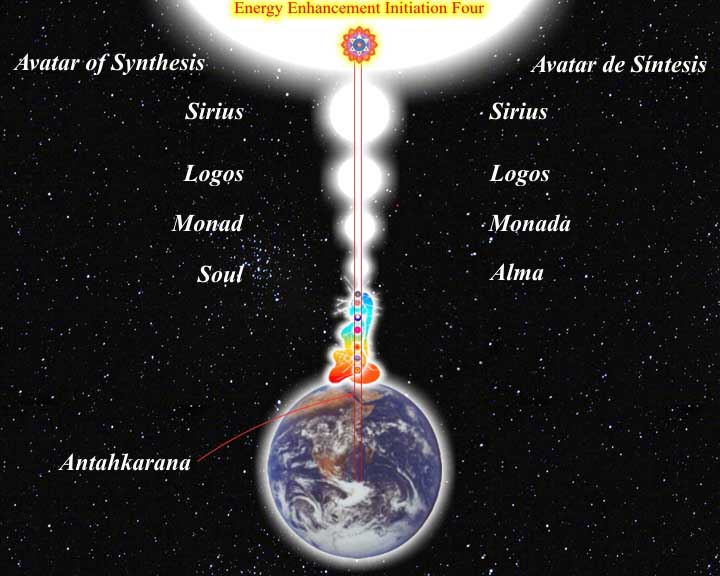
Mind Or Antahkarana Chatushtaya
Antahkarana is a term used
by the Vedantins to include mind, Buddhi, Chitta and Ahankara. When used in
a broad sense, it means the internal instrument. 'Antah' means internal; 'Karana'
means instrument. It is the inner instrument (as distinguished from the term
Bahya Karana, outer instrument or the senses or Indriyas) through which you
sense, perceive, think and reason out.
Ahankara is derived from
Prithvi-Tanmatra. (Tanmatras are Sukshma Bhutas or subtle elements. The five
gross elements are derived from the Tanmatras.) Chitta is derived from Jala-Tanmatra;
Buddhi from Agni-Tanmatra; mind from Vayu-Tanmatra; heart from Akasa-Tanmatra.
Mind is Chetana (intelligent)
when compared with the senses. It is Jada (non-intelligent) when compared with
Buddhi. Sankhya Buddhi or Buddhi in Sankhya Philosophy is will and intellect
combined. Some put Chitta under mind, Ahankara under Buddhi.
Manas, Buddhi, Chitta and
Ahankara are only Vritti-bhedas or functional aspects of the mind. The Manas
has all things for its objects and extends through the past, present and future;
it is one only, but has various functions. You are a Judge when you exercise
your judicial powers in the court. You are a cook when you work in the kitchen.
You are a president of an association when you sit in the chair in that capacity.
You are the same man, but you function differently and you are called by different
names according to those different functions. Similarly, when the mind does
Sankalpa-Vikalpa (will-thought and doubt), it is called Mind; when it discriminates
and decides, it is Buddhi; when it self-arrogates, it is Ahankara; when it is
the storehouse of Samskaras and seat of memory, it is Chitta; also when it does
Dharana and Anusandhana.
Who gave coolness to water,
warmth to fire, motion to air? These qualities are their very nature. Even so,
mind has got its Svabhava of running towards objects, Buddhi of determining,
Ahankara of self-assertion and self-identification, Chitta of thinking (Smriti)
of those objects which are identified by Ahankara.
When the mind is at work,
Buddhi and Ahankara work simultaneously along with the mind. Mind, Buddhi and
Ahankara work in healthy co-operation. Mind makes Sankalpa-Vikalpa. It thinks
whether a certain thing is good or bad. Buddhi comes for determination. It is
Buddhi which discriminates the Vishaya (Nischyatmika, Vyavasayatmika).
The Svarupa of mind is
thought only. Mind is Sankalpa-Vikalpatmaka. It is Vyakaranatmaka when it forwards
the decisions of Buddhi, the messages from Buddhi, to the organs of action for
execution. Mind selects, attends and rejects.
Functions
Of Mind
Sensation, thought and
volition are the threefold functions of the mind. Cognition, desire, volition
are the three mental processes.
Mind has three states,
viz., active, passive and neutral. Mind always wants variety and new sensations.
It is disgusted with monotony.
Law of Association, Law
of Continuity and Law of Relativity are the three principal laws of the mind.
These are the characteristics
of the mind, viz., change (Parinama), activity (Cheshta), suppression (Nirodha),
ideation in action (Sakti), physical life (Jivana), characterisation (Dharma).
Thinking, planning, feeling,
knowing are the various activities that are going on in the mind. Sometimes
you plan. Sometimes you feel. Sometimes you try to know. Sometimes you think
seriously. Sometimes you will (volition). Volition brings all the mental faculties
into play. You must be able to know by introspection what exactly is going on
at different times in the mind.
Aspects
Of Mind
Conscious mind or objective
mind, subconscious mind or subjective mind (Chitta) and superconscious mind
are three aspects of the mind. You see, hear and read with the objective mind.
Sensational mind, rational
mind and intuitive mind are three aspects of mind according to another classification
of Western philosophers.
Heart is the seat of four
Tattvas-Prana, Mind, Ahankara and Atman. According to Vedanta, the seat of mind
is the heart. Ajna Chakra, which consists of two lotuses and which is tentatively
situated in the space between the two eyebrows, is the seat of mind according
to the Hatha Yoga School.
Seat Of
Mind
Mind has various faculties
and centres and operates through corresponding physical centres in the brain.
Mind, Buddhi and understanding are in the Linga Sarira; but they operate through
corresponding centres in the physical brain. The brain is not mind as the Westerners
think. Mind has its seat in the physical brain. It gains experiences of this
physical universe through the vibrations of the brain.
A king, though he has complete
sway over his whole territory, though the whole kingdom belongs to him, has
got special places for his residence. He has got a splendid palace in the capital
and another beautiful, palatial building in Mussoorie or Mount Abu for his stay
in summer. Even so, the mind, though it is all-pervading throughout the body,
has got three places to reside in during the three states-Jagrat, Svapna and
Sushupti. The seat of mind in deep sleep is heart. In dream, the seat of the
mind is neck. In waking state, the seat of the mind is the right eye or Ajna
Chakra. Just mark what you do in Alochana (deep thinking). You hold your finger
in the chin, turn the neck to the right side, turn the gaze towards the space
between the two eyebrows and then begin to think seriously on the problem in
hand. This goes to show that the seat of the mind is the Ajna Chakra.
Mind Is
Not Atman
In the West, the psychologists
make a serious mistake in saying that consciousness is a function and attribute
of the mind. It is Chit or Atman only that is Pure Consciousness Itself. Mind
borrows its light from time to time from its source-Atman, the Light of lights
or the Sun of suns and glitters temporarily like consciousness, like the golden
gilt in brass. Mind borrows its light and power from Brahman, the source (Yoni),
just as the iron-rod borrows its heat and effulgence from fire. Mind is Jada
or non-intelligent, but appears to be intelligent by borrowing light from Brahman,
just as water exposed to the sun borrows heat from the sun.
Mind can do only one thing
at a time. It is finite (Parichhinna). It is Jada. It is the effect (Karya)
of Sattva Guna. It is Vinasi (perishable). It is Chanchala (ever-fluctuating).
It is a bundle of ideas, Samskaras, habits, impulses and emotions. It borrows
light from the Adhishthana (the underlying substratum), Brahman. You can control
the mind. The thinker is different from thought. There is no functioning of
the mind in deep sleep. You always say, "My mind", as if mind is one
of your instruments just like your walking-stick or umbrella. Therefore, mind
is not the self-shining Atman.
Even in cases of delirium
or in cases where there is paralysis of the mental functions, where a man loses
his memory and other faculties partly or wholly, 'He' remains. The 'I' exists
(Aham Asmi). The mind seems to be as much your property and outside of
you as the limbs, the dress worn or the building you dwell in. Therefore, mind
is different from 'I'.
Mind gropes in darkness.
It forgets every moment. It is changing every second. If food is withdrawn for
a couple of days, it cannot think properly. There is no functioning of the mind
during deep sleep. It is full of impurities, Vasanas and Trishnas (cravings).
It gets puzzled during anger. In fear, it trembles. In shock, it sinks. How
can you take the mind, then, as the pure Self?
Manas is an organ of sensation
and thought. This instrument must be under the control of someone who uses it.
The Jiva or human soul is not the director of the mind, because we see that
ordinary men cannot control their minds. They are simply swayed hither and thither
by petty Raga-Dvesha, emotion and fear. Therefore, there must exist some other
Being, who is Director of the mind. Who is that Being? He is the Manasah pati
(Lord of mind), Antaryamin, Kutastha Brahman.
Just as you see the tree
in front of you, there must be somebody to see and know what is going on in
the mind of Jivas. That somebody is Kutastha. Kutastha is Brahman Himself. There
is a tumbler in front of you. It cannot see itself. An instrument, eye and a
seer are needed. If you say that the tumbler can see itself, then there will
be Karmakartritva-bhava-virodha. It is a logical absurdity. Therefore, you have
to admit that there is a silent Sakshi of the mind, who is eternal, unchanging,
eternal knower, always the knowing subject. He is witnessing the motives and
modifications that arise in the minds of Jivas.
Isvara or Saguna Brahman
(Personal God) has full consciousness of Nirguna Brahman. That is His Svarupa-
Lakshana. At the same time, he has full cosmic consciousness. He knows what
is going on in every mind.
Consciousness per se
or the Absolute Consciousness is common in all. This pure consciousness is one.
It is Kutastha Chaitanya. All the workings of the mind, all modifications that
arise in the minds of all are presented to the one common consciousness which
is the witness of the mental Vrittis. Even though consciousness is one, when
Rama is stung by a scorpion, only Rama feels and not his friend Krishna who
is standing near him. Antahkarana or mind is different in every individual.
It is Antahkarana that limits a man who is, in reality, identical with the Brahman
or Supreme Soul! This identity is realised when the Avarana or veil of ignorance
is removed.
The mind is an object of
perception for Brahman. Atman directly cognises all the phenomena of the mind,
viz., desire, imagination, doubt, belief, disbelief, shame, intelligence, fear,
etc. He remains Himself quite unattached and unaffected like the omnipresent
ether, like the crystal which reflects different coloured objects, like the
sun.
Atman-the
Source For The Mind
Manas, which expands through
Sankalpas and Vikalpas, is generated with Brahman as its cause. The form which
the endless Atman (Supreme Spirit) assumes through Sankalpa is Manas (mind).
It first turned its back to discrimination and hence entangled itself in the
folds of Vasanas of objects. The underlying substratum, Adhishthana of the mind,
the source or basis for mind is Atman or Brahman or Absolute Conscious- ness.
The Power of powers who gives power to the mind, the Light of lights who sheds
light on the mind, the Seer of seers who witnesses the motives of and movements
in the mind, the Support of supports on which the mind rests in sleep is BRAHMAN.
"Om Keneshitam
Patati Preshitam Manah-Willed and directed by whom does the mind go towards
its desired objects?" (Kenopanishad). To that Power of powers I bow with
folded hands. That Power of powers I am (Soham, Sivoham).
That Secondless Supreme
Being who resides in the chambers of your hearts as Antaryamin or Inner Ruler
or Controller or Sutradhara or Sakshi (silent Witness), Antaratman (Inner Self),
who has no beginning, middle or end, who is the source of this world, the Vedas,
body, mind, Indriyas and Prana, who is all-pervading, who is unchanging, who
is One Homogeneous Essence (Ekarasa), who exists in the past, present and future,
who is self-existent (Svayambhu), who is independent (Svatantra) and who is
self-luminous (Svayam- jyotis) is God or Atman or Brahman or Purusha or Chaitanya
or Bhagavan or Purushottama.
During dream, you are splendid,
effulgent light. Where does it come from? From Atman. The light that is present
in the dream clearly indicates that Atman is self-luminous (Svayamjyotis, Svaprakasha).
God is Truth. God is Love.
God is Light of lights. God is Peace. God is Knowledge. God is the embodiment
of Bliss. God is Sat-Chit-Ananda-Existence Absolute, Knowledge Absolute and
Bliss Absolute. God is Eternity. God is Immortality. God is Infinity. God is
Avinasi, Supreme Vastu. God is All-pervading Essence or Substance. God is the
only Sara Vastu. God is Infinite Beauty.
Bhagavan is a synonymous
term for God. He who has the six attributes, viz., Jnana (wisdom), Vairagya
(dispassion), Yasas (fame), Aisvarya (divine powers), Sri (wealth) and Dharma
(righteousness) in their fullest measure is Bhagavan.
According to Vayu Purana,
"Omniscience, satisfaction, eternal knowledge, independence, constant presence
of power, infinity of power-these six are said to be the aspects (Angas) of
the Great Lord."
Sarvajnatva (omniscience,
knowledge of all the worlds, their Jivas and their Karmas), Sarvesvaratva (supreme
rulership of all, the power of dispensing the fruits of all Jivas), Sarvantaryamitva
(inner control of all names and forms and all Indriyas and minds), Sarvakaranatva
(causality for the creation, preservation and destruction of all), Sarvaniyantritva
(doing everything without failure of Niyama), Sarvakartritva (the doing of all
actions), Sarvasaktimatva (omnipotence), Svatantratva (absolute independence)
are the eight attributes of God.
"Knowledge, desireless,
power of control, purificatory action, truth, forgiveness, endurance, creation,
the Knowledge of the Self, and being the substratum of all activities-these
ten unchangeable (Avyaya) qualities always live in the Great Source of all Good."
Srishti (creation), Sthiti
(preservation), Samhara (destruction), Tirodhana (veiling) and Anugraha (blessing)
are the five kinds of action (Panchakrityas) of God.
God is the Niyamaka (ruler),
Antaryamin (knower of the heart) and Preraka (prompter) also. He helps the Sadhakas
in a variety of ways, viz., through dreams, the Inner Voice, by talking through
the mouths of others in daily conversations and advice from friends.
Nitya Sukha (eternal bliss),
Parama Santi (supreme peace), Nitya Tripti (eternal satisfaction), infinite
happiness, Akhanda Sukha (unbroken joy) can be had only in God. Attain this
God-consciousness or Self-realisation or Darshana of God through Ananya Bhakti
or Vichara. This is the goal of life. This is your highest duty. All other duties
are secondary.
The essence of Indriyas
is the mind; the essence of mind is Buddhi; the essence of Buddhi is Ahankara;
the essence of Ahankara is Jiva (the individual soul). Brahman or Suddha Chaitanya
is the womb or Yoni or Adhishthana or substratum for everything. He is the Sakshi
or witness of everything.
Atman is the proprietor
of a big firm, this mental factory. Buddhi is the manager. Mind is the head
clerk. The head clerk has got two functions to perform. He gets direct orders
from the manager and he has to supervise the workmen also. Even so, the mind
has got two functions. It has connections with the Buddhi, the manager and Karma-Indriyas,
the workers.
Mind is more internal than
speech. Buddhi (intellect) is more internal than the mind. Ahankara is more
internal than Buddhi. Jiva Chaitanya (Abhasa, reflected intelligence) is more
internal than Ahankara. Atman or Kutastha is more internal than the Jiva Chaitanya.
There is nothing internal to Atman. It is Paripurna (All-Full).
When, by analysing your
own mind, you come face to face with something which is never destroyed, something
which is by its own nature eternally pure, perfect, self-luminous and unchanging,
you will no longer be miserable, no more unhappy.
One Essence only exists.
It is One without a second (Ekameva Advitiyam Brahma). It is Ananta,
spotless, ever pure and Paripurna. Meditate upon It without fluctuation of mind
and free yourself from all pains with true calmness of mind. Being quite unreal,
Ahankara will perish through efforts.
Proof For
The Existence Of Mind
What is the nature of the
Atman or Brahman? It is Sat-Chit-Ananda. Atman is Vyapaka. Then, what is it
that limits the individual soul's vision? It is only mind. This fact proves
the existence of an internal instrument, the mind.
In the commentary on the
Brihadaranyaka, Sri Sankara gives two proofs of the existence of Manas.
One is that it is Manas
which renders all knowledge through senses possible. It is called Sarva Karma
Vishaya Yoga. Sense-knowledge is the product of the connection between the mind
and the sensory organs. That is why there is no simultaneity of the knowledge
of the impressions received through the various sensory organs. People say,
"My mind was elsewhere. I did not see that." The impossibility of
this simultaneity of knowledge through various sensory organs is an indication
of the existence of the mind.
The soul is a constant
factor. Between the Atman and the organs of senses, a connecting link is necessary.
We have to acknowledge the existence of an internal organ (Mind), through whose
attention and non-attention, perception takes place. If we do not admit the
internal organ, there would result either perpetual perception or perpetual
non-perception-the former when there is a conjunction of Atman, the sense (Indriya)
and the object (Vishaya), the three constituting the instruments of perception.
If, on the conjunction of these three causes, the effect did not follow, there
would take place perpetual non-perception. But, neither is the case. We have,
therefore, to acknowledge the existence of an internal organ on whose attention
(Avadhana) and non-attention (Anavadhana) perception and non-perception take
place. This is the argument for the existence of Antahkarana or mind.
The other proof is the
capacity for judgment which we possess. Somebody whom we cannot see touches
us; and, we infer the person. Now, mere touch cannot make us aware of this fact.
The faculty by which we make such an inference is Manas.
Special
Knowledge That Differentiates
Man From Animal
An animal is not able to
"know itself." It has only physical consciousness. It has no self-consciousness.
An animal feels the discomfort and pain. It is not able to analyse its own mental
states. A man not only "knows", but he "knows that he knows."
This is either mental consciousness or self-consciousness. The man not only
"feels" or "senses" things, but he has words to express
his feelings and sensations. He can vividly describe his feelings. He may think
of himself as experiencing them. He can separate himself from the sensation
of feeling. He is able to think, "I feel; I hear; I see; I smell; I taste;
I desire; I act; I enjoy,"
"I know this book."
"I know also that I know this book." This is self-consciousness peculiar
to human beings only.
In the Police Station,
the Chaprasi (peon) strikes ten at the gate. The sound vibrates and passes into
the ears of men and animals. The animals also hear ten times the beating. But
the man counts them and knows through his Buddhi, "Now it is ten o'clock."
He has got this Visesha Jnana (special knowledge); whereas animals have got
Samanya Jnana (ordinary knowledge). It is this special knowledge that differentiates
a man from an animal. Ahara (food), Nidra (sleep), Bhaya (fear) and Maithuna
(copulation) are common to both. Through this Visesha Jnana he knows right from
wrong, good from bad, what to do (Kartavya) and what not to do (Akartavya).
The Four
Sources Of Knowledge
Inspiration, revelation,
insight, intuition, ecstasy, divine sight and Paramananda state are the seven
planes of knowledge. There are four sources of knowledge, viz., instinct, reason,
intuition and super-intuition or Brahma-Jnana.
Instinct
When an ant crawls in your
right arm, the left arm automatically moves towards the right arm to drive away
the ant. The mind does not reason there. When you see a scorpion in front of
your leg, you withdraw your leg automatically. This is termed instinctive or
automatic movement. As you cross a street, how instinctively you move your body
to save yourself from the cars! There is no Vritti in such mechanical movement.
Instinct is found in animals
and birds. In birds, the ego does not interfere with the free divine flow and
divine play. Hence the work done by them through their instincts is more perfect
than that done by human beings. Have you not noticed the excellent work done
by birds in their building of wonderful nests?
Reason
Reason is higher than instinct
and is found only in human beings. It collects facts, generalises, reasons out
from cause to effect, from effect to cause (a priori and a posteriori
methods of reasoning), from premises to conclusions, from propositions to proofs.
It concludes, decides and comes to judgment. It takes you safely to the door
of intuition and leaves you there.
Belief, reasoning, knowledge
and faith are the four important psychic processes. First you have belief in
a doctor. You go to him for diagnosis and treatment. He makes a thorough examination
and then prescribes certain medicines. You take them. You reason out: "Such
and such is the disease. The doctor has given me Iron and Iodide. Iron will
improve my blood. The Iodide will stimulate the lymphatics and absorb the exudation
and growth in the liver. So I should take it." Then the disease is cured,
by a course of these drugs, in a month. Then you get knowledge of and perfect
faith in the efficacy of the medicine and the proficiency of the doctor. Then
you recommend to your friends this doctor and his drugs.
Intuition
Intuition is spiritual
Anubhava. Knowledge through functioning of Karana-Sarira is intuition. Sri Aurobindo
calls it super-mind or supramental consciousness. There is direct perception
of truth (Pratyaksha) or immediate knowledge through Samadhi. You know things
by a flash. Professor Bergson preached about intuition in France to make the
people understand that there is another higher source of knowledge than intellect.
In intuition, there is no reasoning process at all. It is Pratyaksha. Intuition
transcends reason, but does not contradict it. Intellect takes a man to the
door of intuition and returns back. Intuition is Divyadrishti. It is Jnana-Chakshus.
Spiritual flashes and glimpses of truth come through intuition. Inspiration,
revelation, spiritual insight come through intuition.
Atma-Jnana
Atma-Jnana is above intuition.
It transcends the Karana-Sarira. It is the highest form of Knowledge. It is
the only Reality.
Chapter
2
Mind And
Body
Body, The
Mould For Mind's Enjoyment
The body with its organs
is no other than the mind. The physical body is the outward manifestation of
the mind. Mind is the subtle form of this physical body. The mind contemplating
upon the body becomes the body itself and then, enmeshed in it, is afflicted
by it. All the bodies have their seat in the mind only. Should the mind be paralysed,
then the body will not evince our intelligence. Without water, can a garden
exist? It is the mind which transacts all business and is the highest of the
bodies. Mental actions are the real actions. The mind performs all actions very
speedily in the Linga Sarira and fluctuates thereby. But, the gross body knows
not anything and is inert. Even should this gross body be dissolved, the mind
will assume fresh bodies to its liking very quickly. This physical body is the
mould, as it were, made by the mind for its own enjoyment, for its outpouring
of its energy and thereby gaining different experiences of this world through
the five avenues or channels of knowledge, the five Jnana-Indriyas (organs of
knowledge or perception).
Thoughts
Make The Body
The actions of the mind
alone are indeed actions; not so much those of the body. The body is really
our thoughts, moods, convictions and emotions objectivised, made visible to
the naked eyes. It is a point worthy to note with care that every cell in the
body suffers or grows, receives a life-impulse or a death-impulse, from every
thought that enters the mind, for you tend to grow into the image of that which
you think about most.
When the mind is turned
to a particular thought and dwells on it, a definite vibration of matter is
set up and often more of this vibration is caused, the more does it tend to
repeat itself to become a habit, to become automatic. The body follows the mind
and imitates its changes. If you concentrate your thought, the eyes become fixed.
Every change in thought
makes a vibration in your mental body and this, when transmitted to the physical
body, causes activity in the nervous matter of your brain. This activity in
the nervous cells causes many electrical and chemical changes in them. It is
thought-activity which causes these changes.
Face: An
Index Of Mind
Mind is the subtle form
of this physical body. The physical body is the outward manifestation of the
mind. So when the mind is rough, the body is rough too. As a man of rough appearance
generally cannot invoke love and mercy of others, so a rough-minded man cannot
invoke love and mercy of anybody. Mind very conspicuously reflects on the face
its various states which a man of intelligence can very easily read. Face is
an index of the mind, just as the tongue is an index of the stomach.
The body follows the mind.
If the mind thinks of falling from a height, the body prepares itself immediately
and shows external signs. Fear, anxiety, grief, cheerfulness, hilarity, anger-all
produce their various impressions on the face.
The eyes which represent
the windows of the soul bespeak of the condition and state of the mind. There
is a telegraphic instrument in the eyes to transmit the messages or thoughts
of treachery, cunningness, fraud, pure love, compassion, devotion, depression,
gloom, hatred, cheerfulness, peace, harmony, health, power, strength and beauty.
If you have the faculty
to read the eyes of others, you can read the mind at once. You can read the
uppermost thought or dominant thought of a man if you are careful to mark the
signs in his face, conversation and behaviour. It needs a little pluck, acumen,
training, intelligence and experience.
Your thoughts, sentiments,
modes and emotions produce their strong impressions on the face. The face is
like an advertisement board wherein is advertised what is going on inside the
mind. In face, you can hardly hide your thoughts. You may foolishly think that
you have kept up your thoughts in secret. Thoughts of lust, greed, jealousy,
anger, revenge, hatred, etc., at once produce their deep impressions on your
face. The face is a faithful recorder and a sensitive registering apparatus
to register and record all the thoughts that are running in your mind. The face
is a polished mirror to indicate the nature of the mind and its contents at
a particular time.
He who thinks that he can
hide his thoughts is a dunce of the first water. His position is like that of
the ostrich which, when chased by the hunters, hides its head underneath the
sand and imagines that it cannot be seen by anyone.
Your face is like a gramophone
record or plate. Whatever you think is at once written on your face. Every vicious
thought serves as a chisel or needle to write down the thoughts on your countenance.
Your faces are covered with the scars and wounds which are made by the vicious
thoughts of hatred, anger, lust, jealousy, revenge, etc. From the nature of
the scar in your face, I can at once read your state of mind. I can at once
diagnose your disease of the mind.
Mutual
Influence Between Mind And Body
The mind is intimately
connected with the body. The mind acts upon the body and the body reacts upon
the mind. Mind has influence over the body. A pure, healthy mind means a healthy
body. Grief in the mind weakens the body. Body influences the mind also in its
turn. If the body is strong and healthy, the mind also becomes healthy and strong.
If the body is sick, the mind also becomes sick. A pain in the stomach causes
depression in the mind.
Bad Thoughts,
The Primary Cause Of Disease
The primary cause of diseases
which afflict the body is bad thoughts. Whatever you hold in your mind will
be produced in the physical body. Any ill-feeling or bitterness towards another
person will at once affect the body and produce some kind of disease in the
body. Intense passion, hatred, longstanding bitter jealousy, corroding anxiety,
fits of hot temper actually destroy the cells of the body and induce disease
of the heart, liver, kidneys, spleen and stomach. Violent fits of hot temper
do serious damage to the brain cells, throw poisonous chemical products into
the blood, produce general shock and depression and suppress the secretion of
gastric juice, bile and other digestive juices in the alimentary canal, drain
away your energy, vitality, induce premature old age and shorten life.
When the mind is agitated,
then this body also is agitated. Wherever the body goes, the mind follows. When
both the body and mind are agitated, the Prana flows in a wrong direction. Instead
of pervading the whole body steadily and equally, it will vibrate at an unequal
rate (unrhythmically). Then the food is not digested properly. Diseases originate.
If the primary cause is removed, then all diseases will disappear.
The pains that afflict
the physical body are called secondary diseases, whilst the Vasanas that affect
the mind are termed mental or primary diseases. If bad thoughts are destroyed,
all bodily diseases will vanish. Purity of mind means healthy body. Therefore,
be careful in your thinking, in the selection of your thoughts. Always entertain
noble, sublime, loving and kind thoughts. You will have harmony, health and
beauty.
A Lamentable
Practice
It is lamentable, indeed,
to note that most of the doctors in the world, particularly the allopaths, do
more harm than good to their patients. They exaggerate the nature of the disease
to their patients. They fill their minds with imaginary fears of all sorts.
They do not know the power of suggestions and their influences on the minds
of their patients. As greed is ingrained in their minds, as the desire to become
rich is deep-rooted in their minds, they try their level best to extract from
their patients as much money as they can. If they say to their patients, "This
disease is nothing. I will make you all right within a couple of hours,"
who is going to pay them amply? They give wrong suggestions to their patients:
"This is a terrible disease. This is an incurable disease. A dangerous
poison, a dangerous microbe is lurking in your lungs." The poor patient
spends sleepless nights on account of imaginary fear, on account of wrong suggestion
given by the doctor. Every moment he thinks: "I may die at any moment.
The doctor has said that my disease is dangerous and incurable." He drags
a cheerless existence. The worry and anxiety and fear destroy millions of red
blood-corpuscles daily. The doctor gives the wrong suggestions to glorify his
skill, dexterity in the profession also.
The Root
Of All Evils
The erroneous imagination
that you are the body is the root of all evils. Through wrong thinking, you
identify yourself with the body. Dehadhyasa arises. You are attached to the
body. This is Abhimana. Then, Mamata (mineness) arises. You identify yourself
with your wife, children, house, etc. It is identification or attachment that
brings about bondage, misery and pain. You never wept when millions of Germans
died in the war. Why? Because, there was no identification and attachment. But,
you weep profusely when your son dies, on account of attachment. The word 'My'
produces wonderful influence in the mind. Note the difference in effects produced
in the mind when you hear the two sentences: 'Horse is dead' and 'My horse is
dead.'
Pain Is
In Mind Only
Pain is evident so long
as you connect yourself with the mind. There is no pain in sleep. If there is
an inflammatory swelling on your back with throbbing pain, you do not experience
any pain at night when you are asleep. Only when the mind is connected with
the diseased part through nerves and thinking, you begin to experience pain.
There is no pain when the mind is disconnected from the body by the administration
of chloroform. During moments of great joy, the severe pain entirely ceases,
as the mind is taken away from the body, from the seat of the pain. If you can
consciously withdraw the mind from the diseased part by concentrating it on
God or any other attractive object, you will not experience any pain even when
you are wide awake. If you have a powerful will and strong Titiksha (power of
endurance), then also you will not experience any pain. By constant thinking
of any trouble or disease, you only augment your pain and suffering. Pain is
in mind. Atman or spirit is Anandasvarupa (full of bliss).
Conquer
The Mind To Control The Body
With the majority of mankind,
the mind is greatly under the control of the body. Their minds being very little
developed, they live on Annamaya Kosha mostly. Develop the Vijnanamaya Kosha
and, through Vijnanamaya Kosha (Buddhi), control the Manomaya Kosha (mind).
The Vijnanamaya kosha is developed by abstract thinking and reasoning, by systematic
meditation, Brahma-Chintana, study of the Upanishads, Yogavasishtha and Brahma
Sutras.
When you have controlled
the mind, you have perfect control over the body. The body is only a shadow
of the mind. It is the mould prepared by the mind for its expression. The body
becomes your slave when you have conquered the mind.
Chapter
3
Mind, Prana
And Kundalini
Prana-the
Outer Coat Of Mind
There are two principal
Tattvas in the universe, viz., mind and Prana. Wherever there is Prana, there
is mind also. Even in the external movement of breath beyond the nose, the mind
is mixed with the external breath. Prana (energy) is the outer overcoat for
the mind. Prana digests the food, turns it into chyle and blood and sends it
to the brain and mind. The mind is then able to think and do Brahma-Vichara
(enquiry into Brahman). The life of the mind is kept up through the vibration
of the subtle psychic Prana which gives rise to the formation of thought.
Prana is gross. Mind is
subtle. Mind is formed out of the conglomerate Sattvic essence of the five Tanmatras;
whereas, Prana is formed out of the sum total of Rajasic essence of the five
Tanmatras. That is the reason why mind is more Sukshma than the Prana.
The Pranamaya Kosha (vital
sheath) is more subtle than the physical body. It overlaps the Annamaya Kosha
(physical sheath) and is more extensive than it. Manomaya Kosha is more subtle
than the Pranamaya Kosha and more extensive than the vital sheath. You have
to touch the body of another man to have a physical influence over him. Whereas
you can stand at a distance and by mere 'passes' you can impart your Prana to
him; because, Prana (vital) is more subtle than the body. You can influence
a man mentally through thought even though he lives a thousand miles away from
you, because mental force is more subtle than Prana.
Inter-Dependence
Of Mind And Prana
Prana and mind stand to
one another in the relationship of the supporter and the supported. Both these
are only like the flower and its odour or a sesamum seed and the oil in it.
If either of them is slain, then the other also will cease to exist. If the
mind and Prana cease to exist, then thoughts will not arise at all. The destruction
of both will confer Moksha on all.
Ekagrata (one-pointedness)
and Nirodha (controlled state) are two Avasthas of the mind. Spanda (subtle
or Sukshma) and Nirodha are two Avasthas of the Prana. When the mind becomes
one-pointed, Spanda Avastha of the Prana comes by itself. If the mind is purified
with true Sattva Guna, the Prana will be distributed freely throughout the body.
The food will be digested thoroughly.
Mind, Prana
And Virya
Mind, Prana and Virya (semen)
are under one Sambandha (connection). If you can control any one of these three,
the other two are controlled by themselves, quite easily. Hatha Yogins try to
control the Prana. Raja Yogins try to control the mind. Jnana Yogins start their
Sadhana with Buddhi and will.
Benefits
Of Pranayama
By Pranayama (control of
Prana or restraint of breath), you can also increase the mental energy and develop
thought-control and thought-culture. This will help concentration and meditation.
This will make the mind steady. This will remove Rajas (passion) and Tamas (inertia).
This will burn the dross in the mind.
By Pranayama, the mind
gradually moves from the gross to the subtle. It, therefore, exercises a wholesome
check upon sexual irritation. When some evil thought disturbs your mind, at
once take to Padmasana or Siddhasana and do Pranayama. The thought will leave
you immediately.
The Superiority
Of Prana Over Mind
The sight is more internal
than speech as the sight generally informs without contradiction. Similarly,
the hearing than the sight, as the eye may convey false impressions, e.g., the
mother of pearl as silver, but the ear never hears a non-existing sound. Similarly,
the ear only exercises its functions with the aid of the mind's attention and,
similarly, the mind depends on the Prana or life. Prana is, therefore, Brahman,
the Innermost of all.
"Forsooth, mind departed
from the body. It returned after a year's absence and enquired of the organs:
'How did you survive my separation?' 'In the same way', replied the organs,
'in which an infant not possessing the power of reflection breathes through
the agency of his respiratory organs, speaks through the organ of speech, sees
by his eyes, hears by his ears.' Mind resumed its place. Then did mind say unto
Prana, 'The quality of containing all, which belonged to me, is due to thee.'
The function of mind belongs to Prana; from Prana or life proceed all."
(Chhandogya Upanishad, V-xiv-15). This parable illustrates the superiority of
life (Prana) over mind and other organs. In reality, there was no dispute of
any kind.
Mind And
Kundalini
Kundalini, the serpent-like
coiled power that lies dormant with 3 coils with the face downwards in the Muladhara
Chakra, the basal lotus at the end of the spinal column, is connected with Prana
and Prana is connected with the mind.
Even a Vedantin (student
of the path of Jnana) can get Jnana-Nishtha (superconscious state) only through
the awakening of Kundalini Sakti. No superconscious state or Samadhi is possible
without the awakening of this primordial energy, whether it is in Raja Yoga,
Bhakti Yoga or Jnana Yoga.
Kundalini Sakti can only
be aroused when the mind is actually free from passions and desires. Sakti-Chalana
or Asvani Mudra, Tadana, Pracharana-all help in awakening the Kundalini. Mahabheda
helps in taking the Kundalini higher up. When the Kundalini Sakti is awakened,
the mind enters, along with Prana and Jiva, the Sushumna and all perceptions
are in the mental space (Chidakasa). After Kundalini is awakened, Prana passes
upwards through Sushumna or Brahma Nadi within the spinal cord, along with mind
and Agni. The Yogin is freed from physical consciousness. You are shut out from
the external objective world. As soon as Kundalini is awakened for the first
time, a Yogin gets these six kinds of experiences which last for a short time,
viz., Ananda (spiritual bliss), Kampana (tremor of various parts of the body),
Udbhava (rising above the ground from his Asana), Ghurni (intoxication divine-the
body moves in a circle), Nidra (sleep) and Murchha (fainting). After awakening
the Kundalini, you will have to take it up to Sahasrara in the top of the head.
When this Kundalini moves
from Chakra to Chakra (from centre to centre), layer after layer of the mind
opens up. The Yogin experiences different kinds of bliss (Ananda) at each new
centre. He gets different experiences also as well as different powers. He gets
control over the five elements. He perceives the universe in its subtle or causal
form. He gets full knowledge of the types of various kinds of the causal plane.
When Kundalini reaches the Sahasrara Chakra, you are in the Chidakasa (knowledge
space).
Chapter
4
Mind And
Food
"Aharasuddhau Sattvasuddhih
Sattvasuddhau Dhruva Smritih
Smritilabhe Sarvagrantheenam Vipramokshah."
"When the food is
pure, the whole nature becomes pure; when the nature becomes pure, the memory
becomes firm; and when a man is in possession of a firm memory, all the ties
are severed."
(Chhandogya
Upanishad, VII-xxvi-2)
Mind Is
Made Of Food
Mind is manufactured out
of the food that we take. Subtlest part of food reaches upward to the heart
and thence entering the arteries called the 'Hita', and thereby bringing into
existence the aggregate of the organs of speech and being changed into the form
of the mind, it increases the mind. And thus, the mind, being increased by food,
is material and not eternal as held by the Vaiseshikas.
The Upanishadic philosophers
believed that the mind depends upon the food for its formation. "The food
that we take is transformed in three different ways: the gross or the heaviest
part of it becomes the excrement; that of medium density is transformed into
flesh and the finest part goes to form the mind." (Chhandogya Upanishad,
VI-v-1) "Just as in the churning of curd, its fine particles rise up and
are transformed into butter, so when food is consumed, the subtlest part rises
up and is transformed into mind." (Chhandogya Upanishad, VI-vi-1 &
2). Later, even in the days of the Bhagavad-Gita, we find that the three different
mental temperaments-the Sattvic, the Rajasic and the Tamasic-were supposed to
be due to the three different kinds of food what we eat. (Bhagavad-Gita, XVII-8
& 10).
Quality
Of Mind Depends Upon Quality Of Food
Food has a direct and intimate
connection with the mind and plays a vital part in the make-up of the mind.
Sattvic diet calms the mind. Rajasic diet excites the mind. Mark the difference
in nature between a tiger which lives on flesh and a cow which lives on grass.
Food exercises important influence on the mind. You see it clearly every day.
It is very difficult to control the mind after a heavy, sumptuous, indigestible,
rice meal. The mind runs, wanders and jumps like a monkey all the time. Alcohol
causes tremendous excitement in the mind.
Food plays an important
role in meditation. For purposes of meditation, the food must be light, Sattvic
and nutritious. The body is Annamaya (made up of food). Bhairavi Chakra is in
Annamaya Kosha. Bhairavi Chakra is Maya. Light Sattvic food, such as fruits,
milk, etc., takes you to Vishnu Chakra and thence to Nirvikalpa state quite
easily.
When the quality of the
mind depends upon the quality of the food taken, it is natural to insist in
the interest of the highest morality upon a kind of Sattvic regimen of diet
for those aspirants who lead a contemplative life and householders who are attempting
to lead a spiritual life in the world. It was because Narada had his impurity
destroyed that the venerable Sanatkumara pointed out to him the way beyond darkness.
The way which leads up beyond darkness, therefore, must be sought for in the
purity of food, which involves in its train, the purity of mind.
Harmful
Foods
Different foods produce
different effects in different compartments of the brain. Spiced dishes, sour
things, black gram, onions, garlic, tea, wine, fish, meat, mustard oil, etc.,
excite passions and emotions and should, therefore, be avoided. They should
be particularly avoided by a Sadhaka. A Jijnasu (spiritual aspirant) should
strictly give up meat, fish and alcoholic drinks as these make the mind coarse
and produce excitement in the mind. Heavy food brings Tandri (drowsiness) and
Alasya (laziness). Tea should be given up. It destroys Virya. Sugar must be
taken in moderation. It is better if it is given up.
Food Items
Helpful In Meditation
Milk, fruits, almonds,
sugar-candy, butter, green oats, Bengal oats (Chenai) soaked in water overnight,
bread, etc., are all helpful in meditation. Thed, a kind of Kandamula found
in abundance in Brahmapuri, Vasishtha Guha and other parts of the Himalayas,
is very Sattvic. It helps meditation. My friend and spiritual brother Swami
Purushottamanandaji used to live on that for some days when he was at Vasishtha
Guha, fourteen miles from the reputed Rishikesh. Sunthi-Sevana (taking powder
of dried ginger) is very good for aspirants. It can be taken along with milk.
It refreshes the mind and helps digestion. Yogins take it very often. Triphala
water also is taken by Yogins. It removes constipation, cools the system and
stops wet-dreams. Myrobalan or Haritaki (Harad of the yellow kind) can be chewed
by Yogic practitioners very often. It preserves semen and checks nocturnal discharges.
Potatoes boiled without salt or roasted in fire are very good.
A Note
Of Caution
Evolution is better than
revolution. Do not make sudden changes in anything, particularly in food. Let
the change be gradual. The system should accommodate it without any hitch. Natura
non facil saltum (nature never moves by leaps).
A Raja Yogin who wants
to control the mind must be able to avoid the two extremes, viz., luxury and
severe Tamasic Tapas. Too much fasting brings about extreme weakness. You cannot
do any Sadhana. You cannot think. You cannot ratiocinate. Take any food that
suits you. Do not make much fuss about it. Any food that is readily available
and that agrees with your system is harmless.
When Food
Can Be Dispensed With
Food is only a mass of
energy. Water supplies energy to the body. Air also furnishes energy. You can
live without food for very many days, but you cannot live without air even for
some minutes. Oxygen is even more important. What is wanted to support the body
is energy. If you can supply the energy from any other source, you can dispense
with food entirely. Yogins keep up the body without food by drinking nectar.
This nectar flows through a hole in the palate. It dribbles and nourishes the
body. A Jnani can draw energy directly from his pure, irresistible will and
support the body without food. If you know the process of drawing the energy
from the cosmic energy or solar energy, you can maintain the body with this
energy alone for any length of time and can dispense with food.
The Secret
Of Madhukari Bhiksha
The mind is made out of
the subtle essence of food. So it is attached to those persons from whom it
receives the food. If you live with a friend for a couple of months and take
food with him, your mind gets attached to that friend who feeds you. That is
the reason why a Sannyasin lives on Madhukari Bhiksha from three to five houses,
avoids attachment and travels from village to village. He is not allowed to
stay for more than a day in a village during his Parivrajaka (wandering itinerant)
life. The mind of a Paramahamsa who thus lives on alms is as clean as the Ganga
water and is absolutely free from attachment of any kind. ATTACHMENT BRINGS
BONDAGE. Attachment is death. Attachment is the root of all evils.
Chapter
5
The Three
Avasthas
Mind has got three Avasthas,
viz., Jagrat (waking state), Svapna (dreaming state) and Sushupti (deep sleep
state).
Jagrat
Avastha (waking State)
The individual soul (Jiva)
is called awake as long as it is connected with the various external objects
by means of the modifications of the mind-which thus constitute limiting adjuncts
of the soul-apprehends those external objects and identifies itself with the
gross body which is one of those external objects. During waking state, the
mind occupies the brain.
Svapna
Avastha (dreaming State)
When the mind enters the
Hita Nadi, which proceeds from the heart and surrounds the great membrane round
the heart, which is as thin as a hair divided into thousand parts and is filled
with the minute essence of various colours of white, black, yellow and red,
the individual soul or Jiva (ego) experiences the state of dream (Svapna Avastha).
In dream, the senses are
thrown off just as you throw off your suit when going to bed. In dream state,
the senses are quiet and absorbed in the mind. Mind alone plays during dream.
The mind alone operates in a free and unfettered manner. There is no land, no
sea, no horse, no elephant in dream; but mind creates everything out of its
own body, out of the materials supplied from waking consciousness. The mind
itself assumes the various forms of bee, flower, mountain, elephant, horse,
river, etc. It is the subject. It is the object as well. The seer and the seen
are one.
The objects perceived in
dreams are revivals of impressions received in waking state and have an external
reality only to the dreamer. When modified by the impressions which the external
objects have left, the Jiva sees dreams. Perception takes place through the
internal organ called Manas; so it is called "inner perception."
Every man has his own subjective
mental world and his own dream-creatures. The dream-creatures of a young lady
are her husband and new-born babe. Her mind has two strong mental images, viz.,
those of her husband and baby. The mental images are strengthened by constant
thinking. The dream-creatures of a doctor are his patients, while those of a
barrister are his clients.
There is temperamental
difference. Some rarely get dreams. A Jnani who has Knowledge of the Self will
not have any dream.
The Difference
Between Jagrat And Svapna
The difference between
the waking and the dreaming states consists in this, that in the waking condition
the mind depends on the outward impressions, while in the dreaming state, it
creates its own impressions and enjoys them. It uses, of course, the materials
of the waking hours.
In Jagrat state, the objects
exist independent of the mind. So, every day you see the same objects as soon
as you wake up from sleep. But in dreams, the objects of dream exist only so
long as there is mind, so long as the dream lasts, because the dream-creatures
are manufactured out of mind only. In dream, mind itself creates the dream-creatures
out of the materials supplied by waking experiences with some modifications.
When mind drops down to waking state, all dream-objects vanish.
Waking
State, A Long Dream
You dream that you are
a king. You enjoy various kinds of royal pleasures. As soon as you wake up,
everything vanishes. But, you do not feel for the loss because you know that
the dream-creatures are all false. Similarly, even in the waking consciousness
if you are well established in the idea that the world is a false illusion,
you will not get any pain. When you know the real Tattva (Brahman), the waking
consciousness also will become quite false like a dream. Jagrat state is only
a long dream (Dirgha Svapna). The state of waking consciousness does not exist
either in dream or sleep. Therefore, it is illusory. Reality always exists in
all conditions or states. Wake up and realise, my child!
Svapna-Jagrat
Manorajya (building castles
in the air), recollection of the events and things of dream, recollection of
things long past in the waking state are all Svapna-Jagrat (dreaming in the
waking state).
Sushupti
Avastha (deep Sleep State)
When the mind enters the
Puritat Nadi, the state of deep sleep sets in. In Dridha Sushupti (dreamless
sleep), you have a cessation of empirical consciousness. There is no play of
the mind in this Avastha (state). There is neither Raga nor Dvesha (attraction
or repulsion, like or dislike). The mind gets Laya into its cause. Manolaya
(involution of the mind) takes place. There is no play of the Indriyas (organs,
senses) too.
This state of profound
sleep is not a complete non-being or negative, for such a hypothesis conflicts
with the later recollections of a happy repose of sleep. The self continues
to exist, though it is bereft of all experiences. The consciousness is continuous.
You feel you have existed even during sleep as soon as you are awake. You feel
that you exist always. Vedantins build their philosophy around this Sushupti
Avastha. This stage gives them the clue to the non-dual state (Advaitic state).
A careful study of the three states-Jagrat, Svapna and Sushupti (waking, dreaming
and deep sleep)-is of immense practical use for the clear understanding of the
Vedanta.
Says Ajata Satru to Gargya
in Brihadaranyaka Upanishad (II-i-16): "Where was the spirit whose nature
is like knowledge at the time when one profoundly sleeps? When the spirit whose
nature is like knowledge thus profoundly slept, then the ether in the midst
of the heart, drawing in, together with the knowledge of the senses, slept therein
in the ether. When the spirit draws in that (knowledge of the senses), then
he sleeps indeed. Thus, life is drawn in, speech is drawn in, the eye is drawn
in, the ear is drawn in and the mind is drawn in."
When, on the cessation
of the two limiting adjuncts (i.e., the subtle and the gross bodies) and the
consequent absence of the modifications due to the adjuncts, the Jiva is in
the state of deep sleep, merged in the self as it were, then it is said to be
asleep. "When a man sleeps here, then my dear, he becomes united with the
Sat; he is gone to his own self. Therefore, they say of him, 'He sleeps (Svapiti),
because he is gone to his own (Svamapiti)'." (Chhandogya Upanishad)
Sankara observes that the
phenomena of duality caused by the action of the mind are present in the waking
and dreaming states only, but absent in deep sleep state. In waking and dreaming
states, there is the play of the thoughts (and the simultaneous occurrence of
names and forms) and hence the world as well. In dreamless sleep, there are
no thoughts; and hence, there is no world too. We taste the nature of absolute
bliss in dreamless sleep, where a man is cut off from the distracting world.
It is the mind (lower Manas) that creates differences, distinctions, duality
and separateness. If this mind is destroyed by increasing the Sattva and Ahangraha
Upasana, then you will feel oneness everywhere (Sarvatmabhava). This needs continuous
and strenuous efforts on the part of the Sadhakas.
Degree
Of Consciousness In The Three States
In sleep, some action or
other is always going on in your mental or vital being; things happen there
and they govern waking consciousness. For instance, some are very anxious to
perfect themselves and make a great effort in this direction during the day.
They go to sleep and when they rise the next day, they find no trace of the
gains of their previous day's efforts; they have to traverse the same ground
once again. This means that the effort, and whatever achievement there was,
belonged to the mere superficial or wakeful parts of the being, but there were
deeper and dormant parts that were not touched. In sleep, you fell into the
grip of these unconscious regions and they opened and swallowed all that you
had laboriously built up in your conscious hours.
Be conscious. Be conscious
of the night as well as of the day. First, you will have to get consciousness,
afterwards control. Such of you as remember your dreams may have had this experience
that sometimes, even while dreaming, you knew it was a dream; you knew that
it was an experience that did not belong to the material world. Once you know,
you can act there in the same way as in the material world. Even in the dreaming
state, you can exercise your conscious will and change the whole course of your
dream experience. And, as you become more and more conscious, you will begin
to have the same control over your being at night as you have during the daytime,
perhaps even more. For, at night, you are free from slavery to the mechanism
of the body. The control over the processes of the body-consciousness is more
difficult, since they are more rigid, less amenable to change than are the mental
or the vital processes. At night, the mental and vital parts of your being,
especially the vital ones, are very active. During the day, they are under check;
the physical consciousness automatically replaces their free play and expression.
In sleep, this check is removed and they come out with their natural and free
movements.
Sushupti
And Advaita Nishtha Distinguished
In sleep, the mind is in
a subtle state. The Vrittis have also assumed a subtle state. But, in Advaita
(Vedantic) Nishtha, there is no mind. There is no universe. The world sinks
down in Brahman (Prapanchopasamam)-(Vide Mandukya Upanishad, II-1).
The Supreme
Self In The Three Avasthas
The Supreme Self which
has four forms, is inside the bodies of all living beings and is known by the
names Visva, Taijasa, Prajna and Turiya. The seat of the Visva is the right
eye; within the Manas dwells Taijasa, (Manasyantastu Taijasah -Gaudapada's
Karika on the Mandukya Upanishad), while Prajna resides in the ether of the
heart. The objects of enjoyment are of three kinds-gross, subtle and bliss itself.
Satisfaction is also threefold.
Jagaritasthano Bahishprajnah
Saptanga Ekonavimsatimukhah Sthulabhuk Vaisvanarah Prathamah Padah-The first
foot of Omkara is Vaisvanara, whose region is the waking state, who has objective
consciousness, who has seven limbs1 and nineteen mouths2 and who enjoys gross
objects." (Mandukya Upanishad, I-3). The objective mind or conscious mind
plays in the waking state.
"Svapnasthano'ntahprajnah
Saptanga Ekonavimsatimukhah Praviviktabhuk Taijaso Dvitiyah Padah-The second
foot of Omkara is the Taijasa, whose region is dream, who has subjective consciousness,
who has seven limbs and nineteen mouths and who enjoys subtle objects."
(Mandukya Upanishad, I-4). Taijasa is the reflected Chaitanya or consciousness
associated with the dream state. Taijasa is the enjoyer of the subtle world.
The subjective mind and false ego play in dreams.
"Yatra Supto Na
Kanchana Kamam Kamayate Na Kanchana Svapnam Pasyati Tat Sushuptam Sushuptasthana
Ekeebhutah Prajnanaghana Evanandamayo Hyanandabhuk Chetomukhah Prajnastritiyah
Padah-The third foot of Omkara is the Prajna, whose region is deep sleep,
in whom all melt into one, who is a mass of knowledge, who is full of bliss,
who enjoys bliss and who is the door (to the two states of consciousness-waking
and dreaming). That is the state of deep sleep wherein the sleeper does not
desire anything and does not see any dream." (Mandukya Upanishad, I-5).
The mind with the Vasanas rests in deep sleep in Mukhya Prana (chief vital air)
in the heart. Mukhya Prana means Brahman. All the Vrittis assume a Sukshma state.
1.
The seven limbs are: (i) Heaven (is His head), (ii) Sun (is His eye), (iii)
Wind (is His breath), (iv) Akasa (is His waist), (v) Water (is His pelvis),
(vi) Fire (is His mouth) and (vii) Earth (is His feet).
2.
The nineteen mouths are: Five Jnana-Indriyas, five karma-Indriyas, five Pranas
and four Antahkaranas (Manas, Buddhi, Chitta and Ahankara).
Chapter
6
The Three
Gunas
Gunas And
Vrittis
The mind has three Gunas,
viz., Sattva (light, bliss, goodness), Rajas (passion, motion) and Tamas (inertia,
darkness). There are three Vrittis in the mind corresponding to the three Gunas.
Santa Vritti (peace) comes out of Sattva Guna, Ghora Vritti from Rajo Guna and
Mudha Vritti from Tamo Guna. Equilibrium or balance is Santa Vritti; anger is
Ghora Vritti; laziness (Alasya), carelessness (Pramada) and drowsiness (Tandri)
are Mudha Vrittis.
Characteristics
Of Sattva Guna
Sattva Guna is purity.
It is Prakasa (illumination, light). Sattva Guna is a force favourable for the
attainment of Moksha. Daivi Sampat-virtues such as fearlessness, purity of heart,
etc.,-will confer liberation on you. The effect of Sattva Guna is Brahmavichara
(enquiry or search for Truth; differentiation between Sat and Asat, what is
real and what is unreal.)
A Sattvic mind is always
steady. It finds delight internally. It may stick to one place indefinitely.
It keeps friendship with persons for a long, long time. It can read the Gita
or the Yogavasishtha any number of days. It can live on Dal-roti for years together
without any grumbling.
During Sattvic moments,
when there is preponderance of pure Sattva in the mind, you are in touch with
the Divine Source owing to the cleanness of the mind-mirror. You will get inspiration.
You will compose beautiful poetry, etc. Preserve those inspired writings. Jot
them down in your notebook.
Sattvapatti is a state
of mind wherein the mind is full of Sattva or purity. There is purity of thought
(Bhava-Samsuddhi) and purity of heart (Sattva-Samsuddhi). It is the fourth Jnana-Bhumika
or fourth stage of Jnana.
Characteristics
Of Rajo Guna
Rajo Guna is a hostile
force to pull you down into Samsara. Asuri Sampat-vices like Dambha, Darpa,
Krodha, etc.-will drag you down into hell. A mind endowed with Sattva Guna will
make a man still and inactive, while a mind with Rajo Guna will make him restless.
It will not allow him to sit idle and will force him to work.
The Rajasic mind always
wants new sensations and variety. It likes certain persons, objects and places
now and, after some time, it becomes disgusted with them and wants new persons
for company, new vegetables to eat, new books to read and new places to see
(finds pleasure in sightseeing).
The mind of Rajasic type
wants always company and talk. These are the two defects which distract the
mind much. Avoid company. Live alone. Observe Mouna. You will get peace of mind.
Most of the pain comes from bad company. Be careful in the selection of your
companions. You will rarely find a good, sincere friend. Never take a friend
into your close confidence without testing him for a long time. There is no
company or talk in Brahman who is Asanga and Asabda.
The Rajasic mind has a
tendency to look into the defects of others. It also remembers the bad deeds
or wrongs done by others and forgets easily their good acts. These two tendencies
intensify hatred and cause frequent disturbance in the mind.
A mind which is devoid
of Sattva Guna will not be good enough to consider others' happiness as its
own and will, therefore, be ever reeling. Again, as this mind has not the complacency
to rejoice at another's virtues, there is no internal contentment. Then, as
it does not consider others' sufferings as its own, there arises in it no compassion
for them.
It is the Rajasic mind
that splits, separates, divides and deceptively shows plurality (Nanatva). The
sun is one. The moon is one. Akasa is one. The idea behind languages is one.
The feeling of sincerity is one. There is no inside or outside. Husband and
wife become one in heart. Intimate friends are one in heart. Matter is one.
Energy is one. Sattvic mind is one. It unifies. Cosmic Mahat is one. Karma (law
of cause and effect) is one. Dharma is one. Religion is one. Truth is one. Brahman
is one. Ekameva Advitiyam Brahma (Brahman is one without a second).
Intense Rajas takes Sattvic
turn. Dacoit Ratnakar became the sage Valmiki. Jagai and Madhai, who were intensely
Rajasic and who pelted stones at Lord Gouranga, became his first disciples.
Importance
Of Sattva Guna
The real peace of mind
does not come from outside. It is produced in the same mind when the mind is
controlled and its thoughts are checked. You must put forth great efforts to
check the passions and desires. Then alone will your aptitude for activity be
subdued and you will be at rest and your thoughts will be stilled. Develop,
therefore, Sattva Guna by Japa, Vichara, Satsanga, meditation, light Sattvic
food, Tapas and Svadhyaya.
An ordinary worldly-minded
man can hardly hear the inner voice of Atman. He cannot get pure thoughts or
Vichara (enquiry into Self) also. Every Sattvic (pure) thought emanates from
Sattvic Buddhi (pure intellect). In the case of worldlings, all thoughts proceed
from the mind only. He who does Nishkama Karma Yoga (selfless service) and has
purity of the mind, begins to entertain thoughts of God and meditation. Generally,
the mind raises various sorts of curious, fantastic thoughts. It deludes all.
It may pretend to do Vichara also. But, when it comes to actual practice, it
will do nothing. If there is a serious determination in you to concentrate and,
if you put it into actual practice for months steadily and, if the longing for
Darshana of God or Self-realisation becomes keen and acute, then alone think
that all these kinds of thoughts proceed from your Sattvic Buddhi only.
All Sadhanas aim at the
development of Sattva Guna and the attainment of pure, irresistible Will. This
will bring about Avidya Nivritti (removal of ignorance) and Paramananda-Prapti
(Sat-Chit-Ananda state). Increase of Sattva Guna and pure, strong, determined
Will pave a long way in achieving God-realisation.
In the world also, there
are persons with a few Sattvic virtues such as patience, generosity, forgiveness,
etc. But, a spiritual aspirant tries to develop the mind as a whole, to acquire
all Sattvic virtues.
Chapter
7
The Psychic
States
Sit in silence in a solitary
room and watch the various mental phenomena, mental states, moods, impulses,
emotions, sentiments, whims, fancies that occur in the mind. It will be of absorbing
interest to study the subtle states of the inner psychic world.
Instincts
There are two powerful
instincts in the human beings and animals too. They are the instinct of self-preservation
and the instinct of reproduction. Hunger is a manifestation of the self-preserving
instinct. Lust is a manifestation of reproductive instinct. An instinct is an
involuntary prompting to action.
The Jiva or the individual
soul with egoism wants power, name and fame. This is for self-aggrandisement.
Exploitation is greed. It is the act of using for selfish purposes. Domineering
is to command haughtily. The Jiva wants to exercise power over others. This
is Jiva-Bhavana. The rootcause for industries, business, commerce, etc., is
greed and self-preservation. If you want to have constant Brahma-Bhavana, you
will have to give up exploitation and domineering.
There is another third
instinct, viz., the herding instinct (the instinct for company). Woman take
delight in the company of men. Men take delight in the company of women. The
rootcause for this is reproductive instinct. Another reason is that a weak man
gains strength in the company of a strong man. But, a man who wants to realise
God should shun ruthlessly company-particularly, the company of women and worldly-minded
persons. He should live alone. Then he will become very powerful and strong.
He will develop a strong individuality. One will find difficulty in the beginning
in the practice of living alone. Fear will come in. You will have to overcome
all difficulties, one by one, if you want to attain immortality (Amritatva).
The reward is very great: Brahmavit Paramapnoti (A Knower of Brahman
gets the Highest); Amritamasnute (He drinks the nectar of immortality).
Impulses
An impulse is a sudden
propelling force. There are three kinds of impulses, viz., impulses of thought,
impulses of speech and impulses of action. Mouna (silence) checks the impulse
of speech. Meditation checks the impulse of wrong thinking and wrong action.
There are two important
impulses. They are the sex-impulse and the impulse of speech. There is an intimate
relation between impulse and imagination. Imagination induces the impulse. Impulses
must be controlled by reason and will and meditation on God.
Emotions
An emotion is a combination
of thought and desire. Every idea is charged with emotion. Emotions are desires
which are penetrated by the thought element. In other words, emotion is desire
mingled with thought. The vibrations of emotions will arouse corresponding excitement
in purely mental matter and all the man's thoughts will be disturbed and distorted.
There is emotion-desire.
There is emotion-feeling also. If the desire element is predominant, it is emotion-desire.
If the pleasure element is predominant, it is emotion-feeling.
Raga and Dvesha (love and
hatred) are the two important emotions of the mind and all the different emotions
can be classified under these two headings. Wonder is a compound emotion. It
is admiration and fear combined. Reverence is a compound emotion. It is awe
and respect combined. Amarsha is a compound emotion. It is anger and jealousy
combined. As soon as the man is pulled down to a lower level, the anger of the
inferior man who was jealous vanishes.
Pleasure is a particular
kind of emotion in the mind. The mind expands during pleasure. Coolness prevails
in the mind. What takes place of the mind when pleasure feeling arises is not
exactly understood by the western psychologists. It is incapable of being understood
also by ordinary persons. Only a Yogi or a Jnani knows this psychic phenomenon.
During pain, the mind contracts. Considerable heat is produced in the mind.
Many of the physical desires
and emotions in man are akin to those of the lower animals. Anger and sex-impulse
in man are the brutal instincts. In the undeveloped man, these desires and emotions
which belong to the lower nature (Aparaprakriti) predominate and overpower the
higher nature (Paraprakriti).
It is a symptom of weakness
to have emotions in the mind. They should be controlled by the intellect and
the will.
How To
Control Emotions And Impulses
When emotions and impulses
trouble you much, be indifferent (Udasina). Say to yourself: "Who am I?
I am not the mind. I am Atman (all-pervading Spirit, Suddha Sat-Chit-Ananda.
How can emotions affect me? I am Nirlipta (unattached). I am a Sakshi (witness)
of these emotions. Nothing can disturb me." When you repeat these suggestions
of Vichara, the emotions will die by themselves. This Jnana method of controlling
emotions is easier than the Yogic method of driving the emotions and struggling
with the mind (Yogas-chittavritti-nirodhah).
Sentiments
Religious sentiment, moral
sentiment, aesthetic sentiment (or sentiment for the sublime and the beautiful)
are the three important sentiments of the mind. Feeling and sentiments are illusory.
They are not in Atman. They are deceptions created by the mind.
Moods
Mood is a mental state.
The Sanskrit term is Bhava. This term also does not express the true significance
of the word 'mood'. We say, "Mr. Naidu or Mr. Atkinson is a moody gentleman."
This means he becomes a slave of the mood quickly. We also say, "That gentleman
is in 'good mood' or 'happy mood.' " "I can approach him now for a
short interview or talk" or "He is in a very 'angry mood.' I should
not see him now."
The English people, during
the course of their conversation, use the term 'mood' in a broad sense. They
say: "He is in a talking mood"; "He is in a silent mood";
"He is in a mood of hatred"; "He is in a mood of love";
"He is in a mood of selfishness"; "He is in a mood of jealousy";
"He is in a mood of separateness"; "He is in a mood of unity."
In the light of Vedanta, these are all Vrittis (thoughts or emotions) only.
Dr. Bhagavan Das, the reputed author of "Science of Emotions" classifies
these under emotions only.
The Two
Kinds Of Moods And Their Effects
In Vedanta, there are only
two kinds of moods, viz., Harsha (joy, exultation or exhilaration) and Soka
(grief or depression). In the mind, these two kinds of moods prevail. Now there
is joy. Five minutes later, there is depression. These currents alternate. They
belong to the Shad-Urmis (six waves). They are two waves that affect the mind-ocean.
People of gloomy moods
attract to them gloomy things and gloomy thoughts from others and from the Akasic
records in the physical ether. Persons with hope, confidence and cheerful spirits
attract thoughts of similar nature from others. They are always successful in
their attempts.
People with negative moods
of depression, anger, hatred do positive injury to others. They infect others
and raise these destructive Vrittis in others. They are culpable. They do great
damage in the thought-world. People with happy and cheerful moods are a blessing
to society. They bring happiness to others.
Just as a young, beautiful
lady covers her face and does not like to come out to mix with others in society
when she has a nasty festering sore on her cheeks or nose, so also you should
not come in public and mix with your friends and other people when you have
a mood of depression, a mood of hatred or jealousy. For, you will infect others
with these moods. You are a menace to society.
How To
Control Negative Moods
Sadhakas should try to
eradicate depression by prayer, meditation, counter-thoughts of joy, chanting
of Om, Vichara and singing divine songs. Never give room for gloomy depression.
Repeat Om with Bhava. Repeat "I am Ananda-maya," "My Svarupa
is Ananda." Depression will vanish. There are various causes for this depression.
Cloudy day, association with evil persons, indigestion, influence by astral
spirits, revival of old Samskaras of depression-all these induce depression.
When you get a talking
mood, practise at once 'Mouna' (silence). This is an antidote to the talking
mood. When you are in a mood of hatred, develop the opposite virtue of love.
This mood will pass off quickly. When you are in the mood of selfishness, begin
to do selfless work. When you are in the mood of separateness, try to mix with
others through service, love, kindness and Kshama. When you are in the mood
of laziness, do at once some kind of active work, drawing water, gardening,
running, brisk walk or biking, etc.
A Jivanmukta is absolutely
free from all moods. He has controlled all moods completely. He has become a
master of all these moods. In Atman, there are no moods. It is pure consciousness.
Identify with Atman. You can destroy all moods very easily.
The Meditative
Mood
But, there is one good
mood in those who practise meditation. It is termed the "meditative mood."
Those who practise concentration and meditation feel this kind of mood. When
this mood manifests, you must immediately give up reading, writing, talking,
etc. You must immediately sit on the usual Asana (posture) and begin to meditate.
Meditation will come by itself without effort. This mood is very favourable
for contemplation. Watch for this kind of mood. If light disturbs you, close
the windows or put on a curtain along the window. Dark room is favourable for
the beginners in meditation.
Whims And
Fancies
A whim corresponds to the
term 'Taranga' in Sanskrit. Taranga means a wave. When a sudden change arises
in the mind, it is a whim. Whims are Tarangas that arise in the mind. They rise
up and break quickly. They drag you hither and thither. They upset you.
Everybody has his own whims.
Very often you say, "He is a whimsical man," when anyone is swayed
by whims. Whim is also termed caprice. Eccentricity is an exaggerated form of
whim. Whim tosses a man hither and thither, if he yields to it. Whimsical actions
bring on misery. It is through whim that mind tempts and deceives men. Mind
cheats through whims. Whims should be checked by reason.
Do not do actions through
whims. Action must be done through Viveka and wisdom. Destroy whims as soon
as they arise, through Vichara. Always enquire whether the proposed action will
bring you pleasure and spiritual gain or not. Be on the alert.
The word 'whim' always
goes with the term fancy. We say, "whims and fancies." A fancy is
a phase of the intellectual faculty of a lighter and less impressive cast than
the imagination of the active play of this lighter faculty. Fancy is a new and
pleasing thought or conception due to this faculty. Fancy is a form of imagination.
It helps a poet, but not an aspirant. It is a hindrance in meditation. It builds
castles in the air. Check it by Vichara and Viveka.
Just as waves and ripples
rise on the surface of the ocean, whims, various caprices, fancies and wrong
determinations also arise on the surface of the mind-ocean. The whims represent
the ripples. You need not be afraid of these. They come and pass off quickly.
You must be careful about the strong waves, wrong determinations. The strong
thoughts must be eradicated by strong Vichara and proper reasoning.
Imagination
Prakriti never creates
a vacuum in the mind. If one anxiety or worry is over, another anxiety immediately
manifests. Mind can never become vacant. It has got infinite preoccupations.
Carefully mark the ways
of the mind. It tempts, exaggerates, magnifies, infatuates, unnecessarily alarms
through vain imagination, vain fear, vain worries and vain forebodings. It tries
its level best to divert you from concentration on your Lakshya.
It took me many years to
understand thoroughly the subtle workings of the mind. Mind works havoc through
its power of imagination. Imaginary fears of various sorts, exaggeration, concoction,
mental dramatisation, building castles in the air, are all due to this power
of imagination. Even a perfect, healthy man has some imaginary disease or other
due to the power of imagination of the mind. Much energy is wasted on account
of imaginary fears.
When his mind is fully
occupied with the affairs of the war, the soldier does not feel any serious
injury as a gunshot wound in the leg. He is not aware of the loss of a large
quantity of blood also. He is filled with enthusiasm. He is not conscious of
his body-so to say-for the time being. When the excitement is over, when he
sees some blood-spots on his clothing or when some of his friends points out
to him the wound in the leg, he gets the consciousness. Then he is alarmed a
bit. The power of imagination plays havoc now. He gets a collapse now. The power
of imagination always exaggerates.
A man may have a little
weakness. When he becomes your enemy, you at once exaggerate and magnify his
weakness and Dosha. You even superimpose on this or concoct many more weaknesses
and Doshas. This is due to evil imagination on your part.
Whenever the mind of two
friends are strained by ill-feelings, these minds begin to exaggerate and concoct
things. Fault-finding increases. It is very difficult to get at the truth of
the statements of these two broken friends with broken friendship. Their utterances
are always coloured by their inner feelings. The power of imagination does havoc
now. Maya plays havoc through the mind and its power of imagination.
Mind tempts and deceives.
Think of one as a good friend of yours and there the thing is created as a reality.
Think of him as your foe and then also the mind perfects the thought into an
actuality. He who knows the working of the mind and has controlled it by practice
is really happy.
I shall explain to you
the nature of "mental dramatisation." Mark the ways of the mind. During
conversation with your friends, the mind sometimes imagines in vain that it
has hurt the feelings of your friend. It spends much of its energy in unnecessary
feeling. You think: "How can I see him tomorrow morning? He may be displeased
with me." Next morning when you meet him, nothing happens. Your friend
starts a pleasant conversation and smiles. You are surprised. To your great
astonishment, the subject of talk takes quite a different turn altogether. A
family-man imagines when a severe epidemic of plague ravages: "What shall
I do if my wife develops plague and dies now? I have got six children."
This is his vain imagination. Nothing happens. Sometimes, when the train moves
slowly on the Pamban Bridge over the sea near Ramesvaram, the mind imagines,
"If the bridge gives way now, what will become of me? I shall be smashed
to pieces." A touch of fear creeps in. There are thousand and one ways
of mental dramatisation like these. The power of imagination plays a vital part
in mental dramatisation.
When your mind is deeply
concentrated, period of two hours passes like five minutes. If the mind is distracted
and wandering, half an hour hangs on as two hours. This is everybody's experience.
In dream also, many events that represent a period of fifty years take place
within ten minutes. Through the play of the mind, a Kalpa is considered by it
as a moment and vice versa. Time is but a mode of the mind. It is Kala
Sakti. It is also illusory like the objects.
Through the trick of the
mind, one furlong at times appears to be a great distance and three miles at
other times appear to be a very short distance. You ought to have noted this
in your daily life.
Marichi Chaitanya, M.A.,
Ph.D., a Brahmachari of Rumania and myself sat for dinner in the Kailasa Kutia,
Svarga Ashram, on the bank of the Ganga. A dish of potato soup was served. Marichi,
who has no idea of Indian preparations, took it for a soup of meat. The colour
and appearance of the potato soup was exactly the same as that of meat-soup.
This is a case of "mental projection." Marichi projected the idea
of meat from his own Samskara within the mind into the potato-soup. Mental projections
are all false.
Kalpana in the mind means
mental creation or imagination. This is the real Yogamaya. You will have to
destroy these various Kalpanas. This is the aim of all the spiritual Sadhanas.
Then you will be established in Nirvikalpa state of bliss. Pure Nivritti is
needed to attain this after you have got Chitta-Suddhi through Nishkama-Karma
Yoga.
Temperament
And How It Can Be Modified
There are secretions from
endocrine glands which are ductless viz., Thyroid, Thymus, Parotid, Pineal,
Suprarenal, etc. These secretions are directly absorbed into the blood. They
play a vital part in constituting the temperament of every individual. The temperament
of a man can be greatly modified by environments, education and experience.
It can hardly be changed in toto. That is the reason why the Gita says: "Sadrisam
Cheshtate Svasyah Prakriter-Jnanavanapi-Even the man of knowledge behaves
in conformity with nature" (Gita, III-33).
Chapter
8
The Mental
Faculties
The Power
Of The Human Mind
If you closely study the
action of mind upon mind, of mind over matter, of mind over the human body,
you will find that each man is a power in himself. You will have to develop
the potential faculties by self-restraint and mastery over the passions. When
mind is so much powerful, what to speak anything of the glory of Atman, who
is the storehouse of everything, who is the infinite, inexhaustible central
magazine of power, knowledge and bliss from whom the little mind borrows its
light and power!
Illustrations
Of The Power Of Mind
Whenever any fire-accident
or any other kind of accident occurs, how agile and nimble you are! Do you not
exhibit wonderful powers? You jump over a huge wall, save many children, run
amidst fire boldly and carry things. All psychic faculties, memory, imagination,
will, etc., are at play. Chivalry, intrepidity, undaunted spirit, mercy and
various other noble virtues are exhibited by you. Wherefrom did you draw these
faculties and powers? From this, you can conclude that you are, in reality,
all-powerful. There is a big, magnanimous magazine of power inside. Go to the
source by meditation and tap it. You will get everything. Rely on the Self within.
If you get a telegram at
12 a.m. on a hot day in summer, which informs you that your father is seriously
ailing in your native village which is twenty miles distant, at once you leave
even your food and begin to gallop. Though you yourself are not in good health
at that time, you do not mind anything as you are very anxious to see your loving
father. You even run the whole distance and reach the place within a couple
of hours. Then you begin to wonder, "What! I was myself very sick. The
day was very hot. I have covered a distance of twenty miles within two hours.
What a marvel it is!" This clearly shows that you are, in reality, all-powerful.
The mind possesses various kinds of powers and faculties. They lie dormant.
You will have to awaken them.
The Six
Important Powers Of Mind
There are three Saktis
(powers, potencies) in the mind, viz., Ichha Sakti (Will), Kriya Sakti (Action)
and Jnana Sakti (Knowledge). A desire arises in the mind. This is Ichha Sakti.
The mind exerts to have this desire gratified. This is Kriya Sakti. It plans,
schemes and finds out methods, etc., for the achievement of the desired object.
This is Jnana Sakti.
Vedana-Sakti (power of
perception), Smarana-Sakti or Smriti-Sakti (power of memory), Bhavana-Sakti
(Power of imagination), Manisha-Sakti (power of judgment), Ichha-Sakti or Sankalpa-Sakti
(will or volition) and Dharana-Sakti (power to hold) are the six important powers
of the mind.
Vedana-Sakti
Vedana-Sakti is power of
cognition or sensation or power of perception and knowing through Indriyas or
senses (Indriya-Jnana or sense-knowledge).
Smriti-Sakti
The Smriti-Sakti does three
things. It grasps. It holds. It brings to memory whenever a thing is needed.
Though the power of grasping is done by the Vedana-Sakti of the mind (power
of perception or cognition), the Smriti-Sakti also participates in the act of
grasping.
Suppose you hear the sound
of a bell in the temple. The memory Sakti grasps it. Then it retains it through
Dharana. When you hear again the sound of the temple bell, it at once reminds
you, "This is the temple bell. This is not the hostel bell."
In Dhyana, the mind grasps
and takes possession of its perceptions or judgments. It makes the content of
the idea its own. It strengthens the Samskaras so that a voluntary recall is
rendered easy.
Bhavana-Sakti
You have never seen an
elephant riding a cycle. When a man, who has actually seen it, gives you a description,
your mind forms a mental picture at once. This is done by the Bhavana-Sakti
(power of imagination) of the mind.
Manisha-Sakti
Power of comparing and
contrasting, drawing inferences, discussion, conclusion, all belong to Manisha-Sakti
of the mind. The Manisha-Sakti (power of judgment) has got two subdivisions,
viz., Nirnaya (ascertainment) and Tarka (logical reasoning).
A is mortal. B is mortal.
C is mortal. Again, all men are mortal. Mr. Choudhary is a man. Therefore, Choudhary
is mortal. These sorts of drawing conclusions through inductive and deductive
logic with major and minor premises and middle term or through the five parts
of syllogistic reasoning of Gautama Rishi's Indian Logic (Nyaya) are done by
Manisha-Sakti of the mind with the help of Nirnaya and Tarka.
Tarka has got two other
subdivisions, viz., Anumana (inference) and Paramarsa (discussion). When you
see a river in full flood in the morning, you infer that there ought to have
been rain during previous night. When you see smoke on the hills, you infer
that there ought to be fire also on the hill. This is due to Anumana.
Ichha-Sakti
Will is Atma-Sakti. It
is the dynamic aspect of Brahman. Will is Brahman in motion. In Vedanta, will
plays a very conspicuous part.
Much has been said about
the power of imagination in the West-that it is the most tremendous power in
the human mind and that in a conflict between the will and the imagination,
the imagination would invariably win the day.
Some people say that the
will is greater than imagination. In the East, amongst the Vedantins, will is
regarded as a greater faculty than imagination. What would the imagination do
without the impelling power of the will to execute with dynamic power the desires,
wishes and ideals?
There is correlation, co-ordination
and co-operation between the different principles in the mind. Therefore, who
can say which is great or small, important or unimportant when each depends
upon the other for its power? It cannot be truly said that the one is greater
than the other, for their independence and power are derived from one another.
Dharana-Sakti
Dharana-Sakti (power to
hold) is really a part of memory or Smarana-Sakti. In common parlance, we say,
"Mr. Ramakrishna is a man of good Dharana in Vedanta." Here it means
that Mr. Ramakrishna has got fixed and steady ideas in Vedanta. He cannot be
changed by anybody. He is not of a wavering nature. He sticks to Vedanta alone.
Nobody can shake him.
Apperception
Apperception is the mind's
perception of itself as a conscious agent. The principle of apperception is
just like a mail clerk of consciousness receiving, sorting out, correlating,
arranging, pigeon-holing, associating and sending out messages.
How To
Unfold The Latent Powers Of Mind
There are many higher mental
faculties latent in man. Mind is a magazine of power. The unfoldment of these
latent, psychic powers is possible through proper Sadhana. The Sadhana should
be systematic, constant and intense. The student also must have reached the
proper stage of development. There must be genuine Sraddha also. Then only sanguine
success is possible.
Chapter
9
The Three
Doshas
Milk is agreeable to some
and disagreeable to others. There is nothing wrong with the milk itself. Surely,
there is something wrong with the mind. Doubtless, there is a defect in the
mind. The view of a child when it sees its mother is that she is its supporter,
nourisher and giver of all comforts. The husband of the woman regards her as
an object of enjoyment. A tiger, when it sees the same woman, regards her as
its prey. The object, woman, remains the same. The viewpoint differs in these
three cases owing to the Dosha of the mind.
Dosha means fault or defect.
Mala (impurity), Vikshepa (tossing), Avarana (veil of ignorance) are the threefold
defects of the mind.
The mind is tossed about
among objects of love and hatred like a light feather in a stormy wind. It ever
whirls far and wide in vain among sensual objects away from the association
with the wise, like a strolling city dog; but, no results accrue therefrom.
This baneful mind whirls at the sight of its much-coveted immense wealth. This
ferocious dog of mind, following its mate of desire, ever preys upon poor, ignorant
worldlings as on carcasses. It will flit in a moment from Howrah to Paris and
from Colombo to Berlin. Not resting on any object firmly, it is characterised
by an excessive fluctuating power. It will fluctuate and be confused, will flit
away from an object and then return to it, will rejoice in vain and be intoxicated
with Ahankara. A mind becomes a prey to fear through its fluctuation.
The mind should be rendered
fit for salvation, fit to approach its Adhishthana (substratum), its father,
Brahman. Remove the three Doshas.
Mala (such as Kama, Krodha,
Lobha, Moha, Mada, Matsarya) is removed by doing Nishkama Karma. Mala means
sin also.
Vikshepa is removed by
Upasana, Trataka, Pranayama and Raja Yoga.
Avarana is removed by Jnana,
study of Vedantic literature, Nididhyasana and Abheda-Chintana after duly understanding
the right significance of the Mahavakya, "Tat Tvam Asi."
Without hankering after
paltry, terrestrial, things and causing your mind to fluctuate thereby, may
you be immovable as a rock! Those who have no lower impulses drive away rebirths
to a great distance from them.
Study the nature of the
mind. Analyse the mind carefully. Get rid of the three Doshas of the mind, viz.,
Mala, Vikshepa and Avarana. Purify the mind. Steady the mind. Fix the mind on
God or Brahman. Get the mind dissolved in God by constant and intense thinking.
Practise the Sadhana of Manonasa. Rise above the deceptions and temptations
of the mind. This is your duty. You are born for this only; all other duties
are self-created and self-imposed owing to Avidya or ignorance.
Chapter
10
Suddha
Manas And Asuddha Manas
Through the discriminating
mind, the lower mind is powerfully mastered by the wise.
"Uddharet-atmana-atmanam-Let
him raise the self by the Self." (Gita, VI-5)
The Two
Kinds Of Mind
Suddha Manas or Sattvic
mind (pure mind) and Asuddha (impure) Manas or the instinctive mind or desire-mind
as it is called are the two kinds of mind according to Upanishadic teaching.
There is the lower mind filled with passion. There is the higher mind filled
with Sattva (purity). There are two minds. You will have to make it into one-Sattvic
mind only-if you want to meditate. It is through the higher or Sattvic mind
that you will have to control the lower or instinctive mind of passions and
emotions.
There are two kinds of
Buddhi also-Vyavaharic Buddhi and pure Buddhi. There are two kinds of Aham or
Ahankara, viz., Suddha Aham which identifies with Brahman (Sat-Chit-Ananda)
and Asuddha Aham which identifies with the body. There are two kinds of Sankalpa
(resolve, conation), viz., Suddha Sankalpa (thoughts of God) and Asuddha Sankalpa
(thoughts of body and the world).
The Asuddha Manas which
creates Asuddha Sankalpa, the Vyavaharic Buddhi and Asuddha Ahankara-all these
three form a vicious circle. These three work in co-operation. The seed of the
mind is Ahankara. Mind is merely a bundle of thoughts. Of all thoughts, the
'I' thought is the root thought. It is the first thought also that emanated
from the mind. Therefore, mind is only the thought 'I'. Buddhi is the basis
of Ahankara. It is Buddhi that forces you to identify yourself with the physical
body. It is Buddhi that creates difference (Bheda) and Nana Bhava (the idea
of many in the world).
Characteristics
Of The Sattvic Mind
A Sattvic mind like solitude,
silence, simple living, high thinking, study of spiritual books, philosophical
discussions, concentration of mind and company of Sadhus, Mahatmas and Sannyasins.
A stainless mind can be judged through speech, face and eyes. Through these
expressions, the opinion can be formed whether a person has stainless mind.
Higher desires, noble aspirations, lofty ideals, true religious feeling, mercy,
sympathy, pure unselfish love, devotion, Vichara (Atmic enquiry), inspiration,
genius-all come from the higher, pure Sattvic mind. Suddha Manas (pure mind)
is Brahman itself. It is an embodiment of purity itself.
Characteristics
Of The Rajasic Mind
A Rajasic mind likes crowded
cities, much talking, luxurious life, low thinking, the company of women, study
of romantic novels, eating dainty dishes and selfish works. Instinctive mind
is the lower, impure Kama Manas with desires, passions and appetities. The vast
majority of persons have this instinctive mind only. Even the so-called civilised
and educated persons live on the plane of the instinctive mind. Their senses
are very sharp and acute and they run after more refined things for their sense-gratification.
They identify themselves with the physical body and the senses. They have no
idea of the subtle Atman which is entirely distinct from the body and the Indriyas.
Their 'I' is the physical, gross body only though they know that there is a
mind.
Sensual enjoyment brings
on diseases and destroys the power of discrimination (Viveka). It makes the
mind Malina (impure). Therefore, shun Vishayabhoga (sensual enjoyment). Try
to realise the Self within wherein lies eternal bliss and immortality.
Sattvic
Mind Needed For Atma-Vichara
A sharp, subtle, one-pointed,
Sattvic (pure) mind is needed for Atma-Vichara (enquiry into Atman or the Supreme
Spirit) and study of Upanishads. A gross mind or practical (Vyavaharic) Buddhi
with selfishness and lust is absolutely unfit for Vichara and philosophical
ratiocination. Selfishness clouds understanding. Selfishness is the bane of
life. The mind of a worldling is ever ready to absorb sexual thoughts. It cannot
imbibe subtle, philosophical ideas. It is callous and cannot vibrate properly
to take in philosophical ideas. You can drive a nail in clay, but not in a stone.
The mind has to be purified by Nishkama Karma, Japa, Pranayama and other spiritual
Sadhanas.
Mind is compared to a mirror.
If the mirror is dirty, you cannot see your face clearly. Similarly, if the
mind-mirror is dirty (full of Mala, impurities-Kama, Krodha, Lobha, etc.), you
cannot see God clearly; you cannot see the Self clearly. The light of Brahman
cannot shine efficiently. Clean it up with effort daily, through spiritual Sadhana,
meditation, strenuous Nishkama Karma Yoga, devotion, etc. You will realise God.
"Manasaiva-anudrashtavyam"
is the utterance of the Srutis. Brahman is to be seen by the mind. Here 'mind'
means the Suddha Manas (pure mind). Brahman can be seen by a mind which is equipped
with the four means of salvation; which is rendered subtle and pure by the practice
of Sama, Dama, Yama and Niyama; which is furnished with the sacred instructions
of a qualified Guru and which does Sravana (hearing), Manana (reflection) and
Nididhyasana (constant musing). Should the pure mind concentrate itself for
some time through a study of Jnana Sastras, association with the wise and an
uninterrupted practice of meditation, then in such persons developing Jnana,
a divine vision will dawn in which there will be a direct cognition of the one
Reality.
Slay The
Impure Mind
The enemy of Atman is the
impure mind, which is replete with excessive delusion and a host of thoughts.
This mischievous and powerful imp of lower mind is the generator of all pains
and all fears and the destroyer of all noble, spiritual wealth. Your real enemy
is this impure mind only which is full of delusion, Trishnas, Vasanas and host
of other impurities. Lest this enemy of mind should spoil you in diverse ways
through the "enjoyments" of the many "pleasures" in this
world, slay it in the hope of getting eternal bliss and spiritual illumination.
Destroy the lower Asuddha (impure) Manas through the higher Suddha Manas. Destroy
your instinctive mind through discrimination and help of your higher, Sattvic
mind. Then and then alone will you get eternal, infinite peace and bliss of
Atman. Then alone will you become a Jivanmukta.
Sattvic minds and Rajasic
minds move in diametrically opposite directions. Sattvic mind unifies. Instinctive
mind separates and divides. Voice from the instinctive mind will mislead you.
Purify the mind and hear the voice of conscience (Sattvic mind). You will have
to develop the Sattvic part of the mind by annihilating the lower, impure, instinctive
mind. If the lower mind is done away with through the higher mind alone, then
only will you have eternal happiness and peace. Then alone will you attain Moksha,
supreme knowledge and perennial bliss. Slay this mind through constant Vichara
and meditation on Om and rest in your own Svarupa, Sat-Chit-Ananda state.
How To
Purify The Mind
As one iron shapes another
iron, the pure mind of a person which makes efforts in the virtuous path should
correct and mould his impure mind. Mind is unfailingly rendered pure through
true, virtuous and pure actions and constant Satsanga (association with the
wise). Speaking the truth and practice of Daya (pure compassion) are very great
purifiers of mind. All lofty aspirations, all-embracing tendencies and pity-all
go a long way in increasing the Sattvic material of the mind. The higher Manas
is developed.
Sacrifice, gift, compassion,
study of the Vedas and speaking the truth: these five are purifying. The sixth
is penance well-practised. The last one is highly purifying. Pilgrimage to sacred
places is also purifying. You come in contact with holy persons there. You can
have good Satsanga.
Charity, Japa, Nishkama
Karma, Yajna, Agnihotra, Brahmacharya, Sandhya, Tirtha-Yatra, Dama, Sama, Yama,
Niyama, Svadhyaya, Tapas, Vrata, service of saints-all tend to purify the mind.
There will be, doubtless, unalloyed bliss in the mind thus purified.
A Mantra purifies the mind.
Mere repetition of a Mantra, parrot-like, has very little effect. It has some
benefit. It must be repeated with Bhava (feeling). Then it produces wonderful
effects. The Mantra, unless inspired with the powerful will-force of one's own
mind, cannot produce much effect.
Study of philosophical
works, right thinking, exercise of good and noble emotions, prayers and beneficent
endeavours and, above all, regular and strenuous meditation are the means to
improve the mind. These will bring about the rapid evolution of the mind. When
the mind is purified, a hole is formed in the centre through which purity, light
and knowledge flow from Brahman.
A goldsmith converts 10
carat gold into 15 carat gold by adding acids and burning it several times in
the crucible. Even so, you will have to purify your sensuous mind through concentration
and reflection on the words of your spiritual preceptor and the Upanishadic
sentences, meditation, Japa or silent repetition of the Name of the Lord, etc.
It takes a long time to
purify Harital (yellow oxide of arsenic orpiment). It has to be soaked in cow's
urine for seven days, in lime water for ten days and in milk for seven days.
Then it has to be burnt out hundred and eight times before a Bhasma or proper
oxide (ash) is obtained. Even so, it takes a long time to effect Chitta-Suddhi,
purity of mind. Severe Tapascharya (austerity) is needed.
As a result of purification
of the mind, it becomes more sensitive, gets easily disturbed by a sound or
shock and feels any pressure acutely. An aspirant must be sensitive and yet
have the body and nerves completely under his control. The greater the sensitiveness
becomes, the more difficult is the task; there are many noises which pass unheeded
by an ordinary person, but which are torture to one who is very sensitive. You
must do your best to get over this oversensitiveness.
Initiation
Of Pure Mind Leads To Quiescence
Purification is the first
part of Yoga. When purification is over, the natural tendency of the mind is
to go towards liberation, Moksha. If only a disciple whose mind is cleansed
of all its impurities, is initiated into the sacred mysteries by a Guru, then
his mind will get complete quiescence. He will enter into a Nirvikalpa state.
The Nirvikalpa state is termed Asamvedana.
Chapter
11
Vrittis
Vritti-its
Nature And Function
Vritti means a whirl-pool.
It is a wave of thought that arises in the Antahkarana. Vrittis are modifications
of the mind. They are the effect of Avidya. When Avidya is destroyed by Jnana,
Vrittis get absorbed in Brahman (Laya), just as water thrown in a heated pan
is absorbed in the pan.
Wherefrom does a Vritti
arise? From the Chitta or mind. Why does a Vritti arise? It is Svabhava of Antahkarana.
What is its function? It causes Avarana-Bhanga (removes the veil of Sthula Avidya
that envelops the objects). It helps the evolution of a man till he attains
perfection (Jivanmukti). It is Vritti that opens the Kundalini in a Jnani in
the Ajna Chakra and joins it in Sahasrara. This is one path.
The Chitta is the mind
stuff. It is the mental substance. Vritti or thought-wave is a modification
of that mental substance. It is a process. Just as waves and bubbles arise from
the surface of the ocean, so also these Vrittis arise from the surface of the
mind-ocean. Just as rays emanate from the sun, so also these mental rays (modification
of Vrittis) emanate from the mind-sun. Just as the sun merges itself in the
horizon at sunset by collecting all its rays, so also you will have to merge
in that Sun of suns, Absolute Consciousness, Eternal Peace by collecting all
the dissipated mental rays and dissolving the mind itself.
The function of a Vritti
in the mind is to cause Avarana-Bhanga (removal of the veil of ignorance covering
objects). Sthula Avidya or gross ignorance is enveloping all objects. When the
veil is removed, perception of objects becomes possible. The Vritti removes
the Avarana or layer of ignorance. When you pass through a big crowd or persons,
you are able to notice a few persons. You do not see some persons, though they
happen to come in front of you. Why? Because there was not complete Avarana-Bhanga.
When this is done, the object shines before you.
According to Raja Yoga
of Maharshi Patanjali, Pramana (right notion or right proof), Viparyaya (misconception),
Vikalpa (fancy or imagination), Nidra (sleep) and Smriti (memory) are the five
mental Vrittis or mental functions. If these five mental functions are suppressed,
the suppression of desires and other functions will follow.
Vishayakara
Vritti And Brahmakara Vritti
Through its own efforts,
the mind assumes the shape of any object, it concentrates itself upon. If it
thinks of a woman, it assumes the shape of a woman. This is termed Vritti Tadakara.
If it thinks of God or Brahman, Brahmakara Vritti develops. In the former case,
Rajas (passion) will be infused into the mind; while in the latter, Sattva (purity)
will be infused.
When the mind thinks of
objects and dwells on them, it assumes the shape of those objects. It is termed
as Vishayakara Vritti. When it thinks of Brahman or Infinity, the Brahmakara
Vritti is formed. The Sadhaka should be very vigilant and circumspect in watching
the mind and its activities. He must convert Vishayakara Vritti into Brahmakara
Vritti. As soon as the mind drops down from Brahmakara Vritti into Vishayakara
Vritti, he should again make the mind assume Brahmakara Vritti. There is very
hard struggle, indeed.
You cannot have Vishayakara
Vritti as Ghatapatadi Vritti (modification of pot, cloth, etc.) and Brahmakara
Vritti (thought of Brahman) also at the same time. It is Sruti Virodha (i.e.
against the utterances of the Srutis). It is against practical experience also.
It is not the object that
binds you. It is Vritti and identification (Tadatmya Sambandha) with the Vritti
that causes attachment and bondage. It is through Avidya or ignorance that you
identify yourself with Vritti as, for instance, when you say: "I am angry."
Kinds Of
Vritti
Vrittis have been classified
into five kinds: (1) Mano-Vritti, (2) Buddhi Vritti, (3) Sakshi Vritti, (4)
Akhandakara Vritti and (5) Akhanda Ekarasa Vritti. No. 1 belongs to the instinctive
mind. Nos. 2, 3, 4 and 5 belong to the Sattvic mind. Mano-Vritti is the Vishayakara
Vritti of worldlings. Buddhi Vritti belongs to Vivekins. When you identify yourself
with the Sakshi Vritti, you can witness the modifications of the mind. When
you try to feel that you are the Infinite Self, the Akhandakara Vritti is generated.
It is also known as Brahmakara Vritti. There is no Vritti in Brahman.
From Mano-Vritti, you must
jump to Viveka Vritti. Mano-Vritti concerns Manomaya Kosha. Viveka Vritti belongs
to Vijnanamaya Kosha. By developing the Vijnanamaya Kosha, Mano-Vrittis are
conquered. From Viveka Vritti, you must jump to Sakshi Vritti. From Sakshi Vritti,
you must jump to Akhandakara Vritti. From Akhandakara Vritti, you must jump
to Akhanda Ekarasa which is Brahma Svarupa. This is Kaivalya or final goal of
life.
Antarmukha
Vritti And Bahirmukha Vritti
When the outgoing tendencies
of the mind are arrested, when the mind is retained within the heart, when all
its attention is turned on itself alone, that condition is Antarmukha Vritti.
The Antarmukha Vritti is the indrawing energy of the mind owing to increase
in Sattva. The Sadhaka can do a lot of Sadhana when he has this inward Vritti.
The Bahirmukha Vritti is
the outgoing tendency of the mind due to Rajas. When the vision is turned outward,
the rush of fleeting events engages the mind. The outgoing energies of the mind
begin to play. Further, on account of force of habit, the ears and eyes at once
run towards sound and sight. Objects and desire are externalising forces. A
Rajasic man full of desires can never dream of an inner spiritual life with
Antarmukha Vritti. He is absolutely unfit for the practice of introspection.
You will get Antarmukha
Vritti (inward-moving mind) only after you have destroyed all the externalising
powers of the mind. Vairagya and introspection help a lot in the attainment
of this mental state. You must starve the mind by Vairagya and Tyaga (renunciation
of desires, objects and egoism). You must learn the art of making the mind introspective
or turned inward upon itself through the Yogic Kriya, Pratyahara (abstraction).
Just as you have to take back with care your cloth that is fallen on a thorny
plant by removing the thorns one by one slowly, so also you will have to collect
back with care and exertion the dissipated rays of the mind that are thrown
over the sensual objects for very many years.
You will have to gather
them patiently through Vairagya and Abhyasa, through Tyaga (renunciation) and
Tapas and then march boldly with indefatigable energy towards God or Brahman.
Those who know this practice can really be peaceful. They only can be really
happy. When the mental rays are concentrated, illumination begins. Mind cannot
do any havoc now. The mind cannot externalise itself. It can be kept inside
the Hridaya-Guha (cave of the heart).
Destruction
Of Vrittis Leads To Mental Strength
Mind gains great strength
when the Vrittis are destroyed. It is not easy to destroy Vrittis (thought-waves)
because they are innumerable. They should be taken up one by one and dealt with
separately. Some Vrittis are very strong. They demand strong efforts for their
destruction. Most of the Vrittis are very weak. Weak Vrittis melt away like
rent clouds. Strong thoughts remain and frequently recur daily in the morning
as soon as you rise from your bed.
Be silent. Enter silence.
Silence is Atman. Silence is Brahman. Silence is centre. Silence is the Hridaya-Guha
(heart-cave). When the mind runs from one object to another, that state in the
interval wherein you become mindless for a very short time is Svarupasthiti.
That is Brahman. When the mind is controlled fully, Vrittis cease. When all
the modifications subside, you enter into the silence then and then alone. Realise
this, this very moment. Feel the divine glory and Brahmic splendour now by closing
the eyes, by drawing the Indriyas, by stilling the mind, by silencing the thoughts,
by sharpening the intellect, by purifying the Chitta, by meditating on Om, by
chanting Om with Bhava (feeling). Keep up the continuity of Brahmic consciousness
throughout the 24 hours. Have an unceasing flow of Atmic consciousness. This
is very, very important. This is a sine qua non. This is a great desideratum.
When all the Vrittis die,
Samskaras and the frame of the mind remain. Samskaras can only be fried up by
Nirbija-Samadhi.
Chapter
12
Theory
Of Perception
"When one thinks,
then he understands; without having thought, one does not know; it is only after
having thought that one understands." (Chhandogya Upanishad, VII-xxi-1)
"I was absent-minded;
I did not hear. I was absent-minded; I did not see. It is thus evident that
a person sees with the mind, hears with the mind. Desire, determination, uncertainty,
belief, disbelief, steadiness, unsteadiness, shame, intellect, fear-all these
are in the mind alone. Therefore, when touched from behind, a person knows by
the mind.
(Brihadaranyaka
Upanishad, I-v-3)
There are two compartments
in the mind, viz., the thinking portion and the perceiving portion. It is easy
to stop the thinking portion, but it is extremely difficult to stop the functioning
of the perceiving portion.
It is only the individual
mind that sees objects outside. If you see the same objects through a telsecope,
they appear different. If you can see with the mind directly, you will have
a different vision altogether. Hiranyagarbha or Karya Brahman has quite a different
vision. He sees everything as a vibration or movement within himself as his
own Sankalpa, just as you can imagine within your own mind that a big war is
going on and many people are dying on either side. You withdraw your imagination
at your will.
Theories
Of Perception
There is the elastic theory
of the mind. This school of thought says that the mind becomes elastic when
several objects come in contact with the various senses and thus puts itself
simultaneously into touch with various sense-organs or Indriyas of knowledge
(Jnana-Indriyas). When the mind comes in contact with one object and one Indriya,
it contracts to a point. This theory is exploded and refuted by the Vedantins
as unsound.
There is another school
of thought that says that there are different compartments or parts in the mind.
One part of the mind connects itself with one sense (Indriya), another part
with a second sense and so on. This theory is similarly blown up and discarded
by the Vedantins as untenable and unsound.
According to the school
of thought known by the name of Drishti-Srishti-Vada, the perceiver and the
perceived are one. Just as the spider weaves out the web from its own body,
even so the mind throws out this physical universe from its own body during
waking state and withdraws the world into its womb during sleep. An object is
a mental Vritti externalised or objectified.
The Drishya (what you see
outside) is due to mental Avidya. There is only light outside. There is only
vibration outside. It is the mind that gives colour and shape. It is all mental
deception. This is one view. This is one theory of perception.
The interaction between
the mind inside and the Tanmatric vibrations outside is the object or the world
that you see outside. This is one theory of perception. Mind is formed out of
the Sattvic portion of the five Tanmatras. There is light outside. The sun also
emits light. The eye is made up of fire or Agni-Tattva. That portion of the
mind which perceives is also made up of Agni-Tattva. So fire sees fire. Only
that portion of the mind which is made up of Sabda-Tanmatra can hear. Sound
comes from Akasa outside. So Akasa of the mind hears Akasa from outside. But,
Atman can see, hear, taste and feel everything. Atman only can be seen by Atman.
Therefore, whatever you see outside is Atman only. "Sarvam Khalvidam
Brahma-Everything is verily Brahman."
The View
Of Western Medical Science
According to western medical
science, light-vibrations from outside strike the retina and an inverted image
is formed there. These vibrations are carred through optic tract and optic thalamus
to the centre of vision in the occipital lobe of the brain in the back part
of the head. There, a positive image is formed. Then only, you see the object
in front of you.
Perception
According To Sankhya Philosophy
According to Sankhya philosophy,
the real back-ground of perception is the Purusha of whom the western doctors
and psychologists have no idea. Fleshy eyes are only external instruments (Karanas)
for perception. Eye is not an organ of vision. The organ of vision is a centre
situated in the brain; so is the case with all senses. Mind is connected with
the Indriyas, the Indriyas with the corresponding centres in brain and the centres,
with the physical organs, to the external object. The mind presents the sensation
to Buddhi; Buddhi takes it to the Purusha (which is pure Spirit, which is Immaterial).
Now, real perception takes place. Purusha gives order to Buddhi. Then, Buddhi,
after proper decision and judgment and after taking into consideration the pros
and cons of the subject on hand, gives orders back to the mind, for execution
through the motor centres (Karma-Indriyas or organs of action). Buddhi is the
Prime Minister and Judge who hears the statements of the Advocate, viz., the
mind. Mind plays two parts, viz., (i) that of an Advocate and (ii) that of a
Commander-in-Chief. After receiving decisive orders from Buddhi, the mind acts
the part of a Commander-in-Chief and executes the orders of Buddhi through the
five soldiers, the five Karma-Indriyas. This is the theory of perception according
to the Sankhya Philosophy. See how very clear matters are in Hindu Philosophy.
First of all, there is
the instrument or Karana-for instance, the fleshy eye. It takes the sense-impressions
to the centre or Indriya. The mind is then connected with the centre and the
external instruments, namely, the physical eye, ear, etc. The mind carries the
impressions still further and presents them to the Buddhi, the determinative
faculty, which reacts. Then flashes out the idea of egoism or Ahankara, which
self-arrogates and identfies with Abhimana. Then the mixture of action and reaction
is presented to the Purusha, the real Soul who perceives an object in the mixture.
Knowledge comes through
contact with objects (Indriyartha-Sannikarsha). To know a Prapancha Vishaya,
Indriya, Antahkarana and Jiva are required. Indriya will see the Vishaya. Mind
will make it appear. Buddhi, with the help of Abhasa Chaitanya, will understand
it. Mind, senses and the Karanas (external instruments) such as the physical
eye, ear, etc., should all be joined together. Then only perception of an object
is possible. The object comes in contact with the senses. The senses are linked
to the mind. The mind is connected to the Atman. The Atman illumines. This is
with reference to the physical plane.
The Vedantic
Theory
According to the Advaitic
theory of perception, it is the Chaitanya within us that makes perception possible.
The Chetana within us unites with the Chetana in the object and the result is
perception. It does not follow from this that the mind and the senses are useless.
The senses are necessary for the adaptation of perception to their approximate
things. From the soul's essential nature being intelligence, it does not follow
that the senses are useless, for they serve the purpose of determining the special
object of each sense.
The Vedantic theory of
perception is that the mind comes out through the eye and assumes the shape
of the object outside. The Antahkarana-Vritti enters through the opening of
the Indriya (eye), removes Vishaya Ajnana, assumes Vishayakara (the shape and
form of the object it envelops), presents the objects to your view. The function
of Vritti is to cause Avarana-Bhanga (removal of the veil or layer of Sthula
Avidya that envelops all objects).
A ray of the mind actually
goes out, assumes the shape and form of the object and envelops it. Then only
perception takes place. The perception of a book is possible only when the mind
has assumed the actual shape of the book. Mental image plus external something
is the object. Whatever objects you see outside, have got their own images in
the mind.
When you pass through a
mango garden, a ray of the mind comes out through the eye and envelops a mango.
It assumes the shape of the mango. The ray is termed Vritti. The enveloping
process is called Vritti-Vyapti. The function of a Vritti is to remove the Avarana
(veil) that envelops the object and the Upahita Chaitanya. The veil that envelops
the mango is removed by the Vritti or the mental ray. There is Chaitanya associated
with the Vritti (Vritti Sahita Chaitanya). This Chaitanya illuminates the object
'mango'. This is termed Phala-Vyapti. Just as a torchlight illumines an object
in a flash, this Vritti-Chaitanya illumines the object. Then only does perception
of the mango take place. Mind makes Sankalpa-Vikalpa: Is this a mango or not?
Buddhi comes to help the mind and determines (this is a mango) through previous
experience. Chitta makes Anusandhana (enquiry): "How can I get the mango?
May I ask the gardener or the proprietor?" Ahankara asserts: "I must
get the mango anyhow. I want it." Then the command is given by the mind
to the Karma-Indriyas for execution.
When you see a mango tree,
it is external to you. There is externality. The mango tree is a mental percept.
It is a mental concept also. There is no mango tree apart from the mind. You
know the existence of the tree through the mind only. There is a mental image
in the mind. The image in the mind plus the external something is the mango
tree. Even if you close your eyes, you can get at the image through memory.
The green colour of the leaves is due to a certain rate of light vibrations
(say, 10 millions of vibrations). These light vibrations strike at the retina
and are taken to the vision centre at the back of the brain. The mango-leaves
have the power to split the white rays and absorb the green colour only. So
says science.
Your body also is as much
external to you as that yonder mango tree. It is also a mental percept or mental
concept. The mango tree is external to you with reference to your body only.
The mango tree itself is a mere appearance that floats in the Absolute or the
One Reality. As the mango tree is external to you from the standpoint of your
body, and as the body itself is external to you, the idea of externality of
the mango tree or this external universe is blown up now. The term internality
also has a false existence only. There is internality only with reference to
the externality. If the externality goes away, where is the internality? Both
the terms internality and externality are mere illusions, creations of the mind.
There is only the solid existence, the One Reality or Absolute behind the so-called
internality and externality. That is the Real, Infinite 'I'. That is your own
Self.
Mind Alone
Creates Differences
The eyes present before
the mind some forms or images. It is the mind that creates good and bad forms.
It says, "This is good. This is ugly. This is beautiful." Here comes
bondage and trouble. Good and bad, ugly and beautiful are pure mental creations.
If mind can create, it can destroy also. Similarly, the ears bring some sound
vibrations before the mind. It is the mind that says: "This is praise.
This is censure." Eyes and ears are not to be blamed at all. They are innocent.
Mind causes the mischief.
Mental
Cognition Takes Place Serially
Mind can think of only
limited things. Mind cannot think of greenness without thinking of a green object.
Mind is Niravayava (without
parts, divisions, compartments). It can have only one idea at a time. This is
the Siddhanta of Naiyayikas. Even those Vedantins who say that mind is Savayava
(with compartments) on the analogy of Chora-Nari (the prostitute whose mind
is on the paramour even while she works in her house) admit that the mind can
have Visesha Vritti of the lover only and Samanya Vritti of the work on hand
at the time.
The human mind has the
power of attending to only one object at a time, although it is able to pass
from one object to another with a marvellous degree of speed, so rapidly in
fact, that some hace held that it could grasp several things at a time. Mind
is a gate-keeper or guard who can allow only one person, one kind of sense-vibration
at a time into the mental factory. You cannot hear and see at the same time.
The mind can have only one idea at a time. But it moves with such tremendous
lightning speed that an ordinary man thinks that he can have several ideas at
a time.
Perception through the
finite mind or cognition or experience takes place serially and not simultaneousely.
Simultaneous knowledge can only be had in Nirvikalpa Samadhi where past and
future merge in the present. Only a Yogin will have simultaneous knowledge.
A man of the world with a finite mind can have only a knowledge in succession.
Two thoughts, however closely related to each other, cannot exist at the same
time. The nature of the internal organism (Antahkarana or Manas) prevents our
having more than one aspect of an object at each instant presented to consciousness.
Though several objects may come in contact simultaneously with the different
sense-organs, yet the mind acts like a gatekeeper who can admit only one person
at a time through the gate. The mind can send only one kind of sensation at
a time into the mental factory inside for the manufacture of a decent percept
and a nice concept.
When the mind gives attention
and is attached to the sense of sight, it can only see. It cannot hear. It cannot
hear and see at the same time. It is everybody's daily experience. When your
mind is wholly absorbed in deep study of some interesting book, you cannot hear
even if a man shouts, because the mind was not there (with the sense of hearing).
"My mind was elsewhere, I did not see; my mind was elsewhere, I did not
hear, for man sees with his mind and hears with his mind." Brihadaranyaka
Upanishad, I-v-3). When you seriously think of a problem, you can neither see
nor hear nor feel. All the Indriyas are detached from the mind. There is only
the process of Anusandhana (enquiry or investigation) by the Chitta (the mental
substance).
The best philosophers and
seers, Rishis and sages, the best authorities, Eastern and Western, hold to
the "Single Idea" theory as being correct. They are unanimously agreed
that the mind cannot actually attend to more than one thing at a time, but when
it appears to be doing so, it is only moving with prodigious rapidity backward
and forward, from one end to the other. Illiterate people say that they can
see and hear at the same time. The mind moves with a tremendous velocity backward
and forward and people imagine that mind can do two things at a time. It is
a sad mistake. A spark of light presents the appearance of a continuous circle
of light if it is made to rotate rapidly. Even so, though the mind can attend
to only one thing at a time-either hearing or seeing or smelling-, though it
can admit only one kind of sensation at a time, yet we are led to believe that
it does several actions simultaneously, because it moves from one object to
another with tremendous velocity, so rapidly that its successive attention and
perception appear as a simultaneous activity.
Compensatory
Advantage In Sense Perception
In some persons, the sense
of hearing is more developed than the sense of sight. Judges have acute hearing.
Commanders-in-chief have acute sight. The profession itself forces them to develop
the particular sense. Blind people have acute sense of hearing. If one Indriya
is defective, nature compensates by developing more another Indriya. One of
my friends knows of a blind man who can feel the nature of the colour by mere
touch.
Speech is even the sight
of the Purusha. Speech means here sound, the object of the sense of hearing.
When this sense is enlightened, reflection is produced in the mind. By the mind
effort to obtain external thing is made; for by the mind one sees, one hears.
When one, at a time at night in the dark, cannot distinguish where sound arises
(be it the neighing of horses or the braying of donkeys or the barking of dogs),
he resorts there whence speech proceeds.
Supersensory
Perception
It is the mind that really
sees, tastes, smells, hears and feels. When you begin to think of the picture
of Lord Krishna with closed eyes, it is through the mind's eye that you see
the picture.
An occultist can dispense
with his physical, fleshy eyes and can see directly with his mind. A Bhakta
(devotee), being one with Isvara (Lord), sees directly with the eye of Isvara
(with the eye of Karana-Sarira, seed-body). A Jnanin sees with the eye of Knowledge
of Atman (Divya Drishti or Jnana-Chakshus).
How Brahman
Perceives
In the mind, will and sight
are separate. In pure Chit, will and seeing are one; will and sight are combined
and no longer, as in the case of mind, separated from each other.
Brahman does not need Antahkarana
to sense, think and reason. Brahman does not need eyes to see. He is self-luminous.
He gives light to everything. He imparts light to Antahkarana. He gives light
and power to the Indriyas. He is Chit-Svarupa. He is Chidghana. He is a mass
of knowledge. He knows everything through Self-knowledge. He sees within Himself
through Self-knowledge the whole universe as His own Sankalpa, as Vivarta.
How To
Perceive Brahman
Brahman is not an object
or Vishaya. It is to be felt by Sakshatkara (direct spiritual cognition). Knowledge
of Brahman (Existence or Truth Absolute) comes through feeling and meditation
(spiritual Anubhava, direct perception or Atma-sakshatkara) wherein the seer,
sight and seen merge into the one existence like the bubble in the ocean.
Chapter
13
Chitta
And Memory
What Is
Chitta?
Chitta is termed as the
mind-stuff or mental substance. It is the groundfloor, as it were. From it proceed
the three Vrittis, viz., Manas, Buddhi and Ahankara. This word belongs to the
Rajayogic terminology of Maharshi Patanjali. Also in the Gita, Lord Krishna
uses the term Chitta in various places.
Chitta is a separate faculty
or category in Vedanta. Sometimes it is Antargata, comes under Mind. In Sankhya
philosophy, it is included in Buddhi or Mahat-Tattva. The Chitta of Patanjali
Rishi's philosophy of Raja Yoga (Yogas-chittavritti-nirodhah) corresponds
to the Antahkarana of Vedanta.
Subconscious mind is termed
'Chitta' in Vedanta. Much of your subconsciousness consists of submerged experiences,
memories thrown into the background but recoverable. The Chitta is like a calm
lake and thoughts are like waves upon the surface of this lake and name and
form are the normal ways in which these waves rise. No wave can rise without
name and form.
The functions of the Chitta
are Smriti or Smarana, Dharana, attention and Anusandhana (enquiry or investigation).
When you repeat the Japa of a Mantra, it is the Chitta that does the Smarana.
It does a lot of work. It turns out better work than the mind or Buddhi.
The Field
Of Subconscious Mentation
The mental processes are
not limited to the field of consciousness alone. The field of subconscious mentation
is of a much greater extent than that of conscious mentation. The mind is not
conscious of the greater portion of its own activities. As man can hold in consciousness
but one fact at a time, only a fraction of our knowledge can be in the field
of consciousness at any one moment. Only ten per cent of mental activities come
into the field of consciousness. Ninety per cent of the mental activities takes
place in the subconscious mind. Messages, when ready, come out like a flash
from the subconscious mind to the surface of the conscious mind through the
trapdoor in the subconscious mind.
We sit and try to solve
a problem and fail. We walk around, try again and again fail. Suddenly an idea
dawns on us that leads to the solution of the problem. The subconscious processes
were at work.
You repeatedly fail at
night to get the solution for a problem in arithmetic or geometry. In the morning,
when you wake up, you get a clear answer. This answer comes like a flash from
the subconscious mind. Even in sleep, it works incessantly without any rest.
It arranges, classifies, compares, sorts all facts and works out a proper, satisfactory
solution.
Sometimes, you go to sleep
at 10 p.m. with the thought, "I must get up at 2 a.m. in the morning to
catch a train." This message is taken up by the subconscious mind and it
is this subconscious mind that wakes you up unfailingly at the exact hour. Subconscious
mind is your constant, trustworthy companion and sincere friend.
With the help of the subconscious
mind, you can change your vicious nature by cultivating healthy, virtuous qualities
that remain dormant in every human heart. If you want to overcome fear, mentally
deny that you have fear and concentrate your attention upon the opposite quality,
the ideal of courage. When courage is developed, fear vanishes by itself. The
positive always overpowers the negative. This is an infallible law of nature.
This is Pratipaksha Bhavana of Raja Yogins. You can acquire a liking for distasteful
tasks and duties by cultivating a desire and taste for them. You can establish
new habits, new ideals, new ideas anad new tastes and new character in the subconscious
mind by changing the old ones.
Memory
Smriti or memory is a function
of Chitta (subconscious mind). Memory is used in two senses. We say, "Mr.
John has got a good memory." Here it means that Mr. John's capacity of
the mind to store up its past experiences is very good. Sometimes we say, "I
have no memory of that incident." Here, you cannot bring up to the surface
of the conscious mind, in its original form, the incident that took place some
years ago. It is an act of remembering. You do not get any new knowledge through
memory. It is only a reproduction.
If the experience is fresh,
you can have a complete recall of your past experience through memory. In ordinary
recollection there is a temporal coefficient. In personal memory there is a
specific coefficient. That which acts together with another thing is a coefficient.
In Mathematics, the numerical or literal factor prefixed to an unkown quantity
in an algebraic term is a coefficient.
How Does
Memory Arise
Suppose you have received
a nice fan as a present from your amiable friend. When you use the fan, it sometimes
reminds you of your friend. You think of him for a Smriti-Hetu (cause of memory).
If your brother is a tall
man, the sight of a similar tall man in another place will bring to your mind
the memory of your brother. This is memory due to the similarity of objects
(Sadrisyata).
Suppose you have seen a
dwarf at Madras. When you see a very tall man or Patagonian, this will remind
you of the dwarf whom you saw at Madras. The sight of a big palace will remind
you of a peasant's hut or a Sannyasin's grass hut on the bank of Ganga. This
memory is due to dissimilarity in objects (Viparitata).
When you walk along the
road on a stormy day, if you happen to see a fallen tree, you conclude that
the tree has fallen owing to the storm. In this case, the memory is due to the
relation between cause and effect (Karya-karana-sambandha).
The new Samskaras wash
away the old Samskaras. If the Samskaras are fresh and recent, it is easy to
recall them back quickly. They come up again from the depths of the subconscious
mind to the surface of the conscious mind. Revival of old Samskaras takes place.
If you visit once the college wherefrom you received your education, ten years
after you became an officer in the Government, all the previous Samskaras of
your college days will be revived now. You will remember now your old professors,
old friends, old books and various other things.
Characteristics
Of A Good Memory
The following are the four
good characteristics of a good memory: (1) If you read once a passage and if
you can reproduce the same nicely, it is a sign to indicate that you have a
very good memory. This is termed Sugamata. (2) If you can reproduce the same
thing without increase or decrease, addition or substraction, it is called Avaikalya.
(3) If you can preserve a fact or passage or anything for a very considerable
period, it is called Dharana (retentive memory). (4) If you can reproduce a
passage at once without any difficulty when it is needed, it is called Upaharana.
The Process
Of Recollection
When you desire to remember
a thing, you will have to make a psychic exertion. You will have to go up and
down into the depths of the different levels of subconsciousness and then pick
up the right thing from a curious mixture of multifarious irrelevant matter.
Just as the railway sorter in the Railway Mail Service takes up the right letter
by moving the hand up and down along the different pigeon-holes, so also the
sorter subconscious mind goes up and down along the pigeon-holes in the subconscious
mind and brings the right thing to the level of normal consciousness. The subconscious
mind can pick up the right thing from a heap of various matters.
In a big surgical clinic,
the assistant surgeon allows only one patient to enter the consultation room
of the senior surgeon for examination. Even so, the mind allows one idea only
to enter the mental factory at a time through the mind door (Manodvara). The
subconscious mind brings to the threshold of the conscious mind, during an act
of Smriti (memory), the right thing at the right moment, suppressing all others.
It serves the part of a censor and allows only relevant memories to pass by.
What a wonderful mechanism it is! Who is the driver for these dual minds? Who
created these? What a magnanimous Being He must be! My hairs stand on their
ends when I think of Him! My pen quivers when I write. Don't you like to dwell
with Him? What a great privilege and joy it is to be in communion with Him!
When you try to remember
something, sometimes you cannot remember. After some time, the forgotten something
flashes out to the conscious mind. How do you explain this? It is a slip of
memory. The Samkaras of the particular thing has sunk deep. The Chitta, which
is the storehouse of Samskaras (and whose function is memory), has to exert
a bit, to analyse and sort and bring it to the surface of the conscious mind
through the trapdoor. After some exertion, revival of the old Samskaras takes
place and the forgotten idea, or name of a person, which you wished to recollect
sometime back, suddenly flashes to the conscious or objective mind. There ought
to have been some congestion in the brain, which might have prevented the revival
of a forgotten thing, idea or person. As soon as the congestion is relieved,
the forgotten idea floats on the surface of the mind. When the mind is calm,
memory becomes keen.
Power Of
Memory
Those who overwork mentally,
who do not observe the rules of Brahmacharya and who are tormented by many cares,
worries and anxieties, lose their power of memory soon. When you show symptoms
of losing your memory, as you grow old, the first symptom is that you find it
difficult to remember the names of persons. The reason is not far to seek. All
the names are arbitrary. They are like labels. There are no associations with
the names. The mind generally remembers through associations, as the impressions
become deep thereby.
Even in old age, you can
remember old events, as there are associations with events. You can remember
well in old age some passages that you read in schools and colleges. But, you
find it difficult to remember in the evening a new passage you read in the morning.
The reason is that the mind has lost its Dharana Sakti (power of grasping ideas).
The brain cells have degenerated.
In early boyhood, the power
of grasping in the mind is very marked. But, there is no power of understanding.
In 16, 18, 20, the power of understanding becomes manifest. The power of retentive
memory is also great in this age. The mind becomes settled only after 30. Below
30, there is much Chanchalatva (wandering nature). A man below 30-in the vast
majority of cases-is not able to think and decide for himself. He has no power
of judgment. After 45, power of grasping begins to decline. Memory also begins
to decline. He has power of retention for what he has learnt before. He cannot
learn new sciences. Brahmacharya helps a lot to develop the power of retention
and various other psychic powers.
Chapter
14
Samskaras
What Is
Samskara?
Vritti (whirlpool, thought-wave)
arises in the mind-ocean. It operates for sometime. Then it sinks below the
threshold of normal consciousness. From the surface of the conscious mind wherein
it was uppermost for some time, it sinks down deep into the region of the subconscious
mind (Chitta). There, it continues to be a subliminal action and becomes a Samskara
(impression). A conscious action-whether cognitive, affective or conative-assumes
a potential and hidden (Sukshma and Avyakta) form just below the threshold of
consciousness. This is termed a Samskara.
Memory-a
Revival Of Samskara
The Samskaras (impressions)
are embedded in the subconscious mind or Chitta. The subconscious mind is otherwise
known as the unconscious mind. Subjective mind, subconscious mind, unconscious
mind and Chitta are synonymous terms. The seat of this subconscious mind is
the cerebellum or hindbrain. You can recall the past experiences from the storehouse
of Samskaras in the subconscious mind. The past is preserved even to the minutest
detail. Even a bit is never lost. When the fine Samskaras come up to the surface
of the conscious mind back again as a big wave, when the past Vritti comes back
to the surface of the conscious mind again by recollection, it is called memory
or Smriti. No memory is possible without the help of Samskara.
How The
Samskara Is Formed
An experience in the sense-plane
sinks down into the depths of the subconscious mind (Chitta) and becomes there
a 'Samskara' (impression). A Samskara of an experience is formed or developed
in the Chitta at the very moment that the mind is experiencing something. There
is no gap between the present experience and the formation of a Samskara in
the subconscious mind. A specific experience leaves a specific Samskara. The
memory of this specific experience springs from that particular Samskara only,
which was formed out of that particular experience.
When you perceive an orange
and taste for the first time, you get knowledge of an orange. You know its taste.
You know the object, orange. A Samskara is formed in the subconscious mind at
once. At any time, this Samskara can generate a memory of the object, orange
and knowledge of an orange. Though the object and the act of knowledge are distinguishable,
yet they are inseparable.
Cyclic
Causation Of Thought And Samskara
An object awakens or revives
Samskaras in the mind through external stimuli. Hence, a Sankalpa or thought
arises subjectively from within, without a stimulus from outside. When you think
of a cow which you have seen before, you repeat the word 'cow' mentally. Then
only, the mental image comes. Then, a thought is formed. Samskara causes Sankalpa,
and Sankalpa causes Samskara, just as seed is the cause of the tree, and tree
is the cause of the seed, in turn. There is cyclic causation on the analogy
of seed and tree (Bija-Vriksha-Nyaya). A Vritti in the mind produces a Samskara,
and a Samskara, in turn, causes again a Vritti. Owing to the force of stimuli
(Udbodhaka, Vyanjaka) either from within or from without, the seed-like Samskaras
again expand and give rise to further activities. This cycle of Vritti and Samskara
is Anadi (beginningless), but has an end when one attains Divine Knowledge and
liberation. They get Laya (dissolution) into Prakriti. They cease to produce
any effect on the Jivanmukta. The Samskaras should be fried up by continuous
Samadhi. Then only you will be free from births and deaths.
Samyama
Over Samskaras
Samskara is known as "residual
potency" also. When all Vrittis or thoughts die away, the frame of the
mind remains with the Samskaras. This is termed the Potential Mind. In Vedantic
parlance, it is called Antahkarana Matra.
All Samskaras co-exist
in the mind. The Vrittis slowly subside and leave traces in the mind. These
traces are the Samskaras. From these Samskaras springs memory. If you have Yogic
vision, you can vividly notice the marvels that take place in the mental factory
of an individual, how the Vritti arises in the mind-lake, how it subsides and
how a Samskara is formed. You will be struck with wonder. Samyama over these
Samskaras brings out the direct knowledge of the residual potencies. A Yogin
brings into direct consciousness the previous life-states by getting direct
knowledge of their Samskaras. Such knowledge can hardly be acquired in Universities.
A Yogin alone can impart this knowledge to deserving aspirants.
Virtuous
And Vicious Samskaras
Like forces, Samskaras
aid or inhibit one another. When you see a man in serious sickness and when
the feeling of mercy arises in your heart, all the Samskaras of your previous
merciful actions coalesce together and force you to serve and help that sick
man. Similarly, all the Samskaras of charitable actions come forth to the surface
of the conscious mind when you see a man in a serious distress and in straitened
circumstances and they force you to help this man. You begin to share with him
your physical possessions.
When one Samskara or virtuous
action comes into play, another Samskara of dissimilar nature may emerge out
and come in the way of its fulfilment. This is fight between a virtuous and
a vicious Samskara.
When you try to fix your
mind on God and think of purity, just at that moment, all evil thoughts and
Samskaras burst forth with violence and vengeance to fight against you. This
is termed 'crowding of Samskaras'. Good Samskaras also crowd together and help
you to drive out evil Samskaras. The father of Sri Swami Advaitanandaji was
a great Bhakta of Chandi. At the time of his death, he was semi-conscious. He
began to repeat all the Slokas of Chandi-Stotra which he had got by heart while
he was young. This is 'crowding of spiritual Samskaras'.
Past Samskaras
Constitute Prarabdha
When you are born, the
mind is not a mere Tabula Rasa (a smooth or blank tablet or a blank sheet
of white paper). It is a storehouse of Samskaras, predispositions, predilections,
etc. A child is born with his Samskaras. A child is born with his past experiences
transmuted into mental and moral tendencies and powers. By experiences, pleasant
and painful, man gathers materials and builds them into mental and moral faculties.
The earthly experiences are worked up into intellectual faculty. The mind evolves
through the impressions received from the universe through the senses. It will
take many bodies till it gathers the complete experience of the world. Every
man is born with his inborn or inherent Samskaras and these Samskaras are embedded,
lodged or imprinted in the Chitta which is the seat for Prarabdha. In earthly
life, he gains many more Samskaras or experiences through actions and these
are added to the original store and become the future Sanchita Karmas (accumulated
actions).
All Samskaras lie dormant
in the Chitta as latent activities, not only of this life but of all previous
innumerable lives from Anadi Kala (beginningless time). The Samskaras of animal
life (those of dog's births, etc.), the Samskaras of a Deva life, the Samskaras
of kingly life, the Samskaras of the life of a peasant, are all hidden there
in the Chitta. In human life, only those Samskaras which are appropriate to
that particular type of birth will operate and come to play. The other kinds
of Samskaras will remain concealed and dormant.
"As a merchant closing
the year's ledger and opening a new one, does not enter in the new all the items
of the old but only its balances, so does the spirit hand over to the new brain
his judgments on the experiences of a life that is closed, the conclusions to
which he has come, the decisions to which he has arrived. This is the stock
handed on to the new life, the mental furniture for the new dwelling-a real
memory."
Karma
The gross body and the
mind have, on account of your past Karmas, a tendency to act in a certain way
and you act just in accordance with that tendency like a machine. You wrongly
impute to yourself the authorship (agency) of these actions and thus make the
matters worse. Most of your actions are done more or less automatically.
If you find it difficult
to do your actions in a Nishkama spirit, have one desire for liberation in doing
all things.
In Svarga or heaven, all
earthly experiences of the mind are sorted and analysed. The essence is taken.
The Jiva is born again in the physical universe with a new frame and bent of
mind according to the nature of the essence extracted in the mental plane.
When you are writing a
drama, if sleep comes in, you stop writing and retire to bed. As soon as you
get up, you continue to write from where you have left the previous night. Even
so, when you take up a new incarnation, you begin to continue the work which
you had left unfinished in your previous life in accordance with the current
of Vasanas of your past life.
Your next life will depend
very largely upon the Karma you perform in this birth. There are probably many
things which the man of the world does constantly and may do without much harm
resulting in any way; if these things were done by those sincere aspirants who
are treading the path of Realisation, they would be decidedly harmful.
Habitual study of abstract
problems will result-in another earthly life-in a well-developed power for abstract
thinking, while flippant, hasty thinking, flying from one object to another,
will bequeath a restless ill-regulated mind to the following birth into this
world.
The Enslaving
Chains Of Samskaras
Mind exercises its suzerainty
through Samskaras. From Samskaras emanate Vasanas like swarms of locusts. From
Vasana flows the stream of desire and from enjoyment of objects of desires arises
Trishna or internal craving (intense longing). Trishna is very powerful. The
Samskaras are imbedded in the mind, in the Karana Sarira. There arises a memory
of pleasure in the mind. Then the mind thinks of objects. Maya has her powerful
seat in the imagination. There comes attachment. The mind plans and schemes.
You are swayed by the passions. You exert yourself physically to possess those
objects and enjoy them. In your efforts, you favour some and disfavour others
through Raga and Dvesha. You will have to enjoy the fruits of your virtuous
and vicious actions. Through this six-spoked wheel of Raga and Dvesha, virtue
and vice, pleasure and pain, this Samsaric wheel of birth and death moves on
without stopping from Anadi Kala (beginningless time).
Thoughts
And Desires Depend Upon Samskaras
The nature of desires and
thoughts depends upon the nature of your Samskaras. If you have good Samskaras,
you will have good desires and good thoughts and vice versa. Even if you have
indulged in vicious actions up to the age of forty, begin practising virtuous
actions such as charity, Japa, Dama, Svadhyaya, meditation, service of the poor
and the sick, service of saints, etc., from this moment and these Samskaras
will prompt you to do more virtuous deeds. They will stimulate good desires
and noble thoughts. The Lord says in the Bhagavad-Gita:-
Api chet suduracharo
bhajate mam-ananyabhak
Sadhureva sa mantavyah samyag-vyavasito hi sah (IX-30)
"Even if the most
sinful worships Me with undivided heart, he too must be deemed righteous, for
he has rightly resolved."
Evil Samskaras-the
Real Enemy
Who is your real enemy?
It is your own evil Samskaras. Substitute Subha Vasanas in place of Asubha ones.
Then you can approach God. The mind will be changed. Old Samskaras will be obliterated.
Wrong suggestions of various kinds and crude fantastic superstitions are rooted
deeply in your mind. They are harmful. You will have to knock them down by Vichara,
sublime suggestions, right thinking. "I am body," "I am Mr. John,"
"I am a Brahmin," "I am rich"-these are wrong suggestions
and wrong Samskaras. Suggest to yourself boldly that you are Brahman. The previous
wrong suggestion and Samskara "I am body" will slowly melt away by
strenuous efforts.
If you forget your real
Brahmic nature even for a minute, the old Samskaras of Ajnana will try to come
up and overwhelm you. See how Narada's determination began to fluctuate even
though he was absorbed in meditation, when he saw some Deva-girls. He at once
experienced the sexual desire in himself. The seed came out, he put it in a
pot and Chudala in the form of Kumbha Muni emerged from out of the pot. (Yogavasishtha,
story of Sikhidhvaja). Therefore, you will have to be very, very careful. Keep
yourself away from all kinds of temptations-money, woman, name, fame, etc.
How To
Acquire Good Samskaras
Try to acquire some good
spiritual Samskaras in this birth at least, if you are not able to devote all
your time in spiritual pursuit. Do some kind of meditation for a short time
at least daily, say for half an hour in the morning and evening. Have a meditation
room. Make some kind of Japa of any Mantra. Study the Gita regularly. Have Satsanga.
Visit Rishikesh, Nasik, Varanasi, Haridwar, Prayag once a year for a week's
stay. Have the Darshana of Mahatmas. By doing so, you will acquire some spiritual
Samskaras which will be a valuable spiritual asset for a new, good life. You
will have a very good birth. You will be placed in suitable environments in
the next birth for unfolding the Divinity that is lurking in your heart, for
practice of Yoga. All opportunities and facilities will be given to you by God,
through His grace (Isvara-Kripa) for your spiritual Sadhana. Even by a little
systematic spiritual practice (Yogabhyasa and Vedantic Sadhana), you can change
your mentality, your old vicious Samskaras. You can cut short several future
births. By practice for three years, you can free yourself from the clutches
of births and deaths. You are bound to become a Sannyasin. Why not now in this
very birth? Why don't you cut short the cycle of unnecessary births and consequent
miseries? How long do you want to be a slave of the world, a slave of passions
and Indriyas? Wake up now. Do Sadhana and get immortality. Udharet-Atmana-Atmanam-Rouse
the self by the Self.
New, healthy Samskaras
can be implanted by new, healthy suggestions. Suppose your brain is a plank
in which are driven nails which represent the ideas, habits and instincts which
determine your actions. If you find that there exists in you a bad idea, a bad
habit, a bad instinct,-a bad nail, as it were, in the plank of your mind-you
should take another, viz., a good idea, habit or instinct, place it on
the top of the bad one and give a hard tap with a hammer. In other words, you
should make a healthy, useful suggestion. The new nail will be driven in perhaps
a fraction of an inch while the old one will come out to the same extent. At
each fresh blow with the hammer, that is to say, at each fresh suggestion, the
one will be driven in a little further and the other will be driven out just
that much until, after a certain number of blows, the old habits will be completely
replaced by the new habits, new ideas. It demands, doubtless, strenuous efforts.
It needs constant repetition of the new, healthy suggestions. Habit is second
nature. But, pure, irresistible, determined will is bound to succeed eventually.
When you repeat "OM"
or the Mahavakya of the Upanishads "Aham Brahma Asmi" once, one Samskara
of the idea that "I am Brahman or the Absolute" is formed in the subconscious
mind. The object in doing Japa or silent repetition of "OM" 21,600
times daily is to strengthen this Samskara.
Death Of
Samskaras Leads To Moksha
The physical body may die.
But, the thoughts and Samskaras of actions, enjoyments and thinking follow you
after death till you attain Moksha. These are variable Upadhis that accompany
you after death. They are variable because you carry different kinds of Samskaras
each time when you die. In defferent incarnations, you create different kinds
of Samskaras. The permanent Upadhis that accompany you after death are the five
Jnana-Indriyas, five Karma-Indriyas, five Pranas, fourfold mind and the Karana
Sarira which is the support or Adhara for the Linga Sarira or astral body. It
is the death of the Samskaras, it is the death of the Karana Sarira that leads
to the final Moksha. It leads to the attainment of Brahma-Jnana. You will be
getting fresh births so long as there are Samskaras. You will have to take birth
again and again till all the Samskaras are obliterated or fried up by the acquisition
of Brahma Jnana. When the Samskaras are wiped out, Brahmic Knowledge shines
by itself in its own glory.
Sadhana
Consists In Destroying The Samskaras
The aim of a Sadhaka is
to fry out or burn or obliterate all these Samskaras through Nirbija Samadhi.
Sadhana consists in wiping out the Samskaras. Breathing, hearing, seeing, feeling,
tasting, smelling-all cause Samskaras or latent Smriti in the mind. The world
enters the mind through the eyes, ears, tongue (speech) and old Samskaras. If
you remain in seclusion, you can shut out the first three doors. Through Vichara
(right enquiry of Supreme Self), you can destroy the fourth route. Then, Jnana
(Knowledge of Self) will dawn. A Jnani is without Samskaras. They are fried
out by Jnana. No doubt, the force of the Samskaras remains in the Antahkarana.
But they are harmless. They will not bind the Jnani.
Chapter
15
Sankalpa
The Operation
Of Thought
There is the spiritual
life in God. This is what relates us to the Infinite. You get everything in
Brahman, as He is self-contained and Paripurna (all-full). All your wants and
desires are satisfied there. There is then the physical life. This it is that
connects us with the universe around us. The thought-life connects the one with
the other. It is this that plays between the two.
We have the power within
us to open or close ourselves to the divine inflow exactly as we choose. This
we have through the power of mind, through the operation of thought. If you
are Rajasic, you are far from God. You have shut yourself up from God. If you
are Sattvic, you open yourself to the divine inflow.
The sacred Ganga takes
its origin in Gangotri (Himalayas) and runs perennially towards Ganga Sagar.
Similarly, thought-currents take their origin from the bed of Samskaras (impressions)
in the mind, wherein are imbedded the Vasanas (latent subtle desires), and flow
incessantly towards the objects both in waking state and dream. Even a railway
engine is sent to the engine-shed for rest when the wheels become overhot. But,
this mysterious engine of mind goes on thinking without a moment's rest. The
expansion of this mind alone is Sankalpa; and, Sankalpa, through its power of
differentiation, generates this universe.
Ajnanins have fickle minds
with a great deal of fluctuation and myriads of Sankalpas. Their minds ever
vacillate through Sankalpas. But, Jnanins will be free from Sankalpas. They
will be ever resting in their Atmic Jnana (Jnana-Svarupa) which gives the highest
satisfaction (Tripti) and Supreme Peace (Parama Santi).
Sankalpa
Only Is Samsara
When Sankalpa increases
prodigiously, it is in no way beneficial. It is for evil only. The cause of
bondage is Sankalpa. It is all the Sankalpas and Vasanas which you generate
that enmesh you as in a nest. You become subject to bondage through your own
Sankalpas and Vasanas like a silk-worm in its cocoon. Sankalpa of the mind itself
is pain. Its absence is Brahmic bliss. Sankalpa only is Samsara; its destruction
is Moksha.
It is the Sankalpa of the
mind that brings about this world with all its moving and fixed creatures. The
poisonous tree of the great Maya's illusion flourishes more and more out of
the seed of the mind's modifications, full of Sankalpa, in the soil of the variegated
enjoyments of the world.
Maya is a big poisonous
tree. Trishnas and Vasanas water the tree of Mayaic illusion. Karmas are the
fruits. Lust, anger, greed, etc., are the sprouts. Sattva, Rajas and Tamas are
the buds. Indriyas are the twigs. Ahankara is the trunk. Raga and Dvesha are
the two main branches. Various sensual objects are the leaves.
The individualised mind,
which is full of Avidya and is all-pervading, though existing in name, has no
form, either external or internal, like the Akasa permeating all space. The
mere manifestation in all objects of (seeming) reality is the mind. Wherever
there is Sankalpa, there does the mind exist.
The origin and the dissolution
of this universe, which is nothing but a mode of consciousness, take place with
the complete origination and destruction of the Sankalpas of the mind. Realisation
of Brahman can be effected through the mind alone after abandoning its Sankalpas
and Vikalpas. You should root out Sankalpa as completely as possible. This destruction
of Sankalpa should be intelligently practised.
Annihilation
Of Sankalpas Constitutes Moksha
You may perform Tapas for
myriads of years; you may be able to travel at once through the three worlds;
but, never will you be able to reach the stainless MOKSHA, except through the
firm path of annihilation of Sankalpas. Therefore, endeavour to destroy this
Sankalpa and, thereby, attain Brahmic bliss which is devoid of pains and heterogeneity.
It is only Sankalpa of
the mind destroyed beyond resurrection that constitutes the immaculate Brahmic
seat. Why can you not contemplate silently and secretly in your heart upon the
destruction of this Sankalpa? Then it will so betide that even the throne of
an emperor, who sways his sceptre over the whole earth, will be regarded by
you as but a paltry bauble.
Remain without Sankalpa-Vikalpa
and Dvaita-Bhavana (idea and feeling of duality). Divest yourself of all Sankalpas
and be a Nirvikalpa. This is Brahma-Nishtha or Advaita-Nishtha. Strive hard
to get this state. You will be then in perfect peace and joy.
The Svabhava
Of Manas
The mind can very easily
think of worldly objects. It is its Svabhava. Thoughts generally flow with ease
towards objects. Mental energy will readily flow in that direction. The mental
force can easily flow in the old grooves and avenues of mundane thoughts. It
finds it extremely difficult to think of God. It is an uphill work for a Samsaric
mind of Vyavahara. The difficulty in weaning the mind from objects and fixing
it on God is the same as in making the Ganga flow towards Badri Narayan instead
of its natural flow towards Ganga Sagar. It is like rowing against the current
of the Yamuna. Still, through strenuous efforts and Tyaga it must be trained
to flow towards God, much against its will, if you want to free yourself from
birth and death. There is no other go if you want to escape from worldly miseries
and tribulations.
How To
Destroy Sankalpa
Destroy the stains of Sankalpa
or the cloud of Sankalpa through the power of discrimination and constant efforts
and be drowned in the ocean of Brahmic bliss with spiritual illumination. When
you try to bury your shadow in the earth, it always comes out. Similarly, when
you try to destroy the Sankalpas through Viveka-Vritti, they will come out again
and again. Withdraw the mind from the objects and act according to your Guru's
instructions. Purify the mind and fix it on the Akasa of the heart (Infinite
Brahman). The mind will be destroyed in course of time. Be sure of this.
Do not for a moment contemplate
upon the things of the universe. You need not exert yourself too much to rid
yourself of this Sankalpa. With the checking of all thoughts, one's mind will
perish. To crush a full-blown flower in one's hand requires a little effort,
but even that little effort is not needed to do away with Sanklpa. Sankalpa
is destroyed with the control of thoughts. Having firmly annihilated the external
Sankalpa through the internal one and having destroyed the impure mind through
the pure one, rest firmly in your Atma-Jnana.
When you are firmly established
in the idea that the world is unreal, Vikshepa (through names and forms) and
Sphurana of Sankalpa (thoughts) will slowly vanish. Repeat constantly the formula,
"Brahma Satyam Jaganmithya Jivo Brahmaiva Naaparah" (Brahman
alone is real. World is unreal. Jiva is identical with Brahman). You will gain
immense strength and peace of mind through the repetition.
Having freed yourself from
all desires for the visible objects before you and having made your impure mind
firm and steady through your pure mind, eradicate all the Sanklpas that arise
in the mind. Now, this mind, which arises through Sankalpas, perishes through
it alone like a flame of fire which, though fanned by the wind, is yet extinguishable
by the same.
The State
Of Nissankalpa
With the extinction of
the base Sankalpas, there is the extinction of Avidya and its effect, mind.
Sankalpa is pain. Nissankalpa is all bliss. Sit alone in a solitary room. Close
the eyes. Watch the mind and destroy the Vrittis one by one by continuous, energetic
efforts. Asamprajnata Samadhi will ensue.
If, with the extinction
of the pain-producing Sankalpas, the mind also is destroyed, then will the thick
frost of Moha (delusion) affecting you from remote periods dissipate itself.
Then, like an unobscured sky in the autumnal season, Brahman alone will shine
resplendent, blissful, imperishable, non-dual, formless and without birth and
death.
When your thoughts, which
are now dispersed, shall be collected together and you will remain in a state
of repose, then the eternally happy Atman will shine forth as the reflection
of the sun is seen in a clear surface of water. Peace is not in money, woman
or eating. When the mind becomes desireless and thoughtless, Atman shines and
sheds forth eternal bliss and peace. Why do you search in vain for happiness
in objects outside? Search within for bliss in the subjective, Sat-Chit-Ananda
Amrita Atman.
Chapter
16
Thought
Creates The World
Thought,
The Origin Of Everything
Everything in the material
universe about us had its origin first in thought. From this, it took its form.
Every castle, every statue, every painting, every piece of mechanism-in short,
everything-had its birth, its origin, first in the mind of the one who formed
it before it received its material expression or embodiment.
Mind has got various preoccupations.
When an artist begins to draw a picture on the canvas, he draws the picture
out of the material preconceived by the mind.
After all, the world is
merely an idea or thought. Just as a seed begins to germinate at its proper
time and place, so also the seer (knower) appears as the visible through the
Sankalpa of the mind (the visible being no other than the seer itself). When
the mind ceases to think, the world vanishes and there is bliss indescribable.
When the mind begins to think, immediately the world reappears and there is
suffering.
"Cogito, ergo sum-I
think, therefore I am." This is Descartes's fundamental basis of philosophy.
This is in accordance with Sri Sankara's statement that the Atman cannot be
illusive; for he who would deny it, even in denying it, witnesses its reality.
The universe is rendered
visible by mind. But, it is a pity that nobody has seen the mind save a seer.
When you seriously and unceasingly think over the nature of the mind, it is
nothing. When you begin to analyse mind, it is nothing. It dwindles to airy
nothing. It is a bundle of thoughts and the thought 'I' is the root of all thoughts.
This 'I' is a false idea, a non-entity. When the root of all thoughts vanishes
into nothing, where is the boasted mind?
The first thought that
arose in your mind was 'Aham', 'I'. The last thought or Vritti that will arise
in the mind before it is absorbed in Brahman will be Brahmakara Vritti which
is produced by your feeling that you are Infinity.
Universe,
A Creation Of The Cosmic Mind
The universe is not mental
creation of Jiva. One single, organised thought of the Cosmic Mind (Hiranyagarbha)
has materialised as the seeming universe. This phenomenal universe is but an
outcome of the Divine Will, seeming to be real through the workings of the mind.
Before you write out a
drama, you have a vivid mental picture of the whole drama in your mind. Then
you write it out in succession in four acts. When it is staged, it is acted
in succession, part by part. Similarly, the universe with its movements is a
vivid mental picture in the Cosmic Mind-in the mind of Isvara. There is neither
past nor future for Him. Everything is 'Present' for Him. There is neither 'near'
nor 'far' for Him. Every place is 'here'. Every time is 'now'. The events come
out in succession on the stage of the long world-drama as Time rolls on. Atoms
rotate continuously. Old becomes new and new becomes old. In reality there is
no such thing as old; there is no such thing as single. The Jivas with individual
minds are witnessing the events in succession. But Isvara knows all events at
one sweep. He is Sarvajna (all-knowing). He is Sarvavit (all-understanding)
also. He knows every detail of His creation. The Cosmic Mind creates the Maya.
Individual minds receive things under delusion.
This universe is nothing
but a mode of the mind, self-evolved from Brahman, the cause of the universe.
All the universes which appear only through Manas are no other than its modes.
The mind is subjectively consciousness and objectively it is this universe.
Hence, this all-pervading world is nothing but consciousness itself.1
1.
The Jiva and the universe are Brahman in their innate condition only.
Isvara
And Maya
All the Samskaras float
in Maya. Suppose there is a very big mirror. You can see in the mirror the reflection
of all persons who move in the street, all carts, cars, all carriages which
pass along the road. You can be simply watching these movements from a distance
in the mirror without being affected in the least. Even so, the movements of
this whole universe take place in the biggest mirror of Maya. Isvara or the
Lord of the universe is simply witnessing everything. He is the silent Sakshi.
When the Adrishta (the hidden power in Karmas) of the Jivas ripens, Isvara simply
wills and the universe is projected.
Reality
Of The Universe Lies In Sankalpa Of Manas
This ever-agitated Manas
(mind), having come into existence out of the ineffable Brahman, creates the
world according to its own Sankalpa (thoughts). This legerdemain of the universe
springs out of the Sankalpa of your Manas. It is through the Sankalpa of your
Manas that the universe appears to be and it is this Sankalpa that is asked
to be given up by you if you wish to soar to the One Reality beyond the universe.
"Sarvasankalpasannyasi Yogarudhastadochyate-He is said to be established
in Yoga who has renounced all his Sankalpas." (Gita, VI-4)
With the growth of a paltry
Sankalpa, there will arise the universe; with the extinction of the former,
the latter also will disappear. With the annihilation of Sankalpa, all conception
of differences between the seer and the seen will vanish and then the Reality
of Brahman will begin to shine uninterrupted. Then the shadow of all the universe-movable
and fixed-will be found absorbed in It in a non-dual state.
With the contemplation
of 'I', all the train of ideas of the universe will set in; otherwise, all the
universe will vanish as instantaneously as darkness before the sun. Mind and
'I' are one. Destroy the 'I', then the mind is destroyed.
"Manah-kalpitam
Jagat-(Creation of) world is an imagination of the mind" (Yogavasishtha).
This legerdemain of the world is enacted by the mind and the mind alone- "Manomatram
Jagat. What you call world is the mind only." Mind is world. The mind
manifests itself as the external world. This universe is no other than the mind
itself. Like a dream generating another dream in it, the mind, having no visible
form, will generate non-existent visibles. This perishable universe exists only
when the mind exists, but disappears with the absence of the latter. If the
mind, which is the insturument of knowledge, perception and activity, vanishes,
with it disappears this subjective world also.
There is a corresponding
notion and object for every Sabda (sound). There is a notion and an object for
the Sabda "Cow." Maya is deceiving you through Sabda-jala. The whole
world is a mere notion, mere idea. It is Sankalpamatra. It is Bhrantimatra.
It is Kalpanamatra. It is Akasamatra. It exists in name only. "Vacharambhanam
Vikaro Namadheyam Mritti-ketyeva Satyam-all modifications being only
names based upon words, the truth being that all is clay." The whole world
is a combination of five elements. Analyse, realise the illusory nature of all
objects and abandon all false objects. When you begin to analyse, the whole
world vanishes and with it the notion, sound, and objects also.
The happiness and misery
experienced in this world are caused by the working of the mind. All the hosts
of pains and pleasures arise from the mind only. They will perish if the mind
perishes through stainless discrimination and spiritual Sadhana. The three worlds
are created for the pleasures and pains of the mind. Suspension of the mental
activity will cause the three worlds to disappear with their misery. With the
destruction of the mind, all the three periods of time vanish into nothing.
By controlling the mind, all occult powers are acquired. If the mind is not
controlled, all else become useless and painful. Therefore, the mind should
be annihilated.
Mind Functions
Within The Three Categories
Mind always functions within
the categories of time, space and causation. These three categories are mental
creations only. A coconut tree is not really twenty feet high. The height is
only a mental interpretation. There are vibrations only outside. It is the mind
that creates length, breadth, height, thickness, dimensions, void, square, etc.
A distance of two miles comes out of feeling only. You actually feel that you
have walked so much distance. When you transcend the mind, all these categories
vanish entirely. Annihilate the mind, therefore, through Brahmavichara. You
will enter a realm of Peace and Ananda which is eternal, infinite and causeless
(Parama Karana).
The Why
And How Of The Universe-a Transcendental Question
Mr. Narain, my friend who
is standing before me, is my own mental creation. Even this world is my own
mental creation.
Abhava or non-existence
is said to be an object of perception, since non-existence of a thing means
its existence somewhere else.
According to the idealistic
theory, there is no world at all in reality. It is all mere mental imagination.
This is Vijnanavada of the Buddhists.
According to the realistic
theory, the world is a solid reality. Even the dualist shool of Madhva and Visishtadvaita
school of Ramanuja and Raja Yogic school of Maharshi Patanjali hold that the
world is real (Jagat Satyam).
Kant has demonstrated that
space, time and causation are not objective realities, but only subjective forms
of our intellect, and the unavoidable conclusion is that the world, so far as
it is extended in space, is running on in time and ruled throughout by causality,
is merely a representation of our mind and nothing beyond it.
A finite mind that is gross
and conditioned by time, space and causation cannot comprehend the why and how
of the universe, a question that is transcendental. The question has never been
answered by anybody, by any Sastra, by any sage or Acharya. Do not rack your
mind on this point. You can never get a solution for this problem. It is Mauja
of Brahman to create this universe. It is His Lila-Vilasa. It is His Maya. It
is His Svabhava.
Non-Existence
Of The World-what It Means
The Abhava of Jagat (non-existence
of the world) or its Nasa (destruction) does not mean the annihilation of mountains,
lakes, trees and rivers. When your Nischaya (determination) that this world
is Mithya (unreal, illusory) gets stronger and stronger and when you are well-established
on this idea that this world is illusory like Mrigatrishna (mirage), this alone
is destruction of the world.
You cannot destroy a mountain,
but you can destroy the idea of a mountain.
The universe is like a
Svapna in Jagrat. Just as there is the image in the mirror, this world is a
big image in the mind-mirror. The mind is like a big Chaddar (thick cloth)
painted with various pictures. There is neither painter nor canvas nor any material
for painting such as brush, dish, oil, powder, etc. The picture of the universe
appears depicted on the spotless Jnana-Akasa (knowledge-space).
The play of the mind arising
out of Chaitanya (pure consciousness) constitutes this universe. Mind is Maya.
Maya is mind. The workings of the mind are nothing but the workings of Maya
itself. Attraction or attachment in the mind towards forms is Maya. Identification
of one's own self with the mind is Maya.
How The
Mind Manifests As The World
The motion or vibration
of Prana moves the mind. The movement of the mind generates the universe. The
mind manifests itself as the external world. Nama-Rupa (names and forms) arise
owing to Vikshepa Sakti, one of the powers of Maya. The Vikshepa force operates
both in the Jagrat and the Svapna states. The whole world is projected on account
of this power only. In sleep, it disappears.
The world enters the mind
through the eyes, ears, tongue (speech) and old Samskaras. If you remain in
the seclusion, you can shut out these first three doors. Through Vichara (right
enquiry of Supreme Self), you can destroy the Samskaras, the fourth route. Then
Jnana (Knowledge of Self) will dawn.
All the universes with
their heterogeneity, though really Atma-Jnana, shine as worlds only through
our illusory mind, like the blueness of the sky which is really non-existent.
The Self-light of Para Brahman alone is appearing as the mind or this motley
universe. Mind is Prajna-Sakti. Matter is Bhuta-Sakti. Prana is Kriya-Sakti
of Brahman. Everything belongs to Brahman. In reality, there is no Jiva. There
is Brahman only.
The mind which ever rises
and falls with the ebb of desires, fancies this illusory universe to be through
its ignorance; but it should be informed of the real nature of this world, then
it will cognise it to be Brahman itself.
Chapter
17
Avidya
And Ahankara
Avidya
The mind itself is a creation
of Avidya (ignorance). It is a Karya (effect) of Avidya. It is filled with delusion.
That is the reason why it deceives and tempts you. It makes you go astray. If
you can destroy the cause of the mind, Ajnana, by getting Jnana (knowledge of
the Supreme Self), mind is nowhere. It dwindles into an airy nothing. Manonasa
(annihilation of mind) takes place when Jnana dawns.
Avidya works through Upadhis
(attributes, limiting adjuncts). All the special apparatus required by Avidya
constitute the Upadhis of the soul. Mind is an Upadhi; Buddhi is an Upadhi and
Ahankara also is an Upadhi.
The sea of Avidya (ignorance)
is in the mind of man. The explanation of the empirical concept must be sought
in the nature of our cognitive faculty. Sri Sankara explains Avidya in this
way. It is Naisargika; it is innate in our mental faculty. It is Mithyajnananimitta,
based on wrong knowledge; and, knowledge is a function of the mind. It is Nityapratyayarupa;
it consists in the form of a wrong conception. "All Jivas-human entities-which
are really non-existent, are (with all concomitant appearance of birth, death,
etc.) mere results of the objectivising tendency of the mind and nothing else."
The whole experience of
duality, made up of perceiver and perceived, is pure imagination. There is no
Avidya apart from the mind. On destruction of the mind, all is destroyed. The
activity of the mind is the cause of all appearance. On account of Avidya or
Bhranti (illusion) in the mind, you see the objects, trees, etc., outside and
feel as if they are separate from you and real.
So long as there is mind,
there are all these distinctions of big and small, high and low, superior and
inferior, good and bad, etc. The highest Truth is that in which there is no
relativity. If you can transcend the mind by constant and profound meditation
on Atman, you will be able to attain the Nirdvandva state (a state beyond the
pairs of opposites) wherein lies the supreme peace and highest knowledge.
There is no Avidya outside
the mind. The mind itself is Avidya. Imaginations and Sankalpas are products
of Avidya. Ignorance is imbedded in the mind. The mind needs thorough cleansing
with Japa, Pranayama, Satsanga, Vichara and Nididhyasana, just as a rusty copper
plate needs cleansing with earth, ash, tamarind, powder, etc.
Ahankara-how
It Develops
Atman in conjunction with
the Buddhi is Ahankara. The basis of Ahankara is Buddhi. As the Buddhi (Bheda
Buddhi) is the cause for this differentiation (this little "I"), Buddhi
is the cause or seed for Ahankara. Ahamta and Mamata ('I'-ness and 'mine'-ness)
are Jivasrishti. It is Jivasrishti that binds a man to the world. Isvarasrishti
(God's creation) helps man in his God-realisation.
The seed of mind is Ahankara.
Ahankara is development through the thoughts of the mind. As the first thought
is the 'I' thought and as this 'I' thought is at the base of all other thoughts,
Ahankara is the seed for the mind. This idea of 'I' will bring in its train,
the idea of time, space and other potencies. With these environments, the name
Jiva accrues to it. Contemporaneously with it, there arise Buddhi, memory, Manas
which is the seed of the tree of Sankalpa.
When you are a boy, the
Ahankara is not very potent. It is like a shadow in a glass. It gets developed
and firm-rooted during your adolescence after you marry and entangle yourself
in the achievement of various worldly desires. You are fearless in your boyhood.
The moment this little 'I' becomes stronger in your, side by side, various sorts
of fears, various sorts of desires, a host of delusions take firm hold of you.
The world appears to you more real, too.
The Curse
Of Egoism
Ahankara is, after all,
nothing. But, tremendous is its influence! Maya means Ahankara. Mind is another
name for Ahankara. World means Ahankara. The sprout of Ahankara ramifies here
and there with its long branches of 'mine' and 'thine'. It is inveterate. Ahankara
wants to live in flesh (Abhinivesa or clinging to life), to eat flesh and to
embrace flesh. This is pure Ajnana (ignorance) only. Look at Maya's deception
and wholesale swindling! Beware! Awake! Get Jnana.
Just as the cloud screens
the sun, so also this cloud of Ahankara screens the 'Jnana Surya', the Infinite
Sun of Knowledge, Brahman. You cannot realise God, if you have the least tinge
of egoism, if you have the slightest attachment to name and form, if you have
the least tinge of Vasana or if you have the least trace of worldly desire in
the mind.
How To
Eradicate Ahankara
The deep roots of Ahankara
should be burnt by the fire of knowledge (Jnanagni). Then you will quite easily
get the wealth of Moksha. All tribulations, sorrows, miseries and afflictions
will terminate now. Control of the Indriyas and Pranayama help to develop the
Buddhi (Vikasa of Buddhi).
You cannot, all at once,
eradicate Ahankara altogether. You can easily give up wife, children, money,
anger. But it is extremely difficult to give up Ahankara. Try to minimise it
little by little. Remove one anna of Ahankara within three months. Within four
years, you will be able to root it out completely. You will have to remove it
either by self-sacrifice through Karma Yoga-or self-surrender through Bhakti-or
self-denial through Vedantic Atma-Vichara.
Through the Sankalpas of
Manas, Ahankara is generated. If the modification of the mind which leans to
sensual pleasures is destroyed, the Atman, divested of its Ahankara, becomes
the unnameable Brahmic Reality.
Ahankara is like a thread.
It connects or links all the Indriyas on itself. When the thread is broken,
all the pearls fall down. Even so, when the thread of Ahankara is broken by
'Aham Brahma Asmi' Bhavana or Sakshi Bhava or self-surrender method by
taking the Nimitta Bhava (instrument-in-the-hands-of-the-Lord attitude), all
the Indriyas will be broken down or destroyed. The connection with Indriyas
will be severed.
Even if you identify yourself
with a subtle body inside, it will help you in your Self-realisation. It is
only the identification with the fleshy physical body that brings all sorts
of troubles through gross Ahankara and 'mineness'. The physical 'I' is a very
great menace.
Whenever Ahankara asserts
itself, raise a question within thyself, "What is the source of this little
'I'?" Again and again, moot this question and enquire. When you remove
layer after layer, the onion dwindles to nothing. When you analyse the little
'I', it becomes a non-entity; it will gradually vanish. It will dwindle into
an airy nothing. Body is not 'I'. 'I' remains even after the leg is amputated.
Give up Jivasrishti.
Within the time taken to
pluck a flower, within the twinkling of an eye, this Ahankara can be easily
eradicated by right Sadhana or Brahma-Bhava.
Sattvic
Ahankara
When you assert 'Aham Brahma
Asmi' (I am Brahman), it is Sattvic Ahankara. It is Moksha Ahankara. It will
not bind you in any way. It will help you realise Brahman. The fire in a picture
will not burn anything. A light in the presence of midday sun will not shine
and shed its light. Even so, the Ahankara of a Sattvic person cannot do any
harm to any person.
Chapter
18
The Power
Of Thought
Thought
Is A Living Force
Thought is a vital, living
force, the most vital, subtle and irresistible force that exists in the universe.
The thought-world is more real relatively than this physical universe. Thoughts
are living things. Every change in thought is accompanied by vibration of its
matter (mental). Thought as force needs a special kind of subtle matter in its
working.
Mind assumes the form of
anything it contemplates. When you think of an object, your mind shapes itself
into the form of that object. When you change your thought, your mind also changes
its shape. Many modifications continually arise in the mind. Your thoughts rapidly
change. Your mind also changes its shape rapidly. Every moment, mind is continually
creating hundreds of these thought-forms and continually dispersing them again.
It never holds on steadily to one thought-form for some time.
Every thought has a certain
name and a certain form. Form is the grosser and name the finer state of a single
manifesting power called thought. But, these three are one. It is the unity
in trinity, the three degrees of existence of the same thing. Wherever the one
is, the others also are there. Suppose your mind is now perfectly calm, entirely
without thought. Nevertheless, as soon as thought begins to rise, it will immediately
take name and form. Thus you find that every idea that man has, or can have,
must be connected with a certain word as its counterpart.
Language is different,
but thought is one. Mental image is the same in all. Sound has got four forms,
viz., Para, Pasyanti, Madhyama and Vaikhari. Vaikhari is the ordinary
speech. It differs in different countries. But Para, Pasyanti and Madhyama are
one and the same. Para is undifferentiated sound that lies dormant in Brahman.
The language of the Devatas, the language in the mental plane is one. It is
Madhyama. The rotatory vibration of the causal body (Karana-Sarira) is Pasyanti.
That is your real name. When you operate through your Karana-Sarira, (lower
Prakamya or lower Divya Drishti), you will hear the Pasyanti sound, your real
name.
Thought
Is Subtle Matter
Thought is subtle matter.
A thought is as much solid as a piece of stone. You may die, but your thoughts
can never die. They have form, size, shape, colour, quality, substance, power
and weight. A spiritual thought has yellow colour; a thought charged with anger
and hatred is of a dark red colour; a selfish thought has a brown colour; and
so on. A Yogin can see directly with his inner Yogic eye all these thoughts.
The stronger the thoughts,
the earlier the fructification. Thought is focussed and given a particular direction
and, in the degree that thought is thus focussed and given direction, it is
effective in the work it is sent out to accomplish.
Thought
Is A Creative Force
Thought is a great force.
Thought is a dynamic force. Thought moves. Thought is infectious. Thought creates.
You can work wonders with the power of thought. Through the instrumentality
of thought, you acquire creative power. There are nowadays numerous books on
thought-power, thought-dynamics and thought-culture. Study them. You will then
have a comprehensive understanding of thought, its power, workings and usefulness.
The power of thought is
very great. Every thought of yours has a literal value to you in every possible
way. The strength of your body, the strength of your mind, your success in life
and the pleasures you give to others by your company- all depend on the nature
and quality of your thoughts. You must know thought-culture.
Thought
Gives Health
If you entertain healthy
thoughts, you can keep good health. If you hold on to sickly thoughts in the
mind, thoughts of diseased tissues, thoughts of weak-nerves, thoughts of improper
functioning of organs or viscera, you can never expect good health, beauty and
harmony. The body is the product of the mind. If you hold on vigorous thoughts
in the mind, then the physical body also will be vigorous.
Evil thoughts of all kinds
befoul and infure the mind and, if persisted in, will become veritable diseases
and maimings of the mind, incurable during the period of life.
Thought
Builds Character
"As a man thinketh,
so he is." "Man is created by thought; what a man thinks upon, that
he becomes." Think you are strong; strong you become. Think you are weak;
weak you become. Think you are a fool; fool you become. Think you are God; God
you become. A man forms his own character, becoming that which he thinks. If
you meditate on courage, you shall work courage into your character. So with
purity, patience, unselfishness and self-control. If you think nobly, you shall
gradually make for yourself a noble character, but if you think basely, a base
character will be formed. Steady persevering thought sets up a definite habit
of the mind and that habit manifests itself as a quality in the character. The
thread of thought is woven into mental and moral qualities and these qualities
in their totality form what we call character. You can build your character
as surely as a mason can build a wall, working with and through the law.
The first step towards
a deliberate creation of character lies then in the deliberate choosing of what
we will think and then of thinking persistently on the quality chosen. Ere long,
there will be a tendency to evince that quality; a little longer, its exercise
will become habitual. Thought makes character. You spin the thread of thought
into your destiny.
Thought
Weaves Destiny
That which man thinks upon
in one life, he becomes in another. If the mind dwells continually upon one
train of thought, a groove is formed into which the thought-force runs automatically
and such a habit of thought survives death and since it belongs to the ego,
is carried over to the subsequent earth life as a thought tendency and capacity.
Every thought has got its
own mental image. Every man has a mental world of his own, his own views, his
own sentiments, his own feelings, his own habitual thoughts, his own experience
and his own mode of thinking. The essence of the various mental images formed
in one particular physical life is being worked out in the mental plane. It
constitutes the basis for the next physical life. Just as a new physical body
is formed in every birth, so also a new mind and a new Buddhi are formed in
every birth.
It is difficult to explain
the detailed workings of thought and Karma. Every Karma produces twofold effects,
one on the individual mind and the other on the world. Man makes the circumstances
of his future life by the effect of his actions upon others.
Every action has a past
which leads up to it; every action has a future which proceeds from it. An action
implies a desire which prompted it and a thought which shaped it. Each act is
a link in an endless chain of causes and effects, each effect becoming a cause
and each cause having been an effect; and each link in the endless chain is
welded out of three components-desire, thought and activity. A desire stimulates
a thought; a thought embodies itself in an act.
Selfish coveting of the
possessions of others, though never carried out into active cheating in the
present, makes one a thief in a later earth-life, while hatred and revenge secretly
cherished are the seeds from which the murderer springs. So again, unselfish
loving yields as harvest the philanthropist and the saint; and every thought
of compassion helps to build the tender and pitiful nature which belongs to
one who is a friend to all creatures.
Like Attracts
Like
The great law, "Like
attracts like," is ever operating. This is a great cosmic law. This is
a law in nature. This law operates in the thought world also. People of similar
thoughts are attracted towards each other. That is the reason why the maxims
run as follows: "Birds of the same feather flock together... A man is known
by the company he keeps." A doctor is drawn towards a doctor. A poet has
attraction for another poet. A songster loves another songster. A philosopher
likes another philosopher. A vagabond likes a vagabond. The mind has got a 'drawing
power'. You are continually attracting towards you, from both the seen and the
unseen sides of life-forces, thoughts, influences and conditions most akin to
those of your own thoughts and lives.
In the realm of thought,
people of similar thoughts are attracted to one another. This universal law
is continually operating whether we are conscious of it or not. We are all living,
so to speak, in a vast ocean of thought; and the very atmosphere around us is
continually filled with the thought-forces that are being continually sent or
that are continually going out in the form of thought-waves. We are all affected
more or less by these thought-forces either consciously or unconsciously and
in the degree that we are more or less sensitively organised or in the degree
we are negative and so are open to outside influences, rather than positive,
which thus determine what influences shall enter into the domain of our thoughts
and hence into our lives.
Carry any kind of thought
you please about with you and so long as you retain it, no matter how you roam
over land or sea, you will unceasingly attract to yourself, knowingly or inadvertently,
exactly and only what corresponds to your own dominant quality of thought. Thoughts
are your private property and you can regulate them to suit your taste entirely
by steadily recognising your ability to do so. You have entirely in your own
hands to determine the order of thought you entertain and consequently the order
of influences you attract and are not mere willowy creatures of circumstances,
unless indeed you choose to be.
Good Thoughts
And Evil Thoughts
A good thought is thrice
blessed. First, it benefits the thinker by improving his mental body (Manomaya
Kosha). Secondly, it benefits the person about whom it is entertained. Lastly,
it benefits all mankind by improving the general mental atmosphere.
An evil thought, on the
contrary, is thrice cursed. First, it harms the thinker by doing injury to his
mental body. Secondly, it harms the person who is its object. Lastly, it harms
all mankind by vitiating the whole mental atmosphere.
Every evil thought is as
a sword drawn on the person to whom it is directed. If you entertain thoughts
of hatred, you are really a murderer of that man against whom you foster thoughts
of hatred. You are your own suicide, because these thoughts rebound upon you
only.
A mind tenanted by evil
thoughts acts as a magnet to attract like thoughts from others and thus intensifies
the original evil.
Evil thoughts thrown into
the mental atmosphere poison receptive minds. To dwell on an evil thought gradually
deprives it of its repulsiveness and impels the thinker to perform an action
which embodies it.
The Progeny
Of Thoughts
It is not sufficient that
your thoughts are not bad. You must transmute bad thoughts into good thoughts.
This is the first part of your Sadhana. You must make them helpful thoughts.
When they are sent out, they must be capable of doing immense good and benefit
to the suffering humanity and your neighbours.
Thoughts are your own real
children. Be careful of your progeny of thoughts. A good son brings happiness,
name and fame to the father. An evil son brings infamy, discredit to his father.
Even so, a noble thought will bring happiness and joy to you. An evil thought
will bring misery and trouble to you. Just as you rear up your children with
great care, so also you will have to rear up good, sublime thoughts with great
care.
Thought
Is Contagious
Thought is very contagious,
nay, more contagious than the Spanish Flu. Thought moves. It actually leaves
the brain and hovers about. It enters the brains of others also. A sympathetic
thought in you raises a sympathetic thought in others with whom you come in
contact. A thought of anger produces a similar vibration in those who surround
an angry man. It leaves the brain of one man and enters the brains of others
who live at a long distance and excites them. A cheerful thought produces cheerful
thought in others. A thought of joy creates sympathetically a thought of joy
in others. You are filled with joy and intense delight when you see a batch
of hilarious children playing mirthfully and dancing in joy.
In broadcasting, a singer
sings beautiful songs at Calcutta. You can hear them nicely through the radio-set
in your own house at Delhi. All messages are received through the wireless.
Even so, your mind is like a wireless machine. A saint with peace, poise, harmony
and spiritual waves sends out into the world thoughts of harmony and peace.
They travel with tremendous lightning speed in all directions and enter the
minds of thousands and produce in them also similar thoughts of harmony and
peace. Whereas a worldly man whose mind is filled with jealousy, revenge and
hatred sends out discordant thoughts which enter the minds of thousands and
stir in them similar thoughts of hatred and discord.
Thought is very contagious.
Keep a good and honest man in the company of a thief. He will begin to steal.
Keep a sober man in the company of a drunkard. He will begin to drink.
Thought-Tranference
Or Telepathy
What is the possible medium
through which thoughts can travel from one mind to another? The best possible
explanation is that Manas or mind-substance fills all space like ether and it
serves as the vehicle for thoughts as Prana is the vehicle for feelings, ether
is the vehicle for heat, light and electricity, and air is the vehicle for sound.
Mind is Vibhu (all-pervading) like Akasa. Hence, thought-transference is possible.
Thought-transference is telepathy.
If we throw a piece of
stone in a tank or a pool of water, it will produce a succession of concentric
waves travelling all around from the affected place. The light of a candle will
similarly give rise to waves of ethereal vibrations travelling in all directions
from the candle. In the same manner, when a thought, whether good or evil, crosses
the mind of a person, it gives rise to vibrations in the Manas or mental atmosphere,
which travel far and wide in all directions.
While electricity travels
at the rate of 1,86,000 miles per second, thoughts virtually travel in no time,
their speed being as much faster than electricity as their vehicle Manas is
finer than ether, the medium of electricity.
Thoughts are like things.
Just as you hand over an orange to your friend and take it back, so also you
can give a useful, powerful thought to your friend and take it back also. You
must know the right technique to handle and manipulate a thought. The science
is very interesting and subtle. You can aid a friend in trouble by sending him
thoughts of comfort, a friend in search of Truth by thoughts clear and definite
of the truths you know. You can send into the mental atmosphere thoughts which
will raise, purify and inspire all who are sensible to them.
If you send out a loving,
helpful thought to another man, it leaves your brain, goes directly to that
man, raises a similar thought of love in his mind and returns back to you with
redoubled force. If you send out a thought of hatred to another man, it hurts
that man and hurts you also by returning back to you with redoubled force. Therefore,
understand the laws of thought, raise only thoughts of mercy, love and kindness
from your mind and be happy always.
When you send out a useful
thought to help others, it must have a definite, positive purpose and aim. Then
only it will bring out the desired effect. Then only that thought will accomplish
a definite work.
The Duty
Of An Aspirant
You should learn the method
of sending out helping, loving thoughts to others and the whole world at large.
You should know how to remove distraction and collect all thoughts and send
them out as a battalion of helpful forces to do good to the suffering humanity.
Thought-transference is a beautiful science. It is an exact science.
Just as the flowing Ganga
brings joy and coolness to those who live on its banks, so also your strong
thoughts of love and peace must flow out as a healing stream to bring solace,
peace and glee to those persons whose minds are filled with care, worry, anxiety,
tribulation, affliction, etc.
Even some good natured
householders entertain some occasional good thoughts and send out into the world
some helpful thoughts. This is not sufficient for an aspirant in the path of
Truth. A continuous stream of helpful thoughts must gush out from his mind.
It must be a perennial, healing stream of loving, helpful thoughts. He must
be able to charge groups of twenty persons, masses of hundreds and thousands
with love, joy and cheerfulness. He must stir them with a mere glance and a
few sweet, powerful words into enthusiasm, high spirits and exalted moods and
exhilaration. That is spiritual strength, will-force (Atma-Bala).
How Sannyasins
Serve The World Through Their Thought-Vibrations
Indians have now imbibed
the missionary spirit of the West and cry out that Sannyasins should come out
and take part in social and political activities. It is a sad mistake. A Sannyasin
or a Yogin need not become the President of an Association or the leader of
a social or political movement. It is a foolish and puerile idea. A true Sannyasin
can do everything through his thought-vibrations.
It is not necessary that
a Sannyasin, a saint should appear on the platform to help the world, to preach
and elevate the minds of people. Some saints preach by example. Their very lives
are an embodiment of teaching. Their very sight elevates the minds of thousands.
A saint is a living assurance for others for God-realisation. Many draw inspiration
from the sight of holy saints. No one can check the thought-vibrations from
the saints. Their pure, strong thought-vibrations travel a very long distance,
purify the world and enter the minds of many thousands of persons. There is
no doubt in this.
A sage living in a Himalayan
cave can transmit a powerful thought to a corner of America. He who practises
Nishkama Karma Yoga in the world purifies himself through disinterested works
and he who meditates in a cave in the Himalayas and tries to purify himself
really purifies the world, helps the world at large through his spiritual vibrations.
Nobody can prevent his pure thoughts coming out and passing to others who really
want them. Worldly-minded social workers cannot understand this point.
Clear Thinking-how
It Is Accomplished
The common man does not
know what deep thinking is. His thoughts run riot. There is a great deal of
confusion in the mind sometimes. His mental images are very distorted. It is
only thinkers, philosophers and Yogins who have well-defined, clear-cut mental
images. They can be seen through clairvoyance very vividly. Those who practise
concentration and meditation develop strong, well-formed mental images.
Most of your thoughts are
not well-grounded. They come and slip away. They are, therefore, vague and indefinite.
The images are not clear, strong and well-defined. You will have to reinforce
them by clear, continuous and deep thinking. Through Vichara (ratiocination),
Manana (deep reflection) and meditation, you will have to make the thoughts
settle down and crystalise into a definite shape. Then the philosophical idea
will become firm. Through right-thinking, reasoning, introspection and meditation,
you will have to clarify your ideas. Then confusion will vanish. The thoughts
will get settled and well-grounded.
Think clearly. Clarify
your ideas again and again. Introspect in solitude. Purify your thoughts to
a considerable degree. Silence the thoughts. Do not allow the mind to bubble.
Let one thought-wave rise and settle down calmly. Then allow another thought
to enter. Drive off all extraneous thoughts that have no connection with the
subject-matter you are handling at the present moment.
Independent
And Original Thinking
Thinkers are very few in
this world. Most of us do not know what right thinking is. Thinking is shallow
in the vast majority of persons. Deep thinking needs intense Sadhana (practice).
It takes innumerable births for the proper evolution of the mind. Then only
it can think deeply and properly. A man who speaks the truth and has moral purity
has always powerful thoughts. One who has controlled anger by long practice
has tremendous thought power. If a Yogin whose thought is very powerful speaks
one word, it will produce tremendous impression on the minds of others.
Independent and original
thinking is resorted to by the Vedantins. Vedantic Sadhana (Manana, reflection)
demands a sharp intellect. Hard thinking, persistent thinking, clear thinking,
thinking to the roots of all problems, to the very fundamentals of the situations,
to the very presuppositions of all thoughts and being is the very essence of
Vedantic Sadhana. You will have to abandon an old idea, however strong and ingrained
it may be, when you get a new, elevating idea in its stead. If you have no courage
to face the results of your thinking, to swallow the conclusions of your thinking,
whatever they may mean to you personally, you should never take the trouble
to philosophise. Take up to devotion.
Applied
Thinking And Sustained Thinking
Applied thinking applies
the mind to the object and sustained thinking keeps it continually engaged;
rapture brings about the expanding and bliss of the developing mind whose motives
for non-distraction have been accomplished by those two kinds of thinking. Meditation
can arise when applied and sustained thinking, rapture, bliss and collectedness
of mind arise.
Thought is a great force.
It has got tremendous power. It becomes a matter of great moment to know how
to use this power in the highest possible way and to the greatest possible effect.
This can best be done by the practice of meditation.
Chapter
19
Thought-Culture
If a pebble in our boot
torments us we expel it. We take off the boot and shake it out. Once the matter
is fairly understood, it is just as easy to expel an intruding and obnoxious
thought from the mind. About this there ought to be no doubt, no two opinions.
The thing is obvious, clear and unmistakable. It should be as easy to expel
an obnoxious thought from your mind as it is to take a stone out of your shoe;
and till a man can do that, it is just nonsense to talk about his ascendency
and conquest over nature. He is a mere slave and prey to the bat-winged phantoms
that flit through the corridor of his brain. Pitiable, indeed, is the lot of
these creatures!
Benefits
Of Thought-Control
Thoughts lead to action.
Thoughts are the sources of all actions. Thought is the real Karma. Thinking
is the real action. If you can root out all evil thoughts in the beginning,
you will not do any evil action. If you can nip them in the bud, you will be
free from the miseries and tribulations of this world. Watch your thoughts with
vigilance and introspection.
Thought is the real action.
Activities of the mind are the real Karmas. Once the Vikshepa of the mind vanishes,
you will get good Nishtha (meditation). The mind will be very, very calm. Get
rid of the impurities of the mind. Have mastery over the mind. Then all the
miseries of the Samsara with births and deaths will come to an end. If you free
yourself from the clutches of the mind, Moksha (liberation) will come by itself.
There is no doubt about this.
A wise man watches his
thoughts and eradicates all evil thoughts as they arise from the surface of
the mind. So he is happy. He has always pure thoughts. By meditation on God,
pure thoughts emanate from the mind, because God is purity (Nitya Suddha).
If you have control over
your thoughts, you can turn out immense work with intense concentration. Mental
torments of all sorts, cares, worries and anxieties will disappear. The peace
that you will enjoy cannot be adequately described.
Those who have even a little
control over their thoughts and speech will have a calm, serene, beautiful,
charming face, sweet voice and brilliant, lustrous white eyes. Just as sweet
perfume continuously emanates from an incense stick, so also divine perfume
and divine effulgence (magnetic, Brahmic aura) radiate from a Yogin who has
controlled his thoughts and who is constantly dwelling on Brahman or the infinite.
The effulgence and perfume of his face is Brahma-Varchas. When you hold in your
hand a bouquet made of jasmine, rose and Champaka flowers, the sweet perfume
pervades the whole hall and tickles all alike. Even so, the perfume of fame
and reputation (Yasas and Kirti) of a Yogin who has controlled his thoughts
spreads far and wide. He becomes a cosmic force.
Radium is a rare commodity.
There are only 16 grains in the world. Yogins who have controlled their thoughts
are also very rare in the world, like radium.
Conservation
And Proper Utilisation Of Thought-Energy
Just as energy is wasted
in idle talk and gossiping, so also energy is wasted in entertaining useless
thought. Therefore, you should not waste even a single thought. Do not waste
even an iota of energy in useless thinking. Conserve all mental energy. Utilise
it for higher spiritual purposes in divine contemplation, Brahma-Chintana and
Brahma-Vichara. Conserve all thought-energy and utilise it for meditation and
helpful service to humanity.
Do not store in your brain
useless information. Learn to unmind the mind. Unlearn whatever you have learnt.
They are now useless for you. Then only you can fill your mind with divine thoughts.
You will gain new mental strength as all the dissipated mental rays are collected
now.
In physics you have the
term 'power of orientation'. Though the mass of energy is there, the current
will not flow. It must be connected to the magnet and then the electric current
will flow through the power of orientation. Even so, the mental energy which
is dissipated and misdirected in various worthless worldly concerns should be
well-directed in proper spiritual channels.
Negative
Thoughts
Drive away from your mind
all unnecessary, useless and obnoxious thoughts. Useless thoughts impede your
spiritual growth; obnoxious thoughts are stumbling blocks to spiritual advancement.
You are away from God when you entertain useless thoughts. Substitute thoughts
of God. Entertain only thoughts that are helpful and useful. Useful thoughts
are the stepping-stones to spiritual growth and progress. Do not allow the mind
to run into the old grooves and to have its own ways and habits. Be on the careful
watch.
You must eradicate through
introspection all sorts of mean thoughts, useless thoughts, unworthy thoughts,
impure thoughts, all sexual thoughts, thoughts of jealousy, hatred and selfishness.
You must annihilate all destructive thoughts of disharmony and discord. You
must develop thought-culture of good, loving, sublime thoughts, divine thoughts.
Every thought must be of a constructive nature. It must be strong, positive
and definite. The mental image must be of a clear-cut and well-defined nature.
You must develop right thinking. Every thought must bring peace and solace to
others. It should not bring even the least pain and unhappiness to anyone. Then
you are a blessed soul on the earth. You are a mighty power on the earth. You
can help many, heal thousands, spiritualise and elevate a large number of persons
as did Jesus and Buddha.
Just as you grow jasmine,
rose, lily, honolulu flowers in a garden, so also you should cultivate the flowers
of peaceful thoughts of love, mercy, kindness, purity in the vast garden of
Antahkarana. Through introspection, you have to water this garden of mind with
meditation and sublime thinking and remove the weeds of vain, useless discordant
thoughts.
Inconsistent
Thoughts
Generally, in untrained
persons, four or five kinds of thoughts occupy the mind at a time. Household
thoughts, business thoughts, thoughts of office, thoughts of body, thoughts
of food and drink, hope and anticipation, some kind of planning to get money,
some kinds of thoughts of revenge, some habitual thoughts of answering calls
of nature, bathing, etc., occupy the mind at a time. When you are studying a
book with interest at 3.30 p.m., the idea of pleasure of witnessing a cricket
match at 4 p.m. disturbs your study every now and then. It is only a Yogin with
Ekagra mind, who can have only one thought at a time and can keep it as long
as he likes.
If you watch the mind carefully,
you will find that many thoughts are inconsistent. The mind wanders at random
aimlessly. There will be some thoughts of the body and its wants, some thoughts
of friends, some thoughts of acquiring money, some thoughts of eating and drinking,
some thoughts of your boyhood, etc. If you can study the mind and if you have
consistent thoughts of one subject or one kind only to the exclusion of all
other thoughts, this itself is a very great achievement, is a great step in
advancement in thought-control. Do not be discouraged.
Haunting
Thoughts Of Sin
Thoughts of sin haunt the
minds of some persons. One man always thinks, "I have committed a very
heinous sin. I do not know what to do." Again and again, this one idea
haunts his mind. This is a bad habit. These people do not know how to divert
their minds. They become prey to these 'haunting thoughts'. Virtue and sin are
relative terms. They are creations of the mind. Sin is nothing but a mistake.
Japa of God's Name, charity and fasting will destroy at once any amount of sin.
Why are you afraid? Even the worst sinner can attain salvation, can become holy
of holies. What was the state of Valmiki, Jagai and Madhai and Ajamila in the
beginning? Were they not rogues of the first water? Repeat OM, Rama and assert
boldly, 'I am pure now' 'I am holy now'. Where is the room for despair? Nil
desperandum. Do virtuous actions. Remember Him always. Be true to the Antaryamin
(Indweller of your heart).
Techniques
Of Thought-Control
The following are some
of the auto-suggestions for controlling your thoughts: (1) I shall not think
of anything. (2) I shall get peace, if I do not think of anything. (3) My will
is growing strong. I can control my thoughts. (4) I will get perfect peace when
I am thoughtless. I eagerly long for that thoughtless state.
Each thought, by itself,
is extremely weak, because the mind is distracted into countless and ever-varying
thoughts. The more the thoughts are restrained, the more is the mind concentrated
and, consequently, the more does it gain in strength and power. Destroy the
evil thoughts one by one. It doubtless needs patient work.
As soon as you slowly wake
up in the morning, the first thought that comes is 'I'. Then comes the memory
of the events of the previous evening. The strong thoughts that float in the
mind this evening slowly emerge out the moment you rise from your bed in the
following morning and materialise. Then come the thoughts that are to fructify
in the course of the day. Watch this carefully.
When a thought hovers in
the mind, fulfil it. Do not allow it to linger on for a long time. It will frequently
recur again and again. It will be a source of great trouble. Whenever a thought
flashes out to write a letter to your friend, then and there finish that piece
of work. Do not procrastinate it.
There are four ways of
destroying evil thoughts. A Jnana Yogin (student of the path of Knowledge) does
it by living in OM or Truth. He destroys the evil thoughts by Vichara and attitude
of indifference. He says, "This has nothing to do with me. I am Satchidananda-Svarupa,
Sivoham, Sivoham. These impulses belong to the mind. I am distinct from the
mind." A Bhakta destroys the same by prayer and self-surrender. He says,
"O God! I have surrendered myself, the fruits of all actions and the actions
themselves to Thee. Give me strength to drive away and destroy these evil thoughts."
He gets help from God through self-surrender. God sublimates the sex-impulse
into Sattva or Ojas (spiritual energy). The Raja Yogin destroys evil thoughts
either by destroying the Vrittis as they arise or by substituting opposite,
positive thoughts of Sattvic nature, by supplanting sublime thoughts in their
stead (Pratipaksha-Bhavana).
Brahma
Vichara
The first and foremost
of all thoughts-the primeval thought-is 'I'. It is only after the birth of this
thought that any other thought can rise at all. It is only after the first personal
pronoun 'I' has arisen in the mind that the second personal pronoun 'You' and
the third personal pronoun 'He', etc., can make their appearance. If 'I' vanishes,
'You' and 'He' will disappear by themselves. Eradicate this false little 'I'
of an illusory nature through proper Brahma Vichara. There is no other way.
Thinker is different from
thought. Remember this. This gives the clue to the fact that you are the silent
witness of the modifications that arise in the mind. You are Kutastha Brahman.
You are Pratyagatman.
Destruction
of Sankalpas
Raja Yoga teaches Yogas-chittavrittinirodhah:-"Yoga
is the restraint of the mental modifications." It gives you the power of
expelling the thoughts or, if need be, of killing them dead on the spot. Naturally,
the art requires practice, but like other arts, when once acquired, there is
no mystery or difficulty about it. It is worth practising.
Mark how one Sankalpa expands
into many Sankalpas (imaginations) in a short time. Suppose you get a Sankalpa
to have a tea-party for your friends. One thought of tea invites instantaneously
the thoughts of sugar, milk, tea-cups, tables, chairs, table-cloth, napkins,
spoons, sweetmeats, salted things, etc. So this world is nothing but the expansion
of Sankalpas. There is no such thing as the world, independent of and apart
from, thoughts. The expansion of thoughts of the mind towards objects is bondage
(Bandha). Renunciation of Sankalpas is liberation (Moksha). In the string of
Sankalpa, countless thoughts are strung like so many beads. If the string be
cut into pieces, then you may infer what will become of the illusory thoughts
which are strung on it. You must be very watchful and nip the Sankalpas in the
bud. Then only will you be really happy. Mind plays tricks. You must understand
its nature, ways and habits. Then only you can control it very easily.
Pranayama
Prana (energy) is the outer
overcoat for the mind. The vibration of the subtle, psychic Prana gives rise
to the formation of thought. By Pranayama (control of Prana or restraint of
breath), you can also increase the mental energy and develop thought-control
and thought-culture. This will help concentration and meditation. This will
make the mind steady. This will remove Rajas and Tamas (passion and inertia).
This will burn the dross in the mind.
Pratipaksha
Bhavana
If you think again and
again on impure things, an evil thought gains new strength by repetition. It
gets the force of momentum. You must drive them immediately. If you find it
difficult to do so, entertain counter-thoughts of God. Cultivate sublime and
elevating thoughts. Evil thoughts will die by themselves. A noble thought is
a potent antidote to counteract an evil thought. This is easier than the former
method. By repetition of God's Name thousands of times daily, good thoughts
gain new strength by each repetition. By repeating 'Aham Brahma Asmi' thousand
times daily, the idea that you are the spirit (Atman) becomes stronger. The
idea that you are the body becomes weaker and weaker.
Control
of Body and Speech
If you are not able to
control any evil thought, control the body and speech first. Slowly you will
gain mental strength and will-force and will be able to control the thoughts
gradually. If, for a moment you think you will not succeed in vanquishing an
evil thought, at once get up and set about some work involving physical labour.
One effort after another will make gradually the task easy and, in a few weeks,
you will obtain a complete control over your thoughts.
Control the physical body
and the speech first. Then slowly proceed to control thoughts. Do not speak
ill of others. Control the Indriya of speech first. Gradually the mind will
not think ill of others. The mind will say unto itself: "Why should I think
ill of others when the organ of speech is not prepared to express what I think?"
You can control your actions only when you have become moral. When you speak
ill of a man, you poison the mind of several people. It is extremely ignoble
to speak ill of others. But just comment without hatred or malice is permissible
occasionally.
Do not allow useless or
evil thoughts to develop themselves into words. Curb the speech. Divert the
mind at once to some good thoughts. Try to remember some Slokas from the Gita
or repeat some prayers. Keep some 'word-image' as "Om Hari," "Om
Siva," "Om Narayana." Observance of Mouna (vow of silence) for
a couple of hours daily will check the impulses of speech and thinking, will
conserve energy and help meditation and thought-control and thought-culture.
Vigilance
Fully realise for yourself
the grave and ruinous consequences of evil thoughts. This will set you on your
guard when the evil thoughts would come. The moment they come, exert yourself
or divert the mind to some other object of divine thoughts, prayer or Japa.
A real earnestness to drive away the evil thoughts will keep you on the alert
so much so that even if they appear in dream, you will at once wake up. Should
the enemy appear when you are awake, it will not be very difficult for you to
cope with him, if only you are sufficiently watchful.
Keep
the Mind Fully Occupied
When the mind is vacant,
evil thoughts try to enter. Evil thinking is the beginning or starting point
of adultery. Through a lustful look only, you have already committed adultery
in the heart. Mental actions are the real actions. Remember this. God judges
a man by his motives; worldly people judge a man by his external physical actions.
You will have to look to the motive of the man. Then you will not be mistaken.
Keep the mind fully occupied. Then evil thoughts will not enter. An idle brain
is the devil's workshop. Watch the mind every minute. Always engage yourself
in some work-stitching, cleaning vessels, sweeping, drawing water, reading,
meditating, counting the beads, singing divine songs, praying, serving the elders
or nursing the sick. Avoid loose talk and gossip. Fill the mind with sublime
thoughts, such as those contained in the Gita, the Upanishads, the Yogavasishtha,
etc.
Sattvic
Background of Thought
The vast majority of people
will always want something concrete to hold on to, something around which, as
it were, to place their ideas, something which will be the centre of all thought-forms
in their minds. That is mind's very nature. A background of thought is needed
for fixing the mind.
Have a Sattvic background
of thought or mental image. The mind assumes the shape of any object it intently
thinks upon. If it thinks of an orange, it assumes the shape of an orange. If
it thinks of Lord Krishna with flute in hand, it assumes the shape of Lord Krishna.
You must train the mind properly and give it proper, Sattvic food for assimilation.
You must have Sattvic background
of thought to take you to the goal (salvation). If you are a devotee of Lord
Krishna, have a background of thought of His picture and the repetition of His
famous Mantra "Om Namo Bhagavate Vasudevaya" and His qualities (Form-formula-qualities).
A Nirguna Upasaka (Vedantin) should have a background of thought of 'OM' and
its meaning (Infinite Ocean of Light, Satchidananda, Vyapaka, Paripurna Atman).
Work in the world, and the moment the mind is free, begin to think of the background
of thought- either Saguna or Nirguna background according to taste, temperament
and capacity for Sadhana. By constant thinking, a habit in the mind will be
formed and, without effort, the mind will run towards the background of thought.
It is a pity that the vast
majority of persons have no ideal, no programme of life at all and no Sattvic
background of thought. They are doomed to destruction. The background of thought
of a young married lady is usually lustful. The background of thought of an
old mother is the affection towards her sons and grandsons. The background of
thought of the vast majority of persons is hatred and jealousy. Even the so-called
educated persons with many university qualifications, which is only husk when
compared with spiritual knowledge, have no ideal, no programme of life and no
background of thought. A deputy collector, after getting pension, marries a
third wife and goes on as a minister of a State.
A worldly-minded person
is a prey to sexual thoughts and thoughts of hatred, anger and revenge. These
two types of thoughts actually take possession of his mind. He is a slave to
these two sets of thoughts. He does not know how to divert his mind and fix
it on some other good, noble thought. He does not know the laws of thought.
He is quite unaware of the nature and subtle workings of the mind. His position
is extremely deplorable despite his earthly possessions and bookish knowledge
obtained in universities. Viveka has not awakened in him. He has no Sraddha
in saints, Sastras and God. He is unable to resist an evil desire, craving or
temptation on account of his weak will. The only potent remedy to remove his
world-intoxication, world-charm, world-delusion is constant Satsanga or association
with Sadhus, Sannyasins and Mahatmas.
After retirement, everybody
should have a background of thought and should spend his time in philosophical
studies and divine contemplation. Old habits of loose thinking must be replaced
by cultivating fresh habits of good thoughts. At first, a tendency to think
of good thoughts will be formed. By continued practice, a positive definite
habit of thinking of virtuous, helping thoughts will be developed. You will
have to struggle very hard. The old habits will try to recur again and again.
Till you are firmly established in the habit of thinking of good thoughts only,
you will have to fill the mind again and again with Sattvic thoughts, divine
thoughts, thoughts of the Gita, Lord Krishna, Lord Rama, the Upanishads, etc.
New grooves and avenues will be formed now. Just as a gramophone-needle cuts
a small groove in the plate, Sattvic thinking will cut new, healthy grooves
in the mind and brain. New Samskaras will be formed.
Glory Of
The Waveless Jnanin
Through constant and intense
practice, you can become waveless (thought-free). The waveless Yogin helps the
world more than the man on the platform. Ordinary people can hardly grasp this
point. When you are waveless, you actually permeate and pervade every atom of
the universe, purify and elevate the whole world. The names of waveless Jnanins
such as Jada Bharata and Vamadeva are even now remembered. They never built
Ashrams. They never lectured. They never published books. They never made disciples.
Yet, what a tremendous influence these waveless Jnanins had produced on the
minds of the people. Glory to such waveless Jnanins!
Chapter
20
Vasanas
Vasanas-how
They Manifest
Vasana (desire in subtle
form) is a wave in the mind-lake. Its seat is the Karana Sarira. It exists there
in the form of a seed and manifests in the mind-lake. Just as flowers are latent
in seeds, Vasanas are latent in the Antahkarana and the Karana Sarira (seed-body).
Daily new flowers blossom out. They fade out in a day or two. Similarly, Vasanas
blossom out like flowers one by one, come out to the surface of the mind, generate
Sankalpas in the mind of Jivas and goad them to strive to possess and enjoy
the particular objects of enjoyment. Vasanas cause actions, and actions strengthen
the Vasanas. This is a Chakra, vicious circle. On the advent of knowledge of
Brahman, all Vasanas are fried out. The real enemies are the Vasanas within.
Annihilate them. Eradicate them. They are inveterate.
The whole mango tree with
branches, leaves and fruits is contained in a subtle form in the seed. It takes
time for manifestation. Even so, the Vasana of lust lurks in the mind when you
are a boy, manifests at 18, fills the whole body at 25, works havoc from 25
to 45 and then it gradually declines. Various forms of wrong-doing and mischief
are done by human beings between 25 and 45. This is the most critical period
of life. There is no particular difference between a boy and a girl in their
characteristics when they are young. After attaining puberty they exhibit their
characteristic qualities.
Chapalata
Chapalata is Vasana of
a mild type. It lasts for a short time only. There are two kinds of important
Chapalatas. There is the Jihva-Chapalata of the tongue where the tongue wants
to eat the various things every now and then. It is a form of morbid appetite.
Rich people who lead a luxurious life have this form of Chapalata. The other
variety is the Upastha-Chapalata wherein the sex Indriyas wants to taste again
and again the sexual enjoyment (Sparsa).
Vasana
Causes Restlessness And Bondage
Vasana is the cause of
restlessness of mind. As soon as a Vasana manifests, there is an intimate connection
between the mind and the object through overflowing Vishaya-Vritti-Pravaha.
The mind will not retrace its steps till it gets the object and enjoys it. The
restlessness will continue till the object is enjoyed. The Vritti will flow
towards the object till it is obtained and enjoyed. The common run of men cannot
resist or suppress any Vasana owing to weak will.
It is the Vasana in the
mind that causes attraction towards objects and brings about bondage; with the
disappearance of Vasanas, bondage naturally vanishes. There will not be any
attraction, admiration or excitement for any object outside, if there is no
Vasana inside your mind. It is the Vasana that is at the bottom of all your
miseries and troubles. There is no pain from Isvara-Srishti (objects created
by the Lord). Water quenches your thirst. Breeze gives you comfort. Sunshine
enlivens you. Fire gives warmth. It is Jiva-Srishti that brings about bondage.
Ahankara, anger, Abhimana, attachment are all Jiva-Srishtis. Have Suddha Sankalpa,
but no Vasanas.
By mere ethical training,
jealousy, Raga, Dvesha, Krodha, Kama, etc., can be suppressed though not eradicated
completely. These impure, Asubha Vasanas can be considerably attenuated (Tanu-Avastha)
by moral culture. They attain a subtle condition. They cannot harm the individual.
They remain under perfect control.
Eradication,
Not Suppression, The Proper Remedy
A Vasana may be suppressed
for the time being by an aspirant. But it again manifests with redoubled force
when a suitable opportunity arises. Like a minister obeying the king, the five
organs of the body act in accordance with the dictates of the mind. Therefore,
you should through your own pure mind and proper efforts eradicate the Vasanas
for objects. You should rend asunder, the long rope of Vasanas tied to the vessels
of man, whirled on the ocean of Samsara, through enormous efforts on your part.
Vasanas should be thoroughly eradicated. If these Vasanas are destroyed by Vichara
(enquiry of Atman) and discrimination, the mind which is ever restless will
get quiescence like a gheeless lamp.
How To
Destroy Vasanas
Sama
Vijnanamaya Kosa serves
as a great fortress for the aspirant. From there he can attack the Vasanas when
they try to emerge from the seed-body (Karana Sarira) into the mind. Through
the practice of Sama, the aspirant should destroy the Vasanas one by one with
the help of Vijnanamaya Kosa (Buddhi). He should crush them as soon as they
try to raise their heads on the surface of the mind-lake. He must not allow
them to sprout forth. This is Vasana-Tyaga. This attack or fight is from inside.
When a Vasana or Sankalpa
arises in the mind, the mind gives a push to the Antar-Indriya. From the Antar-Indriyas,
this push is communicated to the Bahyakaranas (external instruments) such as
hands, legs, eyes, ears, etc. The practice of Sama stops this very push which
is the root cause of motion of all the Indriyas and Karanas.
Sama is peace of mind produced
by the eradication of the Vasanas (Vasana-Tyaga). The Antahkarana of a man who
possesses this virtue is cooler than ice. Even the coolness of the moon cannot
compete with coolness of the Antahkarana of a man of Sama. Generally, the Antahkarana
of a worldling is a blazing furnace. A man of Sama is neither exalted when he
gets a desired object (Ishta) nor depressed when he gets an undesired thing
(Anishta). He keeps a balanced mind always. He has no enemies. The happiness
of an emperor is nothing, nothing when compared with the supreme spiritual bliss
of a man of Sama. Sama is one of the four sentinels of Moksha. If you have Sama,
you will get the company of the other three friends, viz., Santosha (contentment),
Vichara (enquiry into Atman) and Satsanga (association with the wise and saintly).
Dama
The attack should commence
from outside also. Bahyavritti-Nigraha should be done through Dama (restraint
of the Indriyas). You must not allow sense-vibrations to enter from outside
into the mind through the avenues of Indriyas. This is also necessary. Sama
alone is not sufficient. The senses must be rendered blunt by Dama. The Vasana
for sweets, for instance, should be destroyed by Sama through Vasana-Tyaga,
by crushing the Vasanas within as soon as a desire arises; and the Bahyavritti,
which arises by the sight of sweetmeat should be destroyed by withdrawing the
eyes from the same when you move about the bazaar and by giving up taking sugar.
Dama supplements Sama in the control of mind. Dama is an auxiliary for the complete
eradication of Vasanas.
If you give up an old habit
of taking tea, you have controlled to a certain extent the sense of taste. You
have destroyed one Vasana. This will give you some peace, because the craving
for tea has gone and you are freed from your efforts and thinking in getting
tea, sugar, milk, etc. Thinking is pain, seeing is pain, hearing is pain for
a philosopher and a Sadhaka. It is all pleasure for a worldling. The energy
that was agitating you to run after tea is now transmuted into will. You gain
peace and will-power by giving up one thing. If you give up fifteen things,
your peace of mind will be still greater and the will still more powerful. This
is the fruit of Tyaga. So, you are not a loser in Tyaga. You gain more knowledge,
more bliss and more power. You give up something in favour of something higher.
Is there anyone who will not give up black sugar in favour of white sugar? If
you once control one Vasana, it will be easy for you to control other Vasanas
too, because you gain strength and power.
Svadhyaya
and Meditation
Increase your Sastra-Vasana
in the beginning. Occupy your mind with the study of standard philosophical
books. Thereby you can decrease your Deha-Vasana (thought of the body) and Loka-Vasana
(desire for name and fame, Kirti, Pratishtha, etc). Later on, you will have
to give up Sastra-Vasana also. You must entirely devote all your time and energy
in meditation and meditation alone. Vasana-Kshaya (destruction of Vasanas) is
caused through well-conducted deliberation (Vichara), Brahma-Dhyana, Vairagya
and Tyaga.
Vichara
and Brahma-Bhavana
The wise know that the
mind associated with Vasana tends to bondage while the mind absolutely free
from Vasana is said to be an emancipated one. Just as a lion that is shut up
in a cage emerges out by breaking the bars of the cage, so also a Jnani comes
out of this cage of physical body victoriously by breaking or by destroying
the Vasanas of the mind through constant Vichara (Atmic enquiry), constant Nididhyasana
(profound and constant meditation on 'OM' and its meaning) and Brahma-Bhavana.
The more you attenuate your Vasanas by Svarupa-Bhavana or the Brahma-Bhavana,
the happier you will become. In proportion to the thinning of the Vasanas, the
mind also is proportionately thinned out. Mind is nothing but a bundle of Vasanas.
Mind is no other than the Vasanas which generate an endless series of rebirths.
The true nature of the mind is the Vasanas. The two are synonymous.
Conquest
of Ahankara
If you destroy egoism (Ahankara,
this false little 'I') and control the Indriyas (the senses), the Vasanas will
die by themselves. The root cause for all troubles is Ahankara. Just as the
dependants of a family hang upon the chief of the house- the father-similarly,
all Vasanas, Trishnas, Kamanas, etc., hang upon Ahankara, the chief of this
house-body.
Constantly generate from
the Sattvic mind-battery the Akhanda electric current 'Aham Brahmasmi'-Vritti
(Brahmakara Vritti). That is the potent antidote. Keep it safe in the pocket;
smell it when an apoplectic attack of the Ahankaric false 'I' idea overcomes
you. It is only when you eradicate the painful Ahankara of the mind and conquer
the foes of organs (Indriyas) that the ever-waking Vasanas will subside.
The Meaning
Of Moksha
The illusory Samsaric Vasanas
that have arisen through the practice of many hundreds of lives never perish
except through the practice of Yoga for a long time. Therefore, O Aspirants!
After having put away at a distance the desire of enjoyment by discriminative
efforts, practise the state of mind absolutely devoid of Vasana.
Moksha does not mean physical
separation from all worldly affairs, but only a state of mind bereft of all
impure Vasanas or clinging to worldly things, but yet working as usual amidst
them. You must realise God in and through the world. This is the central teaching
of the Gita. "But the disciplined (lower) self, moving among sense-objects
with senses free from attraction and repulsion and mastered by the higher Self,
goeth to Peace" (Gita. II-64). This is the central teaching of Yoga Vasishtha
also.
There is no Vasana in Brahman.
Complete annihilation of the Vasanas takes place only in Nirvikalpa Samadhi.
Only Nirvikalpa Samadhi can completely fry up the seeds of impure Vasanas. Through
the knowledge of Brahman, there will be an extinction of all Vasanas, which
form the medium of enjoyments. With the extinction of all Vasanas, the undaunted
mind will get quiescence like a gheeless lamp.
Chapter
21
Desires
"Sweep out the sphere
of your mind:
Make a place for Loved One to sit.
Dust out all thoughts of this world
So that His throne may be fit.
A million desires engulf you,
A million ambitions and aims:
How can you make room for His Presence
Unless they vacate His domain?"
What Is
Desire?
Desire is a mode of the
emotive mind. It has got a power of externalising the mind. Desire is the fuel;
thought is the fire. The thought-fire is kept up by the desire-fuel. If you
withdraw the supply of fuel, the fire will be withdrawn into its womb. If you
stop thinking by cutting off desires, the mind will be withdrawn into Brahman.
It is only when the mind,
being divested of all its desires, is indifferent to pleasures and pains and
is not attracted by any object that it will be rendered pure, free from the
grip of the great delusion like a bird freed from its cage and roaming freely
in the Akasa.
Desire, thought and Ahankara
form one vicious circle. If you can destroy any one of them, the other two will
die by themselves. These are the three pillars or corner-stones of the edifice
of mind. They are the three links of the mind-chain. Destroy any one of the
links; the whole chain will be broken.
Why Do
Desires Arise?
Why do desires arise in
the mind? On account of Ananda-Abhava (absence of Ananda or spiritual bliss).
The cause for desire is the existence of objects outside. Curiosity becomes
a desire in the mind. Interest and feeling precede a desire. Hope and expectation
fatten the desire.
Vikshepa-the
Very Nature Of Mind
Just as heat is inseparable
from fire, Vikshepa or the tossing of the mind is inseparable from the mind.
It troubles the Sadhakas a lot. It destroys all of a sudden the determinations
of strong-willed persons also. The mind ceases to exist if it is destitute of
this oscillation. This fluctuating mind alone creates the universe. Even Mala
(impurity) can be removed easily. It demands strenuous efforts for a protracted
time on the part of the Sadhaka to remove this Vikshepa. The undaunted Uddalaka
suffered a lot from this distracting Vikshepa when he tried to enter into Nirvikalpa
state. Raja Bhartrihari underwent the same difficulty when he tried to overcome
this troublesome fluctuating Sakti of the mind. Vikshepa is Maya. Vikshepa is
impure Vasana (Asuddha Vasana). You will have to destroy this Vikshepasakti
by constant Upasana or Yoga or ceaseless Atmic enquiry (Brahmavichara). Then,
peace (Santi) will come by itself.
Types Of
Desire
Desire in the mind is the
real impurity. Sexual desire, vulgar attraction for the opposite sex, is the
greatest impurity. This causes the real bondage. You can even give up wife,
children and wealth. But, it is extremely difficult to give up ambition, name
and fame. Ambition is a serious obstacle in the path of Yoga. This is the most
powerful weapon of Maya with which she slaughters worldly-minded persons. Even
if there is a tinge of desire for name and fame, Truth will not manifest. Truth
will shine by Itself. It does not need any pompous advertisement. It is the
very Self of all beings and objects.
Anirbuddha
Or Subtle, Hidden Desires
Even after you have renounced
all the desires, there may remain in the mind some subtle, hidden desires (Sukshma,
Anirbuddha) that cannot be comprehended. These are very dangerous ones. Therefore,
you will have to be very, very careful. The lurking under-currents of desires
will throw you down at any moment if you are not very vigilant and cautious,
will destroy your Vairagya (dispassion) and will bring about your downfall eventually.
I have witnessed many Yogabhrashtas who had fallen from Yoga owing to the overpowering
influence of these subtle, hidden desires. So long as you have these subtle,
hidden, Anirbuddha (unnoticeable) desires in your mind, you can never dream
of entering into the Nirvikalpa state without any modification of the mind.
You can never develop real Paravairagya (supreme non-attachment and dispassion)
also.
Craving
Or Trishna
You may become old, your
hairs may turn grey, but your mind is ever young. The capacity may vanish, but
the craving remains even when you have reached advanced senility. Cravings (Trishna)
are the real seeds of birth. These craving-seeds give rise to Sankalpa and action.
The wheel of Samsara is kept revolving by these cravings. Nip them in the bud.
Then only will you be safe. You will get Moksha. Brahma-Bhavana, Brahma-Chintana,
meditation on OM and devotion will root out these craving-seeds which are laid
deep. You will have to dig them out properly in various corners and burn them
beyond resurrection. Then only will your efforts bear the fruit of Nirvikalpa
Samadhi.
"Love and kill,"
"Marry and observe Brahmacharya," "Enjoyment without desire,"
"Action without fruits" are paradoxical terms. A man with gross Vyavaharic
Buddhi can hardly understand these terms. A subtle, pure intellect is needed.
Suppose you were a terrible smoker for the last fifteen years. Then you gave
up smoking for five years. The craving for smoking also died. Suppose one of
your friends offers you a cigar in the sixth year. You have no craving for smoking
now. If you take it now and enjoy it just to please your friend, it will be
called a Suddha Bhoga only. You have enjoyed it without a craving or a desire.
Isvara enjoys Suddha Bhoga.
Satisfaction
Of Desire Yields Illusory Happiness Only
Desire excites the mind
and senses. When desire is gratified by enjoyment of the objects of desire,
satisfaction (Tripti) comes in temporarily. Rapture is delight in the attainment
of the desired object. Bliss is the enjoyment of the taste of what is attained.
Where rapture is there is bliss; but where bliss is there is not, quite of necessity,
rapture. Rapture is like a weary traveller who hears or sees water or a shady
wood. Bliss is the enjoying of the water or entering the forest shade.
When there is desire, then
alone is there pleasure. The cause for pleasure is desire. When there is no
desire, there cannot be any pleasure. When there is no hunger, delicious food
can give you no pleasure. When there is no thirst, any refreshing beverage will
have no effect. So, hunger is the best sauce. The first cup of hot milk gives
pleasure. The second cup induces disgust. After the enjoyment is over, Tripti
comes. Hence, disgust arises when the second cup is taken. There is no real
pleasure in milk. The happiness is in Atman only. It is reflected in the object
(milk) owing to ignorance, owing to Bhranti (illusion). It is Bhranti-Sukha.
If there were real happiness in milk, it should induce pleasure always and in
every person. It is not the case.
A desire arises in the
mind. There is a Vritti now. This Vritti agitates your mind till you get satisfaction
through enjoyment of the desired object. There is Santi or peace or happiness
after the enjoyment is over. Another desire arises in the mind. Now, in the
interval between the gratification of one desire and the manifestation of another,
there is pure bliss, because there is no mind then. It is at rest. You are in
union with Brahman. That state of pure bliss between two desires is Brahman.
If you can prolong that period of bliss through Sadhana by keeping up the idea
of Brahman and by not allowing another Vritti or desire to crop up, you will
be in Samadhi. The period between one Vritti and another Vritti is the real
Sandhi (juncture).
Desires
Are Insatiable
Mind plays havoc through
desires. As soon as a desire arises, you think you will get all happiness by
its realisation. You exert yourself to achieve the desired object. As soon as
you get it, a little satisfaction (false Tushti or gratification) is experienced
for a short time. Again, mind becomes restless. It wants new sensations. Disgust
and dissatisfaction come in. Again, it wants some new objects for its enjoyment.
That is the reason why this world is termed as mere Kalpana (imagination) by
Vedantins.
Desires are innumerable,
insatiable and unconquerable. Enjoyment cannot bring in satisfaction. It is
a mistake to think so. Enjoyment fans the desire. It is like pouring ghee in
fire. Enjoyment strengthens, increases and aggravates a desire. See the case
of Raja Yayati of yore. He borrowed the youthful state from his son to have
sexual enjoyment for thousands of years. At last, he cries out in his old age
with bitterness, "Alas! What a fool I am! Still my sexual desires are waxing.
There is no end of desires. I have wasted my life. O God! Have mercy on me.
Lift me up from this mire of Samsara." This comes in Mahabharata. In the
Gita, Chapter III-39, you will find "Kama-rupena Kaunteya Dushpurena-analena
cha-desire which is insatiable as a flame."
Freedom
From Desires Necessary For Jnana
You can attain Jnana only
if you are free from sensuous desires and immortal mental states. Aloofness
of body from sensuous objects and aloofness of mind from immoral states of mind
are needed for the attainment of Jnana. Then only will Divine Light descend.
Just as a bungalow is cleaned of cobwebs and all kinds of dirts and the garden
of all its weeds for the reception of the Viceroy, the mental palace should
be cleansed of all vices, desires and immoral states for the reception of the
Holy Brahman, the Viceroy of viceroys.
When a desire arises in
the mind, a worldling welcomes it and tries to fulfil it; but, an aspirant renounces
it immediately through Viveka. Wise people consider even a spark of desire as
a very great evil. Therefore, they will not entertain any kind of desire. They
will be ever delightful in Atman only.
How To
Control Desires
In this ocean of Samsara,
desires are the crocodiles. Kill them as soon as they arise on the surface of
the mind. Do not yield to them. Do not become despondent under your trials.
Make friendship with the pure, Sattvic mind and destroy the impure mind with
the help of the pure mind. Make your mind rest in the blissful Atman. Desires
should be crushed the very moment they arise in the mind, by discrimination
and dauntless, indefatigable efforts.
Whenever a desire arises
in the mind, consult always your Viveka (power of discrimination). Viveka will
at once tell you that the desire is attended with pain, that it is only a vain
temptation set up by the mind and that Vairagya and Tyaga alone can bring about
satisfaction and peace of mind. It will advise you to renounce the desire immediately
and take to the study of Upanishads, repetition of OM and to have Samadhi-Nishtha
in a solitary place on the bank of the sacred Ganga. Think deeply again and
again whether the new desire will give you more happiness or more spiritual
gain. Viveka will guide you to take up the help of will and drive the desire
immediately. Viveka and will are two potent weapons for an aspirant on the Jnana
Yogic path to destroy evil Mara (temptation) and remove all major and minor
impediments.
Never accept gifts from
anybody, even from your closest friends. It will produce slavish mentality,
weak will and attachment. Asking is begging. Recommending is begging. A beggar
is absolutely unfit for freedom and spiritual pursuits.
Just as you starve a plant
by depriving it of water, so you may starve out obnoxious desires by allowing
the mind not to dwell upon such desires. You have no desire for a thing till
you know what it is like. It is only after you have seen it or heard of it or
touched it that you get a longing for it. Therefore, the best principle for
a man is not to take, touch or see anything that is likely to taint the imagination.
You will have to turn aside the attention resolutely and particularly the imagination
from the subject. In course of time, all objectionable desires will die out.
It is desire in the mind
that has created this body. The nature of the desire depends upon the quality
of Samskaras. If these are good, virtuous Samskaras, good desires will crop
up and, if they are bad, they will give rise to evil desires. Buddhi also is
Karmanusarini (according to the nature of Karmas). It has to be specially trained
by repeated efforts to think and act according to the holy injunctions of sacred
scriptures. Desire becomes the thought and thought becomes the action. An evil
desire sets up an evil thought which leads to evil action. Do always virtuous
action-charity, Tapas, Japa, Dama, Dhyana and study of scriptures. Give up Nishiddha
Karma (actions prohibited by Sastras). Have constant Satsanga. This is very
important. It is the only means of changing the evil Samskaras of the mind.
The mind with half-developed
Jnana feels severe pain when it relinquishes all desires. It demands aid, through
prayer, from higher souls.
A counter-desire, a desire
for God, one strong desire to attain Brahman will destroy all other worldly
desires. Put down vicious desires through virtuous desires. Then give up virtuous
desires through one strong desire-Mumukshutva (desire for liberation). Abandon
this desire for God also in the long run. Give up Asubha Vasana through Subha
Vasana. Give up Subha Vasana through Svarupa Vasana. Give up Svarupa Vasana
by Nididhyasana. Desires will become extinct with the rise of discrimination.
When desires cease, Jivahood becomes extinct.
Brahma-Chintana will destroy
all desires. There are no desires in Brahman. Brahman is All-Purity. Repeat
OM. Repeat the Mantra, "All purity I am." All the desires will vanish.
Kill the thoughts. Practise
thoughtlessness. You can destroy desires. Mind associated with thoughts of gratifying
the passionate desires, blindly goads a man to seek for sensual pleasures. Uncontrolled
thoughts are the roots of all evils. Sublime thoughts will easily destroy lower,
base thoughts. Do not entertain any base thought.
Destruction
Of Desires Leads To Atmic Bliss
Vasanasahita mind (mind
associated with desires) is Bandha (bondage). Mind free from desires is Mukta
(free). Desires are themselves pain. Non-desire is itself pure Atmic Bliss.
Mere annihilation of Maya is Moksha. With the extinction of the base Sankalpas,
there is also the extinction of Avidya. Should all longings for the visibles
cease, then such an abnegation of mind is itself the destruction of Ajnana or
the mind. Such a bliss is generated through one's efforts only. There is nothing
like Purushartha (right exertion). Purushartha changed the destiny of Markandeya.
He became a Chiranjivi.
Desire is the enemy of
peace. You have become the beggar of beggars through desires. A desireless man
is the richest man in the world. It is the mind that makes a man rich.
Free yourself from the
firm grip of crocodiles of desires. Do not get disheartened under trials. Cheer
yourself up. Stand up like a lion. Destroy the impure mind with the help of
the pure mind. Make friendship with the Sattvic mind and rest yourself peacefully
in Atman.
Chapter
22
Raga-Dvesha
Raga-dvesha-viyuktaistu
vishayanindriyais-charan
Atmavasyair-vidheyatma prasadam-adhigacchati
"But the disciplined
(lower) Self, moving among sense-objects with senses free from attraction and
repulsion and mastered by the Higher Self, goeth to Peace." (Gita, II-64)
Raga-Dvesha,
The Cause Of Bondage
Raga (attraction), Dvesha
(repulsion) and Tatastha Vritti (indifference) are the three important Vrittis
of the mind. Raga and Dvesha (like and dislike or love and hatred or attraction
and repulsion) are the two currents in the mind which bind a man to the Samsaric
wheel of birth and death. Raga and Dvesha are the two Doshas or faults in the
mind that have brought you to this world. The Svarupa of Bandha (bondage) is
Raga and Dvesha. The Svarupa of Ajnana is Raga and Dvesha. All the emotions
come under the category of Raga-Dvesha. These two currents are the Dharma (characteristics)
of the mind and not of the spirit. Pleasure and pain, Harsha and Soka, exhilaration
and depression are due to Raga-Dvesha. If Raga and Dvesha vanish from the mind,
Harsha-Soka also will disappear.
Selfish
Love And Divine Love
When two forces of equal
quality or power meet, a third force is formed. When two people of equal force
and quality are attracted towards each other, a third force is formed between
them. That is termed love. This is the scientific way of explaining what love
is. Attraction is Akarshana-Sakti. Repulsion is Vikarshana-Sakti. When I see
myself in another man, when I see him as my own self, I begin to love him as
my own self. When I find something in you that I myself possess, I am naturally
drawn towards you and begin to love you. This is Vedantic way of explaining
love. Love is pouring forth one's affection (Prema) on another. Love is God.
Love is of two kinds, viz., selfish or physical love and real Love or divine
Love which is unselfish and lasting. The first kind is love with attachment.
The second one is love without attachment. He who is a real aspirant of Vedantic
path, who feels his own self everywhere and a real Bhakta who sees Narayana
everywhere in everything can really love others. When an inferior person hangs
on another person for his happiness or existence, physical attachment crops
up. Attachment causes slave mentality and weak will. Attachment is death. Physical
love is death. "Asangasastrena dridhena chhitva-Cut all sorts of
attachment by the sword of non-attachment." (Gita, XV-3)
Raga As
Painful As Dvesha
Raga (attraction) in the
mind is as much dangerous as Dvesha (hatred or repulsion). Whenever there is
Raga, there is Dvesha also. Not only the Dvesha-Vritti (the modification of
dislike), but also the Vritti of Raga gives pain to man. If an object gives
pleasure, you get Raga for the object. But when there is Viyoga (separation)
from the object, as in the case of death of your dear wife or son, you get immense
pain which is indescribable. Suppose you are in the habit of taking fruits after
food. Fruits give you pleasure. You get Raga (liking) for fruits. But if you
cannot get fruits in a place, you get pain.
Whenever there is pleasure
and Raga, there exist side by side fear and anger. Anger is only a modification
of desire. Fear and anger are two old associates of pleasure and Raga. Fear
and anger are hidden in Raga. They constantly torment the mind.
Fear is hidden in Raga.
When you have got Raga for body, fear of death comes in. When you have Raga
for money, there is fear of losing money, as money is the means of getting objects
of enjoyment. When you have Raga for a woman, you always take care in protecting
her. Fear is a very old, intimate friend of Raga.
The Different
States Of Raga-Dvesha
Raga-Dvesha has four Avasthas,
viz., Dagdha (burnt up), Tanu (attenuated or thinned out), Vicchinna (concealed)
and Udara (fully expanded). The first two states pertain to a Yogin; the last
two to worldlings. In a fully developed Yogin, the Vrittis of Raga-Dvesha are
burnt up by Nirvikalpa Samadhi. They are Dagdha (like burnt-up seeds). In a
Yogin who is practising, the impressions of Raga-Dvesha are tenuous. They are
in a fine state. He has control over these two Vrittis. In those who are given
to enjoyments (ordinary mortals), they are concealed and fully expanded. In
the Vichhinna state, they are concealed. When the wife shows affection to her
husband, when the Raga-Vritti is in operation, her anger and hatred remain concealed
for the time being. The moment she gets displeased with him for some reason
or other, the Dvesha-Vritti manifests itself. In the last (expanded) state,
the Samskaras of Raga-Dvesha, having favourable surroundings, attain to great
activity. A worldly-minded man is a mere slave of Raga-Dvesha currents. He is
tossed about hither and thither by these two currents of attraction and repulsion.
In sleep, these two emotions
exist in a man in a Bija state (seed form). They are not destroyed. As soon
as the man gets up from sleep, they begin to operate again.
In children, these twin
currents manifest for a short time and disappear soon. They fight in this second
and join together with joy the very next second. They do not keep up any ill
feelings in their minds. They do not brood also over the wrongs done by others.
They do not exhibit any grudge. The wave comes and passes away. As the child
grows, these currents assume a grave phase by constant repetition and become
inveterate.
Dvaita slowly develops
when the child reaches the second year. Place a baby within one year of age
in any place. It will remain there like a block of stone. It will laugh and
see alike all people without any Raga-Dvesha. Ask a child of two years of age
to sit. It will stand. Ask the child to come near. It will recede back to a
distance. Tell the child, "Do not go to the street"; it will immediately
march to the street. It will do contrary actions, because Dvaita is developing
now in the child.
The Causes
Of Raga-Dvesha
Raga-Dvesha is due to the
Anukula-Pratikula Jnana. You have Raga for things favourable (Anukula) and Dvesha
for things unfavourable (Pratikula). When this Anukula-Pratikula Jnana which
depends upon Bheda Jnana disappears, Raga-Dvesha will vanish.
Raga-Dvesha is also due
to Abhimana-Ahankara. As soon as Abhimana manifests, there comes Raga-Dvesha.
When you conceive yourself as husband, there comes the attachment (Raga) for
your wife. As soon as you conceive yourself to be a Brahmin, there comes the
love of the Brahmins. Give up Abhimana, if you want to eradicate Raga-Dvesha.
If this Abhimana, the result of Avidya (ignorance) vanishes, Raga-Dvesha will
vanish.
Some minds hang on you
through Raga, while some others hang on you through Dvesha. Ravana's mind was
hanging on Sri Rama through hatred and fear. He was seeing Rama everywhere and
in everything through constant, intense thinking of Rama. Similarly, Kamsa's
mind was hanging on Sri Krishna. This is also a form of Bhakti (Vaira-Bhakti).
Anyhow their minds were on God.
Raga-Dvesha
Constitutes Real Karma
Raga-Dvesha in the mind
is the real Karma. It is the original action. When the mind is set in motion
or vibration through the currents of Raga-Dvesha, real Karmas begin. Real Karma
originates from Sankalpas of the mind. It is the actions of the mind that are
truly termed Karmas. External actions manifest later on. It is desire that sets
the mind in motion. When there is a desire, Raga and Dvesha exist side by side
in the mind. Desire is a motive force. Emotions and impulses co-exist with desire.
From Avidya emanates Aviveka
(non-discrimination). From Aviveka originates Ahankara and Abhimana. From Abhimana
emanates Raga-Dvesha. From Raga-Dvesha comes Karma. From Karma comes the body.
From body comes misery. This is the chain of bondage with seven links. This
is the chain of misery.
If you do not want misery,
do not take up the body. If you do not want body, do not do Karma. If you do
not want to do Karma, give up Raga-Dvesha. If you want to give up Raga-Dvesha,
give up Abhimana. If you want to give up Abhimana, give up Aviveka. If you want
to give up Aviveka, give up ignorance. O Rama! If you do not want ignorance,
get Brahma-Jnana.
This Samsara or world process
is kept up by the six-spoked wheel, viz., Raga, Dvesha, merit, demerit, pleasure
and pain. If the root cause, the original Avidya, is destroyed by attainment
of Brahma-Jnana, the whole chain of Abhimana, Raga, Dvesha, Karma body, merit
and demerit, pleasure and pain will vanish. One link hangs upon another. All
the links will be broken totally on the advent of Jnana. Sruti says: "Rite
Jnananna muktih-Liberation comes from knowledge of Brahman."
Absence
Of Raga-Dvesha Makes For Freedom
That Yogin or Jnanin who
has destroyed these two Vrittis of Raga and Dvesha is the highest man in the
three worlds. He is the real King of kings, Emperor of emperors. The chief Linga
or distinguishing mark of a Jivanmukta or a liberated soul is freedom from Raga-Dvesha.
Even if a Jnanin or Yogin sometimes exhibits traces of anger, it is Abhasamatra
(mere appearance). Just as the impression made in water with a stick passes
away soon, as also the anger will disappear in the twinkling of an eye, even
though it manifests in a Jnanin. This can hardly be understood by worldly people.
He who has no Raga but
possesses Titiksha (power of endurance) can do anything. He can move about wherever
he likes. He is as free as the atmospheric air. His happiness, freedom and peace
are unbounded. Their extent can hardly be imagined. The freedom and joy of such
Sannyasins cannot be imagined by the poor, petty-minded worldlings. It is Raga
and luxury that have enfeebled the householders.
Destruction
Of Raga-Dvesha Constitutes
The Essence Of Spiritual Sadhana
I shall tell you the gist
or essence of spiritual Sadhana. Destroy the true modifications of the mind,
Raga-Dvesha, by Vichara and Brahma-Chintana (right thinking and meditation).
Go beyond the Dvandvas (pairs of opposites). You will get eternal, infinite
bliss and peace. You will shine in Brahmic glory. You will become Brahman. YOU
ARE BRAHMAN.
Just as heat in fire can
be removed by Mantra and Oushadha (recitation of God's Name and medicine), so
also the Raga-Dvesha currents, the characteristics of the mind, can be removed
by Yogic Kriya (practices of Yoga). These can be completely fried up by Nirvikalpa
Samadhi or Asamprajnata Samadhi.
Amongst the several Vrittis
in the mind, Raga-Dvesha and Moha are very deep-rooted. They demand strenuous
and persistent efforts for their eradication. In your mental lives, you can
either keep hold of the rudder and so determine exactly what course you take,
what points you touch or you can fail to do this and, failing, you drift and
are blown hither and thither by every passing breeze, by every emotion, by petty
Raga-Dvesha currents.
Chapter
23
Pleasure
And Pain
Pleasure
And Pain Pertain To Mind
Pleasure and pain are the
effects of virtue and vice. They are two kinds of emotions that pertain to the
mind alone. It is the mind alone which brings pleasures and pains on itself
and enjoys them through its excessive inclination towards objects. Mind contracts
during pain and expands during pleasure.
Ahankara creates the body.
Prana does all sorts of Cheshtas (efforts). Mind experiences pleasure and pain.
If you perform actions through a stainless mind (with Akartri Bhava and Nishkama
Bhava), your body will not share their fruits.
There are only facts, vibrations
or phenomena outside. Prakriti is blind. Prakriti is quite indifferent. There
is neither pleasure nor pain in objects. It is all mental creation, mental perception,
mental jugglery. It is only the mental attitude or certain kind of mental behaviour
towards objects that brings joy or grief, pleasure and pain. Maya has her powerful
seat in the imagination of the mind.
All pains are not equally
felt. There is no pain when you are asleep. It is only when the mind is connected
with the body that pains arise. It is the identification with the mind and body,
Abhimana owing to Avidya, that causes pain.
When the mind is intensely
fond of anything, there will be no perception of pain even if destruction awaits
the body. When the mind is completely drowned in any object, who else is there
to observe and flee from the actions of the body?
When you put one drop of
oil on the surface of water, it spreads throughout the surface of water and
makes it oily. Even so, a little pain for a luxurious man spoils all his pleasures
and makes all objects appear very painful. When you are in acute agony, a cup
of coffee, milk or tea does not give you any pleasure. When you are in acute
agony, the whole world which appeared to you to be full of bliss while in good
health, appears quite dreary. The world loses all its charms while you are seriously
ailing.
If the pessimist changes
his mental attitude, the world will appear to him to be full of Ananda.
Mind always runs after
pleasure, because it is born of Ananda Brahman. You love a mango, because it
affords you pleasure. Of all things, you love your own self most. This love
of the self gives the clue to the fact that Ananda or bliss must be the nature
of the Self.
Atman Has
No Pleasure And Pain
Freedom from the body and
mind is the real nature of the Self or Atman and, consequently, there being
no possibility of virtue and vice, very much less is the chance for any effects
of these on the Atman, hence, pleasure and pain do not touch Atman. Atman is
Asanga, Anaasakta, Nirlipta (unattached). It is Sakshi of the two modifications,
pleasure and pain that arise in the mind. Mind enjoys. Mind suffers. Atman is
a silent witness. It has nothing to do with pleasure and pain.
Sense-Pleasure
Is Only A Mental Deception
Pleasure and pain, beauty
and ugliness are all false imaginations of the mind. Mind is a false illusory
product. Conceptions of the mind also must, therefore, be false. They are all
Mrigatrishna (like a mirage in the desert). What is beautiful for you is ugly
for another. Beauty and ugliness are relative terms. Beauty is only a mental
concept. It is only a mental projection. It is only a civilised man that takes
much of symmetry of form, good features, graceful gaits, elegance of manners,
graceful form, etc. An African negro has no idea of all these things. Real beauty
is in the Self only. Pleasure and beauty reside in the mind and not in the objects.
Mango is not sweet; the idea of mango is sweet. It is all Vritti. It is all
mental deception, mental conception, mental creation, mental Srishti. Destroy
the Vritti; beauty vanishes. The husband stretches his own idea of beauty in
his ugly wife and finds his wife very beautiful through passion. Shakespeare
has rightly expressed this in his "Mid-summer Night's Dream": "Cupid
is painted blind. It finds Helen's beauty in the brow of Egypt."
Pleasure arising from external
objects is evanescent, transitory and fleeting. It is mere nerve-titillation
and mental deception. Jiva joins with mind and Vritti and enjoys the Vishayas
(sense-objects). The thing that gives you pleasure gives you pain also. "Ye
hi samsparsaja bhoga duhkhayonaya eva te-The delights that are contact-born,
are verily wombs of pain." The body is an abode of misery and disease.
Wealth brings a lot of trouble in acquiring and keeping safe. Sorrow springs
from every connection. Women are a perpetual source of vexation. Alas! People
prefer this path of misery to that of spiritual enjoyment.
No true, lasting satisfaction
comes from the enjoyment of worldly objects. Yet, people rush headlong towards
objects even when they know that the objects are unreal and the world is full
of miseries. That is Maya. When the mind rests on Atman, then only Nitya-Tripti
(eternal satisfaction) will come; because, Atman is Paripurna (all-full), you
get everything there. It is self-contained. All desires are gratified by realisation
of Atman.
Some say that children
are very happy. It is wrong. They only become exuberant. They get serious reaction
also. They have no balanced mind. They weep for hours together for nothing at
all. It is only a man of balanced mind that can really be happy.
Pleasure
Arises From Vritti-Laya:
Not From Sense-Objects
Really, there is no pleasure
in objects. Atman gives a push to the mind and sets it in motion. A Vritti or
thought-wave arises in the mind on account of the force of a Vasana. The mind
is agitated and runs towards the particular object. The agitation will not subside
till the mind gets the desired object. It will constantly think of the object.
It will scheme and plan various methods to achieve the desired object. It will
be ever restless. It will be ever assuming the shape of the object. As soon
as the object is obtained and enjoyed, the particular Vritti that was causing
agitation in the mind gets dissolved. Vritti-Laya takes place. When Vritti-Laya
takes place, you get peace and Ananda from the Svarupa or Atman within only
and not from the object outside. Ignorant persons attribute their pleasures
to external objects. That is a serious blunder, indeed.
There is no happiness at
all in any of the objects of the world. It is sheer ignorance to think that
we derive any pleasure from the sense-objects or from the mind. Whenever we
feel our desires are satisfied, we observe that the mind moves towards the heart,
towards Atman. In pleasure also, there is exercise of the mind. It expands.
It turns inward and moves to its original home, the place of its origin, Atman
and enjoys Atma-Sukha (Bliss of the Self).
Real Happiness
Lies Within
Why do you search, in vain,
for your happiness, O worldly fools, outside, in objects, money, women, titles,
honours, name and fame, which are false, worthless and like cow-dung? You cannot
get your happiness there. You are entirely deluded. Search within the heart,
subjectively in the Atman, the source and fountain of all happiness.
Real happiness is within
you. It is in the Atman. It is subjective. It is in the Sattva Guna and beyond
Sattva. It manifests when the mind is concentrated. When the Indriyas are withdrawn
from the objects outside, when the mind is one-pointed (Ekagra), when there
is Vasana-Kshaya (annihilation of the Vasanas) and Manonasa (annihilation of
the mind), when you become desireless and thoughtless, Atmic bliss begins to
dawn; spiritual Ananda begins to thrill.
Attachment
And Pleasure
The mind is the cause of
attachment to delusive objects. It is the mind which is the germ of all Karmas.
It daily agitates this body of ours to work and secure for its enjoyment various
pleasurable objects.
The mind always wants to
be doing something and, when it attaches itself with the objects it cherishes,
feels amused and happy. A play at cards has nothing in it; but, the attachment
and attention produce pleasure.
There can be attraction
without attachment. You can be attracted by a beautiful cabbage rose or a young
lady. But it is not necessary that you must be attached either to the rose or
to the lady. Attachment comes after possession and enjoyment.
Attachment, love and Ananda
(bliss)-all go together. You are attached to your wife and children; you love
them also, because they give you Ananda. As this world is illusory and as through
Bhranti (illusion) pain appears as pleasure, you must cut asunder all worldly
attachments ruthlessly and direct your love and attachment towards the Reality,
Brahman, the Adhishthana (substratum or basis) that lies at the back of mind
and all objects and is the Sakshi (witness) for all the activities that take
place in Buddhi.
It is difficult to divert
the mind which, from infancy, has fallen into the pernicious habit of seeking
external pleasure and it shall ever persist in doing so, unless you give it
something superior to be amused with, a greater form of pleasure to delight
in.
Kinds And
Degrees Of Pleasures
Intellectual pleasure is
far superior to sensual pleasure. Ananda from meditation is far superior to
intellectual pleasure. Spiritual bliss or Atmic bliss from Self-realisation
is infinite, immeasurable and unbounded. It is Anandaghana (solid mass of bliss).
The Golden
Mean
Keep the mind in a state
of moderation or happy, golden mean. Never let it run to excesses. People die
of shock from extreme depression as well as from extreme joy. Do not allow Uddharsha
to crop up in the mind. It is excessive merriment. Mind always runs to extremes-either
to extreme depression or extreme joy. Extremes meet. Extremes bring about reaction.
Mind can never be calm in excessive joy. Let the mind be cheerful but calm.
Be always cheerful. Laugh
and smile. How can a mind that is gloomy and dull think of God? Try to be happy
always. Happiness is your very nature. This is termed Anavasada (cheerfulness).
This spirit of cheerfulness must be cultivated by all aspirants.
Study spiritual books.
Have constant Satsanga. Repeat OM 21,600 times daily with Bhava. It will take
you three hours. Meditate on Atman or Krishna. Realise Brahman. Only this will
free you from all mundane miseries and afford you eternal peace, knowledge and
bliss.
With the growth of mind,
pains increase; with its extinction, there will be great bliss. Having lorded
over your mind, free yourself from the world of perceptions, in order that you
may be of the nature of Jnana. Though surrounded by pleasurable or painful objects
to disturb your equilibrium of mind, remain immovable as a rock, receiving all
things with equanimity. The final cool joy and laugh consequent upon it is the
bliss arising from the mind merging into the stainless Brahman.
Chapter
24
Viveka
What Is
Viveka?
When you are fully aware
of the magnitude of human sufferings in this miserable, relative world, you
will naturally begin to discriminate between what is real and what is unreal.
Brahman is real and Jagat is unreal. This is Viveka. Then sincerity or Sraddha
will develop. Then aspiration or keen longing to realise God will be felt. Then
you will have to remember the Truth constantly. Then you will have to assert
constantly: "Aham Brahmasmi-I am Brahman." By incessant practice,
Nama, Rupa and Sankalpa will vanish and you will realise Brahman. This is Vedantic
Sadhana. Discrimination, sincerity, aspiration, remembering Truth always, assertion
and then Realisation are the various stages or means for realisation of Brahman.
Aids To
Viveka
Viveka or power of discrimination
is only awakened by constant Satsanga and Sravana (hearing of Srutis). Those
who have done countless virtuous Karmas in their previous births will have the
fortune through the grace of God to have Satsanga of Mahatmas, Sadhus, Bhaktas,
Yogins, Jnanins and Sannyasins.
Benefits
Of Viveka
Mind wants repetition of
a pleasure once enjoyed. Memory of pleasure arises in the mind. Memory induces
imagination and thinking. In this way, attachment arises. Through repetition,
a habit is formed. Habit causes strong Trishna. Mind then exercises its rule
over poor, helpless, weak-willed worldlings. As soon as discrimination arises,
the power of the mind becomes weakened. The mind tries to recede, to retrace
its steps to its original home-the heart. Its poisonous fangs are extracted
by discrimination. It cannot do anything in the presence of discrimination.
It gets dethroned. The will becomes stronger and stronger when discrimination
is awakened. Thanks to Viveka which enables us to get out of this miserable
Samsara.
Chapter
25
Vairagya
And Tyaga
What Is
Vairagya?
If the mind is constantly
thinking of tea and if it gets pain when you do not get it, it is said that
you have got 'Aasakti' (attachment) for tea. This 'Aasakti' leads to bondage.
The practice of 'Vairagya' (dispassion) demands you to renounce this 'Aasakti'
for tea. Mere giving up of taking tea does not constitute the essence of 'Vairagya'.
Study Vairagya-Prakarana
in Yoga Vasishtha. You will have a comprehensive understanding of the real Svarupa
of Vairagya. A clean description of the actual dispassionate mental state of
Sri Rama is given. Palatable dishes, refreshing beverages, affectionate father
and mother, brother, dear friends, diamonds, pearls, flowers, sandal, ornaments,
soft beds, gardens had no attraction for him. On the contrary, their very sight
gave him intense pain.
In Vairagya, Brahmacharya
is Antargata (hidden). Vairagya includes celibacy in thought, word and deed.
Two Kinds
Of Vairagya
Vairagya (dispassion, indifference,
non-attachment) is of two kinds, viz., (i) Karana Vairagya (Vairagya on account
of some miseries) and (ii) Viveka-Purvaka Vairagya (Vairagya on account of discrimination
between real and unreal). The mind of a man who has got the former type of Vairagya
is simply waiting for a chance to get back the things that were given up. As
soon as the first opportunity offers itself, the man gets the downfall and goes
back to his former state. Vishaya does havoc in him with a vengeance and redoubled
force from reaction. But the other man who has given up the objects on account
of Viveka, on account of illusory nature of objects, will have spiritual advancement.
He will not have a downfall.
How Vairagya
Dawns
Note how Vairagya arises
in the mind. The transitory and perishable nature of all things creates a sort
of disgust in all minds and, in proportion to the depth and subtlety of nature,
this reaction from the world works more or less powerfully in the mind of every
individual. An irresistible feeling arises in our mind, viz., that the finite
can never satisfy the Infinite within us, that the changing and perishable cannot
satisfy the changeless and deathless nature of ours.
When you are not impressed
with the idea of rich living, rich style of living cannot attract you. When
you are impressed with the idea that meat and wine are not at all pleasurable,
they cannot tempt you. In that case, if you do not get meat and wine or rich
living, you will not be agonised at all in your mind. Why are you attracted
towards a young, beautiful lady? Because, owing to your ignorance, you vainly
think you will get pleasure through her. If you have got Viveka, it will at
once tell you that you will get immense pain through her. Then the mind will
recede or withdraw from the object, woman.
Sadhana
Without Vairagya Goes To Waste
When Vairagya appears in
the mind, it opens the gate to Divine Wisdom. From dissatisfaction (with the
sense-objects and worldly sense-enjoyments) comes aspiration. From aspiration
comes abstraction. From abstraction comes the concentration of the mind. From
the concentration of the mind comes meditation or contemplation. From contemplation
comes Samadhi or Self-realisation. Without dissatisfaction or Vairagya, nothing
is possible.
Just as cultivation in
a stony land or saltish earth becomes absolutely fruitless, so also Yogic practices
and Atma-Vichara (enquiry of the Soul) done without Vairagya (dispassion and
indifference to the sensual enjoyments) becomes fruitless. Just as water, when
it leaks into the rat-holes, instead of running into the proper channels in
agricultural fields, becomes wasted and does not help the growth of plants,
grains, etc., so also, the efforts of an aspirant become a wastage if he has
not got the virtue Vairagya. He gets no spiritual advancement.
Intense
Vairagya Necessary For Moksha
There must be intense (Tivra)
Vairagya in the minds of the aspirants, throughout the period of their Sadhana.
Mere mental adhesion will not do for success in Yoga. There must be intense
longing for liberation, a high degree of Vairagya plus capacity for Sadhana
(spiritual practice). Then only they will get Nirvikalpa Samadhi and Moksha.
It was only Raja Janaka and Prahlada who had Tivra Vairagya (intense dispassion).
This kind of Vairagya is necessary for quick realisation. It is very difficult
to cross the ocean of Samsara with a dull type of Vairagya. The crocodile of
sense-hankering (Trishna) for sense-enjoyments and sense-objects will catch
the aspirants by the throat and, violently snatching away, will drown them half-way.
Enemies
Of Vairagya
The
Curse of Affection
Delusion proceeds from
affection. It is a common observation that a person is distressed if the cat
eats his domestic fowl; but when his affections are not touched, for instance,
if the cat eats a sparrow or a mouse, he expresses no sorrow. You must, therefore,
root out affection, which is the cause of vain attachment. The body generates
numerous germs which people are anxious to remove; but to one variety they give
the name "children," for which their lives are wasted away. Such is
the delusion of the world.
At the back of affection
and love, there is grief and sorrow. Affection is mixed with sorrow. At the
back of pleasure, there is pain. Pain is mixed with pleasure. Man sows the poisonous
seed of sorrow under the name of love, from which quickly spring up shoots of
affection which contain a fire dangerous as lightning; and from these shoots,
grow trees of sorrow with innumerable branches which, burning like a heap of
covered straw, slowly consume the body.
The knot of affection is
strengthened by long indulgence. Affection has entwined its threads around the
hearts of men. The principal means to get rid of affection is to consider that
this is a fleeting existence. In this wide world, how many millions of parents,
wives, children, uncles and grandfathers have passed away. You should consider
the society of friends as a momentary flash of lightning and, revolving this
often in your mind, enjoy felicity.
Hope
and Anticipation
Hope and anticipation are
the opposite of Vairagya and Tyaga. They fatten the mind. To be perfectly hopeless
is a very high state for a philosopher. It is a very bad state for worldlings.
They always say with contempt: "He is a hopeless man." Worldlings
and philosophers move towards diametrically opposite poles.
How To
Develop Vairagya
Those who do not develop
the painless Vairagya inherent in one's self and that with great felicity and
happiness are, at best, but vermins in human shapes. When a bee finds that its
feet are stuck in the honey, it slowly licks its feet several times and then
flies away with joy. Even so, extricate yourself from the mind's sticking and
clinging to this body and children-honey owing to Raga and Moha through Vairagya
and meditation and fly away from this cage of flesh and bone to the Source,
Brahman or Absolute.
It is very difficult to
wean some children. They suck the breast even when they are three or four years
old. The mother applies some nim-paste to the nipples. The child is weaned quickly.
Even so, you will have to get a medicine of nim-paste for the mind to get it
weaned from sensual objects. Sit in a solitary room. Think of the miseries of
this earthly life, its cares, worries, anxieties, hunger, thirst, sins, temptations,
passion, fighting, fears, vanity, disease, death, old age, sorrow, grief, tribulation,
loss, failures, disappointments, hostility, scorpion stings, mosquito bites,
etc. This will serve as an efficient nim-paste to wean the mind from Samsara.
You must think in the above-manner daily.
Remember constantly the
pains of various kinds pertaining to this mundane existence. Moha will vanish
if you repeat the following line of Chapter XIII of Gita several times daily:
"Janma-mrityu-jara-vyadhi-duhkha-dosha-anudarsanam-Insight into
the pain and evil of birth, old age and sickness." Always make the mind
understand clearly that there is only pain in this world. Reflect often on the
instability of this world. This is the first Sadhana for aspirants. They can
thus develop Vairagya. The mind will be weaned from objects. Attraction for
sense-objects will gradually vanish.
Renunciation
Brings About Moksha
Shun the earthly objects
as fire or poison or offal. Renounce all desires and cravings. This itself is
Moksha (freedom). Renunciation of desires brings about the annihilation of the
mind. Annihilation of the mind brings on the destruction of Maya, because the
mind alone is Maya. Maya is enthroned in the imagination of the mind. How cunning
she is! A Viveki knows her tricks well. She is awfully afraid of the man of
renunciation and Atmavichara. She bows to him with folded hands.
What Is
True Renunciation?
The mind is the all-in-all
and its mastery leads to the renunciation of all. Chitta-Tyaga alone constitutes
the renunciation of all. True renunciation lies in the abnegation of the mind.
It consists in renouncing all desires and egoism and not world-existence. Through
such a mental abnegation, you will be able to free yourself from all pain. Then
will come immortality in life or enjoyment of the infinite delight of existence
free from ego, founded on oneness of all in Brahman.
Sannyasa-a
Mental State
Sannyasa is a mental state
only. It is Gerua or colouring of the heart and not of cloth alone. He is a
veritable Sannyasin who is free from passions and egoism and who possesses all
the Sattvic qualities, even though he lives with the family in the world. Chudala
was a queen-Yogini-Sannyasini, though she was ruling a kingdom. That Sannyasin
who lives in the forest, but who is full of passions is worse than a householder
and a worldly-minded fool. Sikhidhvaja was a worldly man, though he lived in
the forest naked for very many years.
True renunciation is the
renunciation of all passions, desires, egoism and Vasana. If you have a stainless
mind, a mind free from attachment, egoism and passion, you are a Sannyasin-no
matter whether you live in a forest or in the bustle of a city, whether you
wear white cloth or an orange-coloured robe, whether you shave the head or keep
a long tuft of hair.
Shave the mind. Someone
asked Guru Nanak, "O saint, why have you not shaved your head? You are
a Sannyasin." Guru Nanak replied, "My dear friend, I have shaved my
mind." In fact, the mind should be cleanly shaved. Shaving the mind consists
in getting rid of all sorts of attachments, passions, egoism, Moha (infatuation),
lust, greed, anger, etc. This is the real shaving. External shaving of the head
has no meaning so long as there is internal craving, Trishna.
Many have not understood
what true renunciation is. Renunciation of physical objects is no renunciation
at all. The real Tyaga (renunciation) consists in the renunciation of egoism
(Ahankara). If you can renounce this Ahankara, you have renounced everything
else in the world. If the subtle Ahankara is given up, Dehadhyasa (identification
with the body) automatically goes away.
Vedanta does not want you
to renounce the world. It wants you to change your mental attitude and give
up this false, illusory 'I'-ness (Ahamta) and mineness (Mamata). The snake-charmer
removes only the two poisonous fangs of the cobra. The snake remains the same.
It hisses, raises its hood and shows the teeth. In fact, it does everything
as before. The snake-charmer has changed his mental attitude towards the snake.
He has a feeling now that it has got no poisonous fangs. Even so, you must remove
the two poisonous fangs of the mind, viz., Ahamta and Mamata only. Then you
can allow the mind to go wherever it likes. Then you will have always Samadhi
only.
You must renounce the Tyagabhimana
also. The Tyagabhimana is very deep-rooted. You must renounce the idea, "I
have renounced everything." "I am a great Tyagi"-this Abhimana
of the Sadhus is a greater evil than the Abhimana of householders, "I am
a landlord; I am a Brahmin, etc."
Chapter
26
Control
Of Indriyas
Indriyas,
A Prolongation Of The Mind
Indriyas are objectified
desires. Will to see is the eye. Will to hear is the ear. The Indriyas (senses)
have two states, static and dynamic. When the desire begins to operate, the
Indriyas are put in motion. This is the dynamic state. As soon as the desire
is gratified, the Indriyas shrink through Tripti (satisfaction). This is the
static or passive state.
Mind and Indriyas are one.
Indriya is a prolongation of the mind. The sea is fed by the rivers; the sea
cannot exist without the rivers. Even so, mind is fed by Indriyas and cannot
exist without Indriyas. If you have controlled the Indriyas, you have already
controlled the mind. Indriya is another name for mind.
Mind is a mass of Indriyas.
Mind is a higher power than the Indriyas. Mind is a consolidated Indriya. Indriya
is mind in manifestation. Just as a minister obeys the king, so also, the five
Jnana-Indriyas act in accordance with the dictates of the mind. Indriyas represent
backwaters. The desire in the mind to eat has manifested as tongue, teeth and
stomach. The desire in the mind to walk has manifested itself as legs and feet.
If you can control mind, you can control the Indriyas.
Eyes can only see. Ears
can only hear. Tongue can only taste. Skin can only touch. Nose can only smell.
But, the mind can see, hear, taste, touch and smell. Mind is the common sensory.
The five senses are blended there. It can directly see, hear, smell, taste and
feel independent of the senses. It is an aggregate of the five senses. All the
sense-faculties are blended in the mind. You can see and hear directly through
the mind by Yogic practice (clairvoyance and clairaudience). This blows out
the Western psychological theory of perception.
Mind is termed the sixth
sense: "Manah shashthanindri-yani-the senses of which mind
is the sixth" (Gita, XV-7). The five senses are the five Jnana-Indriyas
(organs of knowledge, sensation or perception).
Ayatana means mind (Chhandogya
Upanishad, IV-vii) which is the substratum of the experiences of all other organs.
Senses cannot do anything, if the mind is not connected with them. When you
are wholly absorbed in the study of an interesting newspaper, you do not hear
when your friend loudly calls you. You are not aware that the clock has struck
five. It is everybody's daily experience. The mind was away at that time. It
was not then connected with the sense of hearing. The eyes may be wide open
during sleep. They do not see anything, because the mind is not there.
Sister
Indriyas
Nose and anus are sister
Indriyas. They are born of the same Prithvi-Tanmatra, nose from the Sattvic
portion, anus from the Rajasic portion. These two Indriyas are the least mischievous.
The olfactory sense and the olfactory nerve do not trouble you much. They can
be controlled very easily.
Tongue and genitals are
born of Jala-Tanmatra, the former from the Sattvic portion and the latter from
the Rajasic portion. They are sister Indriyas. Eating strengthens the reproductive
Indriyas.
Eye and feet are of Agni-Tanmatra,
eye from the Sattvic Amsa (portion), feet from the Rajasic Amsa. They are sister
Indriyas. Eye likes to see 'sights'. Her sisters, feet, say, "We are ready
to take you to the Kumbha Fair at Allahabad. Be ready."
Skin and hands are born
of Vayu-Tanmatra, skin from the Sattvic Amsa and hands from the Rajasic Amsa.
They are sister organs. Skin says, "I want silk and other smooth articles
for my enjoyment." Her sister, hand, says, "I can feel through my
tactile corpuscles. I shall get for you fine soft silk. Do not be afraid, my
dear sister."
Speech and ear are born
of the same Akasa-Tanmatra, ear from the Sattvic Amsa and speech from the Rajasic
Amsa. They are sister Indriyas. They help each other in the economy of Nature.
In a bungalow you will
find two gates, one for entrance, another for exit. Our body is also a nice
bungalow for the Lord. Eyes and ears are entrance gates for the reception of
forms and sounds. These are avenues of sense-knowledge (sight and hearing).
Upastha Indriya (organ of reproduction) and Guda (anus, organ of excretion)
are exit gates. They throw out urine and faeces.
Tongue,
The Most Difficult To Control
The most mischievous and
troublesome Indriya is the generative organ. Then comes tongue. Then comes speech.
Then comes ear. Then comes eye. Control of the organ of taste is far more difficult
than control of the genitals, because you have been enjoying delicious articles
of food even from your very birth. Lust manifests itself just before eighteen.
You indulge in sexual pleasure only for a short period in every birth. But,
you have to take food even in advanced senility. Control of tongue means control
of all Indriyas.
Music, cinema, sight-seeing
are enjoyed in human births only. Ants and rats do not enjoy cinema-show. The
Indriya of sight is not so powerful as the tongue.
The organ of sight serves
as a loving comrade to the organ of taste. The mind is at once tickled at the
sight of a yellow colour of the mango. The eyes see a beautiful mango and the
different dishes that are served on the table. At once, the glosso-pharyngeal
nerves are stimulated. You get good appetite and relish. The food is rendered
more palatable. A blind man may not have as good a relish as a man with sharp
sight has.
Object
Of Sadhana-to Prevent Externalisation By The Indriyas
The three organs of eye,
ear and tongue externalise the mind and make a man altogether worldly. Eyes
and ears are the avenues of sense-knowledge or Vritti-Jnana. Close the eyes.
Shut the ears either with balls of cotton or balls of cotton beaten with yellow
bee's wax or with the two thumbs making Yoni-Mudra. Now you have destroyed two-fifths
of the world. Do not allow anything to enter the mind through these two doors
of sense-knowledge.
The object of Sadhana is
to internalise the mind by introspection or Antarmukha Vritti and to realise
the Truth within yourself. Control the three organs of eye, ear and tongue.
Then you can bring the mind under discipline and prevent the mental energy from
flowing externally. These organs are the main causes of making the mind restive.
Control over them helps the purpose of concentrating the energy internally.
He is a real Kshatriya
who wages internal war with the mind, who fights with the Indriyas, the Svabhava,
through Viveka and will-force and obtains absolute mastery over the mind. He
is a real Kshatriya who fights with the host of evil Samskaras and evil thoughts,
the Rajasic and Tamasic, by awakening and increasing the Sattva Guna. He is
a real Kshatriya whose Sastra is Will, and Astra is Viveka, whose battle-field
is within, whose band is chanting of Pranava and Udgitha of the Chhandogya Upanishad
and whose coat-of-arms is the three qualifications, viz., Viveka, Vairagya and
Mumukshutva.
How To
Control The Indriyas
There are six ways of controlling
the Indriyas: (i) through Vichara, (ii) by will-force, (iii) by Kumbhaka (retention
of breath in Pranayama), (iv) by Dama (restraint), (v) by Pratyahara (abstention)
and (vi) by Vairagya and Tyaga. Perfect control can be made only through Vichara.
Dama
Dama is restraint of the
Indriyas. Dama blunts the Indriyas. Perfect control of the senses is not possible
through Dama alone. If the senses are very sharp and acute, they carry away
the minds of even good Sadhakas impetuously, just as the gale carries away the
ship in stormy weather (Gita, II-67). They can be controlled perfectly through
the help of the mind, through Vichara.
When you walk along Mount
Road, Madras, each Indriya tries its level best to get hold of its objects of
enjoyment and revelry. The Indriyas revolt vehemently if you do not procure
them these objects. Tongue drags you to the coffee hotel or Hotel de Angelis.
Tvak (skin) says, "Let me go to the Bombay Sait's shop and have a piece
of fine China silk." Ear says, "Let me have a gramophone or harmonium."
Nose says, "Let me have a bottle of Otto de Rose." The mind
is at the bottom of these Indriyas to instigate. A tumultuous internal fight
goes on between the five organs of knowledge, each trying to have a lion's share
of enjoyment. Use Viveka, power of discrimination, always. Indriyas tempt and
deceive you. Indriyas are the jugglers. Maya spreads her Moha-Jala through mind
and Indriyas. Be on the alert. Practise Dama through Vairagya and Vasana-Tyaga.
Happiness comes through calmness of Indriyas, through calmness of mind (Uparati).
Go to the sweets' bazaar with plenty of money in hand. Walk hither and thither
for fifteen minutes. Look with a greedy eye at the various sweets. Do not purchase
anything. Return home. Even if dainties are served that day at home, reject
them. Have a plain diet. By so doing, you will control the tongue which is at
the root of all troubles. You will eventually control the mind also. You will
develop will-power.
Give up all luxurious food
and all articles of sensuous enjoyment. Practise rigid penance. Tapas thins
out the Indriyas and eventually leads to control of mind. If you give up tea,
you have really controlled a small portion of the mind; control of tongue really
means control of mind.
Pratyahara
When the Indriyas give
up the objects, they take up the form of the mind-stuff. They are drawn into
the mind. This is termed Pratyahara or abstraction. When the Indriyas are withdrawn
from their respective objects, it is Indriya-Pratyahara. Mental abstraction
takes place when the mind is disconnected with the Indriyas. Pratyahara is a
general, broad term which includes Dama also. The effect of Dama (restraint
of Indriyas) is Pratyahara.
If you can do consciously
Pratyahara at will, consciously attaching and detaching the mind to and from
the senses, you have gained really a great control over the mind. You can check
at any time the outgoing tendencies or outgoing forces of the mind. Pratyahara
is the stepping-stone to inner spiritual life. He who has succeeded in Pratyahara
can concentrate his mind quite readily for a very long time. Dharana and Dhyana
come automatically if Pratyahara is perfect. An aspirant has to struggle hard
to have mastery over Pratyahara. Perfect Vairagya is indispensable for success
in Pratyahara. You can succeed after strenuous and incessant struggle for some
years. "Tatah parama vasyatendriyanam-Thence arises the supreme
control of the organs" (Patanjali Yoga Sutras, II-55). If Pratyahara is
perfect, all the organs are under perfect control.
During the period of Sadhana,
do not mix much; do not talk much; do not walk much; do not eat much; do not
sleep much. Observe carefully the five 'do-nots'. Mixing will cause disturbances
in the mind. Talking much will cause distraction of the mind. Walking much causes
exhaustion and weakness. Eating much induces Alasya and Tandri (laziness and
sleepiness).
Control
of Thought-A Great Desideratum
If you have the reins of
the horses under your control, you can have a safe journey. The Indriyas are
the horses. If you have the senses under your efficient control, you can have
a safe journey in the path of Moksha. Indriyas cannot do anything without the
help of the mind, their master and commander. Control of the Indriyas means
control of the mind only. Control of thoughts leads to the control of mind and
Indriyas also. It leads to the attainment of infinite bliss and eternal life.
Control of thought is indispensable-a great desideratum for all.
Remember
Your Original Home
O Mind! Do not ruin yourself
by keeping company with the senses and their objects. Enough. Enough. Now get
yourself concentrated on Brahma-Svarupa. That is your original home. That is
your real, happy home. Remember this constantly when you chant OM. Brahmakara
or Akhandakara Vritti will arise thereby. Svarupa is your original home. I have
to repeat this again and again, as you always forget your real nature. You have
taken your birth from Svarupa. Now, go back to your original home or birth-place
through the help of Brahmakara Vritti generated by constant Nididhyasana (profound
and constant meditation), through Mahavakya-Anusandhana or Chintana (enquiry
into or thinking on the deep and real significance of the great sentence "Tat
Tvam Asi" or "Aham Brahmasmi"). Then the Avidya (nescience) will
be destroyed and you will be free from all kinds of miseries and pain and will
attain the Paramananda state (highest knowledge coupled with infinite bliss).
When the Svarupakara Vritti arises, all your vain Sankalpas will vanish. You
will reach the Turiya state with Sahajananda (bliss which is your very nature).
Then, O mind, you will be free from birth and death. You will no longer have
to enter again this filthy house of physical body. You will not be clothed again
by flesh and bone. You will be merged in Sat-Chit-Ananda Brahman, your Adhishthana
or repository.
Chapter
27
Mouna And
Introspection
Mouna-its
Practice And Benefits
Miscellaneous talking is
a very bad habit. It distracts the mind. It keeps the mind always Bahirmukha
(outgoing) and makes a man unspiritual. A vow of silence must be practised once
a week. Much energy is wasted in talking.
The Vag-Indriya (organ
of speech) seriously distracts the mind. "Speech is the fourth 'foot' of
Mind-Brahman, because it is by means of the 'foot' of speech that the mind approaches
the denotable objects such as cow, goat, etc. Therefore speech is like a foot
of mind. In the same manner, nose is a 'foot', because it is through nose that
the mind approaches objects of smell. Similarly, the eye is a 'foot'; the ear
is another 'foot'. This constitutes the four-footed character of the Mind-Brahman"
(Chhandogya Upanishad).
Do not allow anything to
come out from the mind through the Vag-Indriyas (organ of speech). Observe Mouna
(a vow of silence). This will help you. Considerable peace follows Mouna. The
speech energy becomes transmuted into spiritual energy (Ojas). Sankalpas become
much decreased. Will becomes stronger. Now you have shut out a big source of
disturbance. You will rest now in peace. Meditate on God or Brahman now in right
earnest.
Spiritual aspirants must
observe Mouna for some hours daily.
Be careful in the selection
of your words before you speak. Think thrice before you speak. Consider what
effect the words will produce on the feeling of others. Observe Mouna for a
couple of years. It is Tapas of speech.
Do not argue unnecessarily.
Argument brings about hostility, heated feelings and wastage of energy. Every
man has got his own views, his own opinion, ideas, sentiments, beliefs and convictions.
It is very difficult to change the views of others. Do not try to convince others.
When you are an aspirant, when you are gathering facts and knowledge from the
study of sacred lore, do not argue with others till your thoughts have become
mature and steady.
Imagination in the mind
always exaggerates. Exaggeration is a modification of lie. Aspirants should
not exaggerate. They should utter words with mathematical and scientific precision.
An aspirant is asked to
give up company and observe Mouna, because on account of Raga, he will multiply
acquaintance; on account of Dvesha, he will incur the displeasure of others
by uttering some unpleasant words. There is a sword in the tongue. Words are
like arrows. They injure the feelings of others. By observing Mouna and giving
up company, one can control the Vag-Indriya and remove Raga. Then the mind will
become calm.
There are fifteen Doshas
that arise from company. An aspirant should, therefore, preferably remain alone
during the period of Sadhana. The Doshas of company are: (1) Misunderstanding,
(2) Ill-feeling, (3) Displeasure, (4) Raga-Dvesha, (5) Jealousy, (6) Vampirism,
(7) Attachment, (8) Mental sharing of pain of another man, (9) Criticisms of
others, (10) Anatma topics, (11) Habit of talking, (12) Bahirmukha Vritti, (13)
Idea and Samskara of duality, (14) Slavish mentality and weak will, (15) Contempt.
Love little, but love long.
When you take a vow of
silence, never assert from within very often, 'I won't talk'. This will produce
a little heat in the brain, because the mind wants to revenge on you. Simply
once make a determination and then remain quiet. Attend to other affairs. Do
not be thinking always, 'I won't talk, I won't talk.'
In the beginning, when
you observe Mouna, you will find some difficulty. There will be a severe attack
of Vrittis. Various kinds of thoughts will arise and force you to break the
silence. There are all vain imaginations and deceptions of the mind. Be bold.
Concentrate all energies on God. Make the mind fully occupied. The desire for
talk and company will die. You will get peace. The Vag-Indriya (organ of speech)
considerably distracts the mind.
Mouna Of
The Mind
Mouna of the mind is far
superior to Mouna of Vak (speech). Mouna should come of itself. It must be natural.
Forced Mouna is only wrestling with the mind. It is an effort. If you live in
Truth, Mouna will come of itself. Then only will there be absolute peace.
What is wanted is natural
Mouna and mental nudity. Physical nudity has no meaning. It is Tamasic Tapas
of fools, that is not countenanced by Sastras and reason. In a Jivanmukta or
a liberated soul, nudity comes of itself as he is absorbed in Brahman, when
he is in the Saptama Jnana-Bhumika (the seventh stage of knowledge).
Introspection-what
It Is And What It Does
The self-existent Brahman
created the mind and senses with outgoing tendencies. The mind has a pernicious
habit of externalisation from time immemorial. So you behold the external universe
and not the internal Self. It is the Vikshepa-Sakti or Maya that draws you out.
From your childhood, you are taught to look to the external world and not to
the internal, psychic world. You have entirely lost the faculty of introspection.
To have a comprehensive understanding of what is going on in the inner 'mental
factory', a Suddha Buddhi (pure reason) and subtle intellect with power of introspection
is needed. You will have to turn the mind inside, then concentrate all its powers
and throw them upon the mind itself, in order that it may know its own nature
and analyse itself. This is Raja Yoga.
Make a vigorous and earnest
search within. Do not trust the mind and the Indriyas. They are your enemies.
Woman and wealth are your bitter foes. These are two great evils.
In introspection, the mind
itself is the subject of study. A portion of the mind studies the remaining
portion of the mind. The higher mind studies the lower mind. Introspection is
apperception. Just as you watch the work done by a coolie, a portion of the
mind watches the movements of the rest of the mind. If you are one with the
mind, if you identify yourself with the mind, you cannot know your defects.
If you are a Sakshi or silent witness of the mind and if you practise introspection,
you can know your various defects.
By a careful watch, many
defects are detected and removed by suitable Sadhana. Enter a quiet room. Enter
into silence daily for about fifteen minutes, morning and evening. Introspect.
Watch the mind carefully. The mind will be doing either thinking, planning,
feeling, knowing or willing. You will have to find out through subjective introspection
what the mind is exactly doing at a particular time. To go through this practice,
you must have Antarmukha Vritti, a subjective mind and a subtle Buddhi. Buddhi
can be rendered subtle by study of philosophical books, Satsanga, control of
Indriyas (Dama) and Sattvic food. The constant utterance of holy Names of God
as Hari, OM, Narayana, Rama, Siva purifies the mind-stuff and helps make the
mind introspective (Antarmukha).
How To
Practise Introspection
You are the best judge
of your mind. Introspect by living alone in solitude or retiring into a calm
room for an hour. You must sit quiet in a solitary room alone, with closed eyes
and watch the activities of the mind. You will then know your defects and weaknesses
very clearly.
You should afterwards feel
the necessity of removing them. Then your Svabhava should agree to change. You
must know the right method to remove the defect. You must apply the method constantly.
Then only improvement will set in. Constant application of the Sadhana is an
indispensable requisite. You must watch the improvement every now and then,
say, once a week, a fortnight or a month. You will have to keep a record of
your progress (spiritual daily diary). You must watch carefully whether you
are progressing in the spiritual path, whether you remain stationary or retrograding,
whether the mind is distracted or concentrated. If it is distracted, you must
remove the distracting causes one by one with patience and vigilance by suitable
methods. If one method fails to bring about the desired results, you will have
to combine two methods (the Yogic methods and Vichara).
Remember the triplet, viz.,
self-analysis, self-reliance, self-determination. It will be of immense use
in your spiritual Sadhana. Analyse your self through introspection. Find out
the nature of your Vrittis. Find out what Guna (quality) is predominating at
a particular moment, whether it is Sattva, Rajas or Tamas. How long can the
mind be absolutely fixed on your Lakshya (point of meditation)-either God, Brahman,
idea or object, whether internal or external? How long can the mind be fixed
on the object, rose and rose alone to the exclusion of all other objects-whether
two seconds or two minutes or five minutes or half an hour? This is self-analysis.
Rely on your self alone. You are your own redeemer and saviour. Nobody can give
you Moksha. You will have to tread the spiritual path step by step. Books and
Gurus can show the path and guide you. This is self-reliance. Make a strong
self-determination, "I will realise God. I will have Atma-Sakshatkara or
Brahmanubhava this very moment and not in the uncertain future." This is
self-determination.
Wordlings have no time
to think over even for a few minutes the life-problems, the mystery of life,
etc. They get up in the morning. Their minds usually run to the special objects
of enjoyment on account of Raga. Their mental energies are poured forth in the
usual grooves and avenues-in thoughts of body, thoughts of eating and dressing,
thoughts of wife, children, friends and also thoughts of office-work and business;
and thus, the day is over. The same routine follows day after day, week after
week. Years roll on and life is wasted. It is highly lamentable, indeed!
Only he who does Manana
(reflection) and introspection through Antarmukha Vritti can change his worldly
nature. In him only the idea of Brahman can get permanently lodged.
Chapter
28
Evil Vrittis
And Their Eradication
Kama, Krodha, Lobha, Moha,
Mada, Matsarya, Darpa (arrogance), Dambha (hypocrisy), Asuya (a form of jealousy),
Irshya (intolerance), Ahankara, Raga (attachment), Dvesha (repulsion) are some
of the evil Vrittis. They bind a man to Samsara (transmigration). Pride, illusion
and desires are so many binding cords of the mind.
Lust, A
Powerful Force
Kama (lust), Krodha (anger),
Lobha (covetousness), Moha (delusion), Mada (pride), Matsarya (jealousy) are
the six passions of the mind. If lust is conquered, anger, Lobha, etc., which
are auxiliary weapons, will become ineffective. If this inveterate enemy, lust
is destroyed, its followers or retinue can be quite easily conquered. If the
commander is killed, it is easy to kill the soldiers. If lust, which is the
source of all enjoyments, ceases, then all worldly bondage, which has its substratum
in the mind, will cease. How, without its renunciation, can you expect to attain
the rare Nirvikalpa Samadhi or Brahma Nishtha?
Lust arises in him who
develops attachment specially towards a person of the opposite sex. Love's principal
weapon is woman or lust. Therefore, attachment should not be developed, specially
towards the opposite sex.
The love between a husband
and wife is mainly physical. It is of a selfish, ephemeral and changing nature.
He who has realised Atman can really love all with sincerity of heart. The love
between two aspirants based on psychological affinity and intellectual parity
is real and lasting. Get rid of selfishness. Selfishness is a major dirt. It
clouds the understanding. Remove it by selfless service, charity, study of Vedantic
literature and Satsanga.
In a Jnanin, the sexual
craving is entirely eradicated. In a Sadhaka, it remains well-controlled. In
a householder, when not controlled, it does havoc. It exists in him in its fully
expanded state. He cannot resist it. He yields to it helplessly on account of
his weak will and lack of firm resolution.
If you keep lemon juice
or tamarind juice in a golden cup, it is not spoiled or tainted. If you keep
it in a brass or copper vessel, it is at once spoiled and rendered poisonous.
Even so, even if there are some Vishaya-Vrittis (sensual thoughts) in the pure
mind of a person, they will not pollute him and induce Vikara (sensual excitement).
If there are sensual thoughts in persons with impure minds, they cause excitement
in them when they come across sensual objects.
Remembrance of image of
a woman unsettles the mind. When a tiger has once tasted human blood, it always
runs after killing human beings. It becomes a man-eater. Even so, when the mind
has once tasted sexual pleasures, it always runs after women. Lust is powerful.
It carries a flowery bow equipped with five arrows, viz., Mohana (fascination),
Stambhana (stupefaction), Unmadana (maddening), Soshana (emaciation) and Tapana
(inflaming).
In the Bhagavad-Gita, you
will find it mentioned that senses, mind and Buddhi are the seats of passions.
Pranamaya Kosha is another seat. Desire is all-pervading in the body. Every
cell, every atom, every molecule, every electron is surcharged with passion.
There are under-currents, cross-currents, inter-currents and submarine currents
in the ocean of passion. You must completely annihilate each one of them.
Be careful in destroying
passions. It is easy to control the conscious mind. But, it is very difficult
to control the subconscious mind. You may be a Sannyasin. You may be a moral
man. Mark how the mind behaves or conducts itself in dreams. You begin to steal
in dreams. You commit adultery in dreams. The sex-impulses, ambitions, low desires
are all ingrained in you and deep-rooted in the subconscious mind. Destroy the
subconscious mind and its Samskaras through Vichara, Brahma-Bhavana, meditation
on 'OM' and its meaning. A man who is established in mental Brahmacharya can
never have even a single thought of evil in dreams. He can never have a bad
dream. There is lack of Vichara or Viveka in dream. That is the reason why you
get bad dreams, even though you are pure in the Jagrat state through the power
of Viveka and Vichara.
That state of mind wherein
no single sexual thought enters the mind is termed mental Brahmacharya. Bhishma
had this state. If you are not established in mental Brahmacharya, at least
try to control the body when the sex-impulse is troubling you.
A Source
Of Perpetual Danger To Sadhakas
The presence or recollection
of a woman usually excites unholy ideas in the minds of recluses who have abandoned
this world and devoted themselves to spiritual exercises and thus deprives them
of the fruit of their austerity. It is very difficult to understand the presence
of subtle lust in the minds of others, particularly in spiritual Sadhakas, though
eye (look), tone, gestures, gait, behaviour, etc., may give a clue.
The Example
Of Jaimini
Once upon a time, Sri Vedavyasa
was holding his Vedanta class amongst his students. In the course of his lecture,
he mentioned that the young Brahmacharins should be very careful and should
not mix with young ladies and that, with all their vigilance and circumspection,
they may fall a victim as lust is very powerful. One of his students, Jaimini,
the author of Purva-Mimamsa, was a little impertinent. He said, "Guruji
Maharaj! Your statement is wrong. No lady can attract me. I am well-established
in Brahmacharya." Vyasa said, "Jaimini, you will know that soon. I
am going to Benares. I will return within three months. Be careful. Do not be
puffed with pride." Sri Vyasa, through his Yogic powers, assumed the form
of a beautiful young girl, with piercing eyes and very charming face, well-dressed
in a thin silken garment. The lady was standing underneath a tree at sunset.
Clouds gathered together. It began to rain. Accidentally, Jaimini was passing
along the side of the tree. He saw the girl, felt pity and addressed her: "O
lady, you can come and stay in my Ashrama. I shall give you shelter." The
lady asked, "Are you living alone? Is any woman living there?" Jaimini
replied, "I am alone. But, I am a perfect Brahmacharin. No lust can affect
me. I am free from any sort of Vikara. You can stay there." The lady objected:
"It is not right for a young virgin girl to stay with a Brahmacharin alone
at night." Jaimini said, "O damsel, do not be afraid. I promise you
of my perfect Brahmacharya." Then she agreed and stayed in his Ashrama
at night. Jaimini slept outside and the lady was sleeping inside the room. At
the dead of night, Jaimini began to feel the influence of lust in his mind.
A little sexual craving arose in his mind. In the beginning, he was absolutely
pure. He knocked at the door and said, "O lady, the wind is blowing outside.
I cannot bear the cold blasts. I want to sleep inside." She opened the
door. Jaimini was sleeping inside. Again, the sexual craving became a little
more intense and keen, as he was very close to a lady and as he heard the sound
of her bangles. Then he rose up and began to embrace her. At once, Sri Vyasa
assumed his original form with his long beard and said, "O, my dear Jaimini,
what about the strength of your Brahmacharya now? Are you established in your
perfect celibacy now? What did you say when I was lecturing on this subject?"
Jaimini dropped his head down in utter shame and said, "Guruji, I am wrong.
Kindly pardon me."
Even Jesus was tempted
by Satan. Buddha had to fight severely with Mara (lust) just before he attained
his Nirvana or Buddhahood.
Beware
Of Maya-a Warning To Aspirants
Therefore, oh, dear aspirants,
you will have to be very, very careful. During the period of Sadhana, avoid
the company of women. You must never mix with young ladies, however strong you
may be. Maya works through under-currents so stealthily that you may not be
aware of your actual downfall.
Keep the mind fully occupied
with spiritual pursuits. Keep yourself at the farthest distance from everything
that would stir up your passions. Then only you will be safe.
Do not live with householders.
Do not test your spiritual strength and purity when you are a beginner on the
spiritual path. Do not rush into evil associations when you are a spiritual
neophyte to show that you have the courage to face sin and impurity. It will
be a serious mistake. You will be running into a grave danger. You will have
a quick downfall. A small fire will be very easily extinguished by a heap of
dust.
Mind has a great power
of imitation. That is the reason why a spiritual aspirant is prohibited from
mixing with householders. His mind will try to imitate the minds of worldlings.
Downfall will ensue.
If an aspirant moves with
rich people, Zamindars and Rajas, his mind begins to imitate the luxurious habits
of these people and, ere long, he gets an unconscious downfall. Certain bad
habits creep in him unconsciously. And he finds it difficult to tear out or
remove these bad habits. After forty, it is difficult to tear out old habits
and establish new healthy habits.
An aspirant can live only
for a short time in his native place if there is an urgent call. Yogic rules
and laws cannot permit him to stay there for a sufficiently long period, however
suitable the place may be and whatever may be the degree of Vairagya (dispassion)
of the aspirant. The force of Samskaras (impressions) is tremendous. Unless
all the Samskaras are thoroughly burnt through pure Asamprajnata Samadhi or
Nirvikalpa Avastha (seedless state), it is not safe for one to stay for a long
time in one's own native place. He is still within the danger zone.
After seclusion for five
years, the aspirant should test his mental state by coming into the world and
mixing with the worldly people. If there is no attraction for objects, he can
be quite sure that he has reached the third Jnana-Bhumika-Tanumanasi-a stage
wherein the mind is thinned out like a slender thread.
How Lust
Develops And Ruins
From the bed of Samskaras
and Vasanas emanates imagination, through memory. Then comes attachment. Along
with imagination, emotion and impulse manifest. Emotion and impulse exist side
by side. Then comes sexual irritation, sexual craving, excitement and burning
in the mind and throughout the body. The irritation and burning in the mind
penetrate into the physical body just as water in the pot penetrates into the
surface of the pot. If you are very vigilant, you can drive off the imagination
itself in the very beginning and avert the danger. Even if you allow the thief
imagination to enter the first gate, keep a careful watch at the second gate
when the irritation manifests. You can stop the burning now. You can stop also
easily the strong sexual impulse from being transmitted to the Indriya itself.
Draw the sex energy up towards the brain through Uddiyana and Kumbhaka. Repeat
OM mentally with force. Divert the mind. Pray. Meditate.
Methods
To Control Lust
Just as you control the
itching sensation in an eczematous part of the leg or scabies of the hand, you
must control the itching from lust by Viveka, Vichara, Brahma-Bhavana, light
Sattvic diet, fasting, Pranayama, Uddiyana, Bandha, Satsanga, study of the Gita,
Japa, prayer, etc. Then only can you enjoy spiritual bliss.
Vichara
and Brahma-Bhavana
It is through constant
Vichara and Brahma-Bhavana that the mind has to be weaned from lustful thoughts
and tendencies. You must remove not only the sexual craving and the sexual impulses,
but also sex-attraction. Think of the miseries that you get from a married life
with its various entanglements and bondage. Make the mind understand by repeated
auto-suggestions and hammering that sexual pleasure is false, worthless, illusory
and full of pain. Place before the mind the advantages, bliss, power and knowledge
of a spiritual life. Make it understand that the exalted, eternal life is in
the immortal Atman. When it hears constantly these useful suggestions, it will
slowly leave off its old habits. The attraction for the sex will slowly die.
Then only real sex-sublimation will take place. You will become then only an
Urdhvaretas.
Atman is sexless. There
is no sex in the five elements. It is the mind that creates the sex idea. Sukadeva
had no sex idea. Consider that a woman is a combination of five elements, a
mass of electrons or atoms. The sex idea will slowly vanish.
Pure
Reason
There are two kinds of
force in the mind, viz., hostile or antagonistic force and friendly or favourable
force. Passion is hostile force that drags you down. Pure reason is a favourable
force that elevates you and transmutes you into Divinity. Develop, therefore,
my child, pure reason to get unalloyed bliss and supreme Brahmic knowledge.
The passion will die itself.
Sattvic
Food
Take light Sattvic food,
such as milk, fruits, etc. You can control passions in this way. The wise say
that purity of food leads to purity of mind.
Fasting
Fasting weakens the sex
Indriya. It destroys sexual excitement. Passionate young men and ladies should
take recourse to occasional fasting. It will prove highly beneficial.
Pranayama
By Pranayama, the mind
gradually proceeds from the gross to the subtle. It, therefore, exercises a
wholesome check upon the sexual irritation. When some evil thought disturbs
your mind, at once take to Padmasana or Siddhasana and practise Pranayama. The
thought will leave you immediately.
Satsanga
and Svadhyaya
Do not study romantic novels.
Do not talk on sexual subjects. Do not keep company with men who indulge in
sex. Strive your best to divert your mind and eyes from external objects that
prompt sexual desires. Keep company with Sadhus and Sannyasins. Read sublime
books such as the Gita, the Upanishads and the Yogavasishtha. Practise Mantra-Japa
and Pranayama.
Keep
the Mind Ever Engaged
Keep the mind fully occupied.
You can be established in mental and physical Brahmacharya. I shall give here
the routine of work: six hours for sleep (10 p.m. to 4 a.m.); six hours for
meditation (4 a.m. and 7 a.m. and 7 p.m. to 10 p.m.); six hours for study; four
hours for Nishkama work, service of the poor, service of the sick, etc., two
hours for walking or indoor exercise. This will keep the mind ever engaged.
Benefits
Of Brahmacharya
Mind, Prana, Virya (seminal
energy) are three links of one chain. They are three pillars of the edifice
of Jivatman. Destroy one pillar-either mind, Prana or Virya and the whole building
will fall to pieces. If you can observe Akhanda Brahmacharya for a period of
12 years, you will enter into Nirvikalpa Samadhi spontaneously without any effort.
The mind will be controlled by itself. Seminal energy is a potent Sakti. Semen
is Brahman itself. A Brahmacharin who has practised unbroken celibacy for full
twelve years will reach to Nirvikalpa state the moment he hears the Mahavakya
"Tat Tvam Asi" (That thou art). His mind is extremely pure, strong
and one-pointed. He need not have repeatedly undergone the lengthy process of
Sravana (hearing) and Manana (intellection).
A drop of semen is made
out of 40 drops of blood. The energy that is spent in one act of copulation
is tantamount to expenditure of mental energy through mental exertion for 24
hours or expenditure of physical energy through physical exertion for three
days. Mark how valuable and precious is semen! Do not waste this energy. Preserve
it with great care. You will have wonderful vitality and energy. When it is
not used, it is all transmuted into Ojas-Sakti (spiritual energy) and stored
up in the brain. Western doctors know little of this salient point. Most of
your ailments are due to excessive seminal wastage.
A true Brahmacharin in
thought, word and deed has wonderful thought-power. He can move the world. If
you develop strict celibacy, Vichara-Sakti (power of enquiry) and Dharana-Sakti
(power of grasping and holding the Truth) will develop. If a man persistently
refuses to yield to his lower nature and remains as a strict celibate, the seminal
energy is deflected upwards to the brain and is stored up as Ojas-Sakti (spiritual
power). Thereby, the power of the intellect is intensified to a remarkable degree.
The strict celibate has keen and acute memory even in old age. The celibate
who has achieved the transmutation of the seminal energy will find that sexual
desires no longer trouble him. Such celibate is known as Urdhvaretas. Hanuman,
Bhishma, Lakshmana, Swami Dayananda and Swami Vivekananda were Urdhvareto-Yogins.
Anger-how
It Arises
Anger arises in him who
thinks of his enemy. Even if you have forgotten the feeling of annoyance, it
lurks in the mind in a dormant form. The effect is there for some time. If you
renew a number of times the same kind of thought of jealousy, envy or hatred
about the same person, the effect lasts longer. Repetition of angry feeling
intensifies hatred. Mere ill-feeling develops into intense malice by repetition
of anger.
On days when you have many
troubles, vexations, worries from the morning to evening, a trifling causes
much irritation in the mind. The balance of mind is upset by a paltry affair.
A single harsh word throws you out of the balance, whereas when you are peaceful
throughout the day, even a strong abuse and severe censure do not produce any
effect whatsoever.
Anger resides in the Linga
Sarira or astral body. But, it percolates into the physical body just as water
percolates through the pores into the outer surface of an earthen pot.
Ill-Effects
Of Anger
Just as heat melts lead,
just as heat and borax melt gold, even so, Kama and Krodha, the heating factors
of the mind, melt it. When you are angry, the mind becomes disturbed. Similarly,
when the mind is disturbed, the body also becomes disturbed. The whole nervous
system is agitated. You become enervated.
Anger spoils the brain,
nervous system and blood. When a wave of anger arises in the mind, Prana begins
to vibrate rapidly. You are agitated and excited. Blood becomes hot. Many poisonous
ingredients are formed in the blood. When the blood is agitated, the semen also
is affected.
Once a child sucked the
breast of his mother when she was in a fit of violent fury or rage and died
immediately on account of poisoning by virulent chemical products that were
thrown into the blood of the mother when she was in great excitement. Many such
cases have been recorded. Such are the disastrous effects of anger. Even three
minutes of violent hot temper may produce such deleterious effects in the nervous
system that it will take weeks or months for the repair of injury.
Anger clouds understanding.
When the mind is violently agitated, you cannot understand a passage of a book
clearly. You cannot think properly and clearly. You cannot write a letter with
a cool mind. When the lamp is flickering through wind, you do not see the objects
clearly. Even so, when the Buddhi (mind) is flickering or agitated by anger,
chaos arises in the Buddhi and you are not able to see and understand things
properly. Buddhi is all light.
A man who is a slave to
anger, may have washed himself well, anointed himself well, dressed his hair
and put on white garments; yet he is ugly, being overcome by anger. There are
symptoms on the face to indicate the presence of anger in the mind. If you get
anger, you will lose the battle of life. If you have an easily irritable mind,
you will not be able to do your daily duties and business in an efficient manner.
How To
Control Anger
There are three ways of
destroying the anger and lust Vrittis: (1) You can drive them through will-force.
This is, no doubt, difficult and taxing. It exhausts your energy much. (2) Pratipaksha-Bhavana
method: Entertain counter-thoughts- thoughts of purity and love. This is easy.
(3) Live in Truth or Brahman. There are no Vrittis of any kind in Brahman. Brahman
is Nirvikara, Nirvikalpa and Nitya Suddha (ever pure). This method is a perfect
and powerful one. Vrittis completely die away.
Conquer passion. It will
then be easy to subdue anger, which is only one of its followers.
Control anger by love.
Anger is a powerful energy that is uncontrollable by practical Vyavaharic Buddhi,
but controllable by pure reason (Sattvic Buddhi) or Viveka-Vichara.
When you become angry with
your servant when he fails to supply your usual milk on a day, raise a question
within yourself: "Why should I be a slave to milk?" Then the wave
of anger will at once naturally subside. It will not arise on other occasions
also, if you are careful and thoughtful.
Control anger by Kshama
(forgiveness), Daya, patience, tolerance, universal love (Visva-Prema), mildness,
Viveka, Vichara, Atma-Bhava, Udasinata, Nirabhimanata and such other virtues.
Forgive and pity the man who does you harm. Consider censure as a blessing,
ornament and nectar. Bear reproach. Develop universal love by service, charity,
Brahma-Bhava. Recall any calm and pure state, which when once brought to mind,
suppresses the hatred and brings composure. When anger is subdued, rudeness,
pride and envy will vanish of themselves. Prayer and devotion will root out
anger.
Practise Pratipaksha-Bhavana
(entertaining a counter-idea). When you get angry, fill the mind with the idea
of love. If you are depressed, fill the mind with the idea of joy and exhilaration.
When you become intensely
angry, leave the place immediately for half an hour. Take a long walk. Repeat
the sacred Mantra, "OM SANTIH," 108 times. Your anger will subside.
I shall tell you another easy way. When you get angry, count from one to thirty.
The anger will subside.
When anger tries to exhibit
itself, observe silence. Keep quiet. Never utter a harsh word or obscene speech.
Try to nip it before it emerges out from the subconscious mind. You will have
to be very alert. It tries to come out suddenly. Before anger manifests, there
is an agitation (Udvega) in the mind. You must try to extirpate this very agitation
in the mind before it assumes a very gross form in the shape of twitching of
muscles of the face, clenching of teeth, red eyes, etc. You will have to punish
the mind well. You will have to impose self-restraint and punishment on yourself
by way of fasting for a day whenever Udvega (agitation) manifests in the mind.
If you strive and make
sincere effort to subdue your anger, the hatred subsides. Even then, a slight
movement of impatience lingers although the angry feeling has gone. You must
eschew this slight disturbance also. For a man who is leading a divine life,
this is a very serious drawback.
Irritability is a weakness
of the mind. If you are easily irritable, it is likely that you may do injustice
to many. Remove this by the practice of patience, Titiksha, tolerance, Karuna
(mercy), love, Brahma-Bhava, Narayana-Bhava, etc.
Calmness of mind is a direct
means to the realisation of Brahman (or the Highest Self).
Verily a certain man in
his behaviour is calm. His calmness is noticed by everyone as he discharges
his duties, large and small, beautifully well. Another man is calm in his behaviour,
in speech, which is noticed by everyone. For, by nature, he is friendly, sweet
in speech, congenial, of a frank countenance, ready at greetings. You should
be calm in all the three states. Towards such a one, the development of love
is not difficult.
You must have the knack
to keep the mind always in balance and in tune. Close your eyes. Dive deep into
the Divine Source. Feel His Presence. Remember Him always. Practise His Name.
Repeat His Name even while at work. You will gain immense spiritual strength.
Meditate early in the morning before you mix with people. You must rise above
the thousand and one things which would irritate you easily in the course of
your daily life. Then only you can turn out wonderful work daily with harmony
and concord.
Hatred
And Its Modifications
Hatred and malice are two
formidable passions. They are so deeply implanted in your system that it is
very difficult to root them out. Pride is not so fearful as hatred and malice.
When a man is placed in a high position and earns much money and is thereby
honoured and respected by all, he becomes very proud. When he loses that position
and fails to earn money, his pride vanishes. But hatred and malice are two passions
which are inveterate and need constant and diligent efforts for their eradication.
Prejudice, intolerance,
Ghrina, insolence, impertinence, scorn, contempt-these Vrittis are all modifications
of the emotion of hatred. Suspicion becomes prejudice by repetition. Prejudice
develops into ill-will (Ghrina) and intolerance. Ill-will is a mild form of
hatred. When repeated, it develops into hatred. Hatred, by successive repetition,
becomes malice or extreme enmity.
Prejudice
Prejudice or unreasonable
dislike, prepossessions and intolerance are three undesirable Vrittis in the
mind. Prejudice makes the mind and brain callous. The mind cannot think truly.
Prejudice is a kind of mental sore. If you have prejudice against Mohammedans,
you cannot understand the teachings of Mohammed in the Quoran. The brain and
the mind will not harmoniously vibrate to receive the spiritual ideas of the
Quoran, because the prejudice has rendered the mind callous.
Prejudice is like an open
sore on the physical body through which the will-power of the man is leaking.
Be liberal or catholic in your views. You must give a place for every school
of philosophy and every religion. A particular religion suits a particular nation
according to the stage of evolution, temperament and capacity of the people.
Arya Samaja, Brahmo Samaja, New Thought Movement, Occultism and cults of various
kinds and denominations serve their own useful purpose. Prejudice is only unreasonable
dislike. You must remove it by efforts and right thinking.
Intolerance
Intolerance is narrow-mindedness
on account of some narrow beliefs, convictions and views. You must be extremely
detached and sober in your views. Your mind will be greatly disturbed through
intolerance. Even though your views are diametrically opposite to the views
of others, you must have perfect tolerance. A man of tolerance has an expanded
heart. Tolerance brings lasting peace.
Insolence
Insolence is overbearing
nature. It is haughtiness manifested in contemptuous treatment of others. It
is arrogant contempt. It is brutal impudence. It is grossly rude or disrespectful
nature. Insolence is rude, haughty behaviour in violation of the established
rules of social intercourse. The insolent man has utter disregard for the feelings
of others. He makes personal attacks either in words or in actions, indicative
of either scorn or triumph.
How To
Eradicate Hatred
No Samadhi or union with
God is possible when hatred, prejudice, jealousy, anger, lust, etc., exist in
the mind. Remove these defects by love, Titiksha, Brahma-Bhavana, Atma-Drishti,
Satsanga, Vichara. Love is the greatest power on earth. Karuna is the highest
Sadhana. Do not give pain to others and relieve pain where it is; this is Karuna.
He who loves another man,
loves himself only. He who gives rupees five as charity to a poor man in distress,
gives it to himself. For, there is nothing else save his own self in the universe.
He who hurts, hates and abuses another man, hurts, hates and abuses himself
only. He digs his own grave.
When thoughts of revenge
and hatred arise in the mind, try to control the physical body and speech first.
Do not utter evil and harsh words. Do not censure. Do not try to injure others.
If you succeed in this by practice for some months, the thoughts of revenge,
having no scope for manifesting outside, will die by themselves. It is extremely
difficult to control such thoughts from the very beginning without having recourse
to control of body and speech first.
Constant Vichara and development
of the opposite virtues -Prema, Daya and Karuna (love, compassion, sympathy
and commiseration)-will eradicate the two violent passions of hatred and malice.
When hatred manifests,
reflect on the blessings of love; it will slowly vanish. The blessings of love
are many. Happy he sleeps. Happy he lives. He sees no bad dreams. He is dear
to all alike. He is dear to subhuman beings. Devas guard him. Fire, poison and
sword cannot approach him. Quickly he concentrates the mind. His complexion
is serene. He dies peacefully and goes to Brahma-Loka.
Have no enemies. Do not
entertain inimical thought against any person who might have done any wrong
to you. If, while you are directing your mind towards your enemy, you recall
the offences that have been committed against yourself and hatred arises in
you, you should dispel it by repeatedly dwelling on love with him. Imagine again
and again that he is your intimate friend and, with effort, raise a strong current
of love towards him. Call in the mind affectionate feelings and others that
cause love and tenderness. Remember the story of Pavahari Baba and Jayadeva,
the author of Gita Govinda in Bhakta Vijaya, who intently prayed to God and
got Mukti for his enemy-the robber who had cut off his two hands.
Serve the man whom you
hate. Share with him what you have. Give him something to eat. Shampoo his legs.
Make prostration sincerely. Your hatred will subside. He will also begin to
love you. Gifts and kind words tame the untamed men. Men bow their heads by
gifts and kind words.
If you give a blanket to
a needy man with unwillingness, it is not Dana (charitable act) at all. It is
a selfish act only. The mind will be waiting to take the blanket back when the
first chance comes. Give anything willingly.
The Sadhana
Of Equal Vision
Serve all. Serve the Lord
in all. Love all. Respect all. Develop cosmic love. Have Atma-Bhavana and Atma-Drishti.
Have equal vision (Sama Drishti). All kinds of hatred will disappear. The Sadhana
of equal vision is extremely difficult, but strenuous and constant efforts will
bring about success eventually.
Aspirants who wish to abolish
the dividing line should immediately develop love for a very dear person, after
him for an indifferent person and then after him for an enemy. And, in doing
so, in each compartment they should make the heart tender and loving and should
immediately afterwards induce Dhyana (meditation).
You should discriminate
between a thief and an honest man, but you should love the thief. A worldly-minded
person hates a thief, sees him outside and considers that he is entirely separate
from the thief; whereas, a Jnani loves a thief as his own Self and sees him
within himself.
When you remember that
a savage or a rogue is a saint of the future and has all the divine qualities
in a potential form, you will begin to love everybody. Hatred will slowly vanish.
It is only a question of time for the rogue or the savage for his evolution
and development.
An aspirant who wishes
to begin with the development of the four divine states, viz., love, pity, sympathy,
and even-mindedness should first, having cut off the impediments, take up the
subject of meditation, finish his light tiffin and drive away his drowsiness
due to eating, sit comfortably on a seat well-arranged in a secluded spot and
think on the evils of hatred and the very many advantages of forbearance. Verily,
by means of this practice, hatred will slowly vanish and forbearance will be
developed. A man who is overcome with hatred and whose mind is assailed by hatred,
kills beings. Patience is the highest virtue. Nothing can excel forbearance.
He who is strong in forbearance is, indeed, a divine being.
There is nothing absolutely
right or absolutely wrong in this relative universe. Right and wrong are mind-made.
Everybody is right from his own point of view. There is a grain of truth in
everything. The point of view is the determining factor in the life of each.
When the understanding is illumined by wisdom, the point of view is broad and
entire. When the understanding is darkened by ignorance, the point of view is
narrow, limited and one-sided. Broad view is the sign of expansion of heart.
A man of broad view is free from suspicion, prejudice, prepossessions and intolerance
of various sorts. Broad view results from foreign travels, good birth, vast
study, Satsanga, public service, varied experience, meditation, etc. A man of
broad views sees things in their entirety and in their right relations. Broad
view creates harmony and concord. Narrow view creates disharmony and discord.
Anticipation
And Avarice
Memory and anticipation
are two kinds of evil Vrittis for a spiritual aspirant, though they are beneficial
for worldly-minded persons. Pratyasa (anticipation) and Parigraha (grasping)
make you a beggar of beggars and destroy your will-power. Do not anticipate
anything. Anticipation fattens the mind and causes restlessness. Do not expect
anything. It causes mental disturbance. If you do not expect, you would not
have disappointment. Forget everything that pertains to the world. Even if anything
that is conducive to luxury comes, reject it at once. You will grow strong.
Remember God and God alone. Everything else here is a dream. The world is a
long dream.
Destroy avarice by Santosha
(contentment), integrity, disinterestedness and charity. Do not entertain hopes.
You will not have any disappointment. Santosha is one of the four sentinels
of the domain of Moksha. A contented mind is a continual feast. If you have
Santosha, you will get help from the other three sentinels, viz., Sama, Vichara
and Satsanga. With the help of these four sentinels, you can attain Brahma-Jnana,
the ultimate goal of life.
Moha And
Its Cure
Moha (delusion) is a strong
weapon of Maya. Do not say, my friend, that desire is more powerful than Moha.
Moha is as much powerful and dangerous as desire is. Moha does three things.
It creates the idea of 'mineness'-my wife, my son, my house, etc. It produces
infatuated love and attachment for body, wife, son and property. It creates
the 'Nitya-Buddhi' (the idea of stability) in the perishable objects of the
world and 'Dehatma-Buddhi'. It makes a false thing appear as true. The world
appears as real on account of Moha. The body is mistaken for Atman or pure Self
owing to the delusive influence of Moha.
Although you know fully
well that the body of a woman is made up of flesh, bone, skin, hair, blood,
urine and faeces, yet you passionately cling to the form. Why? Because of the
force of Raga, Moha, Samskara, Vasana and Kalpana (imagination). When there
is Vasana-Kshaya (annihilation of Vasanas) through Vichara and Viveka, you will
not be attached towards a woman.
Get rid of excessive Moha
and attachment to wife, money and also children by Sannyasa (external renunciation).
If there is external change, internal change must also come. External renunciation
is quite necessary.
The mind is generally attracted
by brilliant light, beauty, intelligence, varied colours and pleasant sounds.
Do not be deceived by these paltry things. Enquire within. What is the Adhishthana
or background for all these things? There is one Essence at the back of the
mind and all objects of this seeming sense-universe. That Essence is all-full
(Paripurna) and self-contained. That Essence is the Brahman of the Upanishads.
That Essence verily you are-"Tat Tvam Asi"-my dear readers!
Pride
Pride is a feeling of superiority
over others. It is of nine kinds: (i) physical pride (pride of possessing great
physical strength), (ii) intellectual pride (pride of great learning), (iii)
moral pride (pride of possessing great moral virtues), (iv) psychic pride (pride
of possessing great psychic powers or Siddhis), (v) spiritual pride, (vi) pride
of noble birth, (vii) pride of power, wealth and other possessions, (viii) pride
of being handsome and (ix) Rajamada (pride of sovereignty). All these varieties
of pride should be completely overcome.
Get rid of pride through
Viveka. Everything is Anitya. Why are you vainly puffed up with pride?
Arrogance is a form of
pride. It is undue assumption of self-importance. It is claiming too much.
Darpa is vanity. It is
vain display. It is vain show. The man is puffed up even though he actually
does not possess anything. A man of pride actually possesses something. That
is the difference between pride and vanity. Vanity is a form of exaggerated
pride.
Hypocrisy (Dambha) is pretending
to be what one is really not. It is feigning. It is concealment of one's true
character. It is the opposite of Adambhitva of the Gita (XIII-7). A hypocrite
pretends to be what he is really not, in order to extract money, honour, fame
or something else from others.
Hypocrisy, falsehood, cheating,
avarice and Trishna (avidity) are very closely related. They are members of
one family. Hypocrisy is the offspring of avarice. Falsehood is the son of hypocrisy.
Hypocrisy co-exists with falsehood. Trishna is the mother of hypocrisy. Hypocrisy
cannot live even for a moment without falsehood, the son and avarice and Trishna
(father and mother). When there is a craving for objects, greed for money comes
in. Without money, there can be no enjoyment. To satisfy the hunger for money,
persons have to put on hypocrisy, tell lies and cheat others. The root cause
of all this is craving for enjoyment. Deceitful diplomacy and falsehood are
old allies of greed and hatred.
Self-sufficiency is a peculiar
modification in the mind. It is the effect of vanity, pride and Dambha. It is
a Rajoguna Vritti. Remove it by right thinking, Vichara and practice of the
opposite virtue, humility.
Jealousy
And Its Modifications
Jealousy is a form of continuous
anger. Irshya is a form of jealousy. It is a form of hatred. Blaming, accusing,
mocking, ridiculing, unjust criticism, censure, cavilling, vilifying, tale-bearing,
backbiting, scandalmongering, faultfinding, complaining-all proceed from jealousy,
either subtle or gross, a hatred of various sorts. They all indicate lack of
proper mental culture and meanness of the person. They should be removed.
Taunting is to censure
sarcastically. Teasing is to torment or irritate with jests. Sneering is to
show contempt by the expression of the face, as by turning up the nose. Frowning
is to wrinkle the brow as in anger. Mocking is to laugh at in ridicule, to mimic
in ridicule. Ridiculing is to make a wit exposing one to laughter. It is derision
or mockery. It is exposing one to merriment. A joke is a clever insult. You
must avoid all these when you move with others, as they cause rupture between
friends, heated feelings and a sense of hostility. Words must be soft and arguments
hard; if words are hard, they will bring discord. A single harsh word will break
the friendship of long years in a minute. Word or sound has got tremendous power.
It is Sabda Brahman. It is Sakti.
There is a world of difference
between "Just comments" and Ninda (censure). "Just comments"
is not Ninda. It is permissible. It is unavoidable too. You can avoid it only
when you shut yourself alone in a far-off Himalayan cave. If you have no hatred
for a man, if you are not jealous of him and if you point out to your friend
in the course of conversation his weaknesses and good virtues also-"Mr.
Thomas is an honest, loving, kind, sympathetic man. He is humble. He speaks
the truth. But, he is extremely irritable and hot-tempered."-this is not
Ninda (censure) at all, although you point out the defect of Mr. Thomas. In
Ninda, you vilify a man. You point out his defects only. You exaggerate his
weaknesses. You point out the defect to everybody of your own accord without
being asked. In your heart of hearts, you are jealous of the man. You want to
vilify him.
If you always look into
the faults of others, you will actually imbibe those faults by constantly thinking
of them. Always look into the bright side of a man. Ignore his defects. Hatred
will vanish. Love will increase.
Faultfinding, cavilling
and scandalmongering are defects. Defects and weaknesses are two distinct qualities.
Anger is a defect. Tea-habit is a weakness. To be over-sentimental is a weakness.
Both defects and weaknesses should be removed by substituting the opposite virtues.
How To
Destroy Jealousy
There are three ways of
destroying jealousy:
(i) Mithya Drishti (Dosha
Drishti): "The whole world with its enjoyments, wealth and luxury is quite
illusory. What do I gain by being jealous of another?" When anyone thinks
like this seriously several times daily, the Vritti of jealousy will slowly
die. This Vritti is the root of all miseries. It is deep-rooted.
(ii) Bhratri Bhava (feeling
of universal brotherhood). You are not jealous of your intimate friend or loving
brother. In these cases, you have become one with your friend or brother. You
feel inwardly that all that belong to them is yours. You will have to do this
with everybody. You will have to love everybody as your brother or friend. Then
you will have no Vritti of jealousy.
(iii) This is a developed
stage: Repeat the formula 'I am the all,' 'I am all-in all.' Feel yourself everywhere.
Think there is nothing save Atman, your own Self, everywhere. Jealousy will
slowly vanish by entertaining this Atma-Bhava. You must always entertain this
idea-"Vasudevah sarvamiti" (Vasudeva is all). "Vasudeva"
means all-pervading. You will have infinite joy which can only be felt. It cannot
be adequately described in words.
If you place a big mirror
in front of a dog and keep some bread in front, the dog at once barks by looking
at its reflection in the mirror. It foolishly imagines that there is another
dog. Even so, man sees his own reflection only through his mind-mirror in all
the people, but foolishly imagines like the dog that they are all different
from him and fights on account of hatred and jealousy.
Fear-a
Dire Disease
Fear is a great human curse.
It is a negative thought. It is your worst enemy. It assumes various forms,
viz., fear of death, fear of disease, fear of public criticism, fear of losing
your property or money, etc. Fear blights many lives, makes people unhappy and
unsuccessful.
Some people can bravely
face the shell or the shot on the battlefield. But they are afraid of public
criticism and public opinion. Some can face a tiger fearlessly in the forest.
But they are afraid of the surgeon's knife and bistoury. You should get rid
of fear of all sorts.
The power of imagination
in the mind intensifies fear. Fear is due to delusion or Moha, attachment to
the gross and physical body on account of Avidya (ignorance). Attachment to
the body (Moha, Dehadhyasa) is the cause of all fear. He who can throw off the
physical sheath (Annamaya Kosha) either by Yoga or Jnana will be free from fear.
He who has conquered fear, has conquered everything, has gained mastery over
the mind.
Some people faint when
they see a copious quantity of blood. Some men cannot see a surgical operation.
They faint. These are all mental weaknesses. Some cannot take their food if
some faecal or vomited matter is nearby. All mental weaknesses must be eradicated
by Vichara.
A calm mind means courage.
You may face without fear the trials and difficulties of the spiritual path.
It has its root in the recognition of the unity of the Self. "Abhayam"
(fearlessness) is one of the Daivi Sampats (divine qualities). Constantly think
you are Atman. You will slowly develop immense courage. The one idea that you
are the Immortal Self (Atman) can destroy efficiently fear of every description.
This is the only potent tonic, the one sure panacea for this dire disease of
fear. Think you are immortal (Amrita), fearless (Abhaya) Atman. Slowly the fear
will vanish. Develop the positive virtue, namely, courage. Fear will slowly
disappear.
Doubt
Doubt is a great tormentor
of mind. It has got a mental world of its own. It again and again troubles a
man. There is no end for doubts. If one doubt is removed, another doubt stands
ready to take its place. This is the trick of the mind. Cut the knot of doubts
by the sword of wisdom. Know him who gets the doubts. No one doubts the doubter.
If all doubts vanish through Brahma-Jnana, then the mind will be destroyed.
Thoughts of worry and thoughts
of fear are fearful forces within us. They poison the very sources of life and
destroy the harmony, the running efficiency, the vitality and vigour; while
the opposite thoughts of cheerfulness, joy and courage heal, soothe, instead
of irritating and immensely augment efficiency and multiply the mental power.
Be always cheerful. Smile. Laugh.
Evil Vrittis
Are Your Real Enemies-destroy Them
Who is your real enemy?
It is your own Antahkarana (mind) possessed by the evil Vrittis. That mind alone,
which is free from attachment, delusion, jealousy, lust, selfishness and anger,
can have constant memory of God. If the mirror is dirty, you cannot see your
face properly. Even so, if the mind-mirror is dirty through the accumulation
of Mala (six passions, Kama, Krodha, etc.), Brahman cannot be reflected in the
mind. When it is cleansed thoroughly, when it becomes Sattvic, it is fit (Yogayukta)
to reflect Brahman.
Whatever you practise-Karma
Yoga or Bhakti Yoga or Raja Yoga or Jnana Yoga-, you must be free from jealousy,
hatred, attachment, pride and egoism and you must have control over Indriyas.
Chitta-Suddhi-Yama and Niyama-is a common element in all kinds of Yoga. What
can a man do in Karma Yoga if he has no self-restraint, if he is extremely selfish?
If you want everything for yourself, if you are luxurious and if you have not
reduced your wants, how can you spare something for others? You can unite with
the cosmos only through love, unselfish service and disinterested charity.
Aspirants should totally
abandon all the evil Vrittis described above. These constitute what is known
as Asuri Sampat (devilish qualities). Whether you live in a town or in a cave
of the Himalayas, it is all the same when you have a ruffled mind. You carry
your own thoughts with you even if you remove yourself to a far-off, lonely
cave. The mind remains the same. Peace comes from within. Irritation, anger,
impatience, revenge, suspicion, prejudice, grudge, dislike, intolerance, restlessness,
depression, fired or heated feelings-all these must be totally removed by spiritual
Sadhana, by developing Sattvic qualities, by meditation on OM, by constant Vichara.
Then only can peace be obtained. By developing Daivi Sampat (divine qualities)
such as Karuna, Satya, Ahimsa, Brahmacharya, Daya, etc., the devilish qualities
will be overcome.
Pratipaksha-Bhavana
Or The Method Of Substitution
It is the method of substitution,
Pratipaksha-Bhavana. When there is a lustful thought, substitute thoughts of
purity. Begin to study the Gita or the Upanishads. Sing Hari's Bhajana on harmonium.
Impure thoughts will vanish. When there is hatred, substitute thoughts of love.
Think of the good qualities of the man whom you hate. Remember again and again
his kind actions. Serve him with sweets, fruits and milk. Talk to him kind words.
Laugh with him. Shampoo his legs. Take him to be Lord Siva or Narayana when
you serve him. Hatred will disappear. When there is fear, fill the mind with
thoughts of courage. When there is irritability, meditate on the virtues of
tolerance, patience and self-restraint. The negative thoughts will die of themselves.
If you are depressed, fill the mind with the idea of joy and exhilaration. If
you are sick, fill the mind with ideas of health, strength, power and vitality.
Practise this. Practise this. Herein lies a great treasure for you.
Every thought or emotion
or mood produces a strong vibration in every cell of the body and leaves a strong
impression there. If you know the method of raising an opposite thought or counter-thought,
then only you can lead a happy, harmonious life of peace and power. A thought
of love will at once neutralise a thought of hatred. A thought of courage will
immediately serve as a powerful antidote against a thought of fear.
Idea creates the world.
Idea brings one into existence. Idea develops the desires and excites the passions.
So, a contrary idea of killing the desires and passions will counteract the
former idea of satisfying the desires. So, when a man will be impressed with
this, a contrary idea will help him to destroy his desires and passions.
How can you ignore an evil
thought? By forgetting. How can you forget? By not indulging in it again. How
can you prevent the mind from indulging in it again? By thinking of something
else which is more interesting. IGNORE. FORGET. THINK OF SOMETHING INTERESTING.
This is a great Sadhana. Call to mind the sublime ideas contained in the Gita.
Remember the ennobling and soul-elevating ideas embodied in the Upanishads and
the Yogavasishtha. Argue, cogitate, reflect, ratiocinate within-subjectively.
Worldly thoughts, thoughts of enmity, hatred, revenge, anger, lust-all will
die.
When there are diseases,
discord, disharmony in the cells of the body owing to influence of vicious thoughts,
worry-thoughts, fear-thoughts, hatred-thoughts, jealousy-thoughts, lustful thoughts,
you can neutralise the poison or canker in these diseased, morbid cells and
establish peace, harmony, health, new vigour and vitality by entertaining sublime,
soul-stirring, life-giving, soul-awakening, Sattvic, divine thoughts, by vibrations
of 'OM' chanting, by repetition of the different Names of the Lord, by Pranayama,
Kirtana (singing of the Name of the Lord), study of the Gita and the holy scriptures,
by meditation, etc. Think constantly that you are Suddha Sat-Chit-Ananda Vyapaka
Atman. All the evil propensities will vanish and the Sattvic virtues will manifest
themselves.
Do not exert to destroy
the different Vrittis-Kama, Krodha, Dvesha, etc. If you can destroy one Vritti
Ahankara, all other Vrittis will die by themselves. Ahankara is the corner-stone
of the edifice of Jiva. If the corner-stone is removed, the whole edifice of
Jiva will tumble down. This is the secret.
Why are you afraid of Kama,
Krodha, etc.? They are your servants. You are Sat-Chit-Ananda Atman. Assert
the majesty and magnanimity of the Self.
Chapter
29
Cultivation
Of Virtues
Maitri (friendliness),
Karuna (compassion), Daya (sympathy), Visva-Prema (cosmic or universal love),
Kshama (forgiveness), Dhriti (spiritual patience), Titiksha (power of endurance,
forbearance) and tolerance are Sattvic qualities of the mind. They contribute
to the peace and happiness of human beings. They should be cultivated to a very
high degree.
Love and pity make the
mind soft. Pity has the characteristic feature of evolving the mode of removing
pain; the property of not being able to bear seeing others suffer; the manifestation
of not harming; the proximate cause of seeing the need of those overcome by
pain. Its consummation is the suppression of harming; its failure is the production
of sorrow.
Patience, tenacity, Utsaha
(perseverance) and determination are indispensable for success in Self-realisation.
They should be developed to a maximum degree, particularly by spiritual aspirants.
When you meditate on OM, when you assert yourself as Brahman in the morning
meditation, you will gain a lot of strength. That will help to give you courage
that is needed for the progress in the spiritual path. Many difficulties on
the path of Truth are to be overcome through the help of fortitude and endurance
(Titiksha). These qualities are the forms of courage. Fortitude is mental power
of endurance. It is firmness in meeting danger. It is power of resistance.
The Ten
Lakshanas Of Dharma
"Dhritih kshama
damo'steyam saucham-indriyanigrahah
Dheer-vidya satyam-akrodho dasakam dharmalakshanam"
(Manusmriti, VI-92)
Patience, forgiveness,
control of mind, non-stealing, external and internal purity, control of Indriyas,
knowledge of Sastras, knowledge of Atman, truthfulness and absence of anger
are the ten Lakshanas of Dharma according to Manu.
Your thoughts must agree
with the word. This is Arjava (straightforwardness). Practise this. You will
derive wonderful benefits. If you practise Satya for twelve years, you will
get Vak-Siddhi. Whatever you speak will come to pass. Chinta (anxiety) will
vanish. You will be free from committing many evil actions by speaking the truth.
Patience, perseverance,
application, interest, faith, zeal, enthusiasm, determination are necessary
during Sadhana. Sraddha and Bhakti are noble Vrittis that help a man to free
himself from bondage. These virtues have to be cultivated. Then only is success
possible. Look at the various difficulties that crop up in the way. The spiritual
line is, therefore, difficult. Very few take to the path, one in thousands (according
to the Gita). Out of them very few succeed. Many give up Sadhana when they are
half-way, as they find it difficult to pull on till the end is reached. It is
only the Dhira (firm) with Dhriti, Dhairya and Utsaha that reaches the goal
of Sat-Chit-Ananda state. Hail, hail, to such rare noble souls!
Chapter
30
How To
Control The Mind
"Manojaya eva mahajayah-Conquest
of mind is the greatest victory."
"Man jita, jag
jita--If you conquer mind, you have conquered the world." (Hindi
Proverb)
In Hindu philosophy, you
will always find an esoteric and an exoteric meaning. This is the reason why
you need the help of a teacher. It is extremely difficult to comprehend the
esoteric, inner meaning. You will find in Hatha Yogic books: "There is
a young, virgin widow seated at the junction of the Ganga and the Yamuna."
What will you make out of this? It is difficult to understand. The young widow
is the Sushumna Nadi. The Ganga is Pingala Nadi. The Yamuna is Ida Nadi.
In Katha Upanishad, you
will find a word whose meaning is brick. 'Brick' means here 'Devata' or deity.
The Secret
Of Ramayana
There is also a Rahasya
(secret) of Ramayana. The secret of Ramayana is control of mind. Killing the
ten-headed monster Ravana of Lanka means the annihilation of the ten evil Vrittis
of the mind such as Kama, Krodha, etc. Sita is mind. Rama is Suddha-Brahman.
Bringing Sita back from Lanka is concentrating the mind on Rama (Brahman) by
withdrawing it from Vishaya (objects) and uniting it with Rama. Sita (mind)
unites with Rama (Brahman), her husband in Ayodhya (Sahasrara Chakra). Mind
merges in Brahman. This is, briefly, the esoteric meaning of Ramayana. This
is the Adhyatmic exposition of Ramayana.
Mastery
Of Mind, The Only Gateway To Moksha
On this side is matter;
on the other side is pure Spirit (Atman or Brahman). Mind forms a bridge between
the two. Cross the bridge (control the mind). You will attain Brahman.
He is a real potentate
and a Maharaja who has conquered the mind. He is the richest man who has conquered
desires, passions and the mind. If the mind is under control, it matters little
whether you stay in a palace or a cave in the Himalayas like Vasishtha-Guha,
fourteen miles from Rishikesh, where Swami Ramatirtha lived, whether you do
active Vyavahara or sit in silence.
It is, indeed, a rare thing
to find a mind that is not affected by its contact with fluctuation. Like heat
which is inseparable from fire, fluctuation which debases the mind, is inseparable
from it. Devoid of this fluctuation, the mind ceases to exist. It is this fluctuation-potency
of the mind that you should destroy through ceaseless Atma-Jnana enquiry.
Mind is the cause of Sankalpa-Vikalpa.
Therefore, you must control the mind. You must bind it.
True freedom results from
the disenthralment of the mind. Reflection of the Self made upon the mind cannot
be perceptible when the mind is not free from its fluctuations, as the reflection
of the moon made upon the surface of a turbulent ocean cannot be visible or
perceptible. To attain Self-realisation, one must constantly struggle with the
mind for its purification and steadiness. It is only the power of the will which
can control it and stop its fluctuations. With the triple weapon of strong desire,
Sraddha (faith) and strong will-power, you can have sanguine success in any
attempt you undertake. If the mind is purged of all its impurities and worldly
taints, it will become exceedingly calm. All fluctuations of the mind will cease.
Then the supreme Nishtha (meditation) will supervene. Then all Samsaric delusion,
attendant with its births and deaths, will come to an end. Then you will get
Parama Dhama (supreme abode of peace).
There is no other vessel
on this earth on which one can cross the ocean of metempsychosis than the mastery
of the antagonistic mind. They alone will reach the world of Moksha who have
controlled the serpent of mind replete with desires and impure Vasanas.
To lovers of Moksha, in
whom the invincible desires have been destroyed and who try to win their way
up to Salvation through their own efforts, the easy abandonment of their dire
mind is itself their transcendental path and they then feel as if a great load
were off their heads. No other path is truly beneficial.
If you get the mastery
over the mind and get true Jnana or illumination after destroying Ahankara and
subjugating the Indriyas (organs), you will be doubtless free from the trammels
of births and deaths. The differentiations such as 'I,' 'you,' 'he' will vanish.
All tribulations, annoyances, miseries, grief will cease with the destruction
of the mind.
Who Can
Control The Mind ?
The mind can be controlled
by untiring perseverance and patience equal to that of one engaged in emptying
the ocean, drop by drop, with the tip of a blade of grass.
A bird laid its eggs on
the seashore. The waves came in and washed away the eggs. The bird became very
angry. It wanted to empty the ocean with its beak. It applied all its energy
in emptying the ocean. The king of the birds pitied its condition and came to
its help. Narada, the peace-making Rishi, also came and gave some advice to
the bird. When the king of the ocean saw all these, he was very much terrified.
He brought back all the eggs of the bird and handed them over to the bird with
apology and prostrations. Sadhakas (aspirants), who are attempting to control
the mind, should have the same asinine patience and untiring perseverance as
that of the bird which attempted to empty the ocean with its small beak.
You must have the knack
or the pluck or the aptitude to tame the mind. To tame a lion or a tiger is
far more easy than taming one's own mind. Tame your own mind first. Then you
can take the minds of others quite easily.
Mind Is
The Cause Of Bondage And Liberation
Mind is the cause of bondage
and salvation of man. "Mana eva manushyanam karanam bandhamokshayoh"-The
mind has two aspects-one is discriminative and the other is imaginative. Mind,
in its aspect of discrimination, releases itself from the bondage and attains
Moksha. In its aspect of imagination, it binds itself to the world.
It is the mind which binds
a man to this world; where there is no mind, there is no bondage. Mind imagines,
through indiscrimination and ignorance, that the soul has been confined and
located in this body and hence it perceives the soul to be in bondage. Mind
exactly identifies itself with the Jivatman and feels itself to be 'I' and hence
thinks, 'I am in bondage.' The egoistic mind is the root of bondage. The non-egoistic
mind is the root of Moksha.
Destroy
Mind Through Mind
The sovereign specific
presented by the wise sages for the eradication of the mind's disease can be
had easily through the mind alone. The intelligent cleanse a dirty cloth with
the dirty earth only. A murderous Agni-Astra (missile) is counteracted by Varuna-Astra.
The venom of serpent-bite is removed by its antidote of an edible poison. So
also is the case with Jiva. Having developed discrimination, destroy the delusions
of the heterogeneous mind through the one-pointed Manas, like an iron severing
another iron.
Purify
The Mind
You must be saved from
the malformation and the miscarriage of your mind. Mind is like a playful child.
The clamant energies of the mind must be bent to become the passive channels
for the transmission of truth. The mind must be filled with Sattva (purity).
It should be trained to think of Truth or God constantly.
The Yoga system requires
us to go through a course of mental and spiritual discipline. The Upanishads
also emphasise the practice of austere virtues before the goal can be reached.
Tapas destroys sins, weakens the Indriyas, purifies the Chitta and leads to
Ekagrata (one-pointedness of mind).
The penances will give
you mental quiet and remove the restlessness of the mind which is a great obstacle
to knowledge. The life of celibacy (Brahmacharya), where you will have no family
attachment to perturb your mind, would enable you to give whole-hearted attention
to your spiritual Sadhana. If you practise Satya and Brahmacharya, you will
become fearless (Nirbhaya). You will eventually realise Brahman also. Get hold
of one thing firmly with leech-like tenacity. Sraddha or faith is necessary.
Arsenic, when purified
and administered in proper doses, is a blessing. It removes many diseases. It
improves the blood. When it is not purified properly and given in overdoses,
it brings about many ill-effects. Even so, when the mind is rendered pure and
Nirvishaya, it leads on to Moksha. When it is impure and Vishayasakta (fond
of sensual objects), it leads on to bondage.
Blessed are the pure in
heart, for they will have Darshan of the Lord. The heart must be pure. The eye
also must be chaste in its look. There is a tongue in the eye. A lustful eye
wants to taste the different types of beauty for its selection. Lust of the
eyes is as much dangerous as lust of the flesh. Beauty of nature emanates from
the Lord. Train the eye properly. Let it see Atman everywhere.
The Yogic methods give
directions as to how you should purify and refine the mind and improve the mirror
and keep it clean by getting rid of the impurities such as lust, anger, greed,
vanity, jealousy, etc. The aim of Dana, Japa, Vrata, Tirtha-Yatra, Seva, Daya,
Svadhyaya, Agnihotra, Yajna is purification of the mind.
The Sermon on the Mount
by Lord Jesus is the essence of Raja-Yogic Yama practice. It is difficult to
put the teachings into practice. But, if they are put into practice, mind can
be easily controlled.
This is the summary of
the Sermon:
(1) "Blessed are the
poor in spirit; for theirs is the kingdom of heaven."
(2) "Blessed are they
that mourn; for they shall be comforted."
(3) "Blessed are the
meek; for they shall inherit the earth."
(4) "Blessed are they
who do hunger and thirst after righteousness; for they shall be filled."
(5) "Blessed are the
merciful; for they shall obtain mercy."
(6) "Blessed are the
pure in heart; for they shall see God."
(7) "Blessed are the
peace-makers; for they shall be called the children of God."
(8) "Blessed are they
who are persecuted for righteousness' sake; for theirs is the kingdom of heaven."
(9) "Blessed are ye,
when men shall revile you, and persecute you, and shall say all manner of evil
against you falsely, for my sake. Rejoice, and be exceedingly glad; for great
is the reward in heaven; for so persecuted they the prophets which were before
you."
(10) "But I say unto
you, that ye resist not evil; but whosoever shall smite on thy right cheek,
turn to him the other also."
(11) "And if any man
shall sue thee in the law and take away thy coat, let him have thy cloak also."
(12) "Love your enemies
as thyself, bless them that curse you, do good to them that hate you, and pray
for them which despitefully use you, and persecute you."
Before you go to work daily,
study once carefully this Sermon of Lord Jesus in the morning and remember the
teachings once or twice during the course of the day. In course of time, you
will be able to regulate your emotions and moods, cultivate virtue and eradicate
vice. You will have immense peace and will-force.
The spiritual path is rugged,
thorny and precipitous. Sruti declares: "Kshurasya dhara nisita duratyaya
durgam pathastat kavayo vadanti,-The path is as sharp as the edge of a razor
and impassable; that path, the intelligents say, is hard to go by." The
thorns must be weeded out with patience and perseverance. Some of the thorns
are internal; some are external. Lust, greed, wrath, delusion, vanity, etc.,
are the internal thorns. Company with the evil-minded persons is the worst of
all the external thorns. Therefore, shun ruthlessly evil company.
Do Good
And Introspect
Do always virtuous actions.
Watch the mind and see what it is doing. These two methods are quite sufficient
to control the mind.
Awaken your spiritual Samskaras
by Satsanga, Japa, etc. Protect them. Develop them. Nourish them. Vichara, Sadhana,
Nididhyasana, Satsanga will all pave a long way in the control of the mind and
the attainment of Moksha.
Introspect. Have an inner
life always. Let a portion of the mind and hands do their work mechanically.
An acrobat girl, while exhibiting her performances, has her attention riveted
on the water-pot she bears on her head although all the time she is dancing
to various tunes. So does truly pious man attend to all his business concerns,
but has his mind's eye fixed upon the blissful feet of the Lord. This is Karma-Yoga
and Jnana-Yoga combined. This will lead to integral development. This is balance.
This is synthetic Yoga. Some Vedantins have one-sided development. This is not
good.
Do Kirtan
A serpent is very fond
of music. If you sing Punnagavarali tune melodiously, the serpent will come
in front of you. Mind also is like a serpent. It likes melodious tunes very
much. It can be entrapped very easily by sweet sounds.
Fix the mind on the sweet
Anahata sounds that emanate from the heart by closing the ears. It can be controlled
quite easily by this method. This is Laya-Yoga. The Ganika Pingala fixed her
mind on the "Rama, Rama" sound uttered by the parrot and attained
Bhava-Samadhi. Ramaprasad of Bengal, a famous Bhakta, controlled the mind through
music. Music exercises a tremendous, soothing influence on a ruffled mind. In
America, doctors use music in curing many diseases, particularly of nervous
origin. Music elevates the mind also.
Kirtan, which is one of
the nine forms of worship (Navavidha Bhakti) causes Bhava-Samadhi (union with
God through Bhava or feeling). It is prevalent throughout India. It corresponds
to the singing of hymns by Christians. Ramaprasad realised God through Kirtan.
His songs are very famous in Bengal. In this Kali-Yuga or Iron Age, Kirtan is
an easy way to God-realisation. Sing the Name of Hari constantly. Praise constantly
His qualities. You will have Darshan of Hari. Those who can sing well should
retire to a solitary place and sing heartily with Suddha Bhava. In course of
time, they will enter into Bhava-Samadhi. There is no doubt about it.
Always
Think Of God
CONSTANTLY THINK OF GOD.
YOU CAN VERY EASILY CONTROL THE MIND. Even if you think of Lord Vishnu or Siva
only once, even if you once form a mental image of these deities, the Sattvic
material will increase a bit. If you think a crore of times, your mind will
be filled with a large quantity of Sattva. Constant thinking of God thins out
the mind and destroys the Vasanas and Sankalpas.
When you fix your mind
on Lord Krishna in the lotus of your heart, your attention is fixed on the figure
of Lord Krishna. When the attention is fixed, the spiritual current is started.
When you meditate, the flow of the current becomes steady and when the meditation
gets very deep and intense, 'Union' (Samadhi) takes place. You become one with
the Lord. All Sankalpas and Vikalpas stop. There is complete 'Chitta-Vritti-Nirodha'
(restraint of the modifications of the mind).
Practise
Pranayama
To bring about control
of mind, two things are essential, viz., Prana-Nirodha (control
of Prana) and Sanga-Tyaga (renunciation of Sanga or association). By the latter
is meant dissociation, not with the world, but only with the longing after or
the attraction towards the objects of the world.
Pranayama or control of
breath checks the velocity of the mind and reduces the quantity of thinking.
It removes the dross (impurities) in the form of Rajas and Tamas from the mind.
For control of the mind,
Kumbhaka (retention of breath) is indispensable. You will have to practise Kumbhaka
daily. You will have to practise Puraka, Kumbhaka and Rechaka (inhalation, retention
and exhalation of breath) regularly and rhythmically. Then the mind will become
Ekagra. The period of Kumbhaka will increase by systematic practice, with regulated
diet and proper dietetic discipline (light, nutritious, Sattvic food). This
is the Hathayogic method. The practice of Kumbhaka must be done under the guidance
of a Guru who is a developed Yogin.
Practise
Sama And Dama
Uparati of mind (calmness)
comes through the practice of Sama and Dama. Sama is calmness of mind induced
by the eradication of Vasanas. Vasana-Tyaga (renunciation of desires) through
discrimination constitutes the practice of Sama, one of the sixfold virtues
(Shatsampatti). If a desire arises in your mind, do not give way to it. This
will become the practice of Sama. Sama is keeping the mind in the heart by Sadhana.
Sama is restraint of the mind by not allowing it to externalise or objectify.
The restraint of the external activities and the Indriyas is the practice of
Dama (Bahyavrittinigraha).
If you renounce the desire
for eating mangoes, it is Sama. If you do not allow the feet to carry you to
the bazaar to purchase the mangoes, if you do not allow the eyes to see the
mangoes and if you do not allow the tongue to taste them, it is Dama.
A desire arises to eat
sweets. You do not allow the feet to move to the bazaar to purchase the sweets.
You do not allow the tongue to eat the sweets. You do not allow the eyes to
see the sweets also. This kind of restraint of the Indriyas is termed Dama.
It is termed Sama when
you do not allow any thought to arise in the mind concerning sweets by eradication
of Vasanas (Vasana-Tyaga). This eradication of the Vasanas can be accomplished
through Vichara, Brahma-Chintana, Japa, Dhyana, Pranayama, etc.
Sama is an internal restraint.
Dama is a restraint of the Indriyas. Though the practice of Sama includes the
practice of Dama, as the Indriyas will not move and work without the help of
the mind, yet the practice of Dama is necessary. The practice of Dama should
go hand in hand with Sama. Sama alone will not suffice. You must attack the
enemy, desire, from within and without. Then alone you can control the mind
quite easily. Then alone the mind will be in perfect control.
Develop
Vairagya
Those who practise Vairagya
are real tamers of their minds. Have no longing for objects. Avoid them. Vairagya
thins out the mind. Vairagya is a drastic purgative for the mind. The thief-mind
shudders and trembles when it hears the words, 'Vairagya,' 'Tyaga,' 'Sannyasa.'
It gets a death-blow when it hears these three terms.
Destroy all the pleasure-centres
of the mind such as frequently eating dainty dishes, gossiping, sightseeing,
music and company of women slowly and cautiously. Keep up three Sattvic pleasure-centres
such as study of books dealing with Atma-Jnana, meditation and service of humanity.
When you advance in meditation, give up service and study also for some time.
After you have attained Nirvikalpa state, preach, work and distribute divine
knowledge (Jnana Yajna of the Gita, XVIII-70).
Whatever object the mind
likes much must be given up. Whatever object the mind dwells upon constantly,
thinks about very often, must be abandoned. If you like brinjals or apples much,
give them up first. You will gain a great deal of peace, will-power and control
of mind.
Suppose you like tea, mangoes,
grapes and sweets very much. Make it a point to renounce them and even the desire
for these objects. After some months, the craving or the hankering will be attenuated
and will slowly vanish. You must be devoting three or four hours daily in proper
prayer, Japa and meditation of God. The above objects which used to attract
you before very much seem very loathsome now. They present the very reverse
of your former feelings. They give you intense pain. This is a sign of true
Vairagya (dispassion) and destruction of the mind.
If all objects which have
an enchanting appearance become eyesores and present the very reverse of the
former feelings, then know that the mind is destroyed. When the mind is changed,
the objects which gave you pleasure before will give you pain. That is the sign
of annihilation of the mind.
Things which used to upset
you easily will not touch you now. Occasions which would have made you irritable
do not make you so now. You have gained strength, power and endurance, power
of resistance, power to deal with troubles. Certain unkind words from other
people which used to torment you, no longer give you the trouble now. Even if
you become irritable and show signs of anger, you are able now to compose yourself
quickly. These are all the signs of your gaining mental strength and will-power.
Meditation brings about all these beneficial results.
When there is quiescence
in the mind and an indifference in it towards all enjoyments and when the powerful
Indriyas are turned inwards and the Ajnana of the mind is destroyed, then and
then only all the noble words of the wise Guru will infiltrate and spread in
the mind of the disciple, just as rose-coloured water impinges on a perfectly
white cloth.
Have Santosha
The mind is ease-loving,
easy-going and happy-go-lucky. You must check this nature. The desire for ease
and comfort is ingrained in the mind. Aspirants should be very cautious and
careful. Do not try to fulfil your desires. This is one way of controlling the
mind.
You must not take back
those things which you have once renounced. Whenever you give up an object,
the desire for that particular object becomes keen and strong for a few days.
It agitates your mind. Keep quiet. Stand firm. It gets thinned out and dies
eventually. Whenever the mind hisses to get back the objects that are rejected,
raise the rod of Viveka. It will lower down its hood. It will keep quiet.
You must not give indulgence
or leniency to the mind. If you increase your wants even by one article, the
articles will begin to swell in number. Luxuries will come one by one. If you
allow it to take one luxury today, it wants two tomorrow. Luxuries will increase
daily. It will become like an overfondled child. Spare the rod and spoil the
child; this also applies to the mind. It is worse than the child. You will have
to punish it by fasting for every serious mistake it does. Keep the organs in
their proper places. Do not allow them to move an inch. Raise the rod of Viveka
whenever an organ hisses to raise its head. By this practice you will get a
concentrated mind. Those who, without longing for objects, avoid them can be
termed the subjugators of their minds.
Those who are not content
with anything that comes in their way are of weak minds only. Santosha (contentment
in the mind) is a very great virtue. "Santoshat paramam labham-by
contentment, you will have great gain." It is one of the four sentinels
of the vast domain of Moksha. If you have this virtue, it will lead to the attainment
of Satsanga (association with the wise), Vichara (enquiry of Self) and Santi
(peace).
When you do not want to
store things for tomorrow, it is called "Asangraha Buddhi." It is
the mental state of a true Sannyasin. A Sannyasin has no thought of tomorrow;
whereas a householder has, on the opposite, Sangraha Buddhi. We must be as free
as a lark which has no "Sangraha Buddhi."
Take Everything
As It Comes
Take everything as it comes,
instead of complaining. By this means, one seizes every opportunity. One develops
easily, gains a great deal of mental strength and evenness of mind. Irritability
vanishes. Power of endurance and patience will develop.
If you have to live amidst
noise, do not complain of it, but profit by it. One may make use of outer disturbances
for the practice of concentration. You must develop the power to work undisturbed
by whatsoever may happen nearby. The power comes with practice and it is then
useful in a variety of ways. To learn to work under different conditions means
progress and a great deal of mental control.
Have Recourse
To Satsanga
Without being impressed
with a clear idea of the nature of the mind, you cannot bridle it. A sublime
thought checks the mind and a base idea excites it. It is necessary for a man
to keep company with spiritual men and to avoid the company of the dregs of
society.
Company of spiritual persons
and good environments play a tremendous part in the elevation of the mind. Satsanga
helps a long way in the attainment of Moksha. There is no other way. It thoroughly
overhauls the mind and changes the current and its Rajasic nature. It removes
the old Vishaya-Samskaras and fills the mind with Sattvic Samskaras. It destroys
the three fires-Adhyatmic, Adhibhautic and Adhidaivic Tapa-and cools the Antahkarana.
It destroys Moha. If you can have Satsanga, you need not go to any Tirtha. It
is Tirtha of Tirthas. Wherever there is Satsanga, the sacred Triveni is already
there.
Annihilate this mind of
Ajnana (ignorance) through the power of constant association with holy men (Satsanga).
In the absence of positive good company, have negative good company of books
written by realised persons and books dealing with Atma-Jnana (spiritual knowledge)
such as Sri Sankara's works, Yogavasishtha, Sri Dattatreya's Avadhuta Gita,
the Upanishads, the Brahma-Sutras, Atma-Purana, Sarva-Vedanta-Siddhanta-Sara-Sangraha,
Sri Sankaracharya's Aparokshanubhuti, etc., etc.
Study of inspiring books
helps spiritual Sadhana but too much study brings about muddy condition of the
brain. When you come down from meditation, you can study occasionally for a
short time book slike Avadhuta-Gita, Yogavasishtha, Katha-Upanishad, Brihadaranyaka-Upanishad.
This will elevate the mind.
If you are in the company
of Sannyasins, if you read books on Yoga, Vedanta, etc., a mental adhesion takes
place in the mind for attaining God-consciousness. Mere mental adhesion will
not help you much either. Burning Vairagya, burning Mumukshutva, capacity for
spiritual Sadhana, intent and constant application and Nididhyasana (meditation)
are needed. Then only is Self-realisation possible.
Annihilate
Sankalpas
The ideas of differentiation
of this person or that person or 'I' or 'thou' or of this or that object do
pertain to the mind only. Put an end to the mind with the sword of Abhavana
(non-thought). Kill the soldiers one by one when they emerge out of the fort.
Eventually you can get hold of the fortress. Even so, destroy every thought
one by one as it arises in the mind. Eventually you can conquer the mind.
If you can do the extinction
of all sorts of Kalpanas (imaginations, thoughts). like thick clouds that are
dispersed through stormy gales, the mind will get absorbed into the Source,
Chit (Absolute Consciousness). Then you will be free from all sorts of tribulations
and worries and miseries. Then only you will have perennial happiness and the
wealth of Moksha.
Mind is Maya. If the mind
runs towards the sensual objects wildly, Maya takes a stronghold of the man.
Maya havocs through the mind. This lower impulsive mind drags you down in all
kinds of petty sensual enjoyments and deludes you in a variety of ways. Maya,
through her power, raises millions of Sankalpas in the mind. The Jiva becomes
a prey to the Sankalpas.
This lower Manas cannot
approach those who have a strong Viveka (power of discrimination) between Sat
and Asat (the real and the unreal). Maya is very easy to be detected and Self
to be realised by men who possess discrimination and strong determination. Through
these powers, viz., Viveka and will, it can be controlled.
Slay the lower mind, the
enemy of Atman through the higher and Sattvic mind. Use your Vichara, Viveka
and pure reason constantly when objects trouble you, delude you. After reason
has dispersed the darkness of the illusions of sense which cover the mind, it
still returns to those things which are deceitful as the appearance of water
on sandy deserts. Again and again, exercise your reason till you are established
in knowledge. The power of Avidya is great, indeed.
Renounce desires; renounce
Sankalpas of objects. Cultivate Vairagya. Give up this little false 'I.' All
the Sankalpas encircle and envelop this 'I.' Do not pay much heed to the body.
Think of the body and its wants as little as possible.
Have no Sankalpa. The fluctuating
mind will die by itself. It will melt in Brahman (Arupa Manonasa). Then you
will have the Sakshatkara (Beatific vision of Atman). When the mind dies, 'I,'
'you,' 'he,' 'this,' 'that,' time, space, Jiva, Jagat, all will dwindle into
nothing. Idea of inside and outside will vanish. There will be only one experience
of the One, Akhanda (the indivisible) Chidakasa which is Paripurna (all-full).
All the doubts and delusions will disappear through the Jnana in the heart.
Destroy
The Ego
You should try to destroy
not only the thoughts (Sankalpas), but the mind itself and the Aham Vritti that
identifies with the body and the Vyavaharic Buddhi that creates the Jiva-Bhava
and differences in the world. Then you will be established in Svarupa (Sahaja-Sat-Chit-Ananda-Nirvikalpa)
state. That is the real Mouna state or Advaita Brahmanishtha. Control of mind
includes control of Buddhi and the annihilation of the little 'I,' the false
self-arrogating personality.
Lord Jesus says, "Empty
thyself and I will fill thee." The meaning is: "Destroy your egoism.
You will be filled with God." This emptying means "Yogas-chittavrittinirodhah-
restraining all the mental modifications." This emptying process or "making
the mind blank" is, no doubt, a trying discipline. But, continued practice
of an intense type will bring success. There is no doubt about this. It is only
through the rigorous discipline that you can rise to that height of strenuous
impersonality from which the gifted souls of the world see distant visions and
enjoy a higher, divine life.
If the mind is divested
of all the Sankalpas of 'I,' then, through meditation of Atman after being initiated
by a Guru and having known the real significance of the Vedas, the mind can
be turned back from various pains and made to rest on the subjective blissful
Atman.
Practise
Brahma-Vichara
Do not wrestle or struggle
with the mind. It is wastage of energy. It is great strain and drain on the
will-force. Do not fight with the mind. Live in Truth. Live in OM. Live in Atman
through Vichara, Brahma-Bhavana and Nididhyasana. All obstacles, all disturbing
factors, all emotions will vanish of themselves. Try, practise, feel and realise
the usefulness of the Vichara method. Perfect control of mind can be effected
only through Brahma-Vichara. Pranayama, Japa and various other methods are only
auxiliaries.
Do Not
Let Failures Discourage You
Do not let failures discourage
you, but go on doing your best. Do not brood over your faults and failures.
Only look at them to see the reason why you failed and then, try again. So doing,
you will starve out the tendencies which led you into them; whereas, thinking
about them only gives them new strength. Do not make too much fuss about little
failures. Do not sit down and brood over failures.
There are some people who
have got the habit of trying to do one thing while thinking of another. These
people always fail in undertakings. The thinking part of the mind should work
in harmony with the acting part of the mind. While attending to any one object,
our thoughts ought not to wander on another. While you are reading, think of
reading only. Do not think of cricket match. While you are playing in a cricket
match, do not think of studies. The frequent cause of failure is striving to
think of more than one thing at a time.
Whenever you observe Niyama
(religious observances) do it to the letter rigidly. Do not say, "I will
do it as far as possible." This term 'as far as possible' will give leniency
to the mind. The mind will be simply waiting for an opportunity and it will
yield to the first temptation quite readily, whenever the first chance arises.
Be strict, therefore.
Check The
Wandering Habit Of The Mind
The mind in the vast majority
of persons has been allowed to run wild and follow its own sweet will and desire.
It is ever changing and wandering. It jumps from one object to another. It is
fickle. It wants variety. Monotony brings disgust. It is like a spoiled child
who is given to much indulgence by its parents or a badly trained animal. The
minds of many of us are like menageries of wild animals, each pursuing the bent
of its own nature and going its own way. Restraint of the mind is a thing unknown
to the vast majority of persons.
This wandering habit of
the mind manifests itself in various ways. You will have to be alert always
to check this wandering habit of the mind. A householder's mind wanders to cinema,
theatre, circus, etc. A Sadhu's mind wanders to Varanasi, Vrindavana and Nasik.
Many Sadhus do not stick to one place during Sadhana. The wandering habit of
the mind must be controlled by rendering it chaste and constant by Vichara.
The mind must be trained to stick to one place for five years during your meditative
life, to one method of Sadhana, to one path of Yoga-either Karma, Bhakti or
Vedanta-to one spiritual objective and to one guide. "A rolling stone gathers
no moss." When you take up a book for study, you must finish it before
you take up another. When you take up any work, you must devote your whole-hearted
attention to the work on hand and finish it before you take up another work.
"One thing at a time and that done well is a very good rule as many can
tell." This is Yogin's way of doing. This is a very good rule for success
in life.
Do not have a goat's mind
or a prostitute's heart. A goat grazes for a few seconds in one patch of green
grass and then immediately jumps to a far distant patch, even though there is
plenty of grass to eat in the first patch. Even so, a wavering mind jumps from
one Sadhana to another Sadhana, from one Guru to another Guru, from Bhakti Yoga
to Vedanta, from Rishikesh to Vrindavana. This is extremely deleterious for
the Sadhana. Stick to one Guru, one place, one form of Yoga, one kind of Sadhana.
Be steady and firm. Then only, you will succeed. Have a steady, resolute mind.
Discipline the mind. Tell
the mind, "O Mind! Be steady. Be fixed on one idea. Absolute is the only
Reality." If it wanders, if it wavers, go to a lonely place, give two or
three sharp slaps on your face. Then the mind will become steady. Self-punishment
helps a lot in checking the wandering mind. Frighten the mind as if you will
beat it with a whip or rod, whenever it wanders from the Lakshya, whenever it
entertains evil thoughts.
Mind tempts and deceives
you through object. Distance lends enchantment to the view. Until you attain
the object, it will seem to you as a pleasurable object from a distance. When
you actually get it, it becomes a source of vexation and pain. Desire is mixed
with pain. Objects are so delusive that they often deceive even the wise in
this way. He is a really wise man who can detect the illusive nature of these
objects.
Mind always tempts you
to have various sightseeing. It is all vain trick of the mind to divert you
from the goal. Use your Viveka always. Address the mind thus: "O foolish
mind, have you not seen before, various places and scenery? What is there in
sightseeing? Rest in Atman within. It is self-contained. You can see everything
there. It is Purnakama; it is Purnarupa. (It contains all forms; it is Beauty
of beauties). What are you going to see outside? Is it not the same sky, the
same earth, the same passions, the same eating, the same gossiping, the same
sleeping, the same latrines, the same urinals, the same cemeteries everywhere?"
In the beginning, I used
to give a long rope to my mind. It will whisper to me, "Let me go to Allahabad
Kumbha Mela." I would say, "My dear friend, my mind! You can go now."
As soon as I return, I would ask, "O mind, are you satisfied now? What
did you enjoy there?" It would hide itself and drop down its head in utter
shame. Gradually, it left off its old habits and became my true friend, guide
and Guru through true counsels it imparts in the way of obtaining the highest
goal.
Do not allow the mind to
wander here and there like the strolling street dog. Keep it under your control
always. Then alone you can be happy. It must be ever ready to obey you, to carry
out your behests. If the mind says to you, "Go eastward," then go
westward. If the mind says to you, "Go southward," then march northward.
If the mind says to you, "Take a hot cup of tea in winter," then take
a cup of icy cold water. Swim like fish against the mental current. You will
control the mind quite easily.
Order the mind to do a
thing which it does not relish and it will revolt. Coax and it will obey.
If the mind is deprived
of its pleasure-centres of all sense-objects, it clings to Vairagya and Tyaga
and must naturally move towards Atman. Renounce everything mentally and destroy
the mind through the attainment of Atma-Jnana. Rest in the self-existent Brahmic
seat. It is only through dauntless energy that the painless wealth of Moksha
can be acquired.
Change
The Habits
Mind is a bundle of habits.
Bad habits and prejudices hidden in one's nature will necessarily be brought
to the surface of the mind when the proper opportunity comes. If you change
the habits, you can also change your character. You sow an act; you reap a habit.
You sow a habit; you reap a character. You sow a character; you reap a destiny.
Habits originate in the conscious mind. But, when they become established by
constant repetition, they sink down into the depths of the unconscious mind
and become 'second nature.'
Though habit is second
nature, it can be changed by a new healthy, agreeable habit of a stronger nature.
You can change any habit by patient efforts and perseverance. Habits of sleeping
in the daytime, late rising, loud talking, etc., can be gradually changed by
developing new habits.
By new practice, you can
change the manner of your handwriting. So also, by a new mode of thinking, you
can change your destiny. When you draw water with a rope and bucket from a well
with a brick parapet, a definite groove is formed along the brick and the rope
readily runs along the groove. Even so, the mental force (the mind) runs easily
or flows readily along the grooves in the brain made by continuous thinking
on certain lines. Now you are thinking, 'I am the body.' Think, 'I am Brahman.'
In course of time, you will be established in Brahmic consciousness.
By spiritual Sadhana, Vichara,
meditation, Pranayama, Japa, Sama and Dama an entirely new mind is formed in
a Sadhaka with new feelings, new nerve-channels, new avenues and grooves in
the brain for the mind to move and walk about, new nerve-currents and new brain-cells,
etc. He will never think about affairs that tend to self-aggrandisement and
self-exaltation. He thinks for the well-being of the world. He thinks, feels
and works in terms of unity.
Do not be a slave to one
idea. Whenever you get new healthy ideas, the old ideas must be given up. The
vast majority of persons are slaves of old outgrown ideas. They have not got
the strength to change the old habits in the mind and the old ideas. When you
hear a new and striking news, you are startled. When you see a new thing, you
are startled. It is natural. It is much more so with new ideas. The mind runs
in ruts-in its old, narrow grooves. It is directly or indirectly attached to
some pleasing or favourite ideas. It unnecessarily sticks to one idea like glue
and never gives it up. It is a great ordeal for the mind to take up a new idea.
Whenever you want to introduce any new, healthy idea in the mind and eschew
any old outgrown idea, the mind fights against it and rebels with vehemence.
Place the idea near the ruts. It will slowly take it. It may revolt furiously
to take it up in the beginning. Later on, by coaxing and training, it will absorb
and assimilate it.
In the mind, there is an
internal fight that is ever going on between Svabhava (nature) and will, between
old worldly habits and new spiritual habits in the case of the aspirants, between
old Vishaya-Samskaras and new spiritual Samskaras, between Subha Vasanas and
Asubha Vasanas, between Viveka and instinctive mind and Indriyas. Whenever you
try to change an evil habit and establish a new habit, there will ensue an internal
fight between Will and Svabhava. If you try to drive away anger, lust, etc.,
they say and assert, "O Jivas! You have given us permission to stay in
this house of flesh and body for a long time. Why do you want to drive us now?
We have helped you a lot during times of your excitements and passions. We have
every right to remain here. We will persist, resist all your efforts to drive
us; we shall disturb your meditation and recur again and again." The Svabhava
will try its level best to get back to its old habit. Never yield. The will
is bound to succeed in the end. Even if you fail once or twice, it does not
matter. Again apply the will. Eventually, will-pure, strong and irresistible-is
bound to succeed. There is no doubt about this. When your reason grows, when
you become wiser and wiser by study, contact with the wise and meditation, your
mind must be well prepared to take up at any moment new, healthy, rational ideas
and eschew old, morbid ones. This is a healthy growth of the mind.
Mind Is
Your Tool Only: Handle It Nicely
Mind is your tool or instrument
only. You must know how to handle it nicely. When emotions, moods, sentiments,
arise in the mind, separate them, study their nature, dissect and analyse them.
Do not identify yourself with them. The real 'I' is entirely distinct from them.
It is the silent Sakshi. Master your impulses, emotions and moods and rise from
the position of a slave to a spiritual king who can rule over them with force
and power. You are eternal, all-pervading Atman in reality. Shake yourself from
the tyranny of the mind that has oppressed you for so long, domineered over
you and exploited you uptil now. Rise up boldly like a lion. Assert the magnanimity
of your Self and be free.
Become an expert driver
of the subtle, powerful 'machine-mind.' Use all the mental faculties to your
best advantage. Mind will become quite a good, willing servant when you know
how to tackle with it ably. Use the subconscious mind also; pass on orders to
work for you while you are asleep and even while you are conscious. It will
sort, analyse and rearrange all facts and figures for you in the twinkling of
an eye.
The mind is very plastic
if you know the secret of its manipulation. You can bend it any way you like.
You can create a dislike for the things you like best now and a liking for the
articles which now you dislike most.
Do a thing which the mind
does not want to do. Do not do a thing which the mind wants to do. This is one
way of developing the will and controlling the mind.
Maintain
A Positive Attitude
Try to acquire the power
of closing yourself against detrimental or undesirable influences by making
yourself positive by a particular attitude of the mind. By so doing, you may
be receptive to all higher impulses of the soul within and to all higher forces
and influences from without. Make a suggestion to yourself, "I close myself;
I make myself positive to all things below and open and receptive to all higher
influences, to all things above." By taking this attitude of the mind,
consciously, now and then, it soon becomes a habit. All the lower and undesirable
influences from both the seen and the unseen side of life are closed out while
all higher influences are invited and, in the degree that they are invited,
they will enter.
In the mind there is doubt;
there is reality also. A doubt arises whether there is a God or not. This is
termed Samsaya-Bhavana. Another doubt crops up whether I can realise Brahman
or not. Then another voice yells: "God or Brahman is real. He is a solid,
concrete Reality as an Amalaka fruit in my hand. He is a mass of Knowledge and
Ananda (Prajnanaghana, Chidghana, Anandaghana). I can realise!" We have
clearly understood something and these ideas are well-grounded and ingrained.
Some ideas are hazy and not firm. They come and go. We will have to cultivate
ideas and ground them till they are firmly fixed and implanted. Clarification
of ideas will remove perplexity and confusion in the mind.
When a doubt arises, "whether
there is God or not, whether I will succeed in Self-realisation or not,"
it must be dispelled by well-directed suggestions and affirmations such as:
"It is true; I will succeed. There is no doubt of this." In my dictionary,
in my vocabulary, there are no such words as 'can't,' 'impossible,' 'difficult,'
etc. Everything is possible under the sun. Nothing is difficult when you strongly
make up your mind. Strong determination and firm resolution will bring sanguine
success in every affair or undertaking.
The Power
Of The Helping Forces
Inside, there are helping
forces also to act against the hostile forces of demoniacal nature. If you once
repeat 'Om' or 'Rama' ten times, if you once sit in meditation for five minutes,
the Samskara of this will force you to repeat the Mantra again many times, to
sit again in meditation for some time though you forget all about spirituality
owing to the force of Maya or Avidya. The hostile forces, e.g., lust, anger,
etc., will try to bring you down; the spiritual currents, the force of Sattva
and Subha Vasanas will try to take you up to God. If evil thoughts enter your
mind once in a month instead of thrice weekly (remember that evil thinking is
the beginning of adultery), if you become angry once in a month instead of once
weekly, that is a sign of progress, that is a sign of your increased will-power;
that is a sign of growing spiritual strength. Be of good cheer. Keep a diary
of spiritual progress.
A mind always hopeful,
confident, courageous and determined on its set purpose and keeping itself to
that purpose, attracts to itself, out of the elements, things and powers favourable
to that purpose.
Some Guide-Lines
In Mind-Control
Mind is so framed that
it runs to extremes. Through Sadhana or spiritual practice, it should be brought
to a balanced state (Samata). It is one-sided by its very nature. It is through
mental drill or training that integral development must be achieved.
Make a vigorous and earnest
search within. Do not trust the mind and the Indriyas. They are your enemies.
Women and wealth are your bitter foes. These are two great evils.
Mind exercises its sovereignty
over man through the force of attachment, craving, Samskara and Vasana (tendency,
latent desire, will to possess and enjoy, world-desire). It does various tricks.
When you once know its ways, it lurks like a thief. It will no longer trouble
you.
In controlling the mind,
you have to do seven things: (1) You must get rid of all desires, Vasanas and
Trishnas. (2) You must control your emotions. You must control the temper so
that you may feel no anger or impatience. (3) You must control the mind itself
so that the thought may always be calm and unruffled. (4) You must control the
nerves through the mind so that they may be as little irritable as possible.
(5) You must give up Abhimana. Abhimana strengthens the mind. It is the seed
of the mind. When you have become a Nirabhimani, how can criticisms, taunts
and censure affect you? (6) You must destroy all attachments ruthlessly. (7)
You must give up all hopes and prejudices.
The following will bring
you peace of mind undoubtedly. (1) Avoid the company of evil persons. (2) Live
alone. (3) Reduce your wants. (4) Do not argue. Arguing creates sense of hostility.
It is a sheer waste of energy. (5) Do not compare yourself with others. (6)
Do not lend your ears for public criticism. (7) Give up the idea of name and
fame.
According to Patanjali
Maharshi, Maitri (friendship between equals), Karuna (mercy towards inferiors),
Mudita (complacency towards superiors), Upeksha (indifference towards rogues),
will bring about Chittaprasada or peace of mind.
You should, through your
higher Sattvic mind, avoid the mind which runs in the direction of objects and,
progressing higher up, should, without any despondency of heart, accumulate
wealth of Tapasya for acquiring that imperishable Supreme Seat (Parama Pada).
Like an emperor who brings under his sway all kings on earth, the fluctuating
mind should be brought under the perfect control of the non-fluctuating mind
and then, the latter reaches its own state which is the Supreme One.
Chapter
31
Concentration
"Tatpratishedhartham-ekatattvabhyasah
- To remove this (tossing and various other obstacles which stand in the way
of one-pointedness of mind), the practice of concentration on one thing alone
(should be made)."
(Patanjali
Yoga Sutras, I-32)
Concentration,
The Key To Peace
Worldly pleasures intensify
the desire for enjoying greater pleasures. Hence, the mind of worldlings is
very restless. There is no satisfaction and mental peace. Mind can never be
satisfied, whatever amount of pleasure you may store up for it. The more it
enjoys the pleasures, the more it wants them. So, people are exceedingly troubled
and bothered by their own minds. They are tired of their minds. Hence, in order
to remove these botherations and troubles, the Rishis thought it best to deprive
the mind of all sensual pleasures. When the mind has been concentrated or made
extinct, it cannot pinch one to seek for further pleasure and all botherations
and troubles are removed for ever and the person attains real peace.
There is an externalising
or objectifying power in the mind. This leads to Bahirmukha Vritti. The mind
is drawn towards various objects. There is dissipation of mental energy, the
powers of the mind, in various directions. The rays of the mind are like the
rays of light, scattered in the case of worldly-minded persons. When the rays
of the mind are scattered over diverse objects, you get pain. When the rays
are gathered and concentrated by practice, the mind becomes concentrated and
you get Ananda (happiness) from within.
When you see your dear
friend after six years, the Ananda that you get is not from the person, but
from within yourself. The mind becomes concentrated for the time being and you
get happiness from within your own self.
When you are in Kashmir,
when you are enjoying the picturesque scenery of Muttan, Gulmarg, Sonamarg,
Chashmashahi and Anantanag, your mind will be suddenly upset by shock, if you
receive a telegram which brings the unhappy tidings of the untimely demise of
your only son. The scenery will no longer interest you. They have lost their
charm for you. There is ejection of attention. There is depression. It is concentration
and attention that gives you pleasure in sightseeing.
For purposes of concentration,
you will have to gather the scattered rays of the mind patiently through Vairagya
and Abhyasa, through Tyaga (renunciation) and Tapas and then march boldly with
indefatigable energy towards God or Brahman. Through constant Sadhana (spiritual
practice), the mind must be checked from externalising. It must be made to move
towards Brahman, its original home. When the mental rays are concentrated, illumination
begins.
Illustrations
Of The Nature Of Mind
Mind is compared to quicksilver,
because its rays are scattered over various objects. It is compared to a monkey,
because it jumps from one object to another object. It is compared to moving
air, because it is Chanchala. It is compared to a furious, rutting elephant,
because of its passionate impetuosity. Mind is known by the name 'Great Bird,'
because it jumps from one object to another object just as a bird jumps from
one twig to another, from one tree to another. Raja Yoga teaches us how to concentrate
the mind and then how to ransack the innermost recesses of our own mind.
Different
Degrees Of Concentration
Kshipta, Mudha, Vikshipta,
Ekagra and Niruddha are the five Yogic Bhumikas. The Chitta or mind manifests
itself in five different forms. In the Kshipta state, the rays of the mind are
scattered on various objects. It is restless and jumps from one object to another.
In the Mudha state, the mind is dull and forgetful. Vikshipta is the gathering
mind. It is occasionally steady and, at other times, distracted. By practice
of concentration, the mind struggles to gather itself. In the Ekagra state,
it is one-pointed. There is only one idea present in the mind. The mind is under
perfect control in the Niruddha state. Dharana is practised for stopping the
modifications of the mind.
The Power
Of Concentration
By manipulating the mind,
you will be able to bring it under your control, make it work as you like and
compel it to concentrate its powers as you desire. He who has learnt to manipulate
the mind will get the whole of Nature under his control. There is no limit to
the power of the human mind. The more concentrated it is, the more power is
brought to bear on one point.
A scientist concentrates
his mind and invents many things. Through concentration, he opens the layers
of the gross mind and penetrates deeply into higher regions of the mind and
gets deeper knowledge. He concentrates all the energies of his mind into one
focus and throws them out upon the materials he is analysing and so finds out
their secrets.
Concentration,
Man's Foremost Duty
Sri Sankara writes in the
commentary on Chhandogya Upanishad (VII-xx-1) that a man's duty consists in
the control of the senses and concentration of mind. So long as the thoughts
of one are not thoroughly destroyed through persistent practice, he should ever
be concentrating his mind on one truth at a time. Through such unremitting practice,
one-pointedness will accrue to the mind and instantly, all the hosts of thoughts
will vanish. Concentration is opposed to sensuous desires, bliss to flurry and
worry, sustained thinking to perplexity, applied thinking to sloth to torpor,
rapture to ill-will.
You are born to concentrate
the mind on God after collecting the mental rays that are dissipated on various
objects. That is your important duty. You forget the duty on account of Moha
for family, children, money, power, position, respect, name and fame.
Concentration of the mind
on God after purification can give you real happiness and knowledge. You are
born for this purpose only. You are carried away to external objects through
Raga and Moha (attachment and infatuated love).
Fix the mind on Atman.
Fix the mind on the all-pervading, pure Intelligence and self-luminous effulgence
(Svayamjyotis). Stand firm in Brahman. Then will you become 'Brahma-samstha,'
established in Brahman.
How To
Concentrate
Practise concentration
of mind. In trying to concentrate your mind or even project a thought, you will
find that you require naturally to form images in your mind. You cannot help
it. Fix the mind on one object, on one idea. Withdraw the mind, again and again,
when it runs away from the Lakshya and fix it there. Do not allow the mind to
create hundreds of thought-forms. Introspect and watch the mind carefully. Live
alone. Avoid company. Do not mix. This is important. Do not allow the mind to
dissipate its energy in vain on vain thoughts, vain worry, vain imagination
and vain fear and forebodings. Make it hold on to one thought-form for half
an hour by incessant practice. Make the mind to shape itself into one shape
and try to keep the shape for hours together through constant and incessant
practice.
What Is
Concentration?
"Desabandhas-chittasya
dharana-Concentration is holding the mind to one form or object steadily
for a long time" (Yoga Sutras, III-1). "Dharana is fixing the mind
on an external object or an internal Chakra or one abstract idea as Aham
brahmasmi" (Yoga Sutras, III-1).
Concentration
On The Internal Chakras
A Raja Yogi concentrates
on the Trikuti (Ajna Chakra, the space between the two eyebrows) which is the
seat of the mind in the waking state. You can easily control the mind if you
can concentrate on this region. Meditation and concentration on the Ajna Chakra
lead to control of mind very easily. Light is seen during concentration in this
region very quickly, even in a day's practice, by some persons. He who wants
to meditate on Virat and he who wants to help the world should select this region
for his concentration.
A Bhakta or devotee should
concentrate on the heart, the seat of emotion and feeling. He who concentrates
on the heart gets great Ananda. He who wants to get Ananda should concentrate
on the heart.
A Hatha Yogi fixes his
mind on the Sushumna Nadi, the middle path in the spinal canal and on a specified
centre, viz., the Muladhara or the Manipura or the Ajna Chakra. Some Yogis ignore
the lower Chakras and fix their mind on the Ajna Chakra only. Their theory is
that by controlling the Ajna Chakra, all the lower Chakras can be automatically
controlled. When you concentrate on a Chakra, a thread-like connection is formed
in the beginning between the mind and the Chakra (centre of spiritual energy).
Then the Yogi ascends along the Sushumna from Chakra to Chakra. The ascent is
made gradually by patient efforts. Even a mere shaking of the opening of Sushumna
causes a great deal of Ananda (bliss). You become intoxicated. You will entirely
forget the world. When the opening of Sushumna is shaken a bit, the Kula-Kundalini
Sakti tries to enter Sushumna. Great Vairagya comes in. You will become fearless.
You will behold various visions. You will witness the splendid "Antarjyotis."
This is termed "Unmani Avastha." You will get different Siddhis, different
types of Ananda and you will get different kinds of knowledge by controlling
and operating on different Chakras. If you have conquered the Muladhara Chakra,
you have conquered the earth-plane already. If you have conquered the Manipura
Chakra, you have already conquered fire. Fire will not burn you. Panchadharana
(five kinds of Dharana) will help you to conquer the five elements. Learn them
under a Guru who is a developed Yogi.
A Note
Of Caution
If you get headache or
pain by concentrating on the Trikuti (the space between the two eyebrows) by
turning the eyes upward, give up the practice at once. Concentrate on the heart.
If you find it difficult to concentrate on your heart or the space between the
two eyebrows (Trikuti) or top of the head, if you experience headache or pain
in the skull, shift your centre of concentration to any object outside the body.
Concentration
On External Objects
It is easy to concentrate
the mind on external objects. The mind has a natural tendency to go outwards.
You can concentrate on the blue sky, light of the sun, the all-pervading air
or ether or sun, moon or stars.
Training
In Concentration
Train the mind in a variety
of ways in concentration in the beginning. Concentrate on the Anahata sounds
of the heart by closing the ears. Concentrate on the breath with Soham repetition.
Concentrate on any concrete image. Concentrate on the blue sky. Concentrate
on the all-pervading light of the sun. Concentrate on the various Chakras of
the body. Concentrate on the abstract ideas of Satyam (Truth), Jnanam (Wisdom),
Anantam (Infinity), Ekam (One), Nityam (Eternal Essence), etc. Lastly, stick
to one thing only.
Aids To
Concentration
Faith
Though any subject has
been established by means of arguments and valid authorities, still people's
minds being entirely taken up with gross external objects, any clear conception
of subtle ultimate truths is almost impossible without proper faith. When there
is faith, the mind can be easily concentrated on the subject to be understood;
and then the understanding quickly follows.
Control
of Breath
Remove the Rajas and Tamas
that envelop the Sattva of the mind by Pranayama, Japa, Vichara and Bhakti.
Then the mind becomes fit for concentration. Pranayama or control of breath
removes the veil of Rajas and Tamas that envelops Sattva. It purifies the nerves
(Nadis). It makes the mind firm and steady and thereby renders it fit for concentration.
The dross of the mind is cleansed by Pranayama, just as the dross of gold is
got rid of by melting. A Hatha Yogi tries to concentrate his mind by having
his breath controlled through Pranayama.
A Raja Yogi tries to concentrate
his mind by "Chitta-Vritti-Nirodha" (restraining the various modifications
of the Chitta), by not allowing the mind to assume various shapes of objects.
He does not care for control of breath. But, his breath becomes necessarily
controlled when his mind is concentrated. Hatha Yoga is a branch of Raja Yoga.
Avadhana
or Attention
Attention (Avadhana) plays
a very great part in concentration. It is the basis of will. When it is properly
guided and directed towards the internal world for purposes of introspection
(Antarmukha Vritti), it will analyse the mind and illumine very many astounding
facts for you.
The force wherewith anything
strikes the mind is generally in proportion to the degree of attention bestowed
upon it. Moreover, the great art of memory is attention and inattentive people
have bad memories. Power of attention becomes weakened in old age.
Attention is focussing
of consciousness. It is one of the signs of trained will. It is found in men
of strong mentality. It is a rare faculty. Brahmacharya wonderfully develops
this power. A Yogi who possesses this faculty can even fix the mind on an unpleasant
object for a very long time. Attention can be cultivated and developed by persistent
practice. All the great men of the world who have achieved greatness have risen
up through this faculty.
It is through the power
of attention that mind carries out all its activities. Attention is the basis
of will-force. Therefore cultivate the power of attention.
Attention may be either
subjective or internal on an idea or objective or external on any object. Throw
your entire attention into whatever you happen to be doing at the moment. It
is easy to fasten the mind on an object which the mind likes best. Practise
attention on unpleasant tasks, from which you have been shrinking before on
account of their unpleasantness. Throw interest upon uninteresting objects and
ideas. Hold them on before your mind. Interest will slowly manifest. Many mental
weaknesses will vanish. The mind will become stronger and stronger.
An Illustration
Of Single-Minded Concentration
There was a workman who
used to manufacture arrows. Once he was very busy at his work. He was so much
absorbed in his work that he did not notice even a big party of a Raja with
his retinue passing in front of his shop. Such must be the nature of your concentration
when you fix your mind on God. You must have the one idea of God and God alone.
No doubt, it takes some time to have a complete Ekagrata of mind. You will have
to struggle very hard to have a single-minded concentration. Sri Dattatreya
made the above arrow-maker as one of his Gurus.
A Common
Blunder
Some medical students leave
the medical college soon after joining it as they find it disgusting to wash
the pus in ulcers and dissect the dead bodies. They make a serious blunder.
In the beginning, it is loathing. After studying Pathology, Medicine, Operative
Surgery, Morbid Anatomy, Bacteriology, the course will be very interesting in
the final year. Many spiritual aspirants leave off the practice of concentration
of mind after some time as they find it difficult to practise. They also make
a grave mistake like the medical students. In the beginning of practice, when
you struggle to get over the body-consciousness, it will be disgusting and troublesome.
It will be a physical wrestling. The emotions and Sankalpas will be abundant.
In the third year of practice, the mind will be cool, pure and strong. You will
derive immense joy. The sum total of pleasures of the whole world is nothing
when compared to the Ananda derived from the meditation. Do not give up the
practice at any cost. Plod on. Persevere. Have patience (Dhriti), Utsaha (cheerfulness)
and Sahasa (tenacity, application). You will succeed eventually. Never despair.
Find out by serious introspection the various impediments that act as stumbling
blocks in your concentration and remove them with patience and efforts one by
one. Do not allow new Sankalpas and new Vasanas to crop up. Nip them in the
bud through Viveka, Vichara and Dhyana.
Know that you are progressing
in Yoga and that the Sattva is increasing, when you are always cheerful, when
the mind is even and concentrated.
Chapter
32
Meditation
"Achintaiva param
dhyanam-To be thoughtless is the highest form of meditation." (Sri
Sankaracharya)
"Dhyanam nirvishayam
manah-When the mind becomes Nirvishaya (free from thinking of sense-objects
and their enjoyments), it is meditation." (Patanjali Yoga Sutras)
What Is
Meditation?
In Vedanta or the path
of Jnana, the terms "Manana" (reflection) and "Nididhyasana"
are very frequently used. Manana-Vritti-Tiraskara is driving away all the thoughts
of worldly objects and Svajatiya-Vritti-Pravaha is increasing the thought-currents
of God or Brahman like a steady stream. Nididhyasana is meditation of Atman.
It is deep and intense contemplation. It is Anatma-Vritti-Vivadana-Rahita Atmakara-Vritti-Sthiti.
The mind is perfectly established in the Absolute. No worldly thoughts will
intrude now. The contemplation is like a steady flow of oil (Tailadharavat).
Indispensability
Of Meditation For God-Realisation
Mind feels tired after
hard and protracted work. It cannot therefore, be Atman. Atman is the store-house
of all powers (Ananta-Sakti). Mind is only an instrument of Atman. It should
be properly disciplined. Just as you develop the physical body through gymnastics
and various kinds of physical exercises, you will have to train the mind through
mental training, mental culture or mental drill. In meditation and concentration,
you will have to train the mind in a variety of ways. Then only the gross mind
will become subtle (Sukshma).
Put a piece of iron rod
in the blazing furnace. It becomes red like fire. Remove it. It loses its red
colour. If you want to keep it always red, you must always keep it in fire.
Even so, if you want to keep the mind charged with the fire of Brahmic wisdom,
you must keep it always in contact or touch with the Brahmic fire of knowledge
through constant and intense meditation. You must keep up an unceasing flow
of the Brahmic consciousness. Then you will have the Sahajavastha (natural state).
Leading a virtuous life
is not by itself sufficient for God-realisation. Concentration of mind is absolutely
necessary. A good, virtuous life only prepares the mind as a fit instrument
for concentration and meditation. It is concentration and meditation that eventually
lead to Self-realisation.
God has hidden Himself
in this world (immanent) and is seated in the cavity of the lotus of your heart.
He is an absentee landlord. You will have to seek Him through concentration
and meditation with a pure mind. This is a real play of hide and seek.
All the visible things
are Maya. Maya will vanish through Jnana or meditation on Atman. One should
exert himself to get rid of Maya. Maya havocs through the mind. Destruction
of the mind means the annihilation of Maya. Nididhyasana is the only way for
conquering Maya. Lord Buddha, Raja Bhartrihari, Dattatreya, Akhow of Gujarat-all
had conquered Maya and mind through deep meditation only. Enter the silence.
Meditate. Meditate. Solitude and intense meditation are two important requisites
for Self-realisation.
Make the mind blank. It
is the only medium for these severe strokes of grief. It is difficult to suppress
thought and, after it is once suppressed, a new succession of thoughts arises
which overpowers the mind. Fix the mind on some tranquil object. You will succeed
in checking the mind. Collect your thoughts in the Spirit (Atman), as a person
cools himself by going into a pool of water in the hot season. Meditate continually
on Hari, who is of an azure hue and who wears an invaluable necklace and is
adorned with ornaments on His arms, in His ears and on His head.
Prerequisites
For Meditation
For meditation, you want
a properly trained instrument (mind). You must have a calm, clear, pure, subtle,
sharp, steady and one-pointed Buddhi to understand the Brahma-Tattva or Brahma-Vastu.
Then and then only is realisation possible. Brahman is pure and subtle and you
need a pure and subtle mind to approach Brahman.
Only a trained mind which
utterly controls the body can inquire and meditate endlessly so long as life
remains, never for a moment losing sight of the object of its search and contemplation
(the Brahman), never for a moment letting it to be obscured by any terrestrial
temptation. All physical activities should be completely suspended, all attachments
should be ruthlessly cut asunder completely for five or six years, if you want
to practise Dhyana Yoga, if you want to realise God through concentration of
mind. Newspaper-reading and correspondence with friends and relatives should
be completely stopped, as they cause distraction of mind and strengthen the
world-idea. Seclusion for a period of five or six years is indispensable.
For purposes of meditation,
everything must be rendered Sattvic. The place of meditation must be Sattvic.
The food must be Sattvic. The wearing apparel must be Sattvic. The company must
be Sattvic. Talking must be Sattvic. The sound that you hear must be Sattvic.
Thinking must be Sattvic. Study must be Sattvic. Everything must be Sattvic.
Then only good progress in Sadhana is possible, particularly with the beginners
(neophytes).
A solitary place with spiritual
vibratory conditions, a cool, Sattvic place with temperate climate as at Uttarkashi,
Rishikesh, Lakshmanjhula, Kankhal or Badrinarayan is indispensably requisite
for concentration of mind and meditation, because the brain gets hot during
meditation. The banks of the Ganga or Narmada, Himalayan scenery, lovely flower-gardens,
sacred temples-these are the places which elevate the mind in concentration
and mediation. Have recourse to them.
Of course, the ideal condition
cannot always be obtained as this is a relative plane. All places combine advantages
and some disadvantages also side by side. You must select a place which has
the maximum of advantages and minimum of disadvantages. You must do the best
you can. You must try to put up with some difficulties. You must overcome them.
You should be alone with yourself. You should be able to abstract yourself from
the distracting causes.
There must be good, Sattvic,
substantial light, nutritious food. Meditation is possible only when the mind
is full of Sattva-Guna. The stomach should not be loaded. There is an intimate
connection between the mind and the food. A heavy meal is harmful. Take a full
meal at 11 a.m. and half a seer of milk at night. The night meal should be light
for those who meditate.
There must be capacity
for Sadhana. Then only meditation will go on steadily with happiness. Asana
(posture) steadies the body. Bandhas and Mudras make the body firm. Pranayama
makes the body light. Nadi-Suddhi effects Samyavastha of the mind. Having acquired
these qualifications, you will have to fix the mind on Brahman.
When Sushumna Nadi is working,
i.e., when the breath flows through both the nostrils, meditation goes on with
ease and joy. The mind then is calm. There is an increase of Sattva Guna when
Sushumna is operating. Sit for meditation the moment Sushumna begins to flow.
You can meditate only when
the mind is beyond all anxieties. Retire to a quiet room or place where you
do not fear interruption so that your mind may feel secure and at rest. Sit
in a comfortable posture and be, so far as possible, free from external disturbing
influences. Drive off negative thoughts. Become positive always. Positive overpowers
negative. You can do nice meditation when you are positive.
There must be firm Vairagya,
burning Mumukshutva and strong Viveka in you. There must be a good, spiritual
teacher (Anubhava Guru) to guide you.
You must have an intellectual
grasp, intellectual conviction and comprehensive understanding of Brahman first
through the purified mind.
Many do not get the above
favourable conditions for spiritual Sadhana. That is the reason why they do
not make any spiritual progress.
Saguna
And Nirguna Forms Of Meditation
When you see the concrete
figure of Lord Krishna with open eyes and meditate, it is the concrete form
of meditation. When you reflect on the image of Lord Krishna by closing your
eyes, it is also concrete form of meditation, but it is more abstract. When
you meditate on the infinite abstract light, it is still more abstract meditation.
The former two types belong to Saguna form of meditation, the latter to Nirguna
form.
Even in Nirguna meditation,
there is an abstract form in the beginning for fixing the mind. Later on, this
form vanishes and the meditator and the meditated become one. Meditation proceeds
from the mind only. The help of the mind is always needed either for perception
of an object or for the understanding of Brahman. When you read a book with
absorbing interest and attention, your mind gets fixed to the ideas. Even so,
in Nirguna meditation of Brahman (formless Dhyana), the mind is fixed on one
idea, viz., that of Atman.
Exercises
In Saguna Meditation
Sit on Padmasana in a solitary
room. Close your eyes. Meditate on the effulgence in the sun, splendour in the
moon, glory in the stars, beauty in the sky. This is one kind of meditation
for beginners.
Meditate on the Himalayas.
Imagine that the river Ganga takes its origin from the icy region of Gangotri,
near Uttarkashi, flows through Rishikesh, Haridwar, Varanasi and enters the
Gangasagar in the Bay of Bengal. Himalayas, Ganga and the sea-these three thoughts
only should occupy your mind. First, take your mind to icy Gangotri, then along
the Ganga and finally to the sea. Then, again take it to the icy Gangotri. Rotate
the mind in this manner for 15 minutes. This is another kind of meditation.
Imagine that there is a
fine garden with lovely flowers. In one corner, there are jasmine flowers. In
another corner, there are beautiful cabbage roses. In the third corner there
is the 'lady of the night.' In the fourth corner, there are Champaka flowers.
Now, meditate on these four varieties of flowers. First meditate on jasmine.
Then take the mind to rose, then to the 'lady of the night' and finally to the
Champaka. Again rotate the mind as above. Do this again and again for fifteen
minutes. Gross meditations like these will prepare the mind for finer abstract
meditation on subtle ideas.
Meditate on the magnanimity
of the ocean, its infinite nature. Compare the ocean with the Infinite Brahman,
the waves, foams and blocks of ice to the various names and forms. Identify
yourself with the ocean. Become silent. Expand. Expand.
Exercises
In Nirguna Meditation
There is a living, universal
Power that underlies all these names and forms. Meditate on this Power which
is formless. This will form an elementary Nirguna meditation without any form
(formless Dhyana).
"There is no world.
There is neither body nor the mind. There is only one Chaitanya (pure consciousness).
I am that pure consciousness."-This is Nirguna meditation (without attributes).
Sit on Padmasana. Open
the eyes. Gaze steadily on the formless air only. This is also another method
of formless meditation. Concentrate on the air. This will lead to the realisation
of the nameless and formless Brahman, the One Living Truth.
Imagine that there is a
Parama, Ananta, Akhanda Jyotis (supreme, infinite effulgence) hidden behind
all the phenomena with an effulgence that amounts to the blaze of crores of
suns together. Meditate on That. That is also another form of Nirguna meditation.
Concentrate and meditate
on the expansive sky. This is also another kind of Nirguna, Nirakara meditation.
By the previous methods in concentration, the mind will stop thinking of finite
forms. It will slowly begin to melt in the ocean of Peace, as it is deprived
of its contents, viz., forms of various sorts. It will become subtler and subtler
also.
Meditation
On 'om'
Have the figure OM in front
of you. Concentrate on this. Do Trataka also with open eyes (steady gazing without
winking till tears flow profusely). This is both Saguna and Nirguna meditation
(with and without attributes). Keep a picture of OM in your meditation room.
You can do Puja for the symbol of Brahman. Burn incense, etc. Offer flowers.
This suits the modern educated persons.
Meditation
On Mind
Mind is Brahman or God
in manifestation. Mind is God in motion. As Brahman is approachable by means
of the mind, it is only proper to meditate upon the Mind as Brahman. "The
mind should be adored as Brahman; this is intellectual worship." (Chhandogya
Upanishad, III-18). This is Upasana Vakya.
The Meditation
Room
The meditation room should
be regarded as a temple of God. Talks of profane nature should never be indulged
in the room. No vicious thoughts of rancorous jealousy, avarice are to be entertained
there. Admittance should ever be sought in it with a pious and reverent mind.
For, what we do, what we think and what we speak of leave their impressions
on the ether of the room and, if no care is taken to avoid them, they will exert
their influence on the aspirant's mind and, rendering his mind perverse and
restive, make him incapable of attending to the devotion. The words uttered,
the thoughts cherished, the deeds done are not lost; they are always reflected
on the subtle layers of ether encircling the room where they are done and affect
the mind invariably. As much as possible effort should be made to overcome them.
This is to be done for a few months only; when the habit is changed, everything
will be all right.
How To
Meditate
Sit in a lonely place on
Padma, Siddha or Sukha Asana. Free yourself from all passions, emotions and
impulses. Subjugate the senses. Withdraw the mind from objects. Now the mind
will be calm, one-pointed, pure and subtle. With the help of this trained instrument,
disciplined mind, contemplate on that one Infinite Self. Do not think of anything
else. Do not allow any worldly thought to enter the mind. Do not allow the mind
to think of any physical or mental enjoyment. When it indulges in these thoughts,
give it a good hammering. Then it will move towards God. Just as the Ganga flows
continuously towards the sea, thoughts of God should flow continuously towards
the Lord. Just as oil, when poured from one vessel to another, flows in an unbroken,
continuous stream, just as the harmonious sound produced from the ringing of
bells falls upon the ear in a continuous stream, so also the mind should 'flow'
towards God in one continuous stream. There must be a continuous divine Vritti-Pravaha,
Svajatiya-Vritti-Pravaha, from the Sattvic mind towards God through continuous
Sadhana.
You must have a mental
image of God or Brahman (concrete or abstract) before you begin to meditate.
When you are a neophyte in meditation, start repeating some sublime Slokas or
Stotras (hymns) for ten minutes as soon as you sit for meditation. This will
elevate the mind. The mind can be easily withdrawn from the worldly objects.
Then stop this kind of thinking also and fix the mind on one idea only by repeated
and strenuous efforts. Then Nishtha will ensue.
In Nididhyasana (meditation),
you will have to develop the Svajatiya-Vritti-Pravaha. Make the thoughts of
Brahman or Divine Presence flow like inundation or flood. Do Vijatiya-Vritti-Tiraskara.
Renounce the thoughts of objects. Drive them away with the whip of Viveka and
Vichara. There is struggle in the beginning. It is trying indeed. But, later
on, as you will grow stronger and stronger and as you grow in purity, Brahma-Chintana
becomes easy. You rejoice in the life of unity. You get strength from Atman.
Inner strength grows when all the Vishaya Vrittis are thinned out and the mind
becomes one-pointed (Ekagra).
When you start a fire,
you heap up some straw, pieces of paper, thin pieces of wood. The fire gets
extinguished quickly. You blow it again several times through the mouth of the
blow-pipe. After some time it becomes a small conflagration. You can hardly
extinguish it now even with great efforts. Even so, in the beginning of meditation
in neophytes, they fall down from meditation in their old grooves. They will
have to lift up their minds again and again and fix on the Lakshya. When the
meditation becomes deep and steady, they get established in God eventually.
Then the meditation becomes Sahaja (natural). It becomes habitual. Use the blow-pipe
of Tivra Vairagya and intense meditation to kindle the fire of meditation.
During meditation, note
how long you can shut out all worldly thoughts. Watch the mind very carefully.
If it is for twenty minutes, try to increase the period to thirty or forty minutes
and so on. Fill the mind with the thoughts of God again and again.
Allow the one Brahmic idea
to flow gently and continuously. Constantly think of God. The mind should always
move towards God. Fasten the mind with a fine silk thread to the lotus feet
of Lord Siva or Hari. Drive out foreign or extraneous (worldly) ideas gently.
Try to keep up the Brahmakara Vritti by repeating OM or "Aham Brahmasmi"
mentally very often. The idea of infinity, the idea of an ocean of light, the
idea of all-knowledge and all-Ananda should accompany the mental repetition
of OM. If the mind wanders, repeat verbally six times the long (Dhirga) Pranava
with 3 Matras. This process will remove the Vikshepa and all other obstacles.
When you begin to sweep
a room that was kept closed for six months, various kinds of dirt come out from
the corners of the room. Similarly, during meditation, under pressure of Yoga,
through the Grace of God, various kinds of impurities float about on the surface
of the mind. Bravely remove them one by one by suitable methods and counter-virtues
with patience and strenuous efforts. The old vicious Samskaras revenge when
you try to suppress them. Do not be afraid. They lose their strength after some
time. You have to tame the mind just as you tame a wild elephant or a tiger.
Do not indulge in vicious thoughts which serve as food for the mind. Make the
mind Antarmukha (self-introspective). Substitute good, virtuous, sublime thoughts.
Feed the mind with ennobling aspirations and ideals. Old vicious Samskaras will
be gradually thinned out and eventually obliterated. Now the Brahmakara Vritti
will dawn. Coupled with Brahma-Jnana, this is the destroyer of Avidya. Allow
the Brahmakara Vritti to flow steadily like Tailadhara (continuous flow of oil).
Now Niratisayananda (infinite bliss) will flow. At this state, the whole universe
will appear as Sat-Chit-Ananda only. This thought also will die. You will then
enter Sahajananda state (Advaita-Avastharupa Samadhi).
Some Useful
Hints
In meditation, do not strain
the eyes. Do not strain the brain. Do not struggle or wrestle with the mind.
It is a serious mistake. Many neophytes commit this grave error. That is the
reason why they get easily tired soon. They get headache and they have to get
up very often to pass urine during the course of meditation owing to the irritation
set up in the micturition centre in the spinal cord.
Make no violent effort
to control the mind. Do not wrestle with it with force. It is a mistake to do
so. But, rather allow it for a while and let it run and exhaust its efforts.
The mind will jump now like an untrained monkey first. Gradually, it will slow
down. Then you can fix the mind on your Lakshya either on a concrete form or
on an abstract idea.
Get up at 4 a.m. (Brahma
Muhurta). Sit comfortably in the Padma, Siddha, Sukha or Svastika Asana. Keep
the head, neck and trunk in one straight line. Relax the muscles, nerves and
brain. Calm the objective mind. Close the eyes. Do not struggle with the mind.
Do not voluntarily and violently drive away intruding thoughts. Gently allow
the divine thoughts to flow. Steadily think of the Lakshya (point of meditation).
Have sublime, Sattvic thoughts. Vicious thoughts will, by themselves, vanish.
Even if the mind runs outside
during your practice in meditation, do not bother. Allow it to run. Slowly try
to bring it to your Lakshya (centre). By repeated practice, the mind will be
finally focussed in your heart, in the Atman, the Indweller of your hearts,
the final goal of life. In the beginning, the mind may run out 80 times. Within
six months, it may run 70 times; within a year, it may run 50 times; within
2 years, it may run 30 times; within 5 years, it will be completely fixed in
the Divine Consciousness. Then, it will not run out at all even if you try your
level best to bring it out, like the wandering bull, which was in the habit
of running to gardens of different landlords for eating grass, but which now
eats fresh gram and extract of cotton seeds in its own resting place.
If there is much strain
in meditation, reduce the number of hours for a few days. Do light meditation
only. When you have regained the normal tone, again increase the period. Use
your common-sense all throughout Sadhana. I always reiterate on this point.
Those who meditate for
four or five hours at one stretch can have two Asanas, either Padma and Vajra
or Siddha and Vajra, in the beginning. Sometimes, the blood accumulates in one
part of the legs or thighs and gives a little trouble. After two hours, change
the Asana from Padma or Siddha Asana to Vajrasana or stretch the legs at full
length. Lean against a wall or a pillow. Keep the spine erect. This is the most
comfortable Asana. Join two chairs. Sit on one chair and stretch the legs on
another chair. This is another contrivance.
Pose or Asana is really
mental. Try to have a mental Padma or mental Siddha Asana. If the mind is wandering,
you cannot have a steady body or a steady physical pose. When the mind is steady
or fixed in Brahman, steadiness of the body automatically follows.
Have the one all-pervading
Bhavana (feeling). Deny the finite body as a mere appearance. Try to keep up
the feelings always. Whatever elevates you, you can take it up for your advantage
just to elevate the mind and then continue your prolonged meditation.
You must daily increase
your Vairagya, meditation and Sattvic virtues such as patience, perseverance,
mercy, love, forgiveness, purity, etc. Vairagya and good qualities help meditation.
Meditation increases the Sattvic qualities.
Just as you conserve the
energy by observing Mouna (vow of silence), so also you will have to conserve
the mental energy by stopping useless thinking. Then you will save abundant
reserve energy for meditation.
Remember these three word-images:
PURIFICATION, CONCENTRATION, ABSORPTION. Repeat them mentally during meditation.
This is a triplet. Remember this triplet. Purify the mind. Get rid of Mala (impurities
such as Kama, Krodha, etc.). Perform selfless, desireless actions. This will
purify the mind. Practise Upasana, Pranayama, Trataka and Rajayogic "Chitta-Vritti-Nirodha."
This will help Ekagrata. Then practise constant and deep meditation. The mind
will be absorbed eventually.
"Pranavo dhanuh
saro hyatma brahma tallakshyam uchyate;
Apramattena veddhavyam saravan tanmayo bhavet."
"Om is the bow, mind
is the arrow and Brahman is the mark to be aimed at. Brahman is to be hit or
pierced by him whose thoughts are concentrated. Then he will be of the same
nature (Tanmaya) as Brahman, as the arrow becomes one with the aim when it has
pierced it." (Mundakopanishad, II-ii-4)
Sit on Padma or Siddha
Asana. Close the eyes. Concentrate the gaze on the Trikuti (space between the
two eyebrows). Now, chant Dhirga Pranava (long OM) forcibly for five minutes.
This will remove Vikshepa or tossing of the mind. Concentration will ensue.
Now repeat OM mentally with Brahma-Bhavana. Whenever the mind begins to wander,
again chant OM verbally. As soon as the mind gets calm, mentally repeat OM again.
The same process can be adopted for Saguna meditation also.
Those who have knowledge
of the flow of the five Tattvas in the nostrils can very rapidly advance in
meditation. There is an intimate connection between the mind and the five Tattvas.
When Agni-Tattva flows through the nostrils, mind is much agitated and meditation
is interrupted. During the flow of the Akasa-Tattva, meditation is very favourable.
A knowledge of "Svara-Sadhana" or "Svarodaya" as it is popularly
termed is an indispensable necessity for those who take up to meditation.
Just as a very skilful
archer, in shooting at a bird, is aware of the way in which he takes his steps,
holds the bow, the bow-string and the arrow at the time when he pierces the
bird-"Standing in this position, holding thus the bow, thus the bow-string
and thus the arrow, I pierce the bird"-and ever afterwards would not fail
to fulfil these conditions that he might pierce the bird, even so should the
aspirant note the conditions such as suitable food thus: "Eating this kind
of food, following such a person, in such a dwelling, in this mode, at this
time, I attained to this meditation and Samadhi."
As a clever cook, in serving
his master, notes the kind of food that he relishes and hence forward serves
it and gets gain, so the aspirant too notes the conditions such as nourishment,
etc., at the moment of attaining meditation and Samadhi and, in fulfilling them,
gets ecstasy again and again.
Meditation
With Eyes Open
In the beginning, when
you are a neophyte, you can close your eyes to remove the distraction of mind,
as you are very weak. But, later on, you must meditate with eyes open, even
during walking. You must keep your balance of mind even when you are in the
bustle of a city. Then only you are perfect. Why do you close your eyes during
meditation? Open your eyes and meditate. Think strongly that the world is unreal,
that there is no world, that there is Atman only. If you can meditate on Atman
even when the eyes are open, you will be a strong man. You will not be easily
disturbed.
Benefits
Of Meditation
Agni (fire) is of two kinds,
viz., Samanya Agni (ordinary fire) and Visesha Agni (special fire). Samanya
Agni is hidden in all trees and woods. It is of no use for burning purposes.
Visesha Agni that is formed by rubbing a match or rubbing two pieces of wood
is useful for cooking and other purposes. Similarly, there is Samanya Chaitanya
(ordinary intelligence or consciousness) that is pervading everywhere. There
is also Visesha Chaitanya (special intelligence). Samanya Chaitanya cannot destroy
the ignorance or Avidya of men. It is only the special intelligence-Atmakara
Vritti or Avichhinna Visesha Chaitanya that can destroy the Mula Ajnana, the
primitive ignorance that envelops the Svarupa (Brahman or Existence). This special
intelligence is developed when a man meditates on the Infinite with a pure heart.
In contemplation, you are
in spiritual contact with the unchanging Light. You are cleansed of all the
impurities. This Light cleanses the soul which touches it. The sun-glass is
exposed to the light of the sun and the straws that are underneath catch fire.
So, within yourself, if you have an open heart devotedly lifted up to God, the
Light of His purity and love, illumining this open soul, will consume all your
shortcomings in the fire of Divine Love. The Light brings enhanced energy and
great comfort.
This purifying process
leads to a deeper insight into Truth. This is the action of Grace of the Lord
upon the soul in meditation. In this inflowing Grace, there forthwith arises
that Light of the mind into which God is sending a ray of His unclouded Splendour.
This Light is vastly potent.
If you can meditate for
half an hour, you will be able to engage yourself with peace and spiritual strength
in the battle of life for one week through the force of this meditation. Such
is the beneficial result of meditation. As you have to move with different minds
of a peculiar nature in your daily life, get the strength and peace from the
meditation and you will have no trouble and worry then.
All actions, whether internal
or external, can be done only when the mind is united with the organs. Thought
is the real action. If you have control over the mind by steady practice, if
you can regulate your emotions and moods, you will not do foolish and wrong
actions. Meditation will help a lot in checking various emotions and impulses.
Meditation acts as a powerful
tonic. It is a mental and nervine tonic as well. The holy vibrations penetrate
all the cells of the body and cure the diseases of the body. Those who meditate
save doctor's bills. The powerful, soothing waves that arise during meditation
exercise a benign influence on the mind, nerves, organs and cells of the body.
The divine energy freely flows like Tailadhara (flow of oil from one vessel
to another) from the feet of the Lord to the different systems of the Sadhakas.
Considerable changes take
place in the mind, brain and the nervous system by the practice of meditation.
New nerve-currents, new vibrations, new avenues, new grooves, new cells, new
channels are formed. The whole mind and the nervous system are remodelled. You
will develop a new heart, a new mind, new sensations, new feelings, new mode
of thinking and acting and a new view of the universe (as God in manifestation).
The fire of meditation,
annihilates all foulness due to vice. Then suddenly comes knowledge or Divine
Wisdom which directly leads to Mukti or final emancipation.
Real peace and Ananda (bliss)
manifest only when the Vasanas are thinned out and Sankalpas get extinguished.
When you fix the mind either on Sri Krishna or Siva or Atman even for five minutes,
Sattva Guna is infused into the mind. Vasanas are thinned out and Sphurana of
Sankalpa becomes less and less. You will feel peace and bliss during the five
minutes. You can compare this Ananda from meditation with the transitory sensual
pleasures. You will find that this Ananda from meditation is a million times
superior to sensual pleasure. Meditate and feel this Ananda. Then you will know
its real value.
You will get the full Ananda
of the divine glory only when you merge deep into silent meditation. When you
are on the border-land of divinity of God, when you are at the threshold of
God, when you are in the outer skirts, you will not get the maximum peace and
bliss.
These are the benefits
that are derived by the Yogic students who practise meditation systematically.
They are Santi (peace), Santosha (contentment), Abhaya (fearlessness), peculiar
spiritual Ananda (bliss), unruffled state of mind in worldly difficulties, Nischala
Sthiti (steadiness), inspiration, intuitive perception, Sattvic qualities and
absence of anger (Akrodha), egoism and Raga-Dvesha (like and dislike).
Develop the Prakamya, the
divine vision (Divine Drishti), Jnana-Chakshus by concentration, purification
and meditation.
How To
Develop Virtues By Meditation
Examine your character.
Pick some distinct defect in it. Find out its opposite. Let us say that you
suffer from irritability. The opposite of irritability is patience. Try to develop
this virtue by meditation on the abstract virtue of patience. Regularly, every
morning, sit down at 4 a.m. in Padma or Siddha Asana in a solitary room for
half an hour and begin to think on patience, its value, its practice under provocation,
taking one point one day, another on another day and thinking as steadily as
you can, recalling the mind when it wanders. Think of yourself as perfectly
patient, a model of patience and end with a vow: "This patience which is
my true self, I will feel and show from today."
For a few days, probably,
there will be no change perceptible. You will still feel and show irritability.
Go on practising steadily every morning. Presently, as you say an irritable
thing, the thought will flash into your mind, unbidden: "I should have
been patient." Still go on in practice. Soon, the thought of patience will
arise with the irritable impulse and the outer manifestation will be checked.
Still go on practising. The irritable impulse will grow feebler and feebler
until you find that irritability has disappeared and patience has become your
normal attitude towards annoyances. In this manner, you can develop various
virtues as sympathy, self-restraint, purity, humility, benevolence, nobility,
generosity, etc.
Chapter
33
Experiences
And Obstacles In Meditation
What Happens
During Meditation
In meditation, new grooves
are formed in the brain and the mind moves upwards in the new spiritual grooves.
When the mind becomes steady in meditation, the eyeballs also become steady.
A Yogi whose mind is calm will have a steady eye. There will be no winking at
all. The eyes will be lustrous, red or pure white. When you enter into very
deep, silent meditation, the breath will not come out of the nostrils. There
may be occasional slow movement of the lungs and the abdomen. During normal
exhalation the air comes out 16 digits. When the mind gets concentrated, it
will become less and less. It will come to 15 then 14, 13, 12, 10, 8 and so
on. From the nature of the breathing, you can infer the degree of concentration
of an aspirant. Watch the breath very carefully.
Man tries to grasp the
abstract through forms. After the mind has been purified, an abstract image
is formed in the purified mind by Sravana (listening to spiritual discourses
and holy scriptures) and Brahma-Chintana. This abstract image melts later on
into deep Nididhyasana. What is left behind is Chinmatra or Kevala Asti (pure
Existence alone).
In Nididhyasana or profound
and continued meditation, thinking ceases. There is only one idea of "Aham
Brahmasmi." When this idea also is given up, Nirvikalpa Samadhi or Sahaja
Advaita-Nishtha ensues. Just as salt melts in water, the Sattvic mind melts
in silence in Brahman-its Adhishthana (substratum).
Experiences
In Meditation
Various persons get various
spiritual experiences. There cannot be a common experience for all. It depends
upon the temperament, mode of Sadhana, place of concentration and various other
factors. Some hear melodious sounds in the ears. Some see lights. Some get Ananda
(spiritual bliss). Some get both Prakasa and Ananda. During meditation, you
may experience that you are rising from your seat. Some experience that they
fly in the air.
Lights
The Divine light comes
not through open doors, but only through narrow slits. The aspirant sees the
Divine Ray as a sunbeam passing through a chick into a dark room. It is like
a 'flash of lightning.' This sudden illumination chokes all sounds of words.
The aspirant is spell-bound in ecstasy and awe. He trembles with love and awe,
just as Arjuna did when he had the Virat-Visvarupa-Darsana of Lord Krishna.
So bright and glorious is the Light environing the Divine that the initiate
is dazzled and bewildered.
During meditation, the
colour of lights that you see varies according to the Tattva that flows through
the nostrils. If there is Agni-Tattva, you will see red-coloured lights. If
Akasa-Tattva flows, you will have blue-coloured lights. If Apas-Tattva (water)
prevails, you will see white-coloured lights. If there is Prithvi-Tattva, you
will have yellow lights. If there is Vayu-Tattva, you will see black colour.
You can change the Tattva by various ways. But the best way is by thought. "As
you think, so you also become." When the Agni-Tattva flows, think intently
of Apas-Tattva. Apas-Tattva will begin to flow soon.
Rapture
During meditation, you
get rapture or ecstasy. It is of five kinds viz., the lesser thrill,
momentary rapture, flooding rapture, transporting rapture and all-pervading
rapture. The lesser thrill is only able to raise the hairs of the body (like
the goose skin). The momentary rapture is like the productions of lightning,
moment by moment. Like waves breaking on the seashore, the flooding rapture
descends rapidly on the body and breaks. Transporting rapture is strong and
lifts the body up to the extent of launching it into the air. When the all-pervading
rapture arises, the whole body is completely surcharged, blown like a full-bladder.
Crossing
the Body-Consciousness
Aspirants are eager to
get spiritual experiences soon. As soon as they get them, they are afraid. They
are awfully alarmed when they go above the body-consciousness. They entertain
a passing wonder whether they will come back again or not. Why should they be
afraid at all? It does not matter much whether they return to body-consciousness
or not. All our attempts are mainly directed towards getting over this body-consciousness.
We are used to certain limitations. When these limitations suddenly drop away,
we feel that there is no definite base left to stand upon. That is the reason
why we are afraid when we go above the body-consciousness. That is a novel experience.
Courage is needed. Bravery is an indispensable requisite. Sruti says, "Nayam-atma
balahinena labhyah-This Atman can hardly be attained by weak (timid) persons."
All sorts of forces have to be encountered on the way. A dacoit or an anarchist
can easily realise God, because he is fearless. A push in the right direction
is only necessary for him. How Jagai and Madhai, rogues of the first water,
became very good saints! They pelted stones at Nityananda, the disciple of Lord
Gouranga. Nityananda won them by pure divine love. Dacoit Ratnakara became Sage
Valmiki.
Visions
of Spirits
Sometimes, bad spirits
will trouble you. They may have ugly, fierce faces with long teeth. Drive them
with your strong will. Give the word of command: "Get out." They will
go away. They are vampires. They are elementals. They will not do any harm to
the Sadhakas. Your courage will be tested here. If you are timid, you cannot
march further. Draw power and courage from the Atman within, the inexhaustible
Source (Avyaya). You will come across very good spirits also. They will help
you a lot in your onward march.
There is a kind of vision
one occasionally gets during meditation. You may behold a dazzling light with
abrupt motion. You may behold a head of marvellous form, of the colour of a
flame, red as fire and very awful to look at. It has three wings of marvellous
length and breadth, white as a dazzling cloud. At times they would beat terribly
and again would be still. The head never utters a word, but remains altogether
still. Now and again, there is beating with its extended wings.
During meditation, some
of the visions that you see are your own materialised thoughts, while some others
are real, objective visions.
Break Veil
After Veil
If you get experiences
of the glimpses of Self during intense meditation, if you see a blazing light
during meditation and if you get spiritual visions of angels, archangels, Rishis,
Munis, Devatas and any other extraordinary spiritual experiences, do not fall
back in terror. Do not mistake them for phantoms. Do not give up the Sadhana.
Plod on. Persevere diligently. Break veil after veil.
If there is any error in
Sadhana (meditation), at once consult the senior Sannyasins or realised souls
and remove the mistake. If your general health is sound, if you are cheerful,
happy and strong, physically and mentally, if the mind is peaceful and unruffled,
if you get Ananda in meditation and if your will is growing strong, pure and
irresistible, think that you are improving in meditation and everything is going
all right.
March on boldly. Do not
look back. Cross the intense void and darkness. Pierce the layer of Moha. Melt
the subtle Ahankara now. Svarupa will shine by itself. You will experience the
Turiya (Arudha state).
Obstacles
To Meditation
Obstacles to meditation
are really from within. Environments are from within; you create your own environments.
Try to be happy in whatever situation you are placed. Do not complain. Bear
sufferings. You can conquer Nature. Maya is Tuchha (nothing) or Alpa (small
or non-entity) for a Brahma-Jnani.
The obstacles to meditation
are only from within. Sleepiness, passions, confused state of the mind, Manorajya
(building castles in the air) are the chief obstacles that stand in the way
of fixing the mind on God or Brahman. The five hindrances to meditation, viz.,
sense-desire, ill-will, sloth-torpor, flurry-worry and perplexity should be
removed. For, when these are not removed, meditation cannot arise. The mind
that lusts after many things through sense-desire is not concentrated on one
object; or being overcome by sense-desire, it does not enter upon the progress
of meditation in order to put away the sensuous element. The mind that is harassed
by ill-will concerning an object does not proceed at once. The mind that is
overcome by sloth and torpor is unwieldy. Obsessed by worry and flurry, it does
not repose, but flirts about. Struck by perplexity, it does not go on the path
that leads to the attainment of meditation and Samadhi. Obstacles to meditation
are thus really from within. They are not from without. Train the mind properly.
Laya (sleep), Vikshepa
(tossing of mind from one object to another), Kashaya (memory of sensual pleasures)
and hidden Vasanas and Rasasvada (the happiness derived from Savikalpa Samadhi)
are four stumbling blocks in meditation.
Tandri
and Manorajya
When the mind has been
withdrawn from objects through Vairagya and Uparati, do not allow it to go into
sleep or Manorajya (fancies and wild imagination). When you constantly contemplate
on the meaning of the Mahavakya 'Aham Brahmasmi' or 'Tat Tvam Asi'
through the process of Mahavakyanusandhana, all the Vishayas (seeing, hearing,
touching, tasting and smelling) will stop. But, owing to the force of Samskaras,
Manorajya (building castles in the air) will continue. Mind builds castles in
the air. This is termed Manoratha in Sanskrit. This is a serious obstacle to
meditation. It should be stopped by Vichara. Sometimes, during the course of
meditation, the mind suddenly slips into its old grooves for sleeping. People
think that they are meditating, while they are actually sleeping. A mixture
of drowsiness (Tandri) and Manorajya (building castles in the air, reverie)
is mistaken by aspirants for deep meditation and Samadhi. The mind appears to
be established in concentration and free from Vikshepa (distraction). This is
a mistake. Alasya and Stabdhata (stupefaction arising from fear or wonder, mental
restlessness and mental depression) are other disturbing factors in meditation.
Closely watch the mind.
Make it Ekagra (one-pointed) and allow it to rest on the Svarupa Brahman). Be
thoughtful, careful and vigilant. Stand up for ten minutes and dash cold water
on the face and head, if drowsiness comes in. Remove the two serious obstacles
of Tandri and Manorajya by Vichara, Pranayama and light, Sattvic diet. Tandri
and Alasya are removed by Pranayama, Sirshasana, Sarvangasana and Mayurasana
and light, Sattvic diet. Find out the disturbing causes and remove them. Avoid
the company of those whom your mind dislikes. Do not argue. Do not contradict.
Do not try to convince persons who are unreasonable and undeveloped. Talk little.
Observe Mouna. Live alone. In this way, you can avoid all sorts of excitements.
Have constant Satsanga. Study elevating books such as the Yogavasishtha, the
Upanishads, etc. Have Brahma-Bhavana. Repeat OM with meaning and feeling. All
depressing thoughts will melt away.
If you are alert and if
by protracted efforts and incessant, vigilant Svarupa-Chintana (meditation on
Brahman), you get over the obstacles of sleep, Manorajya, etc., the steady Brahmakara
Vritti and Brahma-Jnana will dawn in no time. Ajnana will vanish. You will be
established in Sahaja Paramananda state. All Sanchita (accumulated) Karmas will
be burnt up in the fire of wisdom.
Dreams
in Meditation
Various sorts of fantastic
dreams trouble some aspirants very much. Sometimes, there is a mixture of meditation
and dreams. The presence of dreams denotes that you are not yet well-established
in deep meditation, that you have not removed Vikshepa (tossing of the mind)
and that you have not done constant, intense Sadhana. As the phenomenon of dreams
is very peculiar and inexplicable, it is very difficult to control dreams unless
you wipe out all the Samskaras in the Karana Sarira (causal body) and control
all thoughts. As you grow in purity, Viveka and concentration, dreams will decrease.
Depression
Very often, depression
comes in meditation in neophytes owing to previous Samskaras, influence of astral
entities, evil spirits, bad company, cloudy days, bad stomach owing to indigestion
and loaded bowels in constipation. It must be removed quickly by cheerful thoughts,
a brisk walk, singing, laughing, prayer, Pranayama, etc.
Vikshepa
Scents, soft beds, novel-reading,
dramas, theatres, cinemas, vulgar music, dancing, flowers, company of women,
Rajasic diet-all these excite passions and cause disturbance of the mind. Too
much salt, too much chillies, too much sweets cause intense thirst and disturb
meditation. Too much talking, too much walking and too much mixing disturb the
mind in meditation.
Impulses disturb meditation.
All obscure subconscious impulses should be controlled by the intellect and
will. Sex-impulse and ambition are two real disturbing factors in meditation.
They carry on guerilla warfare. They attack the Sadhakas again and again. They
appear to be thinned out for some time. They get revived often. They should
be extirpated by great efforts, Vichara, Viveka (power of discrimination between
Atman and Anatman, Self and non-Self) and Sivoham-Bhavana.
It is the sound that sets
the mind in motion. It is the sound that makes the mind to think. Sound disturbs
the mind a great deal in meditation. A sound with meaning disturbs more than
a sound without meaning. A continuous sound as the silent murmur of a river
is not so disturbing as an abrupt, sudden, sharp, broken sound. The mind does
not feel a sound when it is used to it. You feel only when the clock stops.
Tushnimbhuta
Avastha
Tushnimbhuta Avastha is
a quiet state of the mind wherein there is neither attraction nor repulsion
for objects for a short time. It occurs in the Jagrat state. It is a neutral
state of the mind. It is an obstacle to meditation. It should be avoided. It
is mistaken by ignorant Sadhakas for Samadhi.
Kashaya
Kashaya means colouring.
Raga, Dvesha and Moha are the Kashaya or colouring of the mind. Kashaya is the
subtle influence in the mind produced by enjoyment and left there to fructify
in time to come and distract the mind from Samadhi. This is a serious obstacle
to meditation. It does not allow the Sadhaka to enter into Samadhi-Nishtha.
It induces the subtle memory of pleasures enjoyed. It is hidden Vasana. From
the Samskara, Vasana originates. Samskara is the cause and Vasana is the effect.
It is a kind of Mala (impurity of mind). Constant Vichara coupled with Brahma-Bhavana
is the only potent remedy to eradicate this dire malady Kashaya.
Sattvic
Vrittis
During meditation, when
your mind is more Sattvic, you will be inspired. The mind will be composing
fine poems and solving some problems of life. Stamp out these Sattvic Vrittis
also. This is all dissipation of mental energy. Soar higher and higher to Atman
only.
Savikalpa
Samadhi
Even the happiness of Savikalpa
Samadhi is an obstacle, because it prevents you from entering into the Nirvikalpa
state. It produces false Tushti (contentment) and you stop your further Sadhana.
The mind should be freed
from all these obstacles. Then only will you enter into pure Advaita Nirvikalpa
state. Vichara and Brahma-Bhavana are the only helps to attain this highest
state.
Meditation
And Work
He who meditates is not
able to work. He who works is not able to meditate. This is not balance. This
is not equanimity. The two principles, meditation and action, must be well-balanced.
You must be able, if you are ready to follow the divine injunction, to take
up whatever work you are given-even a stupendous work-and leave it the next
day, with the same quietness with which you took it up and without feeling that
the responsibility is yours. You must be able to work hard in the world with
tremendous force and, when the work is over, you must be able to shut yourself
up in a cave as an absolute recluse for a long time with great peace of mind.
That is balance, that is real strength. Then only you have gone beyond the qualities
(Gunatita). "He, O Pandava, who hateth not radiance (Sattva) nor outgoing
energy (work), nor even sloth and slumber (Moha) when present, nor longeth after
them when absent-he is said to have crossed over the qualities" (Gita,
XIV-22).
When you advance in the
spiritual practice, it will be very difficult for you to do meditation and office
work at the same time, because the mind will undergo double strain. Those who
practise meditation will find that they are more sensitive than the people who
do not meditate and, because of that, the strain on the physical body is enormous.
The mind works in different grooves and channels with different Samskaras during
meditation. It finds it very difficult to adjust to different kinds of uncongenial
activities. As soon as it comes down from the meditation, it gropes in darkness.
It gets bewildered and puzzled. The Prana (energy) which moves inward in different
grooves and channels and which is subtle during the meditation has to move in
new, different channels during worldly activities. It becomes very gross during
work. It has to work in different grooves and channels. When you again sit for
meditation in the evening, you will have to struggle hard to wipe out the newly
acquired Samskaras you have gathered during the course of the day and get calm
and one-pointedness of mind. This struggle sometimes brings in headache.
It behoves, therefore,
that advanced Grihastha Yogic students (householders) will have to stop all
the worldly activities when they advance in meditation, if they desire to progress
further. They themselves will be forced to give up all work, if they are really
sincere. Work is a hindrance in meditation for advanced students. That is the
reason why Lord Krishna says in the Gita, "For a sage who is seeking Yoga,
action is called the means; for the same sage who is enthroned in Yoga (state
of Yogarudha), serenity (Sama) is called the means." Then, work and meditation
become incompatible like acid and alkali or fire and water or light and darkness.
Reasons
For Failures In Meditation
Some practise meditation
for a period of 15 years and yet they have not made any real progress at all.
Why? This is due to lack of earnestness, Vairagya, keen longing for liberation
and intense, constant Sadhana. There is always a complaint amongst the aspirants,
"I am meditating for the last 12 years. I have not made any improvement.
I have no realisation." Why is it so? What is the reason? They have not
plunged themselves in deep meditation into the innermost recesses of their hearts.
They have not properly assimilated and saturated the mind with the thoughts
of God. They have not done regular, systematic Sadhana. They have not disciplined
the Indriyas perfectly. They have not collected all the outgoing rays of the
mind. They have not made the self-determination, "I will realise this very
second." They have not given the full 100% of the mind or 16 annas of the
mind-their full mind-to God. They have not kept an increasing flow of Divine
Consciousness like the flow of oil (Tailadharavat).
You will have to note very
carefully whether you remain stationary in the spiritual path even after many
years of spiritual practice or whether you are progressing. Sometimes, you may
go downwards also, if you are not very vigilant and careful, if your Vairagya
wanes and if you are slack in meditation. Reaction may set in.
Just as the man who foolishly
run after two rabbits will not catch hold of any one of them, so also a meditator
who runs after two conflicting thoughts will not get success in any one of the
two thoughts. If he has divine thoughts for ten minutes and then worldly conflicting
thoughts for the next ten minutes, he will not succeed in anything, in getting
at the Divine Consciousness. You must run after one rabbit only with vigour,
strength and one-pointedness. You are sure to catch it. You must have only divine
thoughts at all times. Then you are sure to realise God soon.
You must not be too hasty
in longing for the fruits at once, when you take to meditation. Haste makes
waste. A young lady perambulated an Asvattha tree (Filicus religiosa)
108 times for getting an offspring and immediately touched her abdomen to see
whether there was a child or not. It is simply foolishness. She will have to
wait for some months. Even so, if those who read works dealing with Atma-Jnana
and who do take delight therein will not be hasty in longing for the fruits
at once, but will meditate regularly and gradually upon them, then the mind
will, by degrees, be ripened and, in the end, the endless Atman will be reached;
and they will get Atmasakshatkara (Self-realisation).
You will have to exert
in the beginning to get an equilibrium of mind. Later on, you will have a habitual
balanced state of mind. So is the case with meditation. After some years of
practice, meditation becomes habitual.
Conditions
For Self-Realisation
Just as you saturate water
with salt or sugar, you will have to saturate the mind with thoughts of God
and Brahman, with divine glory, Divine Presence with sublime soul-awakening
spiritual thoughts. Then only you will always be established in the Divine Consciousness.
Before saturating the mind with thoughts of Brahman, you will have to assimilate
the divine ideas first. Assimilation first and then saturation. Then comes realisation,
at once, without a moment's delay. Remember the triplet always: "Assimilation-Saturation-Realisation."
Free yourself from the
base thoughts of the mind, the various useless Sankalpas (imaginations). Just
as you render the turbid water pure by the addition of clearing nut (strychnos
potatorum), so also you will have to make the turbid mind, filled with Vasanas
and false Sankalpas, pure by Brahma-Chintana (thinking and reflecting on the
Absolute). If the mind constantly dwells on sensual objects, the conception
of the reality of the universe will surely increase. If the mind ceaselessly
thinks of Atman (Absolute), the world appears like a dream. Mark the word "ceaseless."
This is important. Then only there will be true illumination. Then only there
will be dawn of spiritual knowledge. The Jnana-Surya (the Sun of Knowledge)
will rise in the firmament of Chidakasa (knowledge-space).
You will find very often
these terms in the Gita: "Ananyachetah" "Matchittah"
"Nityayuktah" "Manmanah" "Ekagramanah" "Sarvabhavah."
These terms connote that you will have to give your full mind, entire 100% mind
to God. Then only you will have Self-realisation. Even if one ray of mind runs
outside, it is impossible to attain God-consciousness.
It is the actions of the
mind that are truly termed Karmas. True liberation results from the disenthralment
of the mind. Those who have freed themselves from the fluctuation of their minds
come into possession of the supreme Nishtha (meditation). Should the mind be
purged of all its impurities, then it will become very calm and all the worldly
delusion, with its births and deaths, will be soon destroyed.
Mind exists on account
of "I." "I" exists on account of mind. "I" is
only an idea in the mind. "Mind" and "I" are identical.
If "I" vanishes, mind will also vanish; and if mind vanishes, "I"
will vanish. Destroy the mind through Tattva-Jnana. Destroy the "I"
through "Aham Brahmasmi Bhavana," through constant and intense Nididhyasana.
When mind vanishes or thoughts cease, Nama-Rupa will cease to exist and the
Goal is reached.
Chapter
34
Samadhi
Characteristics
Of Samadhi
When the mind is completely
absorbed in one object of meditation, it is termed Samadhi. The mind identifies
itself with the object of meditation. In Samadhi, there is neither Dhyana nor
Dhyata (neither meditation nor meditator). The meditator and meditated, the
thinker and the thought, the worshipper and the worshipped become one or identical.
The Triputi (triad) vanishes. The mind loses its own consciousness and becomes
identical with the object of meditation. The meditator has dissolved his personality
in the sea of God, drowned and forgotten there till he becomes simply the instrument
of God. When his mouth opens, it speaks God's words without effort or forethought
through direct intuition and, when he raises his hand, God flows again through
that to work a miracle.
In Samadhi, there is neither
seeing nor hearing. There is neither physical nor mental consciousness. There
is only spiritual consciousness. There is only Existence (Sat). That is your
real Svarupa. When the water dries up in a pool, the reflection of the sun in
the water also vanishes. When the mind melts in Brahman, when the mind-lake
dries up, the reflected Chaitanya (Chidabhasa) also vanishes. The Jivatman (personality)
goes away. There remains Existence alone.
Turiya is the spiritual
condition where there is no play of mind, where the mind is dissolved in Brahman.
It is the "fourth dimension," where there is infinite Brahmic bliss.
It is not a condition of inertia, forgetfulness or annihilation. It is a state
of absolute consciousness which baffles all attempts at description. It is the
final goal of all. It is Mukti. It is Moksha.
Generally, when you have
what you call dreamless sleep, it is one of two things; either you do not remember
what you dreamt of or you fell into absolute unconsciousness which is almost
death-a taste of death. But, there is the possibility of a sleep in which you
enter into an absolute silence, immortality and peace in all parts of your being
and your consciousness merges into Satchidananda. You can hardly call it sleep,
for there is perfect "awareness." In that condition, you can remain
for a few minutes or hours or days; but, these few minutes give you more rest
and refreshment than hours of ordinary sleep. You cannot have it by chance.
It requires a long training.
Samadhi is not a stone-like
inert state as many people imagine. A life in the spirit (Atman or Divine) is
not annihilation. When the self is bound down to its empirical accidents, its
activities are not fully exercised and, when the limitations of the empirical
existence are transcended, the universal life is intensified and you have enrichment
of Self. You will have a rich inner life. You will have an expanded cosmic life
and supra-cosmic life, too.
The Different
Kinds Of Samadhi
A Raja Yogi gets Nirodha-Samadhi
through Chitta-Vritti-Nirodha (by restraining the mental modifications). A Bhakta
gets Bhava-Samadhi through Prema of the Lord. A Vedanti gets Bheda-Samadhi through
Mithyatva-Buddhi and concentration on the idea of the Asti-Bhati-Priya (the
Anvaya method).
It is only the Raja Yogi
who attempts the annihilation of the Vrittis, the Nirodha Samadhi ("Yogaschittavrittinirodhah"
-Patanjali Yoga Sutras, I-2). A Vedanti has always Atma-Bhava, Brahma-Bhava
whenever he comes across objects. So he does not try to annihilate the Vrittis.
There is no Pratyahara for him. There is no Bahirmukha Vritti for him. He rejects
Nama-Rupa and takes Asti-Bhati-Priya (Bheda-Samadhi). A Bhakta sees Narayana
or Krishna in all objects. He also does not check the Vrittis. He, like the
Vedanti, changes his mental attitude. It is the mind that creates all the differences
and separateness. The world is all Ananda, only if you change your angle of
vision, your mental attitude. You will find heaven on earth.
You can bring down to normal
objective consciousness a Raja Yogi or Bhakti Yogi or Jnana Yogi by mere shaking
of the body or blowing a conch. Chudalai brought down her husband Sikhidhvaja
from Samadhi by shaking his body. Lord Hari brought Prahlada down from his Samadhi
by blowing His conch.
Samadhi
Through Hatha Yoga
A Hatha Yogi draws all
his Prana from the different parts of his body and takes it to the Sahasrara
Chakra (thousand-petalled lotus) at the top of the head. Then he enters into
Samadhi (superconscious state). Therefore it is very difficult to bring him
down to objective consciousness by merely shaking his body. Hatha Yogis have
remained buried underneath the earth in Samadhi for years together. They plug
the posterior nostrils through Khechari Mudra (a king of Hatha Yogic Kriya)
with their long tongues.
Prana and Apana that move
in the chest and anus respectively are united by the Yogic processes of Jalandhara,
Mula and Uddiyana Bandhas and the united Prana-Apana is driven into the Sushumna
Nadi of the spinal canal. The Pranas, when thus driven, draw up the mind also
along the Sushumna Nadi which is otherwise known as Brahma Nadi. During the
ascent in the Sushumna Nadi, the three Granthis or knots, viz., Brahma-Granthi
at Muladhara-Chakra, Vishnu-Granthi at Manipura-Chakra and Rudra-Granthi at
Ajna-Chakra should be cut asunder by strenuous efforts. These knots prevent
the ascent of Kundalini. Bhastrika Pranayama breaks down these knots. When Kula-Kundalini
Sakti that lies dormant in the Muladhara-Chakra in the form of a coiled serpent
with 3 curves or turns, with the face downwards is awakened by spiritual Sadhana,
it ascends upwards towards Sahasrara Chakra or the thousand-petalled lotus in
the crown of the head and takes along with it the mind and Prana also. When
the mind is in the Sushumna, the Yogi is shut out from the objective, physical
consciousness of the world. He is practically dead to the world, sees various
visions and moves in the mental, ethereal space (Chidakasa). Samadhi starts.
Samadhi
Through Raja Yoga
Deep meditation leads to
Samadhi or oneness with God. If you can fix the mind for ten seconds steadily
on a particular object or Murti, it is Dharana (concentration). Ten such Dharanas
become Dhyana (meditation). Ten such Dhyanas form a Samadhi. The mind is filled
with Atman or God. Mind loses its own consciousness and becomes identified with
the object of meditation (Tatchitta, Tanmaya, Tadakara). Just as a toy made
of salt melts in water, even so, the mind melts in Brahman in Nirvikalpa Samadhi.
A sudden stroke of mystic illumination puts an end to all the empirical existence
altogether and the very idea or remembrance of such a thing as this world or
the narrow individuality of the spirit in this world absolutely leaves the Self.
In trained Yogis, you cannot
say where Pratyahara (abstraction) ends and Dharana (concentration) begins;
where Dharana ends and Dhyana (meditation) begins; where Dhyana ends and Samadhi
(superconscious state) begins. The moment they sit on the Asana, all the processes
occur simultaneously with electric or lightning speed and they enter Samadhi
at their conscious will. In the neophytes, Pratyahara first takes place. Then
Dharana begins. Then Dhyana slowly commences. Before Samadhi manifests, their
minds, getting impatient and tired, drop down. Constant and intense Sadhana,
with light but nutritious food, will bring about sanguine success in getting
Samadhi.
Yogic Samadhi
And Vedantic Samadhi
There is a difference between
the Nirvikalpa state of a Yogi and the Nirvikalpa state of a Vedantin. The former
concerns the mind. The latter concerns the pure Atman or Brahman only. In Yogic
Samadhi, Dhyeya remains. Dhyeya means the object of meditation. In Vedantic
Samadhi, Kevala Asti (Existence alone) remains.
Savikalpa
Samadhi And Nirvikalpa Samadhi
The ground floor represents
the life of passion in the sense-universe. The first storey corresponds to Savikalpa
Samadhi. The second storey is tantamount to Nirvikalpa Samadhi. The third storey
represents the Sahajavastha or a Jivanmukta. The moving of a bullock cart can
be compared to Savikalpa Samadhi. It stops. This is Nirvikalpa Samadhi. The
bulls are detached. This is Sahajavastha. When the Yogi has reached the last
perfect stage of meditation and Samadhi, the fire whereof burns surely all the
residue of his actions, he at once gets Liberation (Jivanmukti) in this very
life.
In Savikalpa Samadhi, there
is Triputi or the triad- Dhyata (the meditator), Dhyana (meditation) and Dhyeya
(object of meditation). In Nirvikalpa Samadhi, this Triputi vanishes (Triputirahita).
Nirvikalpa means "free from all sorts of modifications and imaginations."
The mind completely melts in Brahman. The happiness or bliss that you get in
Savikalpa Samadhi is termed Rasasvada. This is also an obstacle (Pratibandha
or Vighna) for further spiritual progress. It makes you stop here. It cannot
liberate you. You must further march onwards to attain the highest Nirvikalpa
state wherein lies your whole freedom.
Advantages
Of Bhakti Yoga Sadhana
The practices of Hatha
Yoga and Raja Yoga are not suited to the majority of men in this age, while
they have always an irresistible charm for such practices because of their apparent
concreteness and promise of speedy rewards. A vast majority of persons have
no good physique and robust constitution. They are weaklings. In this age, children
beget children. There are baby mothers. Devotion or Bhakti Yoga is, therefore,
easy and safe. Any man can repeat the Name of God. Anyone can sing His praise.
Without a mother, you cannot have a son. Even so, without Ananya Bhakti (one-pointed
or single-minded devotion), you cannot have Jnana. When Bhakti is fully ripe,
Brahma-Jnana dawns of itself, without much effort on the part of the Sadhaka.
Any Mantra is very powerful.
It purifies the mind. It induces Vairagya. It causes Antarmukha Vritti. Every
Mantra has a Rishi who gave it; a Devata as its informing power; the Bija or
seed, a significant word which gives it a special power; a Sakti or energy of
the form of the Mantra, i.e., the vibration-forms set up by its sounds; the
Kilaka or the pillar, that which supports and strengthens the Mantra. Kilaka
is a sort of plug which conceals the Mantra-Chaitanya. By constant and prolonged
repetition of the Mantra with Bhava (feeling or right mental attitude) and concentration,
the Mantra-Chaitanya is awakened. Then the Sadhaka gets Mantra-Siddhi. There
is a spiritual current in all Mantras. A Mantra takes the devotee's soul first
to one centre and then to another and so on, till access is gained to the goal
or final region. Dhruva had Darshana of Lord Hari by repeating the Dvadasakshara
(consisting of twelve letters) Mantra 'Om Namo Bhagavate Vasudevaya'
given by Rishi Narada. Prahlada had Darshana of Mahavishnu by repeating the
"Narayana" Mantra. Valmiki realised God by repeating "Mara-Mara"
(which becomes Rama-Rama during the course of repetition). Tukaram of Maharashtra
became one with Lord Krishna by chanting always "Vittala-Vittala,"
the name of the reputed image of Sri Krishna at Pandharpur.
Contemplation-filling-identification
Mark the three processes
that take place in the mind during meditation. These are: CONTEMPLATION, FILLING,
IDENTIFICATION. This is another triplet. Remember these three word-images. Repeat
them mentally while doing Sadhana. It will help you a lot really.
Contemplate on Atman. Fill
the mind with Atman. Then the mind becomes identified with Brahman in accordance
with what is known as the Bhramarakitanyaya (analogy of wasp and caterpillar).
As you think, so you become. Think you are Brahman; Brahman you will become.
When the mind is withdrawn
from the objects and deep reflection sets in, the objective consciousness is
shut up; Savitarka Samadhi commences. Ratiocination, analysis and synthesis
(a priori and a posteriori ways of reasoning), investigation and
abstract reasoning take place. This is Samadhi with reasoning. Evil thoughts
cannot enter now. The mind is Sattvic.
Deep study of philosophical
works with Chitta Suddhi is itself a form of Samadhi. The mind here is free
from worldly thoughts.
When your meditation becomes
deep, you generally operate through the subtle Karana Sarira only. The Karana-Sarira
consciousness becomes your normal consciousness. Yogis have a normal Karana-Sarira
consciousness. Bhaktas like Lord Gouranga, Tukaram, Tulasidas identified themselves
with their Karana Sarira and had a normal Karana-Sarira consciousness. A Bhakta
of Karana-Sarira consciousness is an occupant of Brahma Loka even when living
in the fleshy tabernacle. He is one with Brahman or Hiranyagarbha. He has Divine
Aisvarya; yet he has a thin ethereal body. He keeps up his individuality. A
whirlpool is one with the whole mass of the water. It has a separate existence
also. Similar is the case with the Bhakta who has a life with his Karana-Sarira
in Isvara.
How To
Attain Samadhi Through Vedanta
Purify the mind by Japa,
Pranayama, Satsanga, Svadhyaya, Dana, Yajna, Tapas and selfless service. Then
fix it on God. Destroy Sankalpa-Vikalpa of the mind. Unite the currents of the
mind with the spiritual current. Abandon the idea or notion of "I,"
"he," "thou," Ghata (pot), Pata (cloth), i.e., Nana-Bhava,
Dvaita-Bhava. Have Brahma-Bhavana instead. Then Samadhi or superconscious state
will supervene automatically.
There are four ways of
destroying the ego or Ahankara, viz., two Advaitic methods (positive
and negative), one Bhaktas' method of ungrudging, unreserved, absolute self-surrender
(Atmanivedana) and the fourth, complete self-sacrifice of Nishkama Karma Yogis.
The negative Vedantic method
is denial: "I am not the body, I am not the mind." "Brahma
satyam jaganmithya jivo brahmaiva na-aparah:-Brahman alone is real. The
world is unreal. Jiva is identical with Brahman." World includes the body.
Meditate on this idea. Aham will vanish. The positive method is that everything
is Self only: "Sarvam khalvidam brahma-All is Brahman. There is
nothing but Brahman."
Intelligent
Moderation In Sadhana
Indispensable For Samadhi
Should you hold communion
with Brahman, devoid of mental fancies and modifications, then the great bondage
of the mind will cease, all doubts will vanish and all Karmas will perish:
"Bhidyate hridayagranthih
chhidyante sarvasamsayah
kshiyante chasya karmani tasmin drishte paravare"
The stupid bee, knowing
that flowers are blossoming in a certain tree and setting out with a terrific
speed, passes it; and, in turning back, reaches it when the juice is finished.
Another stupid bee, setting out with a low speed reaches it when the juice is
finished. A clever bee, on the other hand, setting out with just the necessary
speed, easily reaches the bunch of flowers, takes the juice to its heart's content
and, turning it into honey, enjoys its taste.
Similarly, among the students
of surgery who are practising surgical work on a lotus-leaf placed in a vessel
of water, one stupid student, letting fall the knife with speed, either cuts
the lotus-leaf into two or sinks it in the water. Another stupid one, out of
fear of cutting or sinking, dare not touch it with the knife. The clever one,
on the other hand, makes the stroke with the knife with uniform force, finishes
his course and earns money by doing similar work when occasion arises.
To take another instance:
on an announcement from the King, "He who brings a cobweb four fathoms
long gets 4,000 coins," a stupid man draws the cobweb in haste and cuts
it here and there. Another stupid man, through fear of cutting it, dare not
even touch it with his fingers. The clever man, on the other hand, rolls it
from one end on a stick with mild force, brings it and gets the reward.
To take a fourth instance,
a stupid sailor, who goes full sail when the wind is strong, causes the boat
to rush off her course. Another stupid man, who lowers the sails when the wind
is low, makes the boat remain in the same place. The clever one, on the other
hand, goes full sail when the wind is low and half sail when the wind is strong
and reaches his destination in safety.
Again, when the teacher
announces to his pupils, "He who fills the tube without spilling the oil
gets the reward," a stupid student, greedy of gain, filling with haste,
spills the oil. Another stupid one, through fear of spilling oil, dare not attempt
the task. A clever one, on the other hand, fills the tube with calm and steady
force and gets the reward.
Even so, when the sign
appears, an aspirant makes strong efforts, saying: "I will quickly attain
Samadhi"; but, his mind, through excessive strain, becomes distracted and
he is not able to attain ecstasy or Samadhi. Another person, seeing fault in
excessive strenuousness, gives up the effort, saying: "What is the use
of Samadhi to me now?" His mind, through over-slackness of energy, becomes
idle and he too is not able to attain Samadhi. But, he who releases with an
intelligent, calm, uniform force the mind that is slack ever so little from
slackness and the distracted mind from distraction, drives it towards the goal
or Lakshya (i.e., Brahman) and attains Nirvikalpa Samadhi (Advaita-Nishtha).
Become like such a one.
Be silent. Know thyself.
Know That. Melt the mind in That. Truth is quite pure and simple.
Chapter
35
Manonasa
Mind, through ignorance
and indiscrimination, considers its false personality to be true and thinks
it is the doer of all Karmas and thus becomes egoistic. It imagines that it
is in bondage. It identifies itself with the Jivatman; it becomes Jivatman itself
and takes the responsibility upon itself for doing good or bad Karmas and enjoying
or suffering from their fruits. Hence is mind the doer of Karmas (actions) and
responsibility for the Karmas, therefore, rests with it.
Mind is the stealer of
Atman. It is a thief. Mind drags the Jivatman into Vishayas (sensual enjoyments).
Jivatman is the Abhasa of Chaitanya or reflected intelligence in mind. Mind
and Jivatman always live together. They cannot be separated. Slay the mind,
the stealer of Atman, through Vichara, Manana and Nididhyasana (constant and
profound meditation) on Brahman.
Mind has the potency of
creating or undoing the whole world in the twinkling of an eye. Therefore, slay
this mind, the slayer of Atman, whether through the destruction of Vasanas (latent
subtle desires) or the control of Prana or Brahma-Vichara and Mahavakya-Chintana.
The best means of disposing of this great danger of Maya involving all in pains
is the destruction of mind. With the destruction of the mind, all the three
periods of time vanish into nothing. With the destruction of mind, Atman begins
to dawn.
The extinction of Vasanas
(Vasana-Kshaya), Manonasa (annihilation of the mind) and Tattva-Jnana (understanding
of the Reality), when practised together for a long time are regarded as fruitful.
They should be practised at a time. So long as these three are not equally practised
again and again, the Supreme Seat (Parama Pada) cannot be attained even after
a lapse of hundreds of years. Through the practice of these three for a long
time, the firm knots of the heart are cut without doubt, like the breaking of
the threads in a lotus-stalk rent in twain.
The Meaning
Of Manonasa
Destruction of the mind
does not mean annihilation of the Self. The Vedantins divide the mind into the
higher and the lower, of which the lower one leading to desires is asked to
be destroyed.
Destruction of desires,
annihilation of Ahankara, destruction of Sankalpa-all mean control of mind or
annihilation of mind (Manonasa or Amanaskata). Destruction of egoism, Raga-Dvesha
(attraction and repulsion for objects) and all Vasanas alone is Manonasa. Manonasa
comes through the destruction of the Vasanas. Manonasa does not mean that you
should take a sword and cut the mind to pieces.
Manonasa means the death
of the present form of the mind (i.e., the instinctive mind of emotions and
passions), the form which perceives differences where none exists, which identifies
the Self with the body. Its death really means its transformation into and,
therefore, the birth of cosmic consciousness.
Vast majority of persons
live in Annamaya Kosha only. Their thoughts are directed towards eating, cleansing
the body and putting on neat dress. That is all. Even the so-called educated
persons live in Annamaya Kosha only. Sometimes, they live in Manomaya Kosha
(mental sheath). A spiritual aspirant and a Vivekin live in Vijnanamaya Kosha
(Buddhi sheath). The Vijnanamaya Kosha is developed by abstract thinking and
reasoning, by systematic meditation, Brahma-Chintana, study of the Upanishads,
the Yogavasishtha and the Brahma-Sutras. You must all develop the Vijnanamaya
Kosha by the study of Vedantic literature and pure thinking. Then you are safe.
Mind will stop to deceive and torment you.
Laya-Chintana
Of Antahkarana
Mind is absorbed in Mahat
or Buddhi. Individual Buddhi is absorbed in the Cosmic Buddhi; Cosmic Buddhi
in Avyakta; Avyakta in Brahman. This is the Laya-Chintana or Antahkarana or
Mind.
Sambhavi Mudra, Bhrukuti-Drishti
(looking at the spot midway between the two eyebrows), Nasikagra-Drishti (looking
steadily at the tip of the nose), Nadanusandhana (hearing the sounds of the
ear)-all belong to Laya-Yoga. By these practices the mind gets Laya soon. The
Unmani state supervenes rapidly. The Unmani Avastha of Laya-Yogis corresponds
to the Bhava-Samadhi of Bhaktas. In Sambhavi Mudra, the eyes are open but the
mind is fixed on the Lakshya. The eyes do not see the external objects.
When the mind and senses
are thinned out and eventually controlled, Karanendriya-Vyapara (the various
activities of Antahkarana and senses) ceases. Jivatva (personality-notion and
sensation) vanishes. Brahmatva (existence) remains. This is Kevala Asti.
The Two
Kinds Of Manonasa
Manonasa is of two kinds,
viz., (i) Svarupa Manonasa, destruction of the Svarupa of mind, as in the case
of the Jivanmukta and (ii) Arupa Manonasa, destruction of the very form of the
mind, as in the case of Videhamuktas, when they leave off their physical bodies.
The first is termed "destruction of the mind with form." The second
is termed "destruction of the mind without form."
How To
Bring About Manonasa
There are five ways of
effecting Manahkshaya (destruction of the mind). Two are Yogic methods. Three
ways concern Jnana Yoga. (i) When a thought arises, drive it out. Say unto yourself,
"Neti, Neti-not this thought, not this thought. I do not want this thought."
(ii) Pratipaksha Bhavana-substitute a counter-idea, love for hatred, courage
for fear, etc. (iii) Have Brahma-Bhavana. All Sankalpas will die. (iv) Be a
Sakshi of the mind. Be indifferent (Udasina). (v) Make the enquiry, "Who
am I?" constantly. All thoughts will die. For a man of Vichara (enquiry),
the mind dwindles into an airy nothing. This is easier and more effective than
the "Neti, Neti" or "Pratipaksha Bhavana" method.
Sankalpa, desire, Raga,
Dvesha, Ahankara and mind are the six bricks of the mansion of Jiva. They are
the six links of the chain which constitutes the personality-Jiva. Destruction
of one brick or one link brings about the destruction of the whole edifice or
whole chain.
Therefore, cut off daily
the branches of Sankalpa from this dire tree of Manas and ultimately destroy
the tree of mind at its root completely. The cutting off the branches is only
secondary. The eradication of the tree by removal of 'I' is the primary thing.
Therefore, if through virtuous actions you destroy the idea of 'I' which forms
the very root of the tree of mind, then it will not spring up again.
Power, possessions, money
and knowledge strengthen the Abhimana, i.e., the idea of 'I.' They thicken the
mind also. They should be given up in order to thin out the 'I' and the mind.
It is through Vairagya and Tyaga that you will have to thin out the mind. When
the mind becomes thread-like through the thinning process, it is termed Tanumanasi.
The mind can be controlled
either through the control of Prana (Hatha Yogic method) or the arrest of the
fluctuation of the mind (Raja-Yogic method-"Yogas-chittavrittinirodhah"
of Maharshi Patanjali). Control of mind leads to stoppage of breath and control
of breath leads to stoppage of mind, because Prana and mind are under one Sambandha.
During meditation, the breathing becomes very slow. Those who practise meditation
may be aware of this fact. This goes to show that when the mind is concentrated,
Prana stops by itself without any effort.
Pranayama cannot bring
about Manonasa (annihilation of the mind). The Vrittis are quietened only temporarily.
Constant and pure thought
of Paramatman in our heart would bring about the natural Kumbhaka and absorption
of the mind in the heart, the ultimate state and the state which the sages long
for. Absorption of the mind in itself is Eternal Bliss (Salvation). Through
direct perception of Atman, the mind will be destroyed and will generate infinite
Bliss. In such a perception, the seer, sight and the seen become one.
Manonasa
And Manolaya
Manolaya is a temporary
absorption of the mind in the object of meditation. When you meditate on the
form of Bhagavan Sri Krishna, the mind becomes absorbed in the form of Bhagavan
Sri Krishna temporarily.
Manolaya takes place during
sleep. The mind gets involved into its cause, the Mula Avidya.
Manolaya is not sufficient
for attainment of Jnana. In Manolaya, the mind is prone to revive. Manolaya
cannot save you from bondage. Manolaya cannot give you Mukti. It is only Manonasa
(annihilation of the lower mind) that can give you liberation. In Manonasa,
the mind revives not and is dead. Manonasa is brought about by Brahma-Jnana.
Chapter
36
The Mind
Compared
Restless
Like A Ghost
The mind is like a ghost
which is restless. Once, a Brahmin Pundit, through Mantra-Siddhi, had control
over a ghost. The ghost said to the Pundit, "I can do any work for you
in a minute. You must always be giving me some work. If you leave me even for
a second without work, I will at once devour you." The Brahmin agreed.
The ghost dug a tank for the Brahmin, ploughed the fields and did various sorts
of work in a short time. He was not able to give the ghost any further work.
The ghost threatened the Brahmin, "Now there is no work for me. I will
devour you." The Brahmin was quite puzzled. He did not know what to do.
He went to his Guru and explained to him his whole situation. His teacher said,
"O Chela, use your common-sense or Yukti (Buddhi). Install a big, stout,
soft, wooden post in front of your house. Apply castor oil, wax and other greasy
substances to the post. Ask the ghost to get up and get down the whole day and
night." The disciple acted accordingly and controlled the ghost. The ghost
became very helpless. Even so, you must give always some kind of work or other
to the mind, e.g., Japa, meditation, Svadhyaya, service, Kirtan, prayer, Pranayama.
You must keep it fully occupied. Then only the mind can be easily controlled.
You can be established in physical and mental Brahmacharya.
Scatters
Like Mercury
The activity of the mind
is compared to the mobile mercury. If you place a small quantity of mercury
on the ground, it will split into several small pieces and run in various directions.
You cannot collect them again. Even so, the rays of the mind are scattered in
various directions, in sensual objects. It becomes difficult to collect the
dissipated mental rays. Vairagya and Abhyasa will help in making the mind one-pointed.
Shameless
As A Street Dog
The mind can be compared
to the shameless, wandering street-dog with so many wounds on the body. The
dog goes to the door of a house. Someone throws a stone at it and it runs away.
It goes to another house. There also, it gets a good hitting and thrashing.
Then it comes back again to the first house wherefrom it received a pelting
of stone. Someone again throws a big stone and it gets another wound. The dog
will never leave off its wandering habit in spite of the repeated bad wounds
it receives. Even so, this mind always runs towards sensual objects, even though
it experiences immense miseries, griefs and sorrows, pains and tribulations.
It will never leave off its old habits. You will have to thrash this shameless
mind and take it to its source, Brahman, by chanting OM with feeling again and
again. Let it taste the Ananda, the Infinite Bliss of Atman. Then alone it will
find its rest in OM, its original Abode of Eternal Peace.
Jumps Like
A Tennis Ball
When you play tennis, the
ball goes very high in the sky and the next second, it comes down to the ground.
Even so, the mind jumps high to the divine glory, dwells on Sattvic divine virtues
for a very short time in the beginning of meditation in neophytes and, at once
falls down into its old rotten grooves, nasty ruts, foul avenues, stinking channels
and dwells on useless, abominable thoughts. The developing soul, the new flame
shudders and quivers at the sight of these shocking thoughts. It does not matter;
you need not worry. Just as you raise the ball again to the sky by a good, fresh
cut or twist or gentle beating, so also, you will have to raise the mind again
with effort to the heights of divine glory and divine consciousness.
Reflects
Like A Mirror
The mind of a man is compared
to a mirror in which Reality (Brahman) is reflected. The extent you know about
Reality depends upon the state of your mind-whether it corresponds to the full
wealth of Reality or not. Colours are not revealed to the blind nor music to
the deaf nor philosophical truths to the feeble-minded: "Nayam-atma
balahinena labhyah." The revelation will be imperfect or distorted
if there is any taint or imperfection. The selfish desires and passions get
between the instrument of mind and the Reality to be revealed. Hidden subtle
desires (Gupta Vasanas) attack the Sadhakas (aspirants) in a variety of ways.
Sadhakas should be ever watching the mind through serious introspection. When
the personality of the subject affects the nature of the instrument, the reflection
becomes blurred.
Again, if you place a big
mirror in front of a dog and keep some bread in front, the dog at once barks
by looking at its reflection in the mirror. It foolishly imagines that there
is another dog. Even so, man sees his own reflection only through his mind-mirror
in all persons, but foolishly imagines like the dog that they are all different
from him and fights on account of hatred, malice and jealousy.
Oscillates
Like A Pendulum
In a clock, the pendulum
moves to the right and thence to the left. When the children play on a swing,
the swing moves high to one side and at once rises high to the other side. Even
so, in the case of aspirants who are not established or well settled in deep
meditation, their minds also resemble the pendulum or the swing. They sometimes
think of Karma Yoga, enter the world and do actions; while, at other times,
they run to the Himalayas for leading a contemplative life. There is struggle
inside whether to take up Karma Yoga or Dhyana Yoga. You must decide it once
for all and be firm in practising Karma Yoga or in shutting yourself up in a
room or cave for some years in the practice of meditation. To run for work into
the world for six months and then again into the forest for six months for meditation
is no good. Decide one way or the other. Cut asunder the Gordian Knot. Work
till you get Chitta-Suddhi. Then meditate till you realise. This is the wisest
course.
Drops Down
Like A Tennis Ball
If you allow a tennis ball
to drop from the highest stair-case, it will not stop at any of the middle steps
in the stair-case. It will come down to the ground floor at once. Even so, if
you do not take the proper precautions, if you mix with the worldly-minded persons,
you will get a quick downfall like the tennis-ball. The mind that you elevated
by spiritual practices in six or eight years will become tainted with various
sorts of impurities. Beware, therefore, O aspirants!
Miscellaneous
Comparisons
Mind is compared to a SMALL
VESSEL which contains small articles, because mind also contains Vasanas, Trishnas,
Samskaras, Vrittis, ideas, Gunas, etc.
Mind is compared to a DHARMASHALA
or public resting place, because the Vrittis such as lust, greed, anger, pride,
hypocrisy, egoism, etc., take their rest in the mind. Mind is Dharmashala for
those Vrittis.
Mind is compared to a PUBLIC
ROAD. In a public road, anybody can walk. All sorts of people are moving in
a public road. Similarly, all sorts of thoughts are moving in this mind.
Mind is compared to the
HOUSE OF A PROSTITUTE, because mind is attached to one object this moment, to
another object the next moment, like the prostitute. It has a liking for one
object at one time, for another object at another time.
Mind is compared to a DEER,
because it is unsteady. It is compared to a MONKEY, because it jumps from one
object to another. It is compared to a BIRD, because it flies like a bird. It
is compared to the WIND, because it is impetuous, like the wind. Mind is compared
to a Ghost, because it behaves like a devil.
Mind is compared to a CHILD,
because it needs caning.
Mind is compared to an
ENGINE, because it works when the food-fuel is supplied.
Mind is compared to a GARDEN.
There are beautiful flowers in a garden. You can cultivate several kinds of
flowers in a garden. Even so, you can cultivate the flowers of peace, equal
vision, contentment, etc., in the garden of mind.
Mind is compared to a TEMPLE
(Mano-Mandira). When the mind is purified, when the evil Vrittis such as lust,
greed, etc., are destroyed, the Lord takes His seat in the mind and so it becomes
the temple of the Lord.
Mind is also compared to
a FLOWER, because it is offered to the Lord by the devotee.
Mind is compared to REINS
according to Upanishads. He who holds the mind-reins tight can reach the abode
of Bliss.
Chapter
37
Essence
Of Jnana Yoga
What Is
Jnana?
Tattva-jnana is the release
from the trammels of one's own mind. Such a release alone leads to the attainment
of Moksha. The mind becomes of the nature of Jnana by dint of the efforts towards
spiritual direction; but becomes of the nature of the universe through Ajnana.
If the mind is bathed in the water of Jnana and cleansed of all its impurities,
then the shining Moksha will disclose itself in its native effulgence to those
who strive after it. The real bliss is that which arises when the mind, divested
of all desires through the eternal Jnana, destroys its subtle form.
The Glory
Of Jnana Yoga
A Hatha Yogi starts his
Sadhana with the body and Prana. A Raja Yogi starts his spiritual practice with
the mind. A Jnana Yogi starts his spiritual Sadhana with the Buddhi and Will.
To be more accurate a Jnana Yogi starts directly with Brahman. He repeats constantly:
"Aham Brahmasmi." He who is attempting to fix the mind on Brahman
is really doing the highest Karma Yoga, highest Yajna, highest duty and highest
charity. He need not visit Tirthas. He need not distribute charity.
Qualifications
For The Student Of Jnana Yoga
A complete detachment from
the outward things, the manifold objects of sense, together with a capacity
for metaphysical abstraction and concentration on inward things are demanded
from a spiritual aspirant or an earnest seeker after Truth. The voice of the
pure spirit cannot be heard till all superficial organs cease to exist.
For the aspirant in the
Jnana-Yogic path, you have the Four Means of Salvation, Sadhana-Chatushtaya,
in Vedantic preliminary practice. One of the four means is Shatsampat (six-fold
virtues). Of these six virtues, Sama, Dama and Samadhana are really Yogic practices
to control the mind. Sama represents the Chitta-Vritti-Nirodha of Raja Yogis
by Vasana-Tyaga, Dama corresponds to Pratyahara. Samadhana is Ekagrata of Yogis.
Yoga and Jnana are the two wings of the Hamsa bird (Moksha).
Sama (calmness of mind
through Vasana-Tyaga) and Dama (restraint of the Indriyas) are two important
items of Shatsampat. Sama and Dama are really Yogic Kriyas. When this Sadhana
is over, you will have to take recourse to Sravana and Manana. When you take
to deep Nididhyasana, seclusion is necessary for three years.
The purification of the
mind will not, by itself, bring about Brahma-Jnana. The purified mind is rendered
fit to receive the transcendental light and Ananda. You will have to take refuge
in Sravana, Manana and Nididhyasana after purifying the mind.
Sravana, Manana and Nididhyasana
(hearing of Srutis, reflection and then meditation on Brahman) are the three
Vedantic processes for the attainment of Jnana (Jnanadvaita-Nishtha). This is
the ladder with three rungs through which the Vedanti ascends to Brahman. If
you do Sravana or hearing of the Srutis once, you must do Manana ten times (reflection
of what you have heard) and a hundred times or a thousand times Nididhyasana
(profound and constant meditation). Then only real fruit is attained.
A man with Antarmukha Vritti,
changed angle of vision, Vairagya and Mumukshutva is alone fit for the study
of Vedanta and the practice of OM and Jnana Yogic contemplation. Such a man
only will be really benefited. When a man gets a firm conviction that names
and forms are unreal and the Adhishthana at their back is real, then it is said
that his angle of vision is changed.
It is only through your
dauntless energy and own indefatigable efforts that you can get Brahma-Jnana.
Guru and Sastras can show you the path and remove your doubts. Anubhava of Aparoksha
kind (direct, intuitive knowledge) is left for your own experience. A hungry
man will have to eat for himself. He who has a severe itching will have to scratch
for himself.
Mind And
Brahman
The capacity of the mind
to think exists, because it is enlightened by the Brahman or Atman shining within
and it is by that the mind is capable of activity. Those who have realised the
Self say that the mind is pervaded by Brahman. "He who dwells in the mind,
is within the mind, whom the mind does not know, whose body is the mind, who
from within rules the mind is thy Self, the Inner Ruler, immortal." (Brihadaranyaka
Upanishad, III-vii-20) "That which one cannot think with the mind, but
that by which they (wise sages) say the mind is made to think, know that alone
to be Brahman" (Kena Upanishad, 5). Mind is a mere beggar. It borrows its
light and intelligence from the Inner Ruler, the Atman that is self-effulgent.
Just as a piece of iron moves in front of a magnet, so also, this mind moves
in front of the Inner Ruler. It plays, thinks, feels and imagines before the
Divine Presence, just as a prime minister plays and works before the presence
of the king. The mind shines in its borrowed feathers. It appears like Chaitanya
(pure consciousness). How can the mind which gropes in darkness, which changes
in every minute, which has a birth from Mahat and also death (dissolution) in
Prakriti be termed as pure consciousness?
The thoughts are various
and changing. Now good thoughts manifest. Five minutes later, vicious thoughts
appear. The mind is very fickle and changing. It cannot, therefore, be the changeless
Atman or Kutastha-Nirvikalpa (unchanging, rock-seated) Brahman.
Jada And
Chaitanya
Mind, Buddhi, Indriyas
and all other things are Jada. That thing which has no knowledge of itself and
of other things also is called Jada. Brahman only is Chaitanya-Vastu. Chaitanya
or Chit or Chetana is Svayamprakasha (self-luminous) and Sarva-Prakasha (illuminating
everything). It illuminates the mind, Buddhi and all Indriyas internally; and
externally the sun, the moon, the stars, lightning, fire, etc.
Brahman
Is Chaitanya
Who sees the defects in
the sun-whether it shines brightly or whether it is obscured by clouds? It is
the eye. Who sees the defects in the eye whether it is a cataract or Timira
or not? It is the Buddhi (intellect). Who sees the defects in the Buddhi-whether
there is confusion or clarity in it? Who illumines the Buddhi? It is Aham (Infinite
'I'). This Aham is the Kutastha or Atman or Brahman, illuminator of everything.
Who illuminates in dreams?
There is no other light there. The mind is not self-luminous. It is Jada. It
is Brahman who illuminates the objects in the dream.
Suppose there is a blazing
light at night. You stand at a distance. Something stands between you and the
light as an obstruction and you cannot see the light. But you can clearly see
the objects that are illuminated by the light. Though you cannot see the light
directly, you clearly conclude that there must be a big light through the perception
of the objects. So also, there must be a self-luminous illuminator behind this
Nature. That illuminator, the "Light of lights" (Jyotisham-api
tajjyotih) is the Adhishthana (support) for this illusory world.
If you sit down and realise
that you only think by virtue of the one Life and that the mind, animated by
the one Life into the act of thinking, is a part of the whole which is God,
then you will argue that your mind is out of existence as a separate entity
and the result is that mind and body physically (so to speak) disappear and
the only thing that remains is Being-Existence which is not explicable in words.
Brahman
Is Sakshi
Raga, Dvesha, pleasure
and pain, Kartritva (agency), Bhoktritva are the Dharmas of the mind only. Atman
is Sakshi (perceiver) and Asanga (unattached). Like a crystal (Sphatika) which,
though tinged with the seven colours is yet unaffected by them, Atman too is
not affected by the actions of the mind.
The very idea of creation
suggests that there must be a creator. The very idea of matter suggests that
there must be a spirit. The very idea of changing phenomenon suggests that there
must be an unchanging noumenon. The very idea of a changing mind suggests that
there must be an unchanging Sakshi and controller (Niyamaka) for the mind. He
is Kutastha Brahman that clearly understands everything and is a Sakshi or silent
witness of the Jiva and his activities.
You are able to see the
objects only. But the Sakshi or Kutastha Brahman sees the mind, its modifications,
the Jivatman or reflected consciousness and the various objects of the universe.
Brahman
Is Akhanda
Time, space and Vastu (substance)
are the three categories of the mind. Every object has three kinds of limitations
(Pariccheda). Grapes, for instance, are obtainable in a certain season only
and in certain places only. So grape has got Desa-Kala-Pariccheda (limitation
by space and time). It has got Vastu-Pariccheda also. You cannot find grape
in a mango tree. But, the existence of Brahman or Satchidananda is free from
these three kinds of Pariccheda (Trividha-Pariccheda-Rahita), because He is
eternal, infinite and the essence and Adhishthana for all substances.
An Englishman is different
from an Indian. There is Svajatiya Bheda. A tree is different from a stone.
There is Vijatiya-Bheda. There is difference between a fruit, flower and leaves
in the tree. There is difference between a hand, arm, leg, foot, etc. This is
Svagata-Bheda. Brahman has not got these three kinds of Bheda. There cannot
be another Brahman, because Infinity is One. So there is no Svajatiya-Bheda
in Brahman. The world has emanated from Brahman. It is illusory. So it cannot
bring Vijatiya-Bheda for Brahman. World is Brahman Himself. Sat-Chit-Ananda
are not three entities. They are one. It is only Sabda-Bheda, like water, Pani,
Jala. Sat is Chit. Chit is Sat. Chit is Ananda. So there is no Svagata-Bheda
in Brahman. Bheda is a mental creation produced by space, colour, size, etc.
If anything is free from
the three kinds of Pariccheda (limitation) of Desa, Kala, Vastu and three kinds
of Bheda as described above, then it is termed Akhanda. You can ascribe Akhanda-Lakshana
to that substance. That Lakshana can be attributed to Brahman only.
Enquiry
Of 'who Am I?'
Moksha (release from the
Samsaric wheel of birth and death) comes through Jnana (knowledge of Atman or
God). Jnana comes through Vichara (right enquiry) of 'Who am I?' or understanding
and thinking of the right essential significance of the Mahavakya, "Tat
Tvam Asi" (Thou art That) of the Upanishads. Enquiry of 'Who am I?' and
understanding of 'Tat Tvam Asi' are one and the same.
Brahma-Jnana, which enquires
into the true nature of 'I' is the fire which destroys the mind. It is the 'Jnanagni'
referred to in the Gita (IV-37): "Jnanagnih sarvakarmani bhasmasatkurute
tatha-The fire of wisdom reduces all actions (and the false 'I') to ashes."
When any thought arises
in the mind, enquire: Why has this Vritti (modification) arisen? Whom it concerns?
Who am I? All the thoughts will die eventually. All mental activities will cease.
The mind will turn inward. It will rest on Atman. This is Vedantic Sadhana.
You will have to persist constantly in the Sadhana whatever stray thoughts arise.
The one thought 'Who am I?' will destroy all other thoughts of worldly nature.
That thought will die by itself. Ego will vanish. Balance left is Kevala Asti;
Chinmatra; Kevala Suddha Chaitanya; Chidakasa-Matra which is Nama-Rupa-Rahita
(free from all names and forms), Vyavahararahita, Mala-Vasana-Rahita, Nishkriya,
Niravayava, which is Santa-Siva-Advaita of the Mandukya Upanishad. That is Atman.
That is to be known.
The Sakshi
Bhava
It is the Vritti (modification
in the mind) that binds you with the object. You identify yourself with the
Vritti and, through the Vritti, with the object. That is the secret. Be a Sakshi
(silent witness to the activities of the mind) of the Vrittis of the mind. There
will be no longer bondage. Be the seer of the mind's dramatic performances and
be not involved with the mind itself.
When you see a man suffering
from appendicular colic, you do not feel yourself any pain. But when you get
the same colic, you cry out and experience intense agony. Why? Because of egoism
(Ahankara) you identify yourself with the body. If there is absence of Ahankara,
you will not feel any pain. This absence of Ahankara can come only when you
become impersonal, when you become the Sakshi, when you identify yourself with
Brahman (Absolute).
"I am neither Prana
nor the senses. I am quite distinct from these. I am Sakshi (witness) for these
and their activities. I am Sat-Chit-Ananda Svarupa." This alone is sufficient
for the Vedantic Nirguna meditation (formless meditation without any attribute).
At once you will be elevated to the highest pinnacle of glory. This is the best
formula.
If you have a strong Nischaya
(determination) only on the above formula, it is termed Paroksha Jnana (indirect
knowledge of Brahman). If you have actual Anubhava through meditation, it is
termed Aparoksha Jnana (direct intuitive knowledge of Brahman) or Atmasakshatkara.
If you go above body-consciousness,
if you can abandon the body-idea and if the mind rests on Atman or the Self,
then, doubtless, you are Sukhi, Santa and Mukta (happy, peaceful and free).
Mind has got a reflexive
power of looking up into its own depths. A Raja Yogi develops this power. Introspection
helps to cultivate this Yogic faculty. Enter into silence now from today in
a dark quiet room. Watch the mind carefully. Be patient. Do not identify yourself
with the mind. Be a Sakshi or a silent witness. Separate yourself. You can directly
perceive the various mental states.
Soham Dhyana
The effort to keep the
mind always concentrated on Atman or Brahman is what is called Atma-Vichara.
Till the blissful Jnana
dawns on you, you should do constant and intense Sadhana. You must not stop
thinking of Brahman (Brahma-Chintana) even for half a second, even for the time
taken for one winking. You must become Nididhyasana-Parayana (one whose sole
refuge is meditation on OM with feeling and meaning). Then only Brahma-Jnana
is possible.
You will have to destroy
the Jiva-Bhavana by entertaining the opposite 'Aham Brahmasmi' Bhavana. The
Jiva-Bhavana is created by the Vyavaharic Buddhi. You will have to destroy this
kind of Vyavaharic Buddhi by developing the Suddha Buddhi or pure reason.
Although you see your body
and the world, they really exist not. Never move a fraction of an inch from
your established position in Atman. Constantly think that you are the all-pervading
Atman (Chidakasa). Even if you are in the mouth of a machine-gun, repeat "Soham"-"Soham"-"Aham
Brahma Asmi." Roar like a lion. Fear comes only when you identify yourself
with this perishable, fleshy body. If you identify yourself with the infinite,
eternal immortal Atman, you will become at once absolutely fearless. Fear is
an imaginary modification of the mind of an Ajnani.
Find out your centre. Rest
in your centre or equilibrium. That centre is Atman or Brahman or the One Truth
that is shining in your heart from eternity to eternity. If you can rest in
your centre, neither trouble nor tribulation, neither loss nor disappointment,
neither grief nor sorrow can affect you and throw you off the balance.
If you can keep yourself
up in tune with the Infinite, you will have a poised and balanced mind. Nothing
can hurt you. You will be always in joy, because you are identifying yourself
with Atman. You are resting on the Highest Self. Even though Mansoor and Shams
Tabriez the great Sufi Jnanis, were flayed alive, they never felt any sort of
pain. They simply uttered 'Analhaq' (I am He). Every drop of blood that fell
down also uttered 'Analhaq.' They were always in the bliss of Atman. Look at
this marvel. These are the real Jnanis. They showed their power and knowledge
of Atman.
A small fishing boat is
tossed about severely hither and thither even by ordinary waves of a river.
But, a big steamer remains unshaken even though violent waves dash against it
with tremendous impetuosity. Even so, a man of the world with a fickle mind
is tossed about hither and thither even by the small waves of Raga-Dvesha of
the mind; whereas a saint or a Jivanmukta with a balanced and serene mind remains
in the world quite steady without being in the least affected by the stormy
waves of troubles, tribulations, miseries, afflictions, etc. He is always resting
peacefully in the perpetual calm of Atman or the Absolute Self.
Whenever you are much worried,
whenever you get heavy depression, whenever you get severe attacks of pain,
think you are Atman, full of Ananda. Withdraw the mind from objects and worldly
thoughts and fix it on Atman. Enter a solitary room and assert: "I am Anandamaya
Atman. How can there be pain there? Pain belongs to the mind. It is a mental
creation. I am above mind. Atman is an ocean of Ananda. Atman is a storehouse
of Ananda, power and knowledge. I feel that I am Suddha Chaitanya, all-pervading
consciousness which is at the back of all these forms, at the back of mind.
I am Atman. I am all Ananda." You will derive immense joy, power and exhilaration
by this practice.
Strangle every thought
of deficiency, imperfection, weakness, inferiority. Even if you have nothing
to eat, no cloth to wear, even if you suffer from a terrible incurable disease,
cling tenaciously to the ideas, "I am God. I am perfect. I possess everything.
All health I am. All joy I am." Remember that to be your right mental attitude.
What you habitually think prepares a pattern which the life-processes are constantly
weaving, outpicturing in the life.
"I am that Atman or
Brahman which is Eka (One), Chidakasa, Akhanda (without parts, indivisible),
the Self of all beings (Sarvabhutantaratma)." Try to get established in
this Bhava with all efforts (Prayatna). Then the Chanchalata of the mind will
vanish. Then you will get eternal bliss. You will become a Jivanmukta. There
is not an atom of doubt on this point.
Imagine that you hold the
whole world in your womb, in the physical ether which is again supported in
your own Svarupa (Chinmaya) body (Chidakasa, Jnana-Vigraha). Then the ideas
of externality and separateness will vanish. There is nothing outside you. There
is nothing outside Brahman.
Apavada-Yukti
Of Vedanta
The toy-elephant made of
wood has hidden the reality WOOD when you take it for an elephant. Even so,
these names and forms have concealed the Reality BRAHMAN behind these names
and forms. Get rid of the Bhranti (illusion) in the mind, that is deep-rooted
from Anadikala (beginningless time). This is wood. This is not elephant. So
also this is Brahman. This is not world. This is Atman. This is not body. This
is Apavada-Yukti in Vedanta. Take out the balance left that is true after throwing
off the false thing, viz., elephant, wood, body, etc.
Duality is the very nature
of the mind. It can never think in terms of unity. It is through Chitta-Suddhi
and Vedantic Sadhana that it should be trained to think in terms of unity.
Clay is the only reality
in all the three periods of time. Pot is an unreal thing: "Vacharambhanam
vikaro namadheyam mrittiketyeva satyam"-Clay only is the reality. The
modifications such as jar, pot, etc., are in speech only like ornaments (Chhandogya
Upanishad). Similarly, Brahman or Atman is the only real thing, eternal Vastu
which has no beginning, no end, no change. The modifications, body, mind, Indriyas
and world are all totally false. They are in name only. See the clay in all
earthenware vessels. See Atman in all objects (Atma-Drishti).
The cows are different.
They differ in colour and various other particulars. But, milk is the same.
Man minus customs, manners, mode of dress and eating, is the same throughout
the world. His passions and feelings are the same throughout the world. The
languages are different in various districts and climes, but the idea behind
all languages is the same. This is oneness behind variety, duality and multiplicity.
There is one essence or one Rasa in sleep. All feel alike. There is no Nanabhava
in sleep. Similarly, there is one homogeneous substance behind the objects.
That is Atman. That is Brahman. That is your real Self.
There is a coconut made
of sugar only. It has got marks, lines, external shell, ridges, eyes and everything.
But, you have got internal Bhava (feeling) in the mind that it is only sugar.
Similarly, even though you see the different objects of the universe, you must
have a Bhava and Nischaya (determination) of the Atman that is at the bottom
of all these objects, which is the ultimate reality and essence of everything.
Why do you look into the
leaves, twigs, flowers, fruits of the mango tree? Look into the source, the
seed. The cloth is only cotton and thread. Take the cloth as cotton only. Even
so, take the world as Atman or Brahman.
When you see any person
or object, think and feel that he or it is Atman or Narayana. By incessant practice,
the Nama-Rupa, (name and form) will vanish. Atman or Narayana will shine. The
world-idea will vanish. It takes a long time. It demands strenuous efforts.
You will see and feel Atman or Narayana everywhere. During the course of the
practice, your old Samskaras will trouble you. They are your real enemies. Fight
against them boldly. This is the practice of Samyag Jnana. You will have Samyag
Darshan of Atman. You will transmute all objects into Atman. Think and feel
that all actions are Atma-Puja. Idea of inferiority and idea of menial service
will disappear as you see Narayana or Atman everywhere.
The Dawn
Of Jnana
Just as you know the flowering
of mango trees that you will get mango fruits shortly, so also you can know
that you will get Abheda-Jnana (knowledge of identity of Atman and Paramatman)
when the flower of Santi blossoms in your mind.
Just as the six tastes-sourness,
bitterness, astringency, sweetness, saltishness and pungency-are rendered full
and enjoyed completely only when the Saktis of tastes and the mind join together,
so also the plenum (All-full Brahman) arises when all these articles of worship
as contentment, equal vision, etc., are combined with Santi (sweet patience
or quiescence of mind).
Santi or peace of mind
is of two kinds-Sadharana Santi (ordinary peace) and Parama Santi (supreme peace).
Ordinary Santi comes when the Vrittis (modifications in the mind) are controlled
and the Vikshepa (tossing of mind) is removed. Parama Santi manifests when you
get Jnana (Knowledge of Brahman or the Absolute).
Description
Of The Jnana State
The Jnana state is a state
very difficult to be comprehended. It is a tremendously high state wherein all
the Tattvas drop by themselves and Chidakasa only-like the vast, infinite ocean
of 'Vyoma' or 'ethereal space' or 'Gagana'-shines by itself. It is the state
of pure knowledge which transcends the pleasures of natural scenery and beauties.
The beauties of pleasure-gardens, rivers, lakes, snow-clad mountains, green
forests, etc., are the creations of Maya. It veils our eyes and prevents us
from experiencing the infinite Sahaja (natural) beauty of Atman. The melodious
music of birds is also a creation of Maya. It prevents us from hearing the natural
Nada of OM-the sweetest Pranava Dhvani. That Nirvana state which transcends
all nature is Jnana state.
Jnana-Mouna is that state
wherein the mind remains merged in Brahman or Atman or Svarupa. In this state,
there is not the slightest trace of the notion of'I.' As there is no mental
activity and as there is no doer, all the Karmas are burnt in the Jnanagni (fire
of wisdom). The Jiva feels that he is entirely different from the five Koshas
or sheaths, as he identifies himself with the Atman.
In Jnana (Absolute), there
is neither East nor West, neither dawning nor setting, neither increase nor
decrease, neither sitting nor standing, neither life nor death, neither waking
consciousness nor dream state, neither talking nor lecturing, neither thinking
nor knowing, neither light nor darkness. The three-actor (Karta), action (Karma)
and instrument (Karana)- will shine as one in the Self of Jnanis. What an exalted
state it is! It is simply marvellous. It is wonderful. One becomes speechless.
It can never be adequately described in words.
I sat on Padmasana. I meditated
on Atman. I forgot myself and the surroundings. I saw something which I had
never seen upto this time. I heard a Nada which I had never heard upto this
time. There was a sensation and knowledge that I was absolutely free from all
sorts of attachment. I had an experience of new knowledge. The thought of Atman
continued for some time. I had a novel experience of pure bliss. It is a void
full of Light and Knowledge and Bliss free from vicissitudes of this world.
When the Self is once recognised
and realised, it can never be forgotten. The impression of the recognition of
the Self, if once made, can never be obliterated from the mind. It sticks to
the mind always.
Mukti
Mukti is for the mind only.
Mukti is for Prakritti. It is not for the Jiva. Jiva is already Brahman. Jiva
is ever free. He is identical with Brahman. When the water dries up, the reflection
of the sun in water also vanishes. Even so, when the mind-lake dries up by extirpation
of all Sankalpas and Vasanas, the reflection of intelligence, Chidabhasa in
the mind-lake, also vanishes. The name Jivatman disappears. Ego goes away.
Chapter
38
The Mind
In A Jivanmukta
"Dehabhimane galite
vijnate paramatman
Yatra yatra mano yati tatra tatra samadhayah"
"With the disappearance
of the attachment of the body and with the realisation of the Supreme Self,
to whatever object the mind is directed, one experiences Samadhi."
Amana is a Sanskrit term
which means 'without mind.' "Amanaskata" is a condition where there
is no mind. It is mindlessness. You will find this in Jivanmuktas or liberated
sages.
Residual
Sattva
Jivanmukta is a sage free
(from the trammels of births and deaths) while living. Even in the case of a
Jivanmukta, though the instinctive mind with low desires is destroyed, the spiritual
Sattvic mind does not perish. Like flowers and fruits latent in a seed, a residue
of Sattva, the cause of intelligence, rests always in the heart. If you say
that his mind is completely annihilated as soon as he attains Jnana, Jivanmukti
state is impossible. How will he be able to do Vyavahara (worldly dealings)
without an instrument viz., the mind? A Jnani identifies himself with
the all-pervading Brahman and uses his mind and body as His instruments for
Vyavahara (worldly activities); an Ajnani identifies himself with his body.
There have been cases of Jivanmuktas like Raja Janaka who attained Jnana and
who utilised mind and body in this manner for the well-being of the humanity
at large.
Sri Rama and Sri Krishna
were ever resting on Brahman even when they were ruling their kingdoms. They
were ever very conscious of their essential Sat-Chit-Ananda Brahmic nature,
even though they assumed human forms. They utilised their minds and bodies as
their instruments when they were doing various activities.
Empirical
Existence And Existence-Reality
Even this world does not
disappear as absolutely as is supposed in Jivanmukti state. Empirical world,
in fact, ceases to exist. But, this does not mean annihilation. It merely means
that existence changes its form and colour, as it were, for the Absolute. It
is empirical existence and not all-existence which vanishes. Existence-Reality
remains, but its limited forms vanish. Externality has to go; spatial and temporal
views of things must go; causal determination of one thing by another must go;
many-ness and oneness must go. This is inevitable. But, the universe with all
its reality will not go even for the liberated soul. It will merely change its
form, meaning and significance. Nothing will disappear except a false view,
a limited horizon, erroneous idea and a circumscribed vision. Fact, Reality,
Existence, however, will remain as fundamental as ever; but the viewpoint will
change.
The mind of the Jnanis
cannot be termed as a mind, but only as Tattva (Reality). That which gets differentiated
through diverse objects is the mind. The mind of a Jnani, on the other hand,
becomes stainless, like copper transmuted into gold by alchemic process. The
mind of a Jnani is Sattva itself, while persons without Jnana will follow the
path chalked out by their minds. When a Jnani sees outside, he may simply see,
but the Vritti may not assume Vishayakara as in the case of worldly-minded persons.
Just as the mind is free from any Vishayakara in deep-sleep state in all, it
is free from any Vishayakara in the waking state also in a Jnani. The world
appears to him as a mere dream. He dwells in Brahman even while working. In
those that have cognised their Self, the pure Vasanas with which they perform
Karmas will not entail them rebirths. The mind of such a Jnani is called Sattvic,
but a mind without Jnana is generally termed Manas.
The Perfectly
Balanced Mind
Now, mark the nature of
the mind of a Jivanmukta. It is perfectly balanced under all circumstances.
His mind is always cool and unaffected by the Dvandvas (pairs of opposites).
His mind is free from Harsha and Soka (elation and depression). It is neither
elated by enjoyments nor depressed by sorrow and grief. Without being affected
by the pleasures or pains of enjoyments though moving in them, the mind of a
Jivanmukta will become inured to them. Through internal contentment and freedom
from pains, there will arise in the Jnani an equanimity of mind in all circumstances
and at all places. Even when pains and the rest attaching themselves to his
body exhibit themselves on his face, his mind never writhes under them or their
antithesis. It is free from impure Vasanas. There will be no anger or desire.
There will not arise any evil impulse of Kama in such a mind. There is not the
least longing for objects. His mind is above worldly things. He is not affected
by the world. He need not have a separate room or Asana. He need not close the
eyes. He need not do any Pratyahara of the senses.
A mind which, though apparently
enjoying the diverse objects, does not, in reality, enjoy them, may be stated
to be Brahman itself.
Dual Consciousness
An occultist learns through
self-control and discipline to work on two planes at once, that is, to be partly
out of his body at the same time when he is working on the physical plane; so
that, while he is writing or speaking, he may be doing other things with his
astral body. When such is the case with an occultist, little need be said of
a full-blown Jnani who is resting on his own Svarupa. A Jnani has dual consciousness.
He has consciousness of Brahman as well as consciousness of the world. He sees
the world as a dream within himself. A Jnani is always in Samadhi. There is
no 'in Samadhi' and 'out of Samadhi' for a Jnani like that of a Raja Yogi.
When you play on the harmonium,
you adjust the tune first. It may be fixed either on the second reed or the
fourth reed according to the strength and power of your voice. Then you begin
to play on the various reeds. The Sapta Svaras are pronounced now. You can play
now various Raga-Raginis. He who is aware of the main Sruti can be compared
to a Jnani who knows the Atman or support for this universe. He who is aware
of the Sapta Svara only without knowing the fundamental Sruti is like an Ajnani
who is unaware of the Atman, but who has knowledge of the sense-objects only.
When you see an object
with your eyes, you know that it is through the light of the sun that you are
able to see it. You have a double Drishti. Similarly, a Jnani has always a double
Drishti when he does Vyavahara. Even when he works, he knows he is not working;
he is unattached. Even though he sees the world, it is all Brahman and Brahman
for him.
Sama Bhava
And Sama Drishti
There is a slight difference
between Sama Bhava and Sama Drishti. The former is the condition of the mind
(as balanced in pleasure and pain, gain and loss, heat and cold, victory and
defeat). The latter is the condition of knowledge. The Jnani sees the Atman
alone in a scavenger and a king.
When you are expecting
to meet a friend of yours at the railway station, the mind tries to see him
in several other persons with a like physiognomy (Sadrisya), because the mind
is engrossed with the one idea of meeting a particular friend at a particular
time. The mind is very eager to see him. A lustful young man sees a woman in
a pillar tied with a woman's cloth, in fact, everywhere. The mind is charged
with very powerful and lustful thoughts. A God-intoxicated man, on the contrary,
sees God in a tree, a stone, boy, child, girl, cow, dog-in fact, in everything.
"Sarvam khalvidam brahma."
A Jivanmukta, though he
has infinite powers, cannot express all his Siddhis through his finite mind.
Chapter
39
The Powers
Of A Yogi
Siddhis
And Riddhis
There are nine Riddhis
and eight Siddhis (major) and eighteen Siddhis (minor). The eight Siddhis are
Anima (atomic size), Mahima (colossal size), Garima (excessive bulk), Laghima
(extreme lightness), Prapti (attainment of whatever you desire), Prakamya (unhampered
will), Isatva (lordliness) and Vasitva (control over all senses). Riddhi means
affluence. It is inferior to Siddhi.
Bhutajaya
A Raja Yogi gets conquest
over the mind (Manojaya) through Nirvikalpa or Nirbija (without seeds or Samskaras)
Samadhi and, through Manojaya, gets Bhutajaya also (conquest over the five elements).
Fire will not burn such a Yogi. Water will not drown him. Late Trailinga Swami
of Benares who lived 80 years ago and Sri Jnanadeva of Alandi (near Poona) had
various Siddhis. Sri Jnanadeva made his house move to receive Changdeva who
was coming on the back of a tiger. He made the Masjid walk. Trailinga Swami
used to live for six months underneath the Ganga.
Knowledge
Of The Past
The Yogi has got the power
to plunge deep into the depths of his subconscious mind wherein the Samskaras
are embedded and to have direct vision and understanding of the Samskaras of
different births through his new Yogic eye. "Samskara-sakshatkaranat
purvajatijnanam" (Patanjali Yoga-Sutras, III-18). He makes the Yogic
Samyama (Dharana, Dhyana and Samadhi) on these latent Samskaras which are only
the past experiences in a subtler form. Thus he gets the knowledge of his past
life.
Ashtavadhana
And Satavadhana
An untrained mind can only
see or hear at a time, but a perfected mind can see and hear at the same time.
It can be linked to several organs, to one or to none. It can be manipulated
in any way the Yogi likes. It can do eight things at a time. This is called
Ashtavadhana. It can do hundred things at a time. This is Satavadhana.
Separation
Of Astral Body From Physical Body
A Yogi separates his astral
body from the physical body, travels to different parts of the world, as well
as to higher planes, in the twinkling of an eye and returns to this physical
body like a bird returning to its prison of a cage. A slender thread of Prana
connects the physical and the astral bodies. The moment he gets out of the body,
the Yogi sees with his astral vision his physical body as a cast-off slough.
The process is a very simple one when you know the Yogic technique of separating
yourself from the physical body.
Psychic
Siddhis-a Source Of Great Danger
To Spiritual Sadhakas
A man may have psychic
powers and Siddhis through concentration of the mind. But, he may not have mental
purity. Mental purity is of paramount importance for Self-realisation.
Do not think too much of
psychic Siddhis. Clairvoyance and clairaudience are not worth having when far
greater illumination and peace are possible without the Siddhis than with them.
Why do you care for psychic
Siddhis? They are absolutely useless. Shun them ruthlessly even when they try
to manifest. They will mislead you and cause your downfall. Beware, Lord Buddha
shunned Mara (temptations and Siddhis). Try to get Brahma-Jnana. Then you will
have everything. All spiritual Siddhis will welcome you with outstretched hands.
You cannot have a downfall then.
A Jnani never cares for
psychic powers, for he does not need them in his daily life. Through his Sat-Sankalpa,
a Jnani does whatever a Raja Yogi does through his Yogic Samyama. He simply
wills. Whatever he desires, then and there it materialises.
Chapter
40
Necessity
For A Guru
"Learn thou this by
prostration, by investigation and by service. The wise, the seers of the essence
of things, will instruct thee in wisdom." (Gita, IV-34)
Guru or a spiritual preceptor
is necessary for aspirants. Some do the practice for some years, independently.
Later on, they feel acutely the necessity for a Guru. They come across some
obstacles on the way. They do not know how to proceed and how to obviate these
impediments. Then they begin to search for a master. This particularly happens
in Yogic practice.
It is the duty of the Guru
to set each of his disciples upon that path of spiritual development which is
best suited to the Chela, one on one path, one on another, according to the
Guru's insight into the innate tendency of each.
Isvara is Guru of Gurus.
He removes the veil of ignorance and blesses the ignorant Jivas. The aspirant
should regard his immediate Guru in the physical form as an incarnation of that
Guru of Gurus and should have equal devotion to him also. Guru in the physical
form is the main source and embodiment of all good and happiness that can accrue
to the Chela. The disciple should realise the supreme necessity of obeying the
Guru's commands and behests and keeping his faith in him unsullied and staunch.
Lay bare to your Guru the
secrets of your heart; and the more you do so, the greater the sympathy, which
means an accession of strength to you in the struggle against sin and temptation.
Sakti-Sanchara
Or Transmission Of Spiritual Power
Just as you can give an
orange to a man and take it back, so also spiritual power can be transmitted
by one to another and taken back also. This method of transmitting spiritual
power is termed Sakti-Sanchara. Like birds, fish and tortoise, the transmitting
of spiritual power can be done by the Guru through touch or sight or willing,
and thinking. The transmitter sometimes enters the astral body of the student
and elevates his mind through his power. The operator makes the subject sit
in front of him and asks him to close his eyes and then transmits his spiritual
power. The subject feels the electric current actually passing from Muladhara
Chakra higher up to the neck and top of the head. He does various Hatha Yogic
Kriyas, Asanas, Pranayama, Bandhas, Mudras, etc., by himself without any instruction,
through inspiration. Here Prakriti works herself. The student must not restrain
his Iccha-Sakti. He must act according to the inner light. The mind is highly
elevated. The moment the aspirant closes his eyes, meditation comes by itself.
Through Sakti-Sanchara, Kundalini is awakened by the grace of the Guru in the
disciple.
A spiritual teacher actually
transmits his spiritual power to his disciple. A certain spiritual vibration
of the Satguru is actually transferred to the mind of the disciple. Sri Ramakrishna
Paramahamsa actually transmitted his spiritual power to Swami Vivekananda. Lord
Jesus did the same to his disciples. This is Master's spiritual touch. A disciple
of Samartha Ramdas transmitted his power to that dancing girl's daughter who
was very passionate towards him. The disciple gazed at her and gave her Samadhi.
Her passion vanished. She became very religious and spiritual. Mukund Rai, a
Maharashtra saint, put the Badshah in Samadhi.
By the Guru's Grace, the
devotee attains the eight-stepped Yoga (Ashtanga Yoga); by the Grace of Lord
Siva, he attains perfection in Yoga which is eternal.
Chapter
41
Hints To
Aspirants
Aspirants to Yoga are classified
into three degrees: (1) Arurukshu, one who is attempting to climb the steps
of Yoga, (2) Yunjana, one who is busily engaged in the practice of Yoga and
(3) Yogarudha, one who has already reached the height of Yoga.
Indispensability
Of Inner Purity
Aspirants are very eager
for realisation. But, when that realisation actually comes, they begin to tremble,
to quiver. They cannot bear the illuminating blaze of God. They are so puny,
impure and weak that they cannot face the mighty brilliance and divine splendour.
They have not prepared the vessel to hold on the Divine Light. Mark how Arjuna
trembled with fear at the huge cosmic vision of Virat and prayed to Lord Krishna
to show him again the usual form with four hands which represents harmony, perfection,
power and wisdom.
It is difficult to speak
about Brahman. It is still more difficult to understand. It is yet still more
difficult to practise spiritual Sadhana. This corresponds to the Gita's teaching,
Chapter II-29:
"As marvellous one
regardeth Him, as marvellous one speaketh thereof, as marvellous one heareth
thereof; yet, having heard, none indeed understood."
It demands a subtle, pure,
clear mind, determined will, patience, perseverance and Utsaha (cheerfulness)
for the realisation of Brahman.
Vital Need
For Moral Strength And Courage
A spiritual aspirant will
have to face boldly misrepresentation, calumny and misunderstanding. That has
always been the lot of those who tried to raise themselves above their fellows.
Moral strength and courage are necessary to meet that and to enable that man
to maintain his position and what he thinks right, whatever those around him
may think or say or do. People will despise and persecute you. You will have
to stand boldly on your moral footing to live for your own convictions. As aspirant
who has outgrown the rules of society should act according to the dictates of
his pure conscience and pure reason. Then alone he can grow spiritually.
When anyone rises to fame
and power, enemies come in by themselves. Even Sri Sankaracharya had many enemies.
Even Sannyasins who live in forests have enemies. Jealous and petty-minded men
create various sorts of mischief against people who are prosperous and famous.
Have Sakshi-Bhava (feeling of witness) and rise above the idea of friend or
foe. Become an Udasina (indifferent man). Develop the power of endurance. Bear
insult, injury with a cool mind. Then only you can be happy in this world.
There are as many spiritual
Sadhanas as there are individual minds. What suits one mind may not suit another.
Raja Yoga will be easy for one mind, while Jnana Yoga will be easy for another.
One form of Tapas may suit one mind. A different kind of Tapas will suit another.
Daily Spiritual
Routine
Here is a daily spiritual
routine for whole-time aspirants. Those who work in offices and business-houses
can adjust and make necessary alterations according to their convenience and
time at their disposal.
Japa and Meditation
Morning ... 4 hours
Night
... 4 hrs
Svadhyaya (study)
... 3 hrs
Interview (if need be)
... 1 hr
Asana and Pranayama Morning ... 1 hr
Night
... 1 hr
Walking
... 1 hr
Sleep
... 5 hrs
Service
... 1.5 hrs
Bath, etc.
... 1 hr
Food
... 1 hr
Rest
... 0.5 hr
24 hrs
A Slightly
Different Schedule
It is difficult in the
beginning to fix the mind on God all the twenty-four hours. As soon as meditation
is over, the mind will begin to wander, will try its level best to have its
old habits. What are you going to do to check its habits? You must give another
Sattvic object for its grasp. It wants variety. Now, study philosophical books
for some hours. As soon as study is over, take down notes on what you have studied.
You can devote some time in this direction. This will serve to relax the mind.
This will form a mental recreation. You can spend some time in serving poor,
sick persons, according to your capacity. I give below a time-table for your
daily routine:
Meditation
... 8 hours
Study
... 4 hrs
Writing
... 2 hrs
Service
... 2 hrs
Food, bath, exercise ... 2 hrs
Sleep
... 6 hrs
24 hrs
The most impious of men
can, by earnestly devoting himself to God, reach the highest Bliss. "Even
if the most sinful worship Me, with undivided heart, he too must be accounted
righteous, for he hath rightly resolved" (Gita, IX-30). "Pratijanihi
na me bhaktah pranasyati-Know thou for certain that My devotee perisheth not"
(Gita, IX-31). What reason, then, is there for despair? Therefore, be up and
doing. God will surely crown your efforts with success. Even the vilest of us
shall obtain Moksha.
Om purnamadah purnamidam
purnat purnamudachyate
Purnasya purnam-adaya purnam-eva-vasishyate
Om Santih Santih Santih
OM THAT
IS FULL. THIS IS FULL. FROM THAT FULL, THIS FULL EMANATES,
TAKING AWAY THIS FULL FROM THAT FULL, THE FULL STILL REMAINS BEHIND.
OM PEACE, PEACE, PEACE.
Hari Om
Tat Sat
APPENDIX
I
To The
Mind
Thy Life-History
O Mind; O Maya's child!
You always want a form
To lean upon;
You have two forms-
Suddha Manas, pure mind,
Asuddha Manas, impure mind.
Time, space and causation
Are thy categories.
You work through
The law of association;
You think, feel and know.
You are Atma-Sakti.
You are Manomaya Kosha.
You are like a mirror;
Brahman is reflected on you.
You are compared to a tree:
Ego is the seed of this tree,
Sankalpas are the branches,
Buddhi is the first sprout.
You have another three
forms
The conscious mind,
The subconscious mind,
And the superconscious mind.
You are made up of
The subtlest form of food.
You are a bundle of habits,
Samskaras and Vasanas.
You are fourfold:
Manas does Sankalpa-Vikalpa,
Buddhi determines,
Chitta executes,
Ahankara self-arrogates.
Chitta comes under mind,
Buddhi comes under Ahankara.
It is all Vritti-Bheda.
Thy Birth
Thy father, Supreme Brahman,
Felt loneliness once.
He was alone,
One without a second.
He wanted to multiply;
He thought,
"May I become many."
There was a vibration or Spandan
In thy mother, Maya,
The undifferentiated,
The unmanifested;
The equilibrium was disturbed.
You were born at once.
Thy body was made of pure Sattva;
You were known by the name 'Manas'.
The Lord ordained you to do four functions;
So you became fourfold-
Manas, Chitta, Buddhi, Ahankara.
You separated yourself from the Lord
Through self-arrogating 'I'.
You indulged in sensual objects
In company with the senses
And forgot thy divine origin.
You became attached to sons, wife,
Property, names, titles and honours;
You became quite worldly.
You identified yourself with the body,
Sons, wife, house and property
Through Avidya or ignorance.
This is the cause for your downfall
And all sorts of miseries and sufferings.
This is, in short, your life-history.
Give up attachments
And identification with the body.
Annihilate ignorance
By attaining Brahma-Jnana;
You can become one with Brahman
And regain thy divine nature.
Thy Abode
O wandering Mind!
You have three abodes.
In the waking state,
Your abode is the right eye
And the brain;
In the dreaming state,
You rest in the Hita Nadi
Of the throat;
In the deep sleep state
You rest in the Puritat Nadi
In the heart.
According to the Hatha Yogins,
Ajna Chakra is thy seat.
You can be easily controlled
If one concentrates on the Ajna.
Aspirants know now
Thy resting places;
They will surely attain you
And drive you out ruthlessly.
Vacate these dwelling houses
And go back to your original home,
The "Omkar Bhavan"
In the limitless Brahmapuri.
Thy Nature
You are compared to quicksilver,
Because your rays are scattered.
You are compared to a deer,
Because you are unsteady.
You are compared to a monkey,
Because you jump from
One object to another.
You are compared to a bird,
Because you fly like a bird.
You are compared to a ghost,
Because you behave like a devil.
You are compared to wind
Because you are impetuous
Like the wind.
You are compared to an
engine,
Because you work
When the food-fuel is supplied.
You are compared to a child,
Because you need caning.
You are compared to the reins
In the Kathopanishad;
He who holds the mind-reins tight
Can reach the Abode of Bliss.
You are compared to a dog
That strolls in the streets.
You are compared to a flower,
Because a devotee offers you to the Lord;
This is the only good compliment for you.
Thy Thick
Friends
O Mind! O Enemy of Peace!
Thy friends are many.
They help you
In a variety of ways.
So you are very strong.
Ahankara is your best friend;
He is very powerful too;
He is thy commander general.
Lust is your thick chum;
He is your right hand;
He lives with you always;
He is your constant companion;
You are attached to him.
Anger is your amiable friend;
He is your war-minister;
He is your left hand;
He assists you very much.
Raga-Dvesha are your
Intimate acquaintances;
They are very dear to you;
They render you great service.
Greed is your best friend;
He follows you
Like your shadow;
He is your obedient servant.
Pride feeds you;
Hypocrisy ministers you;
Moha counsels you;
Jealousy inspires you;
Cunningness vivifies you;
He is thy propaganda minister.
Crookedness energises you;
Arrogance fattens you;
Deceit rejuvenates you.
Thy Enemies
O Mind, why do you tremble?
Show your strength now.
You cannot stand now.
Surrender yourself
Or you will be killed.
You shudder
When you hear the words
"Vairagya," "Tyaga," "Sannyasa,"
"Satsanga," "Sadhana," "Yoga."
Vairagya is your dire enemy;
It is an axe to cut you.
Renunciation is a sword
To cut your throat.
Sannyasa is an atom bomb
To reduce you to ashes.
Meditation will roast you.
Samadhi will fry you.
Take to your heels, O Mind;
Run away at once,
Get thee gone.
Tarry not; stop thy havoc.
You will be crushed now.
Your teeth will be extracted.
You will be blown out.
You will be smashed.
Japa and Kirtan also
Have joined the forces.
Pranayama is working hard.
Vichara is fiery.
Viveka is persevering.
There is not the least hope for you.
Go back to your original home
And rest peacefully.
Thy Tricks
O Mind! O Wanderer!
In this dire Samsara,
I have found out thy tricks;
You cannot delude me now.
You tempt the worldlings
Through imagination.
You produce intoxication
And turbulence of the mind.
You put on a veil also.
There is nothing in the objects;
And yet you make the people
Believe there is great pleasure
In the sensual objects.
You cause forgetfulness in people.
You cause perversions
Of the intellect.
You tantalise, tempt and enchant.
You cause disgust in monotony.
You always want variety.
You excite the emotions.
You play through instincts.
You agitate the senses.
You destroy discrimination.
Attachment, affection,
Praise, respect, name and fame
Are thy tempting baits.
O Mind! I cannot live with you;
I cannot tolerate now your company.
You are a traitor, diplomat.
You are treacherous.
You cannot play with me now.
Enough, enough of thy tricks.
I am a Viveki.
I will rest in Brahman.
I will ever be blissful.
Thy Secrets
O Mind! O Slayer of Atman!
I know thy secrets now.
You have no real existence.
You appear like a mirage.
You borrow your power
From the Brahman, the substratum.
You are only Jada,
But appear to be intelligent.
You lurk like a thief,
When thy nature is found out;
You are definitely pleased,
When you are coaxed;
You hiss and raise your hood,
When you are directly attacked.
You can be easily attacked
Through Pratipaksha-Bhavana method.
You keep the Samskaras
In the subconscious;
This is your strength,
This is your strong fortress.
You emerge out of your fort
And attack the Jiva again and again
And then hide yourself
In the subconscious.
You play with the Gunas.
You have three colours-
White, red and black.
When you are Sattvic,
You are white;
When you are Rajasic,
You are red;
When you are Tamasic,
You are black.
Vasanas and Sankalpas
Are your vital forces;
You exist
On account of them.
You are nowhere
If these are destroyed;
I will subdue you now
And attain Eternal Bliss.
Thy Blunder
O Mind! Thy glory is indescribable.
Thy essential nature is all-bliss.
Thou art born of Sattva.
Thou art pure like crystal and snow.
Thy powers are ineffable.
Thou canst do anything.
Thou canst do and undo things.
Thou hast spoiled thyself
In company with Rajas and Tamas,
In friendship with the senses and objects.
Thou hast forgotten all about thy divine nature.
Bad company has tainted you.
The evil Vrittis have degraded you.
You were tempted once by
lust;
You have become a slave of lust now.
You were very quiet, calm and serene;
Desires have made you restless now.
You were very near the Supreme Lord once;
Worldliness has blinded thy heart
And taken you away from the Lord.
Keep company with saints
and sages;
Shun the company of Rajas, Tamas and senses.
Free yourself from the taint of desires.
You can regain your original position;
You can reach your original sweet home.
Thy Weakness
O Mind! You are the greatest
fool on this earth!
You are dull, stupid and obstinate;
You never heard the words of the wise;
You have your own foolish ways;
You do not wish to attend Satsanga of saints;
You dislike, hate, speak ill of Mahatmas;
You belong to the dregs of the society;
You always like to revel in filth.
You never find out your
own faults,
But you magnify the faults of others;
You even superimpose Doshas on them.
You never like to hear the praise of others;
You want to glorify yourself only;
You hide cleverly your own faults.
You never think of the glorious feet of the Lord,
But you think of all sorts of rubbish things.
You know you can get Supreme
Bliss
Through meditation on the Supreme Lord;
And yet you wander here and there
Like the strolling street-dog.
I rebuked you, scolded you;
I reprimanded you;
I gave you admonitions;
And yet you stick to your own ways.
Thy Powers
O Mind! you are not weak.
You are not impotent
You are not a beggar.
You are not a slave of objects.
You are not impure.
You are not a clerk.
You are not poor.
You are omnipotent.
You are Light of lights.
You are Sun of suns.
You are King of kings.
The whole wealth of the Lord belongs to you.
You are the nectar's son.
You are the child of Immortality.
You are Amrita Putra.
You are purity itself.
You are strength itself.
You are fountain of joy.
You are ocean of bliss.
You are pool of immortality.
You are river of felicity.
You are the abode of peace.
You are sweet harmony.
Restlessness is not thy nature.
You have clairvoyance.
Ashta Siddhis are yours.
Nava Riddhis are thine.
Powers of judgment,
Discrimination, Vichara,
Reflection, meditation,
Thought-reading, telepathy,
Trikala-Jnana
Are all yours only.
Brahmakara Vritti
Rises from you alone.
The door of intuition is in you.
The key of knowledge is with you.
Thou art the Lord of lords.
Way To
Bliss
O Mind!
I shall show you the way
To Eternal Bliss.
March in the way boldly
And go direct to the abode.
Do not think of objects
any more.
Do not keep company with the senses.
Free yourself from Rajas and Tamas.
Kill Vasanas and cravings.
Give up 'mine-ness' and 'I-ness'.
Let thy conduct be pure.
Let thy behaviour be noble.
Let thy Nishtha be steady.
Be firm in your resolves.
Cultivate virtuous qualities.
Stick to daily spiritual routine.
Keep daily spiritual diary.
Follow the "Twenty Instructions."
Write Mantra for two hours daily.
Be truthful and non-violent.
Do 200 Malas of Japa.
Do Kirtan daily for one hour.
Study Gita and Bhagavata,
Upanishads and Yoga Vasishtha.
Fast on Ekadasi.
Take simple, Sattvic diet.
Be moderate in everything.
Have Saguna realisation
first.
This will enable you
To equip yourself with the "Four Means"
And to attain Nirguna realisation.
Bhakti alone will give you Jnana.
Glory Of
Divine Life
O Mind! Just hear
The glory of the Divine Life.
You will love it immensely;
You will rejoice and dance.
The glory of Divine Life
Is the glory of the father,
Thy creator, thy master,
Thy source and support.
You will be ever peaceful.
You will be always blissful.
You will be one with the Lord.
No cares, worries and anxieties
Will affect you.
You will not be touched
By hunger and thirst.
You will be free from fear,
Fatigue and disease.
No enemies will attach you.
Atomic bomb cannot touch you.
Heat will not torment you.
Cold will not benumb you.
You will sleep soundly.
You will enjoy sleepless sleep.
You will experience Samadhi.
No bugs, no scorpions, no snakes,
No mosquitoes are there.
You will drink the nectar
Of Immortality.
No floods, no earthquake,
No epidemics are there.
There is no communal strife there.
There is no hooliganism.
There is no riot or strike there.
Rivers of honey flow there.
You will enjoy the celestial manna
And all divine Aisvarya.
You will feel oneness
With the Supreme Lord.
You will never be reborn
In the terrestrial plane.
You will become Immortal.
Drink The
Nectar Of Name
O dull Mind!
Throw away laziness.
Meditate upon Lord Hari.
Drink, O Mind,
That immortal Elixir
Of Lord Hari's Name,
The joy of the devotees,
The medicine that destroys
The fear of Samsara
And all delusion in man.
Drink, O Mind,
The Divine Medicine
Of Sri Krishna's Name,
That excites the flow
Of divine ecstasy,
That awakens Kundalini
And makes it rise
In the Sushumna Nadi,
That helps the flow of nectar
From the Sahasrara.
Drink, O Mind,
The Amrita of Vishnu's Name.
There is no better Elixir
Than the nectar of
The remembrance of Lord's Name.
The Name will take you
To the other shore-
Of fearlessness and immortality.
Mano-Mandir
O Mind! Drink thou
The nectar of Lord's holy Name.
Shun evil company.
Abandon tea, liquor and smoking.
Give up tobacco, costly dress.
Wear simple clothing.
Have plain living
And high thinking.
Associate with the saints,
Devotees and sages.
Hear thou Lord's discourses.
Drive lust, anger and greed.
Keep thy abode holy.
Then only the Lord
Will dwell in 'Mano-Mandir',
Temple of Mind.
A pure mind
Is the house of love.
Remove the seeds
Of jealousy and pride
Then only my King
Will dwell in you,
Light the light of love
And illumine His palace.
Serve The
Saints
O Murkha Mind!
You can't expect
An iota of happiness
In sensual objects.
Give up all vain hopes
If you still hope.
It is like trying
To get butter
By churning water.
It is like the attempt
Of the Chatak bird
To get water from the smoke;
Its eyes will be spoiled.
It is like the attempt
To drink water
In the mirage;
Or to get silver
From the mother of pearl.
Think of the feet of Hari.
Recite His Name.
Live in the company
Of saints and Bhaktas.
Do regular Kirtan.
Meditate on His form.
Serve the saints.
You will enjoy bliss.
Admonition
O Mind! Devotion's path
and devotees' company take;
Then Sri Hari will in thy inner Self, His sacred abode make.
Give up forever all abuse of man or beast;
Love and praise all, greatest as well as least.
At early dawn, O Mind, think intently on Ram;
Then soft, yet audible, chant Ram's sweet Name.
Right conduct, the supreme good, never a moment renounce;
The righteous one, all mankind on earth, most blessed pronounce.
O Mind! Vasanas wicked do thou never have.
Likewise, O Mind, sinful mentality never have.
O Mind! Ethics and morality, never leave;
And ever inwardly the essence of truth perceive.
O Mind! thou shouldst all sinful intent abandon;
Cling throughout life to pure and sincere intention.
Give up imagination vain of sensual pleasure;
Such indulgence brings on life-long shame and endless censure.
Never have, O Mind, this anger, so fraught with untold harm;
Never foul desire with all its variegated charm.
Never into thyself, the least access give,
To pride and to jealousy as long as you live.
A lofty ideal in life you shouldst conceive,
All the abuse of the world with forbearance receive.
Thyself shouldst always observe sweetness of speech,
For sweetness, the inmost heart of mankind doth reach.
Perform, O Mind, such actions just, noble and pure,
That, after demise, tend forever to make thy fame endure.
In selfless service wear thyself like sandal-wood;
In inmost heart do thou pray for universal good.
O Mind! Earthly wealth and treasures do not covet;
Selfishness of nature, O Mind, most ruthlessly reject.
Greed of mind, when unfulfilled, great sorrow brings;
Sinful acts, the heart later on with sharp remorse wrings.
Ever and anon on the Divine Lord let pour thy love,
To vicissitudes of life calmly and fearlessly bow.
Pains of physical form as mere trifles regard,
For, in essential nature, thou art nature's overlord.
Rest At
The Feet Of Hari
O Mind! You have all along
been
In the habit of thinking
That wife, children and bungalows
Are your great possessions.
You have failed to bow
Before the Supreme Lord and saints.
Rest, my Mind, rest at the feet of Hari.
O Mind! Surely this body will drop down.
Every moment life is shortening;
The Serpent of Time is swallowing.
The Prana will depart at any moment.
You are happy-go-lucky and playful.
You are silly and stupid.
O Mind! Thou art blind.
You see only this vanity of things.
You do not see the great end drawing near.
Death is creeping in silently.
Wake up, O Mind,
From thy slumber of ignorance
And think of the all-merciful Hari.
There is no hope for thee
Except through the glorious Hari.
Break through the illusion
And take refuge in Hari.
Then alone you are blessed.
Thus sayeth Sivananda.
Why Do
You Forget?
O Mind! You are still under
delusion,
Even after doing some Sadhana
And enjoying the Satsanga of great souls.
Why do you, O Mind, forget
That this world is a manifestation of Lord Hari?
Why do you become angry,
Although you know
That all are forms of Lord Hari?
Why do you offer stale plantains to Hari,
Who feeds the whole world
With all kinds of food?
How vainly do you offer to the Lord
Sweetmeats, fruits and Shundal!
Feed Him with the nectar of devotion
And be happy forever.
Sacrifice
The Passions
O Mind, why art thou so
anxious?
Abandon all anxieties.
Repeat Lord Hari's Name.
Sit in meditation in a quiet place.
Worship the Lord in secret
So that none may know.
You will become proud
From all pomp of worship.
Why do you sacrifice animals?
Sacrifice egoism, Raga-Dvesha
And the sex-passions.
What need is there for drums,
Bells and tom-toms?
Clap your hands
And lay your mind at His feet.
Why do you endeavour to illumine Him
With lamp, petromax and candle?
Light the jewelled lamp of the Mind.
Let is flash its lustre day and night.
To The
Mind And Senses-i
O Mind! You are a fool.
You have dragged me in the avenues of senses and brought disgrace on me.
I will not keep company
with you in future.
You are playing truant.
You are a mischievous monkey. You are a strolling street-dog. You are a pig
who revels in filth. You are a vile wretch. You are a vagabond.
You are born of Ananda
(bliss). Your parentage is very high. Your father is Brahman or the Absolute.
You are born in a very exalted, reputed and cultured family and yet you have
degraded yourself and me also by your useless company. Your mother Maya also
is born in a very high family. She is the wife of Brahman.
Your very Svabhava is to
run towards external, sensual objects. Just as the water runs downwards without
any effort by its very nature, so also you run by your very nature towards perishable
mundane things. You get knocks, blows and kicks and yet you repeat the same
old things. You have become like a habitual, old criminal. Any amount of advice
and admonition has not done you any good nor reformed your nature and character.
Fie on thee!
Now I will totally disconnect
myself from you. I will leave you alone. You can do just as you please. Good-bye
unto you! I am going back to my original Supreme Abode of Immortality and Eternal
Bliss (Param Dhama).
O Ear! You also have been
spoiled by your company with the mind. You do take immense delight in hearing
the censure of others and all sorts of news of the world, but you do not take
so much delight in hearing the Lilas of the Lord and the Kirtan, religious discourses
and sermons.
O Eye! You have no interest
in looking at the picture of the Lord, images of God in temples, saints and
Mahatmas; but you are wholly absorbed in looking at women.
O Nose! You are highly
pleased in smelling the odour of scents, lavender, etc.; but you do not evince
any interest in smelling the sweet fragrance of the flowers etc., offered to
the Lord.
O Tongue! You dance in
joy in eating sweet-meats, fruits and all other palatable dishes; but there
is no joy for you in taking Charanamrita and Prasad of the Lord in temples.
O Skin! You rejoice in
touching women and other soft things; but you do not experience happiness in
touching the feet of the Lord and the saints.
O Vak-Indriya! You daily
talk all sorts of non-sense. You take delight in abusing others, in scandal-mongering
and backbiting; but you do not feel any joy in singing Lord's Name and doing
Japa and studying the Gita and other holy scriptures.
O Hands! You are highly
pleased in taking bribes, in beating others, in stealing others' properties,
in touching women; but you do not rejoice in doing charity, in serving the poor
people and Sadhus, in doing worship of the Lord and offering flowers to Him.
O Feet! You take delight
in going to cinemas, clubs, restaurants, hotels; but you do not find happiness
in going to places of pilgrimage, temples and Ashrams.
O Senses! Behave properly
in future. This is the last chance for you. Improve yourselves and get a good
name. If you live for the Lord and serve Him, you will be ever happy. All miseries
will come to an end.
Good-bye unto you all!
To The
Mind And Senses-ii
O Mind!
Always think of Lord Narayana.
Repeat Hari's Name.
Meditate on His form with four hands.
Fix yourself at His lotus-feet.
O Tongue!
Always sing Achyuta's Name and glory.
Do Kirtan and Bhajan.
Take His Prasad and Charanamrita.
O Ears!
Hear the Lilas of Kesava
And Hari Kirtan.
O Eyes!
Behold the image of Mukunda.
O Nose!
Smell the Tulasi leaves and flowers
That have been used in the worship of
Sri Krishna.
O Hands!
Offer flowers to Govinda.
Wave lights to Sri Rama.
Sweep the temple.
Clean the lights in the temple.
Bring flowers and Tulasi for worship.
Do charity and do service,
In worship of Panduranga.
O Feet!
Do Pradakshina around the temple.
Go on pilgrimage to temples of Vishnu.
O Body!
Serve the Bhaktas, saints and the Guru.
Serve the poor and the sick.
Prayer
To The Lord
O Lord of compassion!
Just hear my prayer.
The mind is very mischievous.
It is very turbulent.
It is disobedient.
I scolded the mind.
I gave him admonitions.
I gave him good counsels.
But he has his own ways.
I told the mind clearly
Not to take Laddu
When there is diarrhoea.
He said, 'Very well'
Like the lady in labour pains.
But he eats Laddu again!
I told the mind
Not to speak ill of others.
But he never leaves this habit!
I again and again told the mind
Not to become angry.
But he becomes annoyed
For trifling things!
I cannot control the mind.
Thou art the Indweller
And prompter of the mind.
You alone can control him,
Please do this for me.
APPENDIX
II
Psychic
Influence
Personality
In common parlance when
one says that Dr. Tagore has a good personality, he means that Dr. Tagore has
a strong, stalwart, tall figure, a beautiful complexion, a fine nose, sharp
and lustrous eyes, broad chest, a muscular body, symmetrical limbs, curly hair
and so on. That which distinguishes one man from another is personality. In
reality, personality is something more than this. It includes a man's character,
intelligence, noble qualities, moral conduct, intellectual attainments, certain
striking faculties, special traits or characteristics, sweet powerful voice,
etc. All these things put together constitute the personality of Mr. So and
so. The sum total of all these things makes up the personality of a man. Mere
physical characteristics cannot make up the personality.
What you call an umbrella
is really a long stick plus a black cloth and some thin iron pieces. Similarly,
what you call 'personality' is really the external physical body, plus brain
and the nervous system and the mind which has its seat in the brain.
If one man is able to influence
many people, we say that such and such a man has a magnetic personality. A full-blown
Yogi or Jnani is the greatest personality in the world. He may be of a small
stature. He may be ugly also. He may be clad in rags. And yet he is a mighty
personality, a great Mahatma. People flock to him in thousands and pay homage
to him. A man who has attained ethical perfection by the continued practice
of right conduct or Yama and Niyama has also got a magnetic personality. He
can influence millions. But he is inferior to a Jnani or a Yogi who has got
full knowledge of the Self.
Dr. Samuel Johnson had
an awkward figure, a pot belly and unsymmetrical limbs. But he was the greatest
personality of the age. He was neither a Yogi nor a Jnani. But he had intellectual
attainments. He was a great essayist. He had good command of the English language.
He was famous for his bombastic style. It was called Johnsonian English. Just
hear some of his lines: "Will you be kind enough to allow my digits into
your odoriferous concavity and extract therefrom some of the pulverised atoms
which, ascending my nasal promontory, cause a great titillation of all my olfactory
nerves?"
Rich people also have some
personality. This is due to the 'Money-power'. They may be licentious. Money
has its own share in the making up of the personality of man. It infuses in
him a sort of colouring. The charitable nature may cover up their licentious
nature and may send some fragrance abroad. People flock to them. Lord Jesus
says: "Charity covereth a multitude of sins."
Character gives a strong
personality to man. People respect a man who has a good character. Moral people
command respect everywhere. He who is honest, sincere, truthful, kind and liberal-hearted
always commands respect and influence at the hands of people. Sattvic virtues
make a man divine. He who speaks truth and practises Brahmacharya becomes a
great and dynamic personality. Even if he speaks a word, there is power in it
and people are magnetised. Character-building is of paramount importance if
a man wants to develop his personality. Brahmacharya is the root of a magnetic
personality. No development of a strong personality is possible without celibacy.
Personality can be developed.
Practice of virtues is indispensable. One should try to be always cheerful.
A morose, gloomy man cannot attract and influence people. He is an infectious
parasite amidst society. He spreads gloom everywhere. A man of a jolly nature
with the spirit of service, with humility and obedience can influence millions.
The law of "like attracts like" operates in the physical and mental
planes. A man of strong personality need not send invitations to people. Just
as bees come and perch as soon as flowers blossoms, so also people of lesser
mind are attracted to men of strong personality, of their own accord.
A powerful, sweet voice,
knowledge of music, knowledge of astrology, astronomy, palmistry, art, etc.,
add to the personality of man. One should know how to behave and adjust himself
with other people. You must talk sweetly and gently. This produces a tremendous
impression. You must be polite, civil, courteous. You must treat others with
respect and consideration. He who gives respect to others gets respect. Humility
brings respect by itself. Humility is a virtue that subdues the hearts of others.
A man of humility is a powerful magnet or loadstone.
You must know the ways
to approach people. You must know how to talk with them and how to behave towards
them. Behaviour is most important. An arrogant, stubborn and self-willed man
can never become a man of strong personality. He is disliked by all.
Develop joyful nature.
Always keep a smiling and cheerful face. This will give you a good personality.
People will like you much. Your superiors will be very much pleased. Have an
amiable nature, a modest and unassuming temperament. You will succeed in your
interviews with all big guns. Take down notes of what you want to speak with
them in the course of the interview. Keep a small memorandum slip in your pocket.
Remember the points well and talk slowly and gently. Then the man will patiently
hear. Do not be agitated in your talks. Do not become nervous. Be bold. Pay
respects with sincerity as soon as you see the person. Do not stand erect like
the proverbial man who holds the gas-light in a marriage procession. Gently
bow your head with feeling. The man will be immensely pleased. He will be glad
to receive you with a depth of feeling and you will get success in your interview.
Talk about the important points first and just review in your mind whether you
have finished all the eight points you wanted to talk. In the West, people care
for personality. In India, people care for individuality and assert: "Aham
Asmi"-which means "I exist." They try to destroy the personality
to realise the Self.
Endeavour to possess a
magnetic personality. Try to possess that strange and mysterious power, personal
magnetism which charms and fascinates people. Understand the secrets of personal
influence. Develop your will-power. Conserve all leaking energy. Enjoy robust,
blooming health and a high standard of vigour and vitality and achieve social
and financial success in every walk of life. If you can understand the amazing
secrets of personal influence, you can increase the earning capacity and can
have a broader and happier life.
A strong personality is
a very valuable asset for you. You can develop it if you will. "Where there
is a will there is a way" is a maxim which is as true today as it was from
the time of Adam. Win laurels of name and fame and attain success in life through
a dynamic personality. You can do it. You must do it. You know the science now.
I shall back you up.
Power Of
Suggestions
You should have a clear
understanding of suggestions and their effects upon the mind. You should be
careful in the use of suggestion. Never give wrong suggestion which will have
destructive results to anybody. You will be doing a great harm and a disservice
to him. Think well before you speak. Teachers and professors should have a thorough
knowledge of the Science of Suggestion and Auto-suggestion. Then they can educate
and elevate students in an efficient manner. In Southern India, when children
cry out in houses, parents frighten them by saying: "Look here, Balu! Irendukannan
has come. (The two-eyed man has come.) Keep quiet. Or I will hand you over to
this man." "Puchandi (or ghost) has come" and suggestions of
this sort are very destructive. The child becomes timid. The minds of children
are elastic, tender and pliable. Samskaras are indelibly impressed at this age.
Changing or obliterating the Samskaras becomes impossible when they grow. When
the child grows into a man, he manifests timidity. Parents should infuse courage
into the minds of their children. They should say: "Here is a lion. See
the lion in this picture. Roar like a lion. Be courageous. See the picture of
Shivaji, Arjuna or Clive. Become chivalrous." In the West, teachers show
the pictures of battlefields to children and say: "Look here, James! See
this picture of Napoleon. Look at his cavalry. Won't you like to become a Commander-in-Chief
of the army or a Brigadier-General?" They infuse courage into the minds
of children from their very childhood. When they grow, these Samskaras get strengthened
by additional external stimuli.
Doctors should have a thorough
knowledge of the science of suggestion. Sincere, sympathetic doctors are very
rare. Doctors who have no knowledge of suggestion do more harm than good. They
kill patients sometimes by unnecessarily frightening them. If there is a little
cough of an ordinary nature, the doctor says: "Now, my friend, you have
got T.B. You must go to Bhowali or Switzerland or Vienna. You must go in for
a course of tuberculin injections." Poor patient is frightened. There is
not at all any sign of consumption. The case is an ordinary one. It is simple
catarrh of the chest from exposure to chills. The patient actually develops
phthisis by fright and worry owing to the wrong destructive suggestion of the
doctor. The doctor ought to have told him: "Oh, it is nothing. It is simple
cold. You will be all right by tomorrow. Take a purgative and inhale a little
oil of eucalyptus. Adjust your diet. It is better you fast today." Such
a doctor is God Himself. He must be adored. A doctor may say now: "Well,
sir, if I say so, I will lose my practice. I cannot pull on in this world."
This is a mistake. Truth always gains victory. People will run to you as you
are sympathetic and kind. You will have a roaring practice.
There is healing by suggestion.
This is a drugless treatment. This is suggestive therapeutics. By good and powerful
suggestion, you can cure any disease. You will have to learn this science and
practise it. All doctors of Homoeopathic, Allopathic, Ayurvedic and Unani systems
should know this science. They can combine this system along with their own
systems. They will have a roaring practice by this happy combination.
Do not be easily influenced
by the suggestions of others. Have your own sense of individuality. A strong
suggestion, though it does not influence the subject immediately, will operate
in due course. It will never go in vain.
We all live in a world
of suggestions. Our character is daily modified unconsciously by association
with others. We unconsciously imitate the actions of those whom we admire. We
daily absorb the suggestions of those with whom we come in daily contact. We
are acted upon by these suggestions. A man of weak mind yields to the suggestions
of a man of strong mind.
The servant is always under
the influence of the suggestions of his master. The wife is under the influence
of the suggestions of her husband. The patient is under the influence of the
suggestions of the doctor. The student is under the influence of the teacher.
Custom is nothing but the product of suggestion. The dress that you put on,
the manners, the behaviour and even the food that you eat are all the outcome
of suggestions only. Nature suggests in various ways. The running rivers, the
shining sun, fragrant flowers, the growing trees, are all incessantly sending
you suggestions.
All the prophets of yore
were hypnotists. They knew the science of suggestion fully well. Their words
had tremendous powers. Every word they uttered had magic power and a peculiar
charm. All the hearers remained spell-bound. A spiritual preacher produces a
sort of hypnosis in the minds of others. The hearers come under the influence
of his suggestions.
There is power in every
word that is spoken. There are two kinds of Vrittis, viz., Sakti-Vritti
and Lakshana-Vritti in words. In the Upanishads, the Lakshana-Vritti is taken.
"Vedasvarupoham" does not mean "embodiment of Vedas." The
Lakshana-Vritti does denote "Brahman" who can be reached by the study
of the Upanishads alone: by the Sabda Pramana alone.
Mark here the power in
the words. If anyone calls another "Sala" or "Badmash" or
"fool," he is thrown into a state of fury immediately. Fight ensues.
If you address anyone as "Bhagavan" or "Prabhu" or "Maharaj,"
he is immensely pleased.
Hypnotism
And Mesmerism
A greater mind can influence
a smaller mind. This is mesmerism or hypnotism. This is not at all a new science.
It is also Anadi. It has existed from beginningless time. It was only Mesmer
and Braid who popularised this science in the West. Hindu Rishis knew this science
in days long gone by. Demosthenes and Socrates, Visvamitra and Patanjali Maharshi
used hypnotism and mesmerism in olden days. It was James Braid, the Manchester
surgeon, who gave this name hypnotism to this science and who first founded
this science in the West. The term 'hypnotism' has a Greek origin which means
sleep.
Mesmer was a philosopher,
physician and astrologer. He was born in 1784. He died in 1815. He brought in
the theory of animal magnetism. He believed that man had a wonderful magnetic
power by which he could heal and influence other people. He made use of this
power in the treatment of various diseases. The system of mesmerism is known
after his name.
All orators possess the
power of hypnotism. Consciously or unconsciously they subdue the minds of hearers.
The hearers are swayed by the powerful speech of orators. They are charmed,
as it were, for the time being. All the religious preachers and prophets of
the world possessed this power to a remarkable degree.
Suggestion is the master-key
to hypnotism. The hypnotist suggests and the operator acts implicitly. The lesser
mind implicitly obeys the higher mind. Suggestion is an idea communicated by
the operator to the subject. Suggestion is a science. One should be very clever
in putting the suggestion in a skilful manner. We live in the world of suggestion
and under the magic spell and influence of hypnotism. Hypnotism is a mighty
power in the world. We are all hypnotised by the spell of Maya. We will have
to dehypnotise ourselves to obtain a knowledge of the Self. Vedanta gives powerful
suggestions to dehypnotise ourselves. Hypnotism is a state of mind in which
suggestions, verbal and visual, are received as true whether they are true or
not. There is an irresistible desire to carry out the suggestions. The power
of will and the power of suggestion are very closely linked together.
The operator develops his
power of hypnosis through the practice of crystal-gazing and other methods of
concentration. Pranayama also helps a lot in the development of this power.
Brahmacharya also is very essential. A man of loose character cannot become
a powerful hypnotist.
A man can be hypnotised
by gazing or suggestion or passes. The operator makes some 'passes' in front
of the subject and the subject passes into a hypnotic state. The passes in the
reverse direction will bring back the subject to normal consciousness. Sometimes,
if the hypnotist is a powerful man, he can hypnotise several persons in a group
or bunch. That man who resists the suggestions of the hypnotist cannot be hypnotised
so easily. If one believes in the hypnotiser and thinks he can be hypnotised,
he can rapidly come under his spell and operation.
There is also another variety
of hypnotism called the stage hypnotism in which the hypnotist hypnotises the
whole audience and shows several tricks. He puts a lady in a small tight box
in standing posture, ties her hands and closes the box and then cuts the box
with a saw. Afterwards he opens the broken box and the lady comes out without
any injury. A famous Fakir ascended the platform in England with a red rope
in his hand, threw it in the air and climbed up through the rope and then vanished
in the air. This is stage-hypnotism. This is the famous 'rope-trick' of the
Fakir. There was no impression in the plate of a camera. This is a trick only
after all. A hypnotist hypnotises a boy and places his head and feet over two
chairs. He then places a large weight over his body. The body does not bend.
He asks the audience to clasp the fingers of both hands and makes a strong current
of electricity to pass. They all actually feel the shock of the current. He
first starts the current in his own hands and thinks strongly that the current
should pass to the hands of others.
Hypnotism is very beneficial
in the correction of bad habits of boys and in the treatment of hysteria and
other nervous diseases. The opium habit and the drinking habit are also removed.
The hypnotist should not misuse the power in wrong channels. He will get a hopeless
downfall. Wherever there is power, there is side by side a chance for misuse.
There are temptations also. One has to be very careful.
A hypnotist looks at the
second-hand of a watch and the second-hand stops immediately. He asks a subject
to look at the second-hand of a watch and stops his thinking. His eyes becomes
listless. A hypnotist makes the body of a hypnotised subject to levitate and
move in the air through a big iron ring. The hypnotised person is blindfolded.
He is able to walk over a rope that is distributed on the ground in quite a
zigzag manner. He is able to read the contents of a sealed letter and give proper
answers to questions. Here the unconscious mind of the subject operates. He
can see through an opaque wall. Marvellous are the mysteries of the science
of hypnotism! Thanks to Mr. James Braid of happy memory!
Telepathy
Telepathy is thought-transference
from one person to another. Just as sound moves in the ethereal space, so also
thought moves in the mental space, Chidakasa. There is an ocean of ether all
round. There is also an ocean of mind all round. Thought has shape, colour,
weight and form. It is as much matter as this pencil. When you have some good
thought of an elevating nature sometimes, it is very difficult to say whether
it is your own thought or the thought of some other person. Thoughts of other
persons enter your brain.
Telepathy was the first
wireless telegraphy of the Yogis. Yogis send their messages through telepathy.
Thought travels with electric speed that is unimaginable. Sometimes you think
of a friend with such intensity in the evening that you get a letter from him
early in the morning. This is unconscious telepathy. Your powerful thought has
travelled and reached the brain of your friend immediately and he has replied
you then and there. So many interesting and wonderful things are going on in
the thought-world. Ordinarily, people who have not developed the power of telepathy
are groping in the darkness.
Telepathy is communication
of mind with mind. The pineal gland which is considered by occultists as the
seat of the soul plays an important part in telepathy. It is this pineal gland
that actually receives messages. It is a small piece of nervous matter that
is imbedded in the brain or hind-brain in the floor of the mind ventricle. It
is an endocrine gland that is ductless. It has got an internal secretion which
is directly poured into the blood.
Practise telepathy in the
beginning from a short distance. It is better to practise at nights, to start
with. Ask your friend to have the receptive attitude and concentration at ten
o'clock. Ask him to sit on Virasana or Padmasana with closed eyes in a dark
room. Try to send your message exactly at the appointed time. Concentrate on
the thoughts that you want to send. Will strongly now. The thoughts will leave
your brain and enter the brain of your friend. There may be some mistakes in
the beginning here and there. When you advance in practice and know the technique
well, you will always be correct in sending and receiving messages. Later on,
you will be able to forward messages to different corners of the world. Thought-waves
vary in intensity and force. The sender and receiver should practise great and
intense concentration. Then there will be force in sending the messages, clarity
and accuracy in receiving the messages. Practise in the beginning telepathy
form one room to the next room in the same house. This science is very pleasant
and interesting. It needs patient practice. Brahmacharya is very essential.
You can influence another
man without any audible language. What is wanted is concentration of thought
that is directed by the will. This is telepathy. Here is an exercise for your
practice in telepathy. Think of your friend or cousin who is living in a distant
land. Bring a clear-cut image of his face to your mind. If you have his photo
look at it and speak to it audibly. When you retire to bed think of the picture
with intense concentration. He will write to you the desired letter the following
day or so. Try this yourself. Do not doubt. You will be quite surprised. You
will get success and firm conviction in the science of telepathy. Sometimes,
when you are writing something or reading a newspaper, suddenly you get a message
from some one near and dear to you. You think of him suddenly. He has sent you
a message. He has thought of you seriously. Thought-vibrations travel faster
than light or electricity. In such instances, the subconscious mind receives
the messages or impressions and transmits the same to the conscious mind.
Great adepts or Mahatmas
who live in the Himalayan caves transmit their messages through telepathy to
deserving aspirants or Yogis in the world. These Jijnasus or Yogis carry out
their orders and disseminate their knowledge far and wide. It is not necessary
that Mahatmas should come on the platform and preach. Whether they preach or
not, it does not matter. Their very life is an embodiment of teaching. They
are the living assurance for God-realisation. Preaching on the platform belongs
to the second-class type of men who have no knowledge of telepathy. The hidden
Yogis help the world through their spiritual vibrations and magnetic aura more
than the Yogis of the platform. In these days, Congressmen expect even Sannyasins
to work on the Congress platform. They even force them. As their minds are saturated
with Karma Samskaras, they are not able to grasp and understand the grandeur,
utility and magnanimity of pure Nivritti of Dhyana-Yogis. The field or domain
of activity of Sannyasins is entirely different. They cannot become presidents
of Sabhas or Mandalas. Their sphere is of a cosmic nature. Their field is Adhyatmic
that relates to the science of the Self. Let me repeat the words of Bhagavan
Sri Krishna:
"Lokesmin dvividha
nishtha pura prokta mayanagha,
Jnanayogena samkhyanam karmayogena yoginam."
"In this world there
is a twofold path, as I said before, O sinless one, that of Yoga by Knowledge,
of the Sankhyas, and that of Yoga by action, of the Yogis" (Gita, III-3).
The glory of Hinduism will be lost, if Sannyasins become extinct. They can never
become extinct from India. The Samskaras of Tyaga and renunciation are ingrained
in their cells, nerves and tissues. Buddhists have got monks. Mohammedans have
their Fakirs. Christians have got their priests, clergymen and reverend fathers.
Every religion has people in the world with the spirit of renunciation. There
must be a set of people in every religion who are entirely devoted to divine
contemplation. It is the duty of householders to attend to their wants. They
will receive their blessings. It is these people who lead the life of Nivritti
Marga, who can make researches in Yoga and give to the world new messages. It
is these men who can really help the world at large and do Loka-Kalyana.
Clairvoyance
Clairvoyance is vision
of distant objects through the inner astral eye or psychic eye. Just as you
have physical sense in the physical body, there are astral counterparts of these
Indriyas in the inner, subtle, astral body. The Yogi or the occultist develops
these inner organs through practice of concentration. He develops clairvoyant
vision. He can see objects in far-off climes. This Siddhi or power is called
Dura Drishti.
Just as light rays penetrate
a glass, just as X-rays penetrate solid, opaque objects, so also the Yogi can
see the things through a solid wall, can see the contents of a sealed envelope
and the contents of a hidden treasure underneath the ground through his inner
psychic eye. This psychic eye is the eye of intuition or Divya Drishti or Jnana-Chakshus.
One has to develop this inner eye through concentration. Just as the microscope
magnifies the small cells, germs, etc., so also he can see things of the astral
world very clearly through this inner eye and can magnify them also by special
focussing of the inner astral lens.
He creates an astral tube
by willing and the strong wishing and thinking and, through this astral tube,
he sees things at a distance. The vision may not be very clear in the beginning.
Just as the new-born baby learns, so also he learns in the beginning. As he
advances in his practice, his inner vision becomes quite distinct. There is
another method. The Yogi takes astral journey and sees things during his astral
travelling unconsciously.
Just as light rays travel
in space, so also astral light rays travel with tremendous velocity. They are
caught up by the astral eye. Every one of you has got these astral senses. But
few only consciously develop them. A clairvoyant can see the events of the past
by looking into the Akasic records and have Trikala Jnana also. The degree of
power varies in different individuals. Advanced clairvoyants are very rare.
Clairaudience
Clairaudience is the hearing
of distant sounds in the astral plane by means of the astral ear. The process
is similar to clairvoyance. The astral sound-vibrations are caught hold of by
the astral sense of hearing. A clairvoyant need not necessarily be a clairaudient.
These are two distinct powers.
Patanjali Maharshi gives
the method to develop this power of distant hearing. "Shrotrakasayoh"
(Patanjali Yoga Sutras, 3-41). By Samyama on the relation between the ear and
Akasa, comes divine hearing. Samyama is concentration and meditation combined.
All the inhabitants of
the Pitriloka possess this power. Where their descendants perform Sraaddha and
Tarpana in this world, they hear these sounds through the power of clairaudience
and they are highly pleased.
These psychic Siddhis are
all by-products of concentration. Just as there are various coal-tar derivatives
and various petroleum preparations, so also there are these Siddhis manifest
in a Yogi when he concentrates. These are all obstacles in the path of spirituality.
The aspirant should ignore them and develop Vairagya. Then only will he be able
to reach the goal.
All the sound vibrations
of the past are in the Akasic records. The Yogi can hear these sounds nicely.
He can hear the sounds of Shakespeare, Johnson, Valmiki, Visvamitra, etc. Just
as you can hear now the music and song of a songster who died fifty years ago
in the gramophonic records, so also the Yogi can hear the sounds of those persons
of the past by concentration connecting his astral hearing to the Akasic records.
Just as impressions of your boyhood remain in your brain and the subconscious
mind, so also the impressions of old sounds remain in the Akasic records. One
should know the Yogis' technique only. Just as the experienced record-keeper
in the office can bring out in a short time any old record, so also the Yogi
can hear the sound of good old days in the twinkling of an eye.
APPENDIX
III
Annihilation
Of Mind
Mind is Atma-Sakti. Mind
is a bundle of Vasanas (desires) and Sankalpas (thoughts, imaginations). Mind
is a bundle of Raga-Dvesha (likes and dislikes). Annihilation of mind is Manonasa.
Manolaya is temporary absorption
of the mind. This cannot give Moksha. The mind can come back again and wander
in sensual objects. Manonasa alone can give release or Moksha.
Vichara
How is the mind purified,
brought under control and how are its activities stopped and how is it annihilated?
Here are some useful and practical points. Mind can be controlled and annihilated
by Vichara or enquiry of "Who am I?" This is the best and most effective
method. This will annihilate the mind. This is the Vedantic method. Realise
the unreality of the mind through philosophical thinking.
Slay The
Ego
Eradicate the feeling of
egoism. Ego is the seed of the tree of mind. "I" thought is the source
of all thoughts. All thoughts are centred on the little "I." Find
out what the little "I" is. This little "I" will dwindle
into an airy nothing. It will be absorbed in the infinite "I" or Parabrahman,
the source for the little "I" or Ahankara (egoism).
The Sun of Self-realisation
is fully seen when the cloud of ego disappears.
Vairagya
Vairagya (dispassion) is
another method for annihilating mind. It is distaste for objects of sense-pleasures
by finding out the defects in the sensual life. Objects are perishable. Sensual
pleasure is momentary and illusory.
Abhyasa
Abhyasa or practice is
another method. Concentrate the mind by fixing it on Brahman. Make it steady.
Abhyasa is ceaseless meditation. This leads to Samadhi.
Non-Attachment
Asanga or non-attachment
is a sword to destroy the mind. Take the mind away from objects. Detach. Attach.
Detach it from the objects. And attach it to the Lord. Do this again and again.
The essence of the seed of the sprout of world experience, which is desire,
can be destroyed by the fire of non-attachment.
Vasana-Kshaya
Vasana-Kshaya is another
method. Vasana is desire. Renunciation of desires leads to Vasana-Kshaya. This
will lead to annihilation of mind (Manonasa). Desire for objects of pleasure
is bondage; giving it up is emancipation. Desire is the most essential nature
of the mind. Mind and egoism are synonymous.
Pranayama
Vibration of Prana causes
movement of the mind. It gives life to the mind. Pranayama or control of Prana
will stop the activities of the mind. But it cannot destroy the mind to its
roots like Vichara.
Control
The Thoughts
Control the thoughts or
Sankalpas. Avoid imagination or day-dreaming. The mind will be annihilated.
Extinction of Sankalpas alone is Moksha or release. The mind is destroyed when
there is no imagination. The experience of the world illusion is due to your
imagination. It vanishes away when imagination is completely stopped.
Renunciation
Mental renunciation of
possessions is another method. The absolute experience can also be realised
if you learn to be in a state of thought-suspending Samadhi.
Be Balanced
Attainment of equanimity
is another method. Be balanced in pain and pleasure, heat and cold, etc.
He alone experiences everlasting
peace and eternal bliss who has transcended the mind and rests in his own Satchidananda
Atman.
Devotion
And Service
Japa, Kirtan, prayer, devotion,
service of Guru and study are also means to annihilate the mind.
Glossary
NOTE: This includes
only those Sanskrit terms for which the English equivalents are not indicated
simultaneously (or almost simultaneously) with their first occurrence in the
text.
A
ABHASA: reflection
ABHEDA: without difference
ABHIMANA: ego-centred attachment
ABHYASA: spiritual practice
ACHARYA: preceptor
ADAMBHITVA: unpretentiousness
ADHAMA-UDDHARAKA: uplifter of the downtrodden
ADHIBHAUTIC: elemental
ADHIDAIVIC: celestial
ADHYATMIC: spiritual
ADVAITA: non-duality
ADVAITA-NISHTHA: establishment in the state of non-duality
AGNI: fire
AGNI-ASTRA: fire-missile
AGNIHOTRA: a fire-offering
AHAM: "I" or the ego
AHAM BRAHMA ASMI: I am Brahman
AHANGRAHA UPASANA: meditation in which the aspirant identifies himself with
Brahman
AHANKARA: egoism
AHIMSA: non-violence
AISVARYA: divine powers
AJNA CHAKRA: centre of spiritual energy between the two eyebrows
AJNANA: ignorance
AKHANDA EKARASA: the one undivided Essence
AKARTA: non-doer
AKASA: ether
AKASAMATRA: ether only
AKHANDA: indivisible
AKHANDAKARA: of the nature of indivisibility
AMALAKA: phyllanthus emlica, Indian gooseberry
AMRITA: nectar
AMRITA PUTRA: nectar's son
AMSA: part
ANADI: beginningless
ANAHATA: mystic sounds heard by Yogins
ANANDAGHANA: mass of bliss
ANANDAMAYA: full of bliss
ANANTA: infinite
ANANYA BHAKTI: exclusive devotion to the Lord
ANASAKTA: unattched
ANATMA: not-Self
ANITYA: transitory
ANNAMAYA KOSHA: food sheath, the gross physical body
ANTARGATA: immanent
ANTARIKA: internal
ANTAR-INDRIYA: internal sense-organ
ANTARJYOTIS: inner Light
ANTARMUKHA VRITTI: introspective thought-current
ANTARVAHA SARIRA: the subtle body of a Yogi by which he accomplishes entry into
the bodies of others
ANUBHAVA: spiritual realisation
ANUBHAVA-GURU: preceptor who has had pesonal spiritual realisation
ANUSANDHANA: enquiry into the nature of Brahman
ANVAYA: the positive aspect
APANA: the down-going breath
APANCHIKRITA: non-quintuplicated
APAS: water
APAVADA-YUKTI: employment of the logical method of negation
ASABDA: soundless
ASAMPRAJNATA SAMADHI: superconscious state where the mind is totally annihilated
ASANA: bodily pose
ASANGA: unattached
ASHRAMA: hermitage
ASHTA: eight
ASHTAVADHANA: doing eight things at a time
ASTI-BHATI-PRIYA: same as Satchidananda, the eternal qualities inherent in Brahman
ASTRA: a missile invoked with a Mantra
ASUBHA: inauspicious
ASUDDHA: impure
ASUDDHA MANAS: impure mind
ASVANI MUDRA: a Hatha Yogic Kriya
ATMA(N): the Self
ATMA-DRISHTI: the vision of seeing everything as the Self
ATMA-JNANA: Knowledge of the Self
ATMAKARA: pertaining to Atman
ATMA-SAKSHATKARA: Self-realisation
ATMA-SAKTI: Soul-power
AVASTHA: state
AVICHHINNA: continuous
AVIDYA: nescience
AVINASI: imperishable
AVYAKTA: unmanifest
B
BAHIRMUKHA VRITTI: the
outgoing thought-current
BAHIR-VRITTI: same as above
BAHIR-VRITTI-NIGRAHA: restraint of the outgoing thought-current
BAHYA-VRITTI-NIGRAHA: same as above
BHAJANA: devotional singing
BHAKTA: devotee
BHAKTI YOGA: the Yoga of devotion
BHASTRIKA PRANAYAMA: a type of breathing exercise
BHAVA(NA): attitudinal feeling
BHAVA-SAMADHI: supeconscious state attained by devotees through intense divine
emotion
BHEDA BUDDHI: the intellect which divides
BHOGA: enjoyment
BHOKTRITVA: the stage of being an enjoyer
BHRANTIMATRA: mere illusion
BHUTAJAYA: control over the elements
BHUTA-SAKTI: the power of the element
BRAHMACHARI(N): celibate
BRAHMACHARYA: celibacy
BRAHMAKARA VRITTI: thought of Brahman
BRAHMA LOKA: the world of Brahma, the four-headed Creator
BRAHMAN: the Absolute Reality
BRAHMANA: member belonging to the priestly caste
BRAHMA NADI: same as Sushumna
BRAHMA-NISHTHA: one who is established in the Knowledge of Brahman
BRAHMANUBHAVA: Self-realisation
BRAHMIN: Same as Brahmana
BUDDHI: intellect
C
CHAITANYA: pure consciousness
CHAKRA: centre of spiritual energy
CHANCHALA: wavering
CHANCHALATA: tossing of the mind
CHARANAMRITA: water sanctified by the feet of a Deity or of a holy man
CHATAK: a bird
CHELA (Hindi): Disciple
CHIDGHANA: mass of consciousness
CHINMAYA: full of consciousness
CHINTANA: thinking
CHIRANJIVI: one who has gained eternal life
CHIT-MATRA: consciousness alone
CHIT-SVARUPA: of the very form of consciousness
CHITTA: subconscious mind
CHITTA-SUDDHI: purity of mind
D
DAMA: restraint of the
sense-organs
DAMBHA: hypocrisy
DANA: charity
DARPA: vanity
DARSANA: vision
DEHADHYASA: attachment to the body, identification with the body
DEHATMA-BUDDHI: the intellect that makes one identify with the body
DEVA: a celestial being
DEVATA: a Deity, also the Lord
DHAIRYA: courage
DHARANA: concentration
DHARMA: righteous conduct; characteristic
DHRITI: spiritual patience
DHYANA: meditation
DHYANA YOGA: the Yoga of meditation
DINABANDHU: friend of the poor and the helpless, God
DOSHA: defect
DOSHA-DHRISHTI: the vision that perceives defects
DRISHTI: vision
DRISHTI-SRISHTI VADA: the theory that the world exists only so long as it is
perceived
DURA-DRISHTI: distant vision
DVAITA: dualism
E
EKADASI: the eleventh day
of the Hindu lunar fortnight
EKAGRA: one-pointed
EKAGRATA: one-pointedness of mind
G
GANIKA: prostitute
GHRINA: ill-will
GUNA: quality
GURU: preceptor
H
HATHA YOGA: the Yoga of
physical perfection
HIRANYAGARBHA: Cosmic mind
HITA: astral tubes near the heart
I
IDA NADI: the psychic nerve-current
which flows in the left nostril
INDRIYA: sense-organ
ISVARA: Lord, God
J
JAALA: jugglery, illusion
JAGADGURU: world-preceptor
JAGAT: world
JAGRAT: waking state
JALANDHARA BANDHA: a Hatha Yogic exercise
JAPA: repetition of the Name of the Lord
JIVA: the individual soul
JIVANMUKTA: one who is liberated in this life
JIVASRISHTI: creations of the individual soul such as egoism, mine-ness, etc.
JIVATMA(N): the individual soul
JNANA: knowledge of the Self
JNANA-BHUMIKA: plane of knowledge
JNANAGNI: fire of spiritual knowledge
JNANA-INDRIYAS: organs of knowledge or perception
JNANA YOGA: the Yoga of knowledge
JNANA YOGI(N): one who practises the Yoga of Knowledge
JNANI(N): the sage of wisdom
K
KALA-SAKTI: Divine Mother
manifesting as Time
KALPA: a period of 432,00,00,000 years
KALPANAMATRA: lying only in imagination
KAMA: desire, lust
KAMANA: longing
KANDAMULA: roots and tubers
KARANA SARIRA: the causal body or the seed body
KARIKA: commentary
KARMA: action operating through the Law of Cause and Effect
KARMA-INDRIYAS: organs of action
KARMA YOGI(N): one who practises the Yoga of selfless service
KASHAYA: a subtle influence in the mind produced by enjoyment, hidden Vasana
KEVALA ASTI: pure Existence
KIRTAN: singing the Lord's Name
KRIYA: Hatha Yogic exercise
KRODHA: anger
KSHAMA: forgiveness
KSHATRIYA: member belonging to the ruling caste
KULA-KUNDALINI: same as Kundalini
KUMBHAKA: retention of breath
KUNDALINI: the primordial cosmic energy located in the individual
KUTASTHA: the rock-seated, unchanging Brahman
L
LAKSHANA: characteristic
LAKSHYA: goal
LAYA: absorption
LILA: divine sport
LILA-VILASA: the splendour of divien sport
LINGA SARIRA: the subtle body, the astral body
LOBHA: covetousness
LOKA-KALYAN(A): good of the world
M
MADA: pride
MADHUKARI BHIKSHA: alms collected from door to door like a bee collecting honey
from flower to flower
MAHABHEDA: a Hatha Yogic Kriya
MAHARAJA: emperor
MAHARSHI: great sage
MAHATMA: great soul
MAHAVAKYA: (Lit.) Great sentence; Upanishadic declarations, four in number,
expressing the identity between the individual soul and the Supreme Soul
MAHAVAKYANUSANDHANA: enquiry into the truth of the Mahavakyas
MALA-VASANA-RAHITA: free from impurities and subtle desires
MANO-MANDIR: temple of mind
MANAS: mind
MANDALA: region, sphere
MANIPURA CHAKRA: centre of spiritual energy in the region of the navel
MANONASA: annihilation of the mind
MANTRA: incantation
MANTRA SIDDHI: psychic power acquired through repetition of Mantra
MARGA: path
MATRA: unit; alone
MATSARYA: jealousy
MAUJA (Urdu): sweet will
MOUNA: silence
MAYA: the illusory power of Brahman
MAYURASANA: the peacock pose
MITHYA-DRISHTI: the vision that the universe is unreal
MITHYATVA-BUDDHI: the intellect that considers this world as unreal
MOHA: delusion
MOKSHA: liberation
MUDRA: a type of exercise in Hatha Yoga
MUKTI: liberation
MULA AVIDYA: primal ignorance
MULA BANDHA: a Hatha Yogic exercise
MULADHARA CHAKRA: centre of spiritual energy located at the base of the spinal
column
MUNI: an ascetic
MURKHA: foolish
N
NADA: a mystic sound
NAIYAYIKAS: followers of the Nyaya school of Indian philosophy
NAMA: name
NAVA RIDDHIS: the nine minor spiritual powers
NETI, NETI: not this, not this
NIDIDHYASANA: profound meditation
NIRABHIMANATA: free from ego-centred attachment
NIRABHIMANI: one who is devoid of Abhimana
NIRAKARA: formless
NIRAVAYAVA: without limbs
NIRBIJA-SAMADHI: Samadhi wherein the Bija or seeds of Samskaras are fried by
Jnana
NIRGUNA: without attributes
NIRGUNA BRAHMAN: the impersonal, attributeless Absolute
NIRODHA: suppression
NIRVANA: liberation
NIRVIKALPA: without the modifications of the mind
NIRVIKARA: unchanging
NIRVISHAYA: without object
NISCHAYATMIKA: with firm conviction
NISHKAMA: without desire
NISHKRIYA: without action
NISHTHA: meditation, establishment (in a certain state)
NISSANKALPA: devoid of thought or imagination
NIVRITTI: renunciation
NIYAMA: observances
NYAYA: logic
O
OM(KARA): the sacred syllable
symbolising Brahman
OM TAT SAT: a benediction, a solemn invocation of the Divine blessing
P
PADMASANA: the lotus pose
PARAMAHAMSA: the fourth or the highest class of Sannyasins
PARAMANANDA: supreme bliss
PARAMATMA(N): the Supreme Soul
PARAM DHAMA: the Supreme Abode (Brahman)
PINGALA NADI: the psychic nerve-current which flows in the right nostril
PITRILOKA: the world of manes
PRABHU: Lord
PRACHARANA: A Hatha Yogic Kriya
PRADAKSHINA: circumambulation
PRAJNA: Chaitanya associated with the causal body in the deep sleep state
PRAJNANAGHANA: mass of consciousness
PRAJNA-SAKTI: power of consciousness
PRAKAMYA: unhampered will
PRAKASA: luminosity
PRAKRITI: Nature, the primitive non-intelligent principle
PRAMANA: proof
PRANA: the vital force, the life-current
PRANAVA: same as OM
PRANAVA DHVANI: the cosmic sound of OM
PRANAYAMA: control of breath
PRAPANCHA VISHAYA: worldly objects
PRARABDHA: destiny
PRASAD: anything consecrated by being offered to God or to a saint
PRATIPAKSHA BHAVANA: entertaining a counter-idea
PRATISHTA: reputation, fame
PRATYAGATMA: Inner Self, Brahman
PRATYAHARA: abstraction or withdrawal of the senses from their objects
PRATYAKSHA: direct perception
PRAVAHA: flood-tide
PREMA: affection
PRITHVI: earth
PUJA: worship
PUNDIT: a learned man
PURITAT NADI: one of the astral tubes or subtle passages in the body
R
RAGA-DVESHA: attraction
and repulsion, like and dislike, love and hatred
RAGA-RAGINIS: melodic structures in music
RAJA: king
RAJASIC: passionate, active
RAJA YOGA: the Yoga of meditation
RIDDHIS: minor spiritual powers
RISHI: a seer of Truth
RUPA: form
S
SABDA: sound
SABDA-BHEDA: difference in sound
SABDA BRAHMAN: sound-form of Brahman
SABDA-JAALA: jugglery of words
SABHA: assembly
SADHAKA: spiritual aspirant
SADHANA: spiritual discipline
SADHU: a righteous man; a Sannyasin
SAGUNA: with attributes
SAHAJA: natural
SAHAJANANDA: state of bliss that has become natural
SAHAJA PARAMANANDA: state of absolute bliss that has become natural
SAHAJAVASTHA: superconscious state that has become natural and continuous
SAHASRARA: centre of spiritual energy at the crown of the head
SAKSHI: witness
SAKTI: power, potency
SAKTI-CHALANA: a Hatha Yogic Kriya
SAMA: calmness of mind induced by eradication of Vasanas
SAMA-BHAVA: feeling of equality
SAMADHANA: mental balance
SAMADHI: the state of superconsciousness where Absoluteness is experienced
SAMA-DRISHTI: equal vision
SAMANYA: ordinary
SAMBHAVI MUDRA: a Hatha Yogic Kriya
SAMSARA: the wheel of transmigration, cycle of birth and death
SAMSKARA: impression in the subconscious mind
SAMYAG-DARSANA: unclouded vision
SAMYAG-JNANA: Supreme knowledge
SAMYAMA: concentration, meditation and Samadhi
SAMYAVASTHA: the state of equanimity
SANDHYA: the daily worship of offering oblations to the Sun-God thrice a day-at
sunrise, noon and sunset
SANGRAHA BUDDHI: the intellect that wants to accumulate and possess
SANKALPA: thought, imagination
SANKALPAMATRA: existing in thought only
SANKHYA: system of Indian philosophy founded by Kapila Muni
SANNYASI(N): renunciate, monk
SANTA-SIVA-ADVAITA: peaceful, auspicious, non-dual Brahman
SANTI: peace
SAPTA SVARA: the seven notes of the Indian scale of music
SARA VASTU: true substance, real entity
SARVA: all, everything
SARVANGASANA: a Yogic pose
SARVATMA BHAVA: feeling the one Self in all
SASTRAS: scriptures
SATAVADHANA: doing hundred things at a time
SATCHIDANANDA: Existence-Absolute, Knowledge-Absolute, Bliss-Absolute; Brahman
SATGURU: a true preceptor
SATSANGA: company of the wise
SAT SANKALPA: pure will
SATTVIC: pure
SATYA: truth
SAVIKALPA: with modifications
SAVITARKA SAMADHI: Samadhi with argumentation
SEVA: service
SIDDHANTA: established doctrine
SIDDHASANA: a meditative pose
SIDDHI: major psychic power; perfection
SIRSHASANA: the topsy-turvy pose
SIVOHAM: a Vedantic assertion meaning "I am Siva (the Absolute)"
SLOKA: verse
SMRITI: memory
SOHAM: a Vedantic assertion meaning "I am He (Brahman)"
SPHURANA: vibration. bursting forth
SRAADDHA: an annual ceremony when oblations are offered to the manes
SRADDHA: faith
SRUTI: musical refrain
STHULA AVIDYA: gross ignorance
STOTRAS: verses of praise
SUBHA: auspicious
SUDDHA: pure
SUDDHA MANAS: the pure mind
SUDDHA SANKALPA: pure will
SUDDHI: purity
SUKHA: happiness
SUKHASANA: the comfortable pose
SUKSHMA: subtle
SUKSHMA SARIRA: the subtle body, the astral body
SUSHUMNA: the psychic nerve-current that passes through the spinal column and
through which the Kundalini is made to rise through the practice of Yoga
SUSHUPTI: the deep sleep state
SUTRADHARA: the wire-puller, God
SVABHAVA: innate nature
SVADHYAYA: reading of scriptures
SVAPNA: dreaming state
SVARA-SADHANA: science of breath
SVARODAYA: same as above
SVARUPA: essential nature
SVARUPA-LAKSHANA: distinguishing marks of the essential nature of Brahman
T
TADANA: a Hatha Yogic Kriya
TAIJASA: Chaitanya associated with the astral body in the dream state
TAMASIC: dull
TANMATRAS: subtle elements
TAPA: burning
TAPAS: penance
TAPASYA: practice of penance
TARPANA: libation of water for gratifying the manes
TATTVA: principle, Reality
TATTVA-JNANA: knowledge of Brahman
TAT TVAM ASI: That Thou Art
TIRTHA: place of pilgrimage usually containing a bathing place
TIRTHA-YATRA: pilgrimage
TITIKSHA: endurance
TRATAK(A): steady gazing
TRIKALA JNANA: knowledge of the three periods of time
TRIPHALA: three fruits used in the Ayurvedic system of medicine
TRIVENI: the place where three holy rivers meet
TUL(A)SI: the Indian holy basil plant
TURIYA: superconscious state
TUSHNIMBHUTA AVASTHA: a neutral state of the mind
TYAGA: renunciation
U
UDBODHAKA: stimulus, awakener
UDDIYANA: a Hatha Yogic exercise for raising the diaphragm
UDDIYANA BANDHA: same as above
UDGITHA: sonorous prayer prescribed in the Chhandogya Upanishad to be sung aloud
UNMANI AVASTHA: mindless state of Yogins
UPADHI: limiting adjunct
UPAHITA CHAITANYA: pure consciousness associated with Upadhis, the individual
soul
UPASAKA: worshipper
UPASANA: worship
URDHVARETAS: a Yogi in whom the seminal energy flows upwards to the brain and
is stored up as Ojas Sakti or spiritual energy
UTSAHA: cheerfulness, enthusiam
V
VAIRA-BHAKTI: constant
and intense thought of God induced by hatred and enmity
VAIRAGYA: dispassion
VAISESHIKA: system of Indian philosophy founded by Kanada Rishi
VAK-INDRIYA: the organ of speech
VAKYA: sentence
VARUNA-ASTRA: water-missile
VASANA: latent subtle desire
VASTU: substance, entity
VAYU: air
VEDA: the revealed scripture of the Hindus containing the Upanishads
VEDANTA: (Lit.) end of the Vedas; the school of thought based primarily
on the Vedic Upanishads
VIBHU: all-pervading
VICHARA: enquiry
VIDEHAMUKTA: one who has attained disembodied Salvation
VIJATIYA-VRITTI-TIRASKARA: casting aside of alien thoughts, i.e., thoughts other
than those of God
VIJNANAMAYA KOSHA: the intellectual sheath
VIJNANAVADA: subjective idealism
VIKALPA: fancy
VIKARA: modifications or change
VIKSHEPA: tossing of mind
VIRAT: macrocosm; the Lord in His form as the manifested universe
VIRAT-VISVARUPA-DARSANA: the vision of the Lord's cosmic form
VISESHA: special
VISHAYA: sense-object
VISHAYAKARA-VRITTI: the flow of objective thinking
VISHAYA-VRITTI-PRAVAHA: the continuous thought-current of worldly objects
VISISHTADVAITA: the doctrine of conditioned non-dualism
VISTARA: expansion
VISVA: Chaitanya associated with the gross body in the waking state
VIVARTA: illusory appearance, apparent variation, superimposition
VIVEKA: discrimination
VRATA: religious vow
VRITTI: a wave of thought, a modification of the mind
VYAKARANATMAKA: grammatical
VYANJAKA: indicative, manifesting
VYAPAKA: all-pervading
VYAVAHARA-RAHITA: devoid of worldly activity
VYAVAHARIC: worldly
VYAVASAYATMIKA: with resolution and determination
Y
YAJNA: sacrifice
YAMA: self-restraint
YOGA: (Lit.) union; union of the individual soul with the Supreme Soul; any
course which makes for such union
YOGABHRASHTA: one who has fallen from the high state of Yoga
YOGAMAYA: the power of divine illusion
YOGA SADHANA: the spiritual discipline of Yoga
YOGI(N): one who practises Yoga; one who is established in Yoga
YONI-MUDRA: the Mudra in which one closes the ears, eyes, nose and mouth with
the thumbs and fingers of the hands to enable one to hear the Anahata sounds

A DIVINE LIFE SOCIETY PUBLICATION
Twelfth Edition: 1994
World Wide Web (WWW) Edition : 1998
WWW site: http://www.SivanandaDlshq.org/
This WWW reprint is for free distribution
© The Divine Life Trust Society
ISBN 81-7052-006-1
Published By
THE DIVINE LIFE SOCIETY
P.O. Shivanandanagar—249 192
Distt. Tehri-Garhwal, Uttar Pradesh,
Himalayas, India.
|