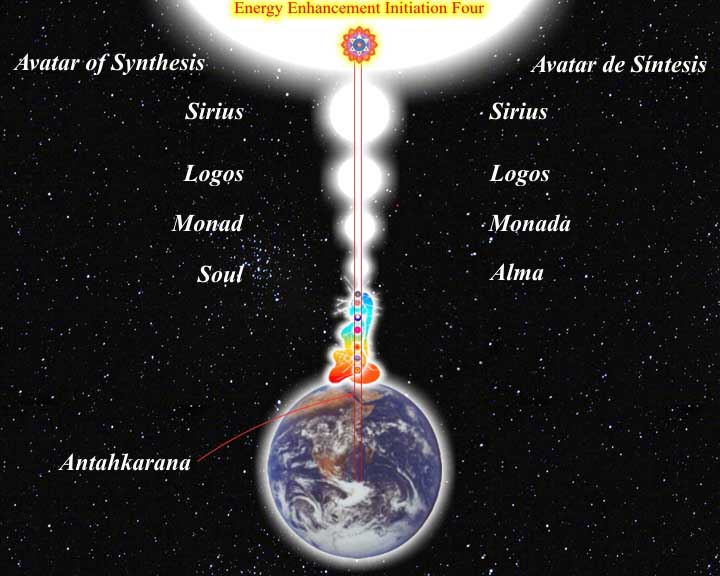
THE ENERGY ENHANCEMENT MEDITATION COURSE BY VIDEO
Every part of Society is a collaborative part of the Aims of the Liberal and Neo-Con Elite.
The purpose of every human being is to evolve and the purpose of society should be to help that aim.
Thus Elites Sponsored False Concept of Climate Change to create acceptance of Low Scientific Levels and thus Poverty.
The relatively highest category of human thought, as typified by that of such as the Pythagoreans and Plato, is a system of thought based upon the scientific principle of hypothesis. This category is typified by the process of discovery and realization of universal principles which are proven by means of a certain quality of experiment best known to us under such rubrics as "Socratic thinking," or as illustrated by the examples provided by both Pythagoreans, such as that friend of Plato's known as the great Archytas, and by Plato himself. Cardinal Nicholas of Cusa could be, therefore, fairly identified as a modern follower of Plato.
SEE 4.2. The Liberal Logic, above "The second formula for uncoupling the level of income from the amount of labour supplied is the institution of a `social minimum' or `social income' unconditionally guaranteed to all citizens. This formula has its supporters on the left as well as on the Right. In general, its objective is to protect an increasing mass of unemployed people from extreme forms of poverty. In the most generous variants of this scheme, the social income guaranteed to all citizens is to be fixed above the poverty line"
"You have been down that path before and you know where it ends" - Trinity to Neo, Matrix
A better life experience can arrive through an increase in the Real Physical Economy allowing the money for the banning of pollution. Reductions to zero in cancer and heart disease follow on naturally from a lack of pollution. Coal no longer needed for production of electricity.
Free education and entertainment mean a possible good life for all humanity without the need for ordinary "work" just for money. Money is the Root of all Evil. Money is a by-product of Meaning and Significance, not the other way around. Your Real work has within it a passion for Meaning and Significance.
Channeling this passion of people in good directions will benefit all humanity.
by SATCHIDANAND
ENERGY ENHANCEMENT LIFE GAMES
- A Game Worth Playing
THIS ARTICLE IS CONCERNED with games and aims.
It has been stated by Thomas Szasz that what people really need and demand from
life is not wealth, comfort or esteem but games worth playing.1 He who cannot
find a game worth playing is apt to fall prey to accidie, defined by the Fathers
of the Church as one of the Deadly Sins, but now regarded as a symptom of
sickness. Accidie is a paralysis of the will, a failure of the appetite, a
condition of generalized boredom, total disenchantment—"God, oh God, how weary,
stale, flat and unprofitable seem to me all the uses of this world!" Such a
state of mind, Szasz tells us, is a prelude to what is loosely called "mental
illness," which, though Szasz defines this illness as a myth, nevertheless fills
half the beds in hospitals and makes multitudes of people a burden to themselves
and to society.
Seek, above all, for a game worth playing. Such is the advice of the oracle to
modern man. Having found the game, play it with intensity—play as if your life
and sanity depended on it. ( They do depend on it. ) Follow the example of the
French existentialists and flourish a banner bearing the word "engagement."
Though nothing means anything and all roads are marked "No EXIT," yet seem to
offer a game worth playing, then invent one.2 For it must move as if your
movements had some purpose. If life does not be clear, even to the most clouded
intelligence, that any game is better than no game.
What sort of games does life offer? We can study Stephen Potter for tips on
"gamesmanship." We can ( and should) read Eric Berne on Games People Play.3 If
we have mathematical inclinations we can look into the work of John von Neumann
or Norbert Wiener, who devoted some of their best thinking to the elaboration of
a theory of games.4
From the Hindu scriptures we can learn of the cosmic game, the alternation of
lila and nitya, the Dance of Shiva, in which primordial unity is transformed
into multiplicity through the constant interplay of the three faunas. In the
works of the mystic novelist, Hermann Hesse, we can read of the Magic Theater in
which all life games are possible or of the game of games (Glassperlenspiel) in
which all elements of human experience are brought together in a single
synthesis."
What is a game? An interaction between people involving ulterior motives? Berne
uses the word in this sense in Games People Play. But a game involves more than
this. It is essentially a trial of strength or a trial of wits played within a
matrix which is defined by rules."' Rules are essential. If the rules are not
observed, the game ceases to be a game at all. A meaningful game of chess would
be impossible if one player insisted on treating all pawns as queens.
Life games reflect real life aims. And the games men choose to play indicate not
only their type, but also their level of inner development. Following Thomas
Szasz ( more or less) we can divide life games into object games and meta-games.
Object games can be thought of as games played for the attainment of material
things, primarily money and the objects which money can buy. Meta-games are
played for intangibles such as knowledge or the "salvation of the soul." In our
culture object games predominate. In earlier cultures meta-games predominated.
To the players of meta games, object games have always seemed shallow and
futile, an attitude summarized in the Gospel saying: "What shall it profit a man
if he gain the whole world and lose his own soul?" To the players of object
games, meta-games seem fuzzy and ill-defined, involving nebulous concepts like
beauty, truth or salvation. The whole human population of the earth can be
divided roughly into two groups, meta-game players and object-game players, the
Prosperos and the Calibans.8 The Ascenders and the Descenders The two have never
understood one another and it is safe to predict that they never will. They are,
psychologically speaking, different species of man and their conflicts
throughout the ages have added greatly to the sum of human misery.
Life Games
ALL games have an
important and probably
decisive influence on
the destinies of the
players under ordinary
social conditions; but
some offer more
opportunities than
others for lifelong
careers and are more
likely to involve
relatively innocent
bystanders. This group
may be conveniently
called Life Games Which
we work on in Energy
Enhancement Level 3. It
includes "Addict,"
"Defaulter," "Kick Me,"
"Now I've Got You, You
Son of a Bitch," "See
What You Made Me Do" and
their principal
variants. They merge on
the one side with
marital games, and on
the other with those of
the underworld. All
these games are Implant
Blockage created
Distractions which are a
total waste of time,
only removable by Energy
Enhancement meditation
Based techniques.
Their use is promoted by Hollywood Advertising (Psychopathic Killing as an advertisement for people to join the Army) Bollywood Advertising (Dancing and sweet love to get you to enter into the Householder Game and create a massive Population so that a massive army can be generated) and childish novels as attention distracters from the Master Game.
Life games are a big subject to do with purpose, one of the energies of the Will, of the Avatar of Synthesis.
What is your purpose, your mission in this lifetime?
What is distracting you from your purpose?
Table I.
|
META GAMES AND OBJECT GAMES PLAYED BY PROSPEROS AND CALIBANS BY ASCENDERS AND DESCENDERS BY FORREST GUMP AND FORREST GUMP'S GIRLFRIEND |
|
| GAME | AIM |
| MASTER GAME | INTEGRATION AND SYNTHESIS - SOUL, MONAD, LOGOS, AVATAR OF SYNTHESIS INFUSION - ILLUMINATION |
| WORLD INTEGRATION | INTEGRATION AND SYNTHESIS |
| RELIGION GAME | SALVATION |
| SCIENCE GAME | KNOWLEDGE |
| ART GAME | BEAUTY |
| HOUSEHOLDER GAME | RAISE FAMILY |
| NO GAME | NO PURPOSE |
| HOG IN TROUGH | WEALTH |
| COCK ON DUNGHILL | FAME |
| MOLOCH GAME | WAR, GLORY OR VICTORY |
The big celebration, the wedding or housewarming, takes place not when the debt is discharged, but when it is undertaken.
What is emphasized on TV, for example, is not the middle-aged man who has finally paid off his mortgage, but the young man who moves into his new home with his family, proudly waving the papers he has just signed and which will bind him for most of his productive years.
After he has paid his debts—the mortgage, the college expenses for his children and his insurance—he is regarded as a problem, a "senior citizen" for whom society must provide not only material comforts but a new "purpose."
This is the life of Nothing. You come into this world with Nothing; make some money, pay the bills for the hospital and you leave with Nothing!!
As this is
written, a sow
bug crawls
across a desk.
If he is turned
over on his
back, one can
observe the
tremendous
struggle he goes
through to get
on his feet
again. During
this interval he
has a "purpose"
in his life.
When he succeeds, one can almost see the look of victory on his face. Off he goes, and one can imagine him telling his tale at the next meeting of sow bugs, looked up to by the younger generation as an insect who has made it.
And yet mixed with his smugness is a little disappointment. Now that he has come out on top, life seems aimless. Maybe he will return in the hope of repeating his triumph. It might be worth marking his back with ink, so as to recognize him if he risks it. A courageous animal, the sow bug. No wonder he has survived for millions of years.
This is the Existential Position of Eric Berne which is true of any game except the Master Game of Illumination.
All games are played according to rules. In man-made games such as poker the
rules are imposed by the laws of probability (odds against a straight are 254 to
1, against a flush, 508 to 1.) or they are dependent on special limitations
(pawns and other pieces in chess each having its own move). In life games, rules
are imposed by natural, economic or social conditions. The player must both
remember the aim and know the rules. Apart from this, the quality of his game
depends on his own innate characteristics.
Great chess masters are born, not made. Great football players are bound to have
certain physical characteristics. The game a man can play is determined by his
type ( of which more later). Ho who tries to play a game for which his type does
not fit him violates his Own essence with consequences that are often
disastrous.
The Low Games
The main types of life
games are shown in Table I.
Hog
in Trough is an object
game pure and simple. The aim is to get one's nose in the trough as deeply as
possible, guzzle as much as possible, el¬bow the other hogs aside as forcefully
as possible. A strong Hog in Trough player has all the qualities with which
communist propa¬ganda endows the capitalist, insatiable greed, ruthlessness,
cun¬ning, selfishness. Pure Hog in Trough is not considered entirely respeetahly
iii the contemporary U.S.A. and is generally played today with a certain
moderation that would have seemed sissy to the giants oi the game who savagely
exploited the resources of the continent a century or so ago. Although the 4
trillions of dollars stolen out of the system by the latest 2008 housing bubble
and by the yearly bubbles for 200 years - The rules of the game have become more
complex and the game itself more subtle.
Cock on Dunghill
is played for fame. It is
designed primarily to inflate the false ego and to keep it inflated. Players of
Cock on Dunghill are hungry to be known and talked about. They want, in a word,
to be celebrities, whether or not they have anything worth celebrating. The game
is practically forced upon people in some professions ( actors, politicians),
who are compelled to maintain a "public image" which may have no relationship to
the thing they really are. But the real player of Cock on Dunghill, whose
happiness depends entirely on the frequency with which he (or she) sees his name
in the papers, does not much care about public images. For him any publicity is
better than no publicity. He would rather be well known as a scoundrel than not
known at all.
The Moloch Game
is the deadliest of all games, played for "glory" or for "victory," by various
grades of professional mankillers (trained to regard such killing as creditable
provided those they kill favor a different religion or political system and can
thus be collectively referred to as "the enemy." "They were all bad" - Big Arnie.
These people are created for a purpose and that purpose is the creation of
poverty, low intellect - dumming down, in order to kill off the intellectual
elite every few years - the cull, and control humanity for thousands of years.
Moloch Game is a purely human game. Other mammals, though they fight with
members of their own species, observe a certain decent moderation and rarely
fight to the death.9 But the players of the Moloch Game have no moderation.
Lured on by some glittering dream of glory or power, they kill with boundless
enthusiasm, destroying whole cities, devastating entire countries. The game is
played so passionately and with such abandon that nothing, neither pity,
decency, sympathy or even common sense, is allowed to interfere with the
destructive orgy. As the devotees of the god Moloch sacrificed their children to
the idol, so the players of the Moloch Game sacrifice the lives of thousands of
young males in the name of some glittering abstraction ( formerly "glory," now
more generally "de¬fence") or a silly phrase couched in a dead language: "Dulce
et decorum est pro patria mori." - It is good and beautiful to die for ones
country. 1
Some of the war poets (World War I vintage) had bitter things to say about this
phrase:
"If you could hear, at every jolt, the blood
Come gargling from the froth-corrupted lungs,
bitter as the cud
Of vile, incurable sores on innocent tongues,
My friend, you would not tell with such high zest
To children ardent for some desperate glory,
The old Lie: Dulce et decorum est
Pro patria mori."
(Wilfred Owen, Poems [New York: The Viking Press, 1931].)
But so great is the power wielded by the players of this game, exerted through
various forms of coercion and blackmail, that the thousands of young men
involved make little protest. They "go to their graves like beds," not daring to
expose the emptiness of the glittering words on which the Moloch Game is based.
These three games, Hog in Trough, Cock on Dunghill and the Moloch Game, are all
more or less pathological activities. The players who "win" win nothing that
they can truly call their own. "Hog in Trough" may emerge twice as rich as
Croesus only to find himself embittered, empty and unhappy, at a loss to know
what to do with the wealth he has amassed.
"Cock on Dunghill"
may make himself so famous
that everyone knows his name only to realize that this fame of his is a mere
shadow and a source of inconvenience.
Players of the Moloch
Game may wade in blood
up to the ears only to find that the victory or glory for which they sacrificed
a million lives are empty words, like richly bedizened whores who lure men to
their destruction. There is a criminal ele¬ment in all these games because, in
every instance, they do harm both to the player and to the society of which he
forms a part. So warped, however, are the standards by which men measure
crimi¬nality that players of these games are more apt to be regarded as "pillars
of society" than dangerous lunatics who should be exiled to remote islands where
they can do no harm to themselves or Others.
Between the higher and the lower games is the neutral game, the Householder
Game, the aim of which is simply to raise a family and provide it with the
necessities of life. One cannot call it either a meta-game or an object game. It
is the basic biological game on which the continuation of the human race
depends. It is also possible to find, in every human society, a certain number
of nonplayers, people who, due to some constitutional defect, are unable to find
any game worth playing, who are, as a result, chronic outsiders, who feel
alienated from society and generally become mentally deranged, tend to become
antisocial and criminal
The High Games
The Meta-Games are rarely played in their pure form but are perverted in order
to maintain dumming down. Money and wealth depend upon human invention to
maintain the increase in human population, interaction, culture, genius and joy
in life. Without this genius, humanity is set in the pattern of poverty seen on
this planet for the last 100,000 years.
The Art Game
is directed toward the expression of an inner awareness defined as beauty. The
awareness is purely subjective. One mans beauty be another man's horror. The
beautiful of one age can seem ugly to another. But bad players of the art game
have no inner awareness all. They are technically proficient and imitate those
who ha yg awareness, conforming to the fashion whatever that fashion may he. The
whole Art Game, as played today, is heavily taintede with commercialism, the
greed of the collector pervades it like a bad smell
It is further complicated by the tendency to show off that afflicts all
contemporary artists, whether they be painters, sculptors, writers or composers.
As all traditional concepts of the beautiful have been abandoned, anything goes,
just so long, as it is new and startling. This makes it almost impossible to
tell whether a work of art corresponds to some inner awareness of the artist or
merely shows that he was trying to be clever 11
The Science Game
is also rarely played in its pure form. Much of it is mere jugglery, a tiresome
ringing of changes on a few basic
themes by investigators who are little more than technicians with higher
degrees.
The Science Game
has become so complex, so vast
and so expensive that more or less routine enterprises are given preference.
Anything truly original tends to be excluded by that formidable array of
committees that stands between the scientist and the money he needs for
research. He must either tailor his research plans to fit the preconceived ideas
of the committee or find himself without funds. Moreover, in the Science Game as
in the Art Game there is much insincerity and a frenzied quest for status that
sparks endless puerile arguments over priority of publication. The game is
played not so much for knowledge as to bolster the scientist's ego.
To the Art Game and the
Science Game we must add the Religion Game,
a meta-game played for an aim loosely defined as the attainment of salvation.
The Religion Game, as played in the past, had a fairly well-defined set of
rules. It was essentially a game played by paid priests of one sort or another
for their personal benefit. To compel their fellowmen to play the game, the
priests invented various gods, with whom they alone could communicate, whose
wrath they alone could assuage, whose cooperation they alone could enlist. He
who wanted help from the gods or who wished to avert their wrath had to pay the
priests to obtain his ends. The game was further enlivened, and the hold of the
priests on the minds of their victims further strengthened, by the inven¬tion of
two after-death states, a blissful heaven and a terrible hell. To stay out of
the hell and get into the heaven, the player of the Religion Game had to pay the
priests, or his relatives had to pay them after his death. This "pay the priest"
aspect of the Religion Game has caused several cynics to define it as the
world's oldest confidence trick designed to enable certain unscrupulous
individuals to make a profit out of the credulity and suggestibility of their
fellow men by interceding on their behalf with some nebulous god or ensuring
their entry into an equally nebulous heaven. It was this aspect of the Religion
Game that caused Sigmund Freud to ex¬claim, more in sorrow than anger: "The
whole thing is so patently infantile, so incongruous with reality, that for one
whose attitude to y is friendly it is painful to think that the great majority
of mortals will never be able to rise above this view of life." 12
A hideous aspect of the Religion Game resulted from the insistence by certain
priests that their brand of god was the only god, that their form of the game
was the only permissible form. So eager were these priests to keep the game
entirely in their own hands that they did not hesitate to persecute, torture or
kill any who happened to wish to play the game by other rules.
This practice was started by the Jews, whose enthusiasm for their one and only
and very jealous father-god justified those slaughterings the accounts of which
constitute so much of the bulk of the Old Testament. As well has how to create
an altar of sacrifice, how big, where to put the holes for the blood to run out
of.
The Policy of the "Long War" is that of economic destruction to keep humanity at
the level of the beast. In Current lexicon, "To bomb them back into the Stone
Age" in order to maintain the control of humanity exerted for thousands of
years. "It is not enough that I succeed, everyone else must fail" - Gengis Khan,
who was paid in Machiavelian manner by the Catholic Popes to attack Islam from
behind. The wars of Napolean and the First and Second World wars to destroy the
economic capacity of Europe. Also Iraq, Iran, Afganistan. The practice was
eagerly adopted by the elite of the so-called Christians, who, not satisfied
with slaughtering Moslems and Jews, turned like rabid dogs on one another in a
series of ghastly religious wars, Protestant versus Catholic. The Moslems, who
borrowed the rules of their Religion Game from Jews and Christians alike, did
not fail to copy the bad habits of both. Believers were exhorted in the Koran to
wage war on the infidel, the slaughter of unbelievers being defined as one sure
way of gaining entry into the Moslem heaven ( a much lusher paradise than the
rather insipid affair offered by their priests to conforming Christians).
It would simplify our account of the games if we could offer the above
description of the Religion Game without further comment. Unfortunately, this is
impossible. Simply to define the Religion Game as the world's oldest con game is
as "patently infantile" ( to borrow Freud's words) as it is to take seriously
the anthropomorphic father-god floating in his bed sheet somewhere in the
stratosphere surrounded by cherubs and seraphs and other improbable species of
celestial fauna (the "gaseous vertebrate" so derided by Ernst Haeckel).
For it must be obvious to any fair-minded observer that there is another element
in the Religion Game besides that of playing on the credulity of believers and
selling them entry permits into a phoney heaven. All the great religions offer
examples of saints and mystics who obviously did not play the game for material
gain, whose indifference to personal comfort, to wealth and to fame was so
complete as to arouse our wonder and admiration. It is equally obvious from the
writings and sayings of these mystics that they were not so naive as to take
seriously either the gaseous vertebrate or heaven with its golden harps or hell
with its ovens. Obviously they played the game by entirely different rules and
for entirely different aims from those of the priestly con men, who sold trips
to heaven for hard cash and insisted on payment in advance (no refund if not
fully satisfied, either).
What game did these mystics play? Within the matrix imposed by their religion,
these players were attempting the most difficult game of all, the Master Game,
the aim of which is the attainment of full consciousness or real awakening. It
was natural for these players to play their game within a religious matrix. The
basic idea underlying all the great religions is that man is asleep, that he
lives amid dreams and delusions, that he cuts himself off from the universal
consciousness (the only meaningful definition of God) to crawl into the narrow
shell of a personal ego. To emerge from this narrow shell, to regain union with
the universal consciousness, to pass from the darkness of the ego-centered
illusion into the light of the non-ego, this was the real aim of the Religion
Game as defined by the great teachers, Jesus, Gautama, Krishna, Mahavira, Lao-tze
and the Platonic Socrates.
Among the Moslems this teaching was promulgated by the Sufis, who praised in
their poems the delights of reunion with the Friend. To all these players, it
was obvious that the Religion Game as played by the paid priests, with its
shabby confidence tricks, promises, threats, persecutions and killings, was
merely a hideous travesty of the real game, a terrible confirmation of the truth
of the statement: "This people praise me with their lips but their hearts are
far from me. . . They have eyes but see not, ears and hear not, neither do they
understand."
So little did they understand that, at least within the matrix of the
"Christian" religion, it actually became physically dangerous during several
centuries to try to play the Master Game at all. Serious players found
themselves accused of heresy, imprisoned by the Inquisitors, tortured, burned
alive. It became impossible to play the game openly. To survive at all, one had
to adopt a disguise, pretend that one's real interest was alchemy or magic, both
of which were permitted by the priests, who did not understand the real
significance of either.
Alchemy was particularly safe as its stated aim, the transmutation of base
metals into gold, posed no challenge whatever to the authority of the priests.
Therefore it was behind the mask of alchemy that many players of the Master Game
concealed their real aims, formulating the rules of the game in an elaborate
secret code in which the transmutations of substances within the body were
expressed in terms of mercury, sulfur, salt and other ele¬ments. There were, of
course, numerous alchemists who took the whole science at its face value, who
believed that the Great Work referred to the production of metallic gold, who
impoverished and frequently poisoned themselves in the quest for the great
secret, and incidentally laid the foundations of modern chemistry. But for the
serious alchemist the transmutation involved the formation of the pure spiritual
golden aura - Aurum Non Vulgi - Not Fool's Gold, or the genesis of the
homunculus, both of which symbolized the creation of fully conscious, cosmically
oriented man out of the ego-centered puppet that goes by the name of man but is
really only a pathetic caricature of what man could be. So well did the
alchemists conceal their secrets that it took all the intuitive genius of Carl
Gustav Jung (perhaps the leading authority on the subject) a large part of his
life to unravel this mystery.13
Today no danger is involved in playing or attempting to play the Master Game.
The tyranny of the priests has more or less ended. The Religion Game, though
often as much of a con game as ever, is played without threats of torture and
death. A good deal of the old venom has gone out of the game; in fact, it is
even possible for priests who wear round their necks the label "Catholic" to be
moderately polite to those who wear the once hated label "Protestant." So the
game is now played with a certain amount of restraint not because men have
become more tolerant, but because the whole issue of heaven versus hell,
salvation versus damnation, is no longer taken very seriously. Even the
theologians admit that the old father-god ( Haeckel's "gaseous vertebrate") is
dead as far as anyone above the Jehovah's Witness level is concerned. The fight
today is between rival political systems rather than rival theologies.
But although it is safe to play the Master Game, this has not served to make it
popular. It still remains the most demanding and difficult of games and, in our
society, there are few who play.
Contemporary man, hypnotized by the glitter of his own gadgets, has little
contact with his inner world, concerns himself with outer, not inner space. But
the Master Game is played entirely in the inner world, a vast and complex
territory about which men know very little. The aim of the game is true
awakening, full development of the powers latent in man.
The game can be played only by people whose observations of themselves and
others have led them to a certain conclusion, namely, that man's ordinary state
of consciousness, his so-called waking state, is not the highest level of
consciousness of which he is capable. In fact, this state is so far from real
awakening that it could appropriately be called a form of somnambulism, a
condition of "waking sleep." 14
Once a person has reached this conclusion, he is no longer able to sleep
comfortably. A new appetite develops within him, the hunger for real awakening,
for full consciousness. He realizes that he sees, hears, knows only a tiny
fraction of what he could see, hear and know, that he lives in the poorest,
shabbiest of the rooms in his inner dwelling, but that he could enter other
rooms, beauti¬ful and filled with treasures, the windows of which look out on
eternity and infinity. In these rooms he would transcend his petty personal self
and undergo spiritual rebirth, "the rising from the tomb" which is the theme of
so many myths and the basis of all the mystery religions, including
Christianity.
He who arrives at this conclusion is ready to play the Master Game. But though
he may be ready, he does not necessarily know how to play. He cannot draw upon
instinctive knowledge, for na¬ture has not endowed men with such instincts. She
provides for man's development up to the age of puberty, she endows him with the
instinct to propagate his kind, but after this she leaves him to his own
devices. Far from helping man to develop further into the harmonious and
enlightened being he might become, the blind force of evolution has actually put
obstacles in his way.15
One who would play the Master Game is therefore compelled to seek a teacher, a
skilled player who knows the rules. But where will he find such a teacher? A
materialistic, spiritually impoverished culture can offer no instructions to the
aspirant. The huge, highly specialized training centers that call themselves
universities are obviously lacking in universality. They do not put the emphasis
on expansion of consciousness first and acquisition of specialized knowledge
second. They educate only a small part of man's totality. They cram the
intellectual brain with facts, pay some lip service to the education of the
physical body by encouraging idiotic competitive sports. But true education, in
the sense of expansion of consciousness and the harmonious development of man's
latent powers, they do not offer.
Here it is sufficient to say that the Master Game can never be made easy to
play. It demands all that a man has, all his feelings, all his thoughts, his
entire resources, physical and spiritual. If he tries to play it in a
halfhearted way or tries to get results by unlawful means, he runs the risk of
destroying his own potential. For this reason it is better not to embark on the
game at all than to play it halfheartedly.
Energy Enhancement
The present site offers a synthesis of many methods derived from different
sources, all of which are designed to help the practitioner to emerge from the
darkness of waking sleep into the light of full consciousness. Purely for
convenience, these methods are referred to collectively as Energy Enhancement,
Enhancement because they bring about a higher synthesis, a new level of order
within the psyche. Energy Enhancement is based on the idea that man can create
by his own efforts a new being within himself ( the second birth). As a result,
he can enjoy certain experiences, exercise certain powers, attain certain
insights that are quite inconceivable to man in his once-born state.
Energy Enhancement involves the highest form of creativity of which man is
capable, the creation of a truly inner-directed being out of a helpless
other-directed slave. This creative work involves every aspect of man's
behavior, the instinctive, motor, emotional and intellectual. It involves an
understanding of the chemistry of the body and of the mind. It involves a study
of type and all that pertains to type, the strengths and weaknesses that type
imposes.
It involves a study of creative activity, arts, crafts, techniques of various
kinds and of the effects these activities produce on levels of consciousness. It
involves a study of events on the large scale and on the small, an awareness of
the processes taking place in human and nonhuman communities that affect the
individual adversely or otherwise. For man cannot be studied apart from his
environment and he who would know himself must also know the world in which he
lives.
The theory of Energy Enhancement can be studied in books." The practice is a
different matter. For this a teacher is necessary. One who tries to practice the
method without a teacher almost inevitably encounters certain difficulties which
he cannot surmount. The illusion-creating mechanism in man's psyche does not
cease to operate merely because a man decides to practice Creative Psychology.
In fact, in such a one, it may operate all the more actively. So he may enjoy
all sorts of pseudo-experiences, the result not of an expansion of consciousness
but of the workings of his own imagination. A teacher can help him to sort out
the true from the false, can warn him about the traps that lie in his path.
Furthermore, the solitary practitioner of Energy Enhancement lives today in a
culture that is more or less totally opposed to the aims he has set himself,
that does not recognize the existence of the Master Game, and regards players of
this game as queer or slightly mad.
The player thus confronts great opposition from the culture in which he lives and must strive with forces which tend to bring his game to a halt before it has even started. Only by finding a teacher and becoming part of the group of pupils that that teacher has collected about him can the player find encouragement and support. Otherwise he simply forgets his aim, or wanders off down some side road and loses himself. Unfortunately, it is very difficult to find such teachers and such groups.
They do not advertise, they operate under disguises. Moreover, there exists an abundance of frauds and fools who pass themselves off as teachers without having any right to do so. So the would-be player of the Master Game encounters at the outset one of the most difficult tests in his career. He must find a teacher who is neither a fool nor a fraud and convince that teacher that he, the would-be pupil, is worth teaching. His future development depends largely on the skill with which he performs this task.20
KUNDALINI AND THE DIRECTORS OF "ENERGY ENHANCEMENT SYNTHESIS OF LIGHT" BIOGRAPHIES - SATCHIDANAND and DEVI DHYANI - CLICK HERE!!
"I am now in the last week of the course and I feel like a totally different person. I have regained myself and have been given from nothing having no psychic vision at all at the start of the energy enhancement course, a clarity of psychic vision that is breathtaking." "As we practiced on each other we came very quickly to realise this. I could literally feel the energy moving inside each chakra as the other person worked within me from several meters away and when I worked on the other person I could see me projecting energy to them and could see where the blockages were within their chakras.
I could force the energy from my centres into their centres and clean their centre bringing the energy full circle back to me. You could tell the state of their chakras by the amount of energy returning to your own centre and this was achieved by mind power only.
Before I came here Satchi said he would teach me to do it in this way and I was sceptical about this claim. I could never envision me having psychic vision, but I have now, I can now do astonishingly powerful Reiki sessions on people without going any where near them and distance healing over any distance is a piece of cake, incredible stuff."
"I am totally de-stressed and have expanded in every way. I feel stronger and fitter and much more mentally agile than I have ever felt in my life. The fog and confusion of life has gone and I feel that I have just received the inside information on everything.
I am ready for anything and am wide awake. I am full of the most incredible energy imaginable and have Energy Enhancement Reiki that is so powerful it staggers me. I know a thing or two about Reiki and had a very strong Reiki connection before I got here, now I have a connection that is beyond description and I have yet to undergo the second initiation this week and then the masters. I have opted to take this as an extra and for anyone who is interested, I believe this is beyond anything you will ever experienced anywhere."
I am now equipped with life tools and healing tools that one only dreams of and there is nothing out there in the world that will ever faze me again. I am absolutely delighted that I decided to come here, because this experience has changed me, for the good of me and for all those that I will touch when I leave here. I am so excited and can’t wait to start exploring my new found talents"
MORE ON ENERGY ENHANCEMENT REIKI
email sol@energyenhancement.org for Course details
THOMAS BLAIRS REPORT JULY 9TH 2010
I have been to see Satchi & Devi almost once a year since 2005, and I have to say, that I have never been let down. Every time they greet me at the airport I am received in an atmosphere of great warmth, positivity and generosity, into which I soon relax and know that it’s safe to be me with all my “luggage”. In June 2010 I recently went on a 6 week course they were holding in India.
In the weeks I spent with them it was clear that the blockages I was removing with their help, were increasing the amount of energy flowing through me during meditation. I have never been one to naturally take to meditating, but with these new experiences of Samadhi (sam – with, adhi – light), it was certainly making it possible for me to sit for much longer periods.
I must concede, that on more than one occasion I started to object and complain about what we were doing, and the methods employed to transmute the blockages in my being. Satchi & Devi would patiently wait for me to see that the person complaining was not the real me, it was not the soul infused personality that I really am, but rather the voice of the blockages that did not want to go. There are different types of blockages, and of course, the easy ones are the first to go, but I was now experiencing some really tough ones. They can certainly be very cunning these blockages, and its thanks to the experience and energy of Satchi & Devi that I was able to continue on my way to overcome some really strong blockages.
My experiences of Samadhi: The first time I experienced anything other than a calm mind in meditation was actually the very first course I attended with Satchi & Devi in Spain. The experience of energy surging through my body was first felt in my 1st and 2nd chakras. It was like having champagne bubbling away in my lower abdomen. Before I talk about my experience here in India, I think it would be useful to describe briefly and partly a technique used to commence the flow of energy and so the entry into Samadhi. It’s to do with using the mind to visualise chakras above the head and below the base chakra to infinity. For me, the concept of infinity and trying to imagine this distance above my head, kind of triggered a bypass switch in my mind, and all of a sudden my mind was quite literally replaced by a surge of electricity and light – Samadhi.
"If the Map is Correct, Experiences Follow" - Satchidanand
This time here in India I was experiencing different levels of Samadhi. During meditation I notice the attainment of a constant flow of energy through my being which gets more and more intense, and rises further and further up my body, the higher I go up the chakras above my head to an inconceivably bright and intense sun. Quite often my breathing slows or even stops a while at the head of an in-breath as my head feels infused with light. My body feels like it is being purified, and in fact it is, as light is being shone through me. I always finish the meditation feeling more positive about my life and the world around me and a feeling that really everything is ok.
Over and above this, I receive what I would describe as bolts of light lasting between 2-5 seconds.
During these brief moments, I am no longer a body with senses or even a sense of weighing or being anything, and am unable to think.
"In the Buddhafield we find we can Move On More Quickly!" - Satchidanand
It’s my experience that the body is like a resistor in an electronic circuit. The more blockages we have, the greater the resistance to the light. By removing a significant number of blockages, I have reduced the resistance of my gross and subtle body, and am now able to sit in Samadhi with ease. And of course, the more light I can sit in, the more blockages I can remove - now that’s what I call spiritual progress!
Thomas Blair
YOGA TEACHERS - GET REIKI MASTERY AND INITIATE YOUR STUDENTS IN ENERGY ENHANCEMENT REIKI
LOVE AND LIGHT
SATCHIDANAND
BIBLIOGRAPHY
1. Szasz, T. S., The Myth of
Mental Illness (New York: Hoeber-Harper, 1961).
2. "You're free. Choose. That is, invent." Sartre, J. P., Existentialism and
Human Emotions (New York: Philosophical Library, 1957).
3. S. Berne, Eric, Games People Play (London: Deutsch, 1966).
4. Von_ Neumann, J., and Morgenstein, 0., Theory of Games and Economic Behavior
(Princeton, N. J.: Princeton University Press, 1947); Wiener, Norbert, The Human
Use of Human Beings (Garden City, N. Y.: Doubleday, 1954).
5. Hesse, Hermann, Steppenwolf (London: Holt, Rinehart and Winston, Ltd., 1963).
6. -, Magister Ludi (New York: Frederick Ungar Publishing Co., 1957).
7. See section on "matrices and codes" in Koestler, Arthur, The Act of Creation
(London: Hutchinson, 1964).
8. Shakespeare, W., The Tempest. This is the most esoteric of all Shakespeare's
plays. Its central theme work is the alchemical magnum Opus. For a modern
variation on this theme, the reader should consult Fowles, J., The Magus
(London: Jonathan Cape, 1966).
9. Carthy, J. D., and Ebling, F. J., editors, The Natural History of Aggression
(New York: Academic Press, 1965).
10. Some of the war poets (World War I vintage) had bitter things to say about
this phrase:
"If you could hear, at every jolt, the blood
Come gargling from the froth-corrupted lungs,
bitter as the cud
Of vile, incurable sores on innocent tongues,
My friend, you would not tell with such high zest
To children ardent for some desperate glory,
The old Lie: Dulce et decorum est Pro patria mori." (Wilfred Owen, Poems [New
York: The Viking Press, 1931].)
11. "Creative thought, creative art or creative poetry are all excuses to expose
the world to aberrations born in the sullied minds of the so-called intellectual
elite of the West. The true creative artist never cries his creativeness to the
skies. The true intellectual never claims to be one. It is the unfulfilled, the
unsuccessful, the lazy and the foolish who weld together old bicycles and claim
to be creative. They are sur¬rounded by their kind who shower the rubbish with
praises so that, in their turn, they may be the recipients of praise." (Shiekh
Abdul Muhl in Rafael Lefort's The Teachers of Gurdjieff [London: V. Gollancz,
1966], p. 115).
12. Freud, Sigmund, Civilisation and Its Discontents (Hogarth Press, 1963).
13. Jung's writings on alchemy are at times as obscure as the texts they
interpret. The shortest and most lucid of his commentaries on this subject will
be found in the chapter "The Work" in his Memories, Dreams and Reflections (Routledge
and Collins, 1963)
14. This term, "waking sleep," is one of several technical terms used in the
system of C. Gurdjieff, as intrepreted by P. D. Ouspensky. See Ouspensky's In
Search of the Miraculous (New York: Harcourt, Brace & World).
15. For an account of the possible evolutionary origin of these obstacles, see
Science and Salvation (New York: St. Martin's Press, 1962).
16. An attempt to outlaw use of peyote by members of the Native American Church
was made by the legislature of the State of California but was ruled
unconstitutional by the State Supreme Court.
11. It must be admitted that Patanjali, the great Hindu commentator on yoga,
describes "simples" (ausadhi) along with samadhi (roughly, a state of
meditation) among the means of attaining the siddhis (yogic powers) but ". . .
hemp and similar drugs produced ecstasy and not the yogic samadhi." See Mircea
Eliade's book in note 19. According to the latter authority the use of hemp,
opium or other narcotics that belongs properly to shamanism, and to decadent
shamanism at that.
12. "Verily there are many hard and almost insurmountable obstacles in Yoga, yet
the Yogi should go on with his practice at all hazards; even were his life to
come to the throat." Siva Samhita, translated by Vasu, R.B.S.C. (Lahore, 1888;
reprinted in Allahabad, 1914).
13. Energy Enhancement, a modern synthesis, combines physiology and psychology,
eliminates the artificial barrier created between them by dualistic theories
separating mind and matter. There is no single formulation of the teaching. It
cannot be learned from books, but only by practice under the guidance of a
teacher, P. D. Ouspensky, G. Gurdjieff and others. See Ouspensky's In Search of
the Miraculous, op. cit.; and his A New Model of the Universe (London: Kegan
Paul, 1938); Gurdjieff, G., All and Everything (New York: Harcourt, Brace and
Co., 1958); Gurdjieff, G,, Meetings with Remarkable Men (New York: E. P. Dutton,
1964). References will be made in this book to the "Gurdjieffian System," but
the term is used only for convenience. The studies of Rafael Lefort in The
Teachers of Gurdjieff (London: V. Gollanez, 1966)
Although it must be repeatedly emphasized that little can be learned from books,
reading may be of some value in preparing the student and helping him to define
what he needs to Know. The student, however, should beware of substituting mere
reading for actual practice and guard against losing himself in the jungles of
terminology and the deserts of mere scholasticism. The following books may prove
useful:
Bernard, Theos, Hatha Yoga (London: Rider and Co., 1950).
Eliade, Mircea, Yoga: Immortality and Freedom (New York: Pantheon Books, 1958).
Evans-Wentz, W. Y., editor, The Tibetan Book of the Dead (London, Oxford
University Press, 1935).
Tibetan Yoga and Secret Doctrines (London: Oxford University Press, 1935).
Frankl, V. E., Man's Search for Meaning (London: Hodder and Stoughton, 1963).
Idries Shah, The Sufis (London: W. H. Allen, 1964).
Jacobs, H., Western Psychotherapy and Hindu Sadhana (London:Allen and Unwin,
1961).
James, William, On Vital Reserves: The Energies of Men (New York: Holt, 1939).
The Varieties of Religious Experience (London: Longmans, Green and Co., 1929).
Maslow, A. H., Toward a Psychology of Being (New York: Van Nostrand, 1962).
Mishra, R. W., The Textbook of Yoga Psychology (New York: The Julian Press,
1963).
Watts, Alan, Psychotherapy East and West (New York: Pantheon Books, 1961).
-, The Way of Zen (New York: Pantheon Books, 1957).
20. Madame Alexandra David-Neel has described in some detail the trials and
tribulations of would-be initiates in Tibet during their search for a teacher.
Admission to the Way is never made easy. Overcoming the obstacles deliberately
put in the path demands heroic efforts on the part of the student. See David-Neel,
Alexandra, Magic and Mystery in Tibet (London: Souvenir Press, 1967), Chapter V.
| ANTAHKARANA | CHAKRAS ABOVE THE HEAD | VITRIOL | SOUL FUSION | ENERGY BLOCKAGES | AKASHIC RECORDS | ENERGY CONNECTIONS |
|
ENERGY ENHANCEMENT MEDITATION
|
GAIN ENERGY
APPRENTICE
LEVEL 1
DVD Course TWO WEEK LIVE COURSES
|
THE
ENERGY BLOCKAGE REMOVAL
PROCESS
DVD Course
TWO WEEK LIVE COURSES
|
THE
KARMA CLEARING
PROCESS APPRENTICE
LEVEL3 DVD Course TWO WEEK LIVE COURSES
|
MASTERY
OF RELATIONSHIPS
TANTRA
APPRENTICE
LEVEL4 DVD Course TWO WEEK LIVE COURSES
|
ENERGY ENHANCEMENT LEVEL 5 - IMMORTALITY WITH ENERGY ENHANCEMENT - CREATING THE IMMORTAL VAJRA DIAMOND BODYONE MONTH LIVE COURSES
|
2005 AND 2006
 |
|
ENERGY ENHANCEMENT TESTIMONIALS EE LEVEL1 EE LEVEL2 EE LEVEL3 EE LEVEL4 EE FAQS |
Before I came here Satchi said he would teach me to do it in this way and I was sceptical about this claim. I could never envision me having psychic vision, but I have now, I can now do astonishingly powerful Reiki sessions on people without going any where near them and distance healing over any distance is a piece of cake, incredible stuff."
"I am totally de-stressed and have expanded in every way. I feel stronger and fitter and much more mentally agile than I have ever felt in my life. The fog and confusion of life has gone and I feel that I have just received the inside information on everything.
I am ready for anything and am wide awake. I am full of the most incredible energy imaginable and have Energy Enhancement Reiki that is so powerful it staggers me. I know a thing or two about Reiki and had a very strong Reiki connection before I got here, now I have a connection that is beyond description and I have yet to undergo the second initiation this week and then the masters. I have opted to take this as an extra and for anyone who is interested, I believe this is beyond anything you will ever experienced anywhere."
I am now equipped with life tools and healing tools that one only dreams of and there is nothing out there in the world that will ever faze me again. I am absolutely delighted that I decided to come here, because this experience has changed me, for the good of me and for all those that I will touch when I leave here. I am so excited and can’t wait to start exploring my new found talents"
MORE ON ENERGY ENHANCEMENT REIKI
email sol@energyenhancement.org for Course details
THOMAS BLAIRS REPORT JULY 9TH 2010
I have been to see Satchi & Devi almost once a year since 2005, and I have to say, that I have never been let down. Every time they greet me at the airport I am received in an atmosphere of great warmth, positivity and generosity, into which I soon relax and know that it’s safe to be me with all my “luggage”. In June 2010 I recently went on a 6 week course they were holding in India.
In the weeks I spent with them it was clear that the blockages I was removing with their help, were increasing the amount of energy flowing through me during meditation. I have never been one to naturally take to meditating, but with these new experiences of Samadhi (sam – with, adhi – light), it was certainly making it possible for me to sit for much longer periods.
I must concede, that on more than one occasion I started to object and complain about what we were doing, and the methods employed to transmute the blockages in my being. Satchi & Devi would patiently wait for me to see that the person complaining was not the real me, it was not the soul infused personality that I really am, but rather the voice of the blockages that did not want to go. There are different types of blockages, and of course, the easy ones are the first to go, but I was now experiencing some really tough ones. They can certainly be very cunning these blockages, and its thanks to the experience and energy of Satchi & Devi that I was able to continue on my way to overcome some really strong blockages.
My experiences of Samadhi: The first time I experienced anything other than a calm mind in meditation was actually the very first course I attended with Satchi & Devi in Spain. The experience of energy surging through my body was first felt in my 1st and 2nd chakras. It was like having champagne bubbling away in my lower abdomen. Before I talk about my experience here in India, I think it would be useful to describe briefly and partly a technique used to commence the flow of energy and so the entry into Samadhi. It’s to do with using the mind to visualise chakras above the head and below the base chakra to infinity. For me, the concept of infinity and trying to imagine this distance above my head, kind of triggered a bypass switch in my mind, and all of a sudden my mind was quite literally replaced by a surge of electricity and light – Samadhi.
"If the Map is Correct, Experiences Follow" - Satchidanand
This time here in India I was experiencing different levels of Samadhi. During meditation I notice the attainment of a constant flow of energy through my being which gets more and more intense, and rises further and further up my body, the higher I go up the chakras above my head to an inconceivably bright and intense sun. Quite often my breathing slows or even stops a while at the head of an in-breath as my head feels infused with light. My body feels like it is being purified, and in fact it is, as light is being shone through me. I always finish the meditation feeling more positive about my life and the world around me and a feeling that really everything is ok.
Over and above this, I receive what I would describe as bolts of light lasting between 2-5 seconds.
During these brief moments, I am no longer a body with senses or even a sense of weighing or being anything, and am unable to think.
"In the Buddhafield we find we can Move On More Quickly!" - Satchidanand
It’s my experience that the body is like a resistor in an electronic circuit. The more blockages we have, the greater the resistance to the light. By removing a significant number of blockages, I have reduced the resistance of my gross and subtle body, and am now able to sit in Samadhi with ease. And of course, the more light I can sit in, the more blockages I can remove - now that’s what I call spiritual progress!
Thomas Blair
YOGA TEACHERS - GET REIKI MASTERY AND INITIATE YOUR STUDENTS IN ENERGY ENHANCEMENT REIKI
LOVE AND LIGHT
SATCHIDANAND
BIBLIOGRAPHY
1. Szasz, T. S., The Myth of
Mental Illness (New York: Hoeber-Harper, 1961).
2. "You're free. Choose. That is, invent." Sartre, J. P., Existentialism and
Human Emotions (New York: Philosophical Library, 1957).
3. S. Berne, Eric, Games People Play (London: Deutsch, 1966).
4. Von_ Neumann, J., and Morgenstein, 0., Theory of Games and Economic Behavior
(Princeton, N. J.: Princeton University Press, 1947); Wiener, Norbert, The Human
Use of Human Beings (Garden City, N. Y.: Doubleday, 1954).
5. Hesse, Hermann, Steppenwolf (London: Holt, Rinehart and Winston, Ltd., 1963).
6. -, Magister Ludi (New York: Frederick Ungar Publishing Co., 1957).
7. See section on "matrices and codes" in Koestler, Arthur, The Act of Creation
(London: Hutchinson, 1964).
8. Shakespeare, W., The Tempest. This is the most esoteric of all Shakespeare's
plays. Its central theme work is the alchemical magnum Opus. For a modern
variation on this theme, the reader should consult Fowles, J., The Magus
(London: Jonathan Cape, 1966).
9. Carthy, J. D., and Ebling, F. J., editors, The Natural History of Aggression
(New York: Academic Press, 1965).
10. Some of the war poets (World War I vintage) had bitter things to say about
this phrase:
"If you could hear, at every jolt, the blood
Come gargling from the froth-corrupted lungs,
bitter as the cud
Of vile, incurable sores on innocent tongues,
My friend, you would not tell with such high zest
To children ardent for some desperate glory,
The old Lie: Dulce et decorum est Pro patria mori." (Wilfred Owen, Poems [New
York: The Viking Press, 1931].)
11. "Creative thought, creative art or creative poetry are all excuses to expose
the world to aberrations born in the sullied minds of the so-called intellectual
elite of the West. The true creative artist never cries his creativeness to the
skies. The true intellectual never claims to be one. It is the unfulfilled, the
unsuccessful, the lazy and the foolish who weld together old bicycles and claim
to be creative. They are sur¬rounded by their kind who shower the rubbish with
praises so that, in their turn, they may be the recipients of praise." (Shiekh
Abdul Muhl in Rafael Lefort's The Teachers of Gurdjieff [London: V. Gollancz,
1966], p. 115).
12. Freud, Sigmund, Civilisation and Its Discontents (Hogarth Press, 1963).
13. Jung's writings on alchemy are at times as obscure as the texts they
interpret. The shortest and most lucid of his commentaries on this subject will
be found in the chapter "The Work" in his Memories, Dreams and Reflections (Routledge
and Collins, 1963)
14. This term, "waking sleep," is one of several technical terms used in the
system of C. Gurdjieff, as intrepreted by P. D. Ouspensky. See Ouspensky's In
Search of the Miraculous (New York: Harcourt, Brace & World).
15. For an account of the possible evolutionary origin of these obstacles, see
Science and Salvation (New York: St. Martin's Press, 1962).
16. An attempt to outlaw use of peyote by members of the Native American Church
was made by the legislature of the State of California but was ruled
unconstitutional by the State Supreme Court.
11. It must be admitted that Patanjali, the great Hindu commentator on yoga,
describes "simples" (ausadhi) along with samadhi (roughly, a state of
meditation) among the means of attaining the siddhis (yogic powers) but ". . .
hemp and similar drugs produced ecstasy and not the yogic samadhi." See Mircea
Eliade's book in note 19. According to the latter authority the use of hemp,
opium or other narcotics that belongs properly to shamanism, and to decadent
shamanism at that.
12. "Verily there are many hard and almost insurmountable obstacles in Yoga, yet
the Yogi should go on with his practice at all hazards; even were his life to
come to the throat." Siva Samhita, translated by Vasu, R.B.S.C. (Lahore, 1888;
reprinted in Allahabad, 1914).
13. Energy Enhancement, a modern synthesis, combines physiology and psychology,
eliminates the artificial barrier created between them by dualistic theories
separating mind and matter. There is no single formulation of the teaching. It
cannot be learned from books, but only by practice under the guidance of a
teacher, P. D. Ouspensky, G. Gurdjieff and others. See Ouspensky's In Search of
the Miraculous, op. cit.; and his A New Model of the Universe (London: Kegan
Paul, 1938); Gurdjieff, G., All and Everything (New York: Harcourt, Brace and
Co., 1958); Gurdjieff, G,, Meetings with Remarkable Men (New York: E. P. Dutton,
1964). References will be made in this book to the "Gurdjieffian System," but
the term is used only for convenience. The studies of Rafael Lefort in The
Teachers of Gurdjieff (London: V. Gollanez, 1966)
Although it must be repeatedly emphasized that little can be learned from books,
reading may be of some value in preparing the student and helping him to define
what he needs to Know. The student, however, should beware of substituting mere
reading for actual practice and guard against losing himself in the jungles of
terminology and the deserts of mere scholasticism. The following books may prove
useful:
Bernard, Theos, Hatha Yoga (London: Rider and Co., 1950).
Eliade, Mircea, Yoga: Immortality and Freedom (New York: Pantheon Books, 1958).
Evans-Wentz, W. Y., editor, The Tibetan Book of the Dead (London, Oxford
University Press, 1935).
Tibetan Yoga and Secret Doctrines (London: Oxford University Press, 1935).
Frankl, V. E., Man's Search for Meaning (London: Hodder and Stoughton, 1963).
Idries Shah, The Sufis (London: W. H. Allen, 1964).
Jacobs, H., Western Psychotherapy and Hindu Sadhana (London:Allen and Unwin,
1961).
James, William, On Vital Reserves: The Energies of Men (New York: Holt, 1939).
The Varieties of Religious Experience (London: Longmans, Green and Co., 1929).
Maslow, A. H., Toward a Psychology of Being (New York: Van Nostrand, 1962).
Mishra, R. W., The Textbook of Yoga Psychology (New York: The Julian Press,
1963).
Watts, Alan, Psychotherapy East and West (New York: Pantheon Books, 1961).
-, The Way of Zen (New York: Pantheon Books, 1957).
20. Madame Alexandra David-Neel has described in some detail the trials and
tribulations of would-be initiates in Tibet during their search for a teacher.
Admission to the Way is never made easy. Overcoming the obstacles deliberately
put in the path demands heroic efforts on the part of the student. See David-Neel,
Alexandra, Magic and Mystery in Tibet (London: Souvenir Press, 1967), Chapter V.
| ANTAHKARANA | CHAKRAS ABOVE THE HEAD | VITRIOL | SOUL FUSION | ENERGY BLOCKAGES | AKASHIC RECORDS | ENERGY CONNECTIONS |
|
ENERGY ENHANCEMENT MEDITATION
|
GAIN ENERGY
APPRENTICE
LEVEL 1
DVD Course TWO WEEK LIVE COURSES
|
THE
ENERGY BLOCKAGE REMOVAL
PROCESS
DVD Course
TWO WEEK LIVE COURSES
|
THE
KARMA CLEARING
PROCESS APPRENTICE
LEVEL3 DVD Course TWO WEEK LIVE COURSES
|
MASTERY
OF RELATIONSHIPS
TANTRA
APPRENTICE
LEVEL4 DVD Course TWO WEEK LIVE COURSES
|
ENERGY ENHANCEMENT LEVEL 5 - IMMORTALITY WITH ENERGY ENHANCEMENT - CREATING THE IMMORTAL VAJRA DIAMOND BODYONE MONTH LIVE COURSES
|
2005 AND 2006
|
|
ENERGY ENHANCEMENT TESTIMONIALS EE LEVEL1 EE LEVEL2 EE LEVEL3 EE LEVEL4 EE FAQS |